

Why Cancer Prevention Holistic Strategies Are More Powerful Than Any Single Fix
Cancer prevention holistic strategies work by addressing the full picture of your health — not just one risk factor at a time. Here is a quick overview of what that looks like in practice:
| Strategy | Key Action |
|---|---|
| Nutrition | Follow whole-food, plant-rich dietary patterns |
| Movement | Get 150+ minutes of moderate activity weekly |
| Weight management | Maintain a healthy BMI to reduce risk for 13+ cancers |
| Sleep & stress | Support circadian rhythms and lower cortisol |
| Avoid toxins | Limit alcohol, tobacco, and endocrine disruptors |
| Screening & vaccines | Stay current on age-appropriate tests and HPV/Hep B vaccines |
| Environmental awareness | Minimize UV exposure and harmful chemical contact |
| Mind-body connection | Practice stress modulation and emotional well-being |
Cancer is the second leading cause of death in the United States. Almost half of all men and more than a third of all women will receive a diagnosis at some point in their lives.
That is a sobering statistic. But here is the other side of it.
Up to 80–90% of total cancer is linked to dietary and environmental factors — not genetics. Genetic predisposition accounts for only 2–4% of avoidable cancer deaths. That means the choices you make every day carry enormous weight.
The problem is that most prevention advice focuses on one thing at a time. Eat less red meat. Exercise more. Stop smoking. These are all valid. But cancer does not develop from a single cause — and prevention does not come from a single fix.
A truly holistic approach looks at how your entire lifestyle — food, movement, sleep, stress, environment, and mindset — works together to either protect or expose your cells to harm.
This guide walks you through each of those layers in plain language, grounded in current evidence.
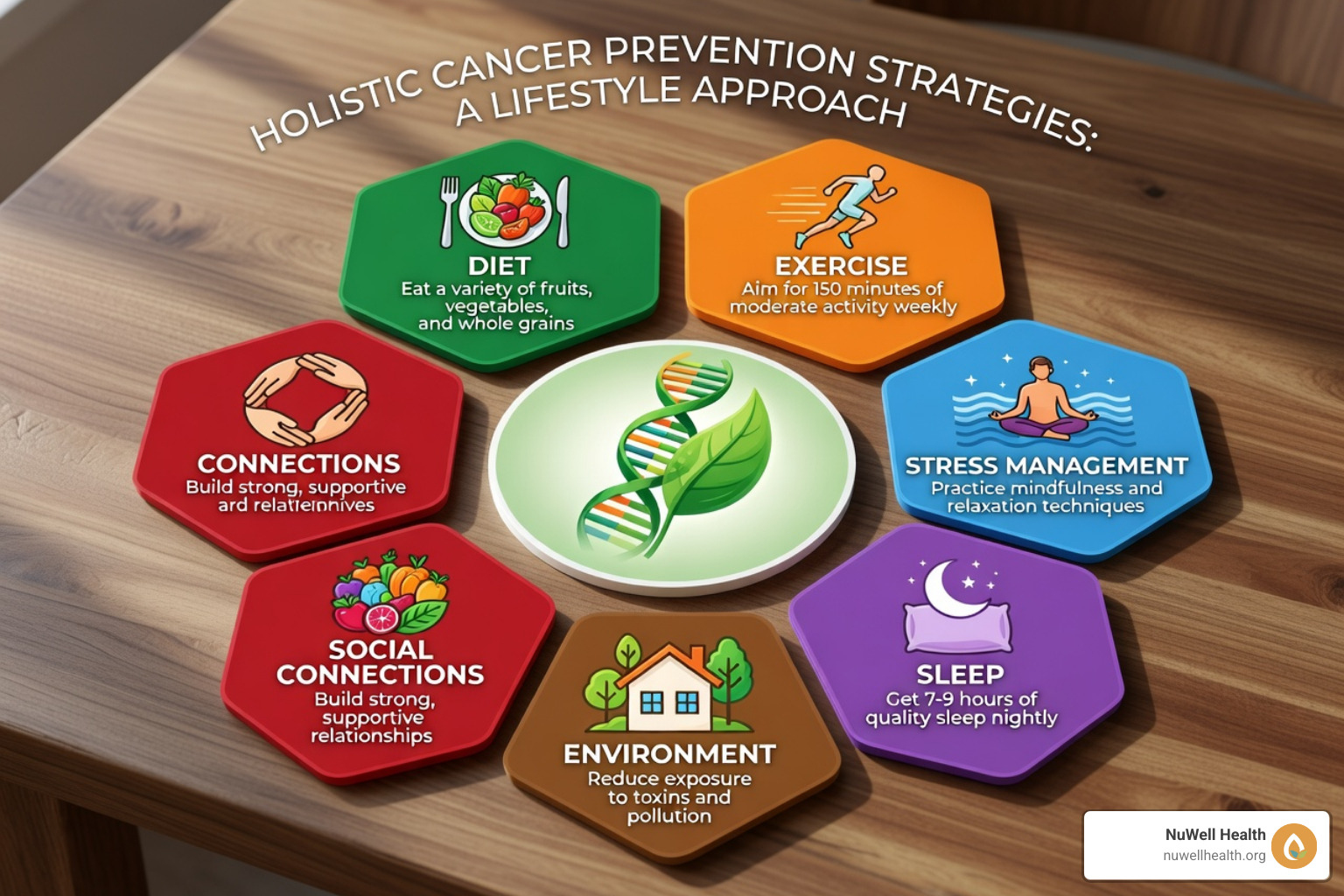
The Power of Cancer Prevention Holistic Strategies
When we talk about a holistic approach, we aren’t just talking about “natural” alternatives to medicine. We are talking about a comprehensive biological strategy. In our view at NuWell Health, your body is a temple, and maintaining its integrity requires looking at the Roots Over Remedies.
Research in April 2026 continues to reinforce that cancer is often a nutrition-responsive and lifestyle-responsive condition. One of the most fascinating concepts in modern science is “epitropy.” While “pleiotropy” refers to a gene having multiple effects, epitropy describes the expansive, multi-faceted influence that nutrition has on our biology. It challenges the purely genetic view of cancer, suggesting that while a “seed” (a mutation) might be present, it is the “soil” (your internal environment) that determines if that seed grows.
By utilizing Evidence-Based Strategies for Cancer Prevention, we can influence gene-nutrient interactions. This is the heart of naturopathic medicine & holistic care: creating an internal environment where healthy cells thrive and abnormal cells are kept in check.

Shifting from Reductionism to Wholism
For decades, nutrition science was reductionist. It looked at Vitamin C in isolation or fiber in isolation. But we don’t eat nutrients; we eat food. A holistic approach recognizes that nutrients interact synergistically. For example, the fat in an avocado helps you absorb the lycopene in a tomato.
When we focus on broad dietary patterns — like the Mediterranean diet — rather than “superfood” supplements, we see much stronger protective effects. This is a core pillar of What is Naturopathic Medicine?: treating the whole person by using the complex wisdom found in whole foods.
Addressing the Root Causes of Cellular Damage
Cancer doesn’t appear overnight. It is often the result of years of Chronic Pain and Inflammation and oxidative stress. Chronic inflammation acts like a “slow burn” that damages DNA and encourages cells to divide uncontrollably. By using cancer prevention holistic strategies, we aim to douse those flames through anti-inflammatory living, supporting the body’s natural DNA repair mechanisms before a mutation can take hold.
Wholistic Nutrition: Patterns Over Single Nutrients
The most consistent evidence we have for cancer prevention involves dietary patterns. The World Cancer Research Fund (WCRF) and the American Institute for Cancer Research (AICR) have found that the more closely people follow their recommendations, the lower their risk.
Diet is estimated to be responsible for 35% of all cancers, with some experts placing that number as high as 70%. In rural China studies, researchers found that moving from a plant-heavy rural diet to a meat-heavy urban diet caused cancer rates to skyrocket. This suggests that Preventing Cancer • The Nutrition Source is largely about returning to whole, intact plant foods.
High fiber intake is especially crucial. Not only does it help with Digestive Issues, but it also binds to toxins and excess hormones (like estrogen) and flushes them out of the body.
Implementing Cancer Prevention Holistic Strategies in Your Kitchen
How do we put this into practice? It starts with variety.
- Cruciferous Vegetables: Broccoli, cauliflower, and kale contain sulforaphane and indole-3-carbinol, which help the liver detoxify carcinogens.
- Lycopene-Rich Foods: Tomatoes are great, but cooked tomatoes (like in sauce) paired with healthy fats are even better for bioavailability.
- Allium Vegetables: Garlic and onions contain allicin, linked to lower risks of stomach and colon cancers.
If you struggle with Allergies and Food Sensitivity, we work with you to find the plant-based patterns that nourish you without causing systemic irritation.
The Role of Functional Foods and Spices
Spices are “nature’s pharmacists.” Turmeric, specifically the compound curcumin, has been shown to inhibit cancer cell growth. Green tea is packed with EGCG, a powerful antioxidant. Berries offer anthocyanins that protect our DNA, and flaxseeds provide lignans that can block stronger, harmful estrogens. These are all part of Lifestyle-Based Approaches to Cancer Prevention and Treatment – PMC.
Lifestyle Medicine: Movement, Sleep, and Stress
Beyond what is on your plate, how you move and rest dictates your cellular health. Obesity is now a recognized contributor to at least 13 different types of cancer. This is because excess fat tissue isn’t just “storage”; it acts like an endocrine organ, pumping out inflammatory cytokines and estrogen.
Effective Weight Management is one of the most powerful cancer prevention holistic strategies available. Even if you aren’t dealing with Chronic Fatigue, regular movement is essential for keeping your “metabolic engine” running cleanly.
Metabolic Health and Weight Management
Insulin resistance is a major driver of cancer. When insulin levels are chronically high, it signals cells to grow and divide — exactly what we want to avoid with cancer. The goal is 150–300 minutes of moderate aerobic activity or 75–150 minutes of vigorous activity each week. This helps regulate Hormone Imbalance and reduces the “fuel” available for tumor growth.
Restorative Sleep and Stress Modulation
Sleep is the foundation of hormonal health. During deep sleep, your body produces melatonin, which isn’t just a sleep hormone — it’s a potent antioxidant and anti-cancer agent.
Stress, on the other hand, floods the body with cortisol. While cortisol is necessary for the “fight or flight” response, chronic elevation suppresses the immune system’s “Natural Killer” cells, which are responsible for hunting down and destroying early cancer cells. We advocate for mindfulness, prayer, and “oxytocin-boosting” activities like spending time with loved ones to modulate this response, as discussed in the Lifestyle Medicine Lifestyle Factors and Cancer Review.
Environmental Defense and Proactive Screening
We live in a world full of synthetic chemicals. From the plastics in our kitchen to the UV rays from the sun, our cells are under constant assault. Holistic prevention means being a “gatekeeper” for your environment.
This includes Lifestyle & Preventive Health measures like:
- UV Protection: Seeking shade and using SPF 30+ to prevent skin cancer, the most common and preventable type.
- Tobacco Cessation: Avoiding all forms of tobacco, which contains over 9,000 chemicals.
- Endocrine Disruptors: Swapping plastic containers for glass and choosing “clean” personal care products to avoid xenoestrogens.
Following these 7 tips to reduce your risk from the Mayo Clinic is a fantastic starting point for environmental defense.
Advanced Tools for Cancer Prevention Holistic Strategies
In 2026, we have access to more than just the basics. While we focus on the root cause, we also value early detection. Advanced tools like the Galleri test (a multi-cancer early detection blood test) and whole-body MRI scans can identify issues before they become symptomatic. We also look at epigenetic testing to see how your lifestyle is currently affecting your gene expression, which is particularly helpful for those dealing with Autoimmune conditions or other complex health histories.
The Role of Clinical Screenings
A truly comprehensive strategy does not ignore clinical medicine.
Furthermore, regular screenings like mammographies, colonoscopies, and Pap smears are non-negotiable. While we aim to prevent the disease from ever starting, Prevention of Cancer Through Lifestyle Changes – PMC teaches us that catching a “pre-cancer” during a routine screening is one of the greatest successes of modern medicine.
Frequently Asked Questions about Holistic Cancer Prevention
Is cancer primarily a genetic disease?
Contrary to popular belief, no. While we often hear about “cancer genes,” genetic predisposition only accounts for about 2–4% of avoidable cancer deaths. The vast majority of cancers (80–90%) are triggered by environmental and lifestyle factors. This is good news — it means you have a significant amount of control over your risk through cancer prevention holistic strategies.
Does alcohol consumption significantly impact cancer risk?
Yes. Alcohol is a known carcinogen. When the body metabolizes ethanol, it produces acetaldehyde, a chemical that damages DNA and prevents cells from repairing the damage. Drinking alcohol is linked to at least six different types of cancer, including breast and colorectal. From a holistic perspective, the healthiest choice is zero alcohol.
How does fiber contribute to cancer prevention?
Fiber is a superhero for colorectal health. It adds bulk to the stool, diluting potential carcinogens and speeding up their transit through the colon. It also feeds the healthy bacteria in your gut microbiome, which produce short-chain fatty acids that protect the gut lining. We recommend aiming for at least 30 grams of fiber daily from whole plant sources.
Conclusion
At NuWell Health, we believe that true wellness is a three-fold cord: mind, body, and spirit. Taking a holistic approach to cancer prevention is about more than just avoiding a disease; it is about the stewardship of the life you have been given.
By addressing the root causes — inflammation, poor nutrition, and chronic stress — and viewing your health through a Christian perspective of care and responsibility, you can build a formidable shield for your cells. We are here to empower you with the tools for self-care, helping you move toward a vibrant, preventive lifestyle with fewer side effects and more vitality.
This article was researched with AI and heavily edited by Jordan Oliver for accuracy and relevance.
Jordan is an author, ordained minister, and online host for His Glory TV, sharing biblically grounded insights on faith, prayer, and spiritual growth. She is the co-founder of Triple-Braided Cord Co., an intercessory prayer and healing ministry inspired by Ecclesiastes 4:12.
Jordan holds a Bachelor’s degree in Communications and Religious Studies from High Point University and is a certified Spiritual Life Coach through iCoachLife in Nashville, Tennessee. Drawing from her ministry, coaching, and academic experience, she creates trustworthy, faith-based content that helps readers grow in their relationship with God. Learn more about Jordan here.