

When Your Body Reacts to Food: Understanding Allergies and Food Sensitivity
Allergies and food sensitivity affect far more people than most realize — and the two are often confused, even though they work very differently in the body.
Here’s a quick breakdown to address what you need to know:
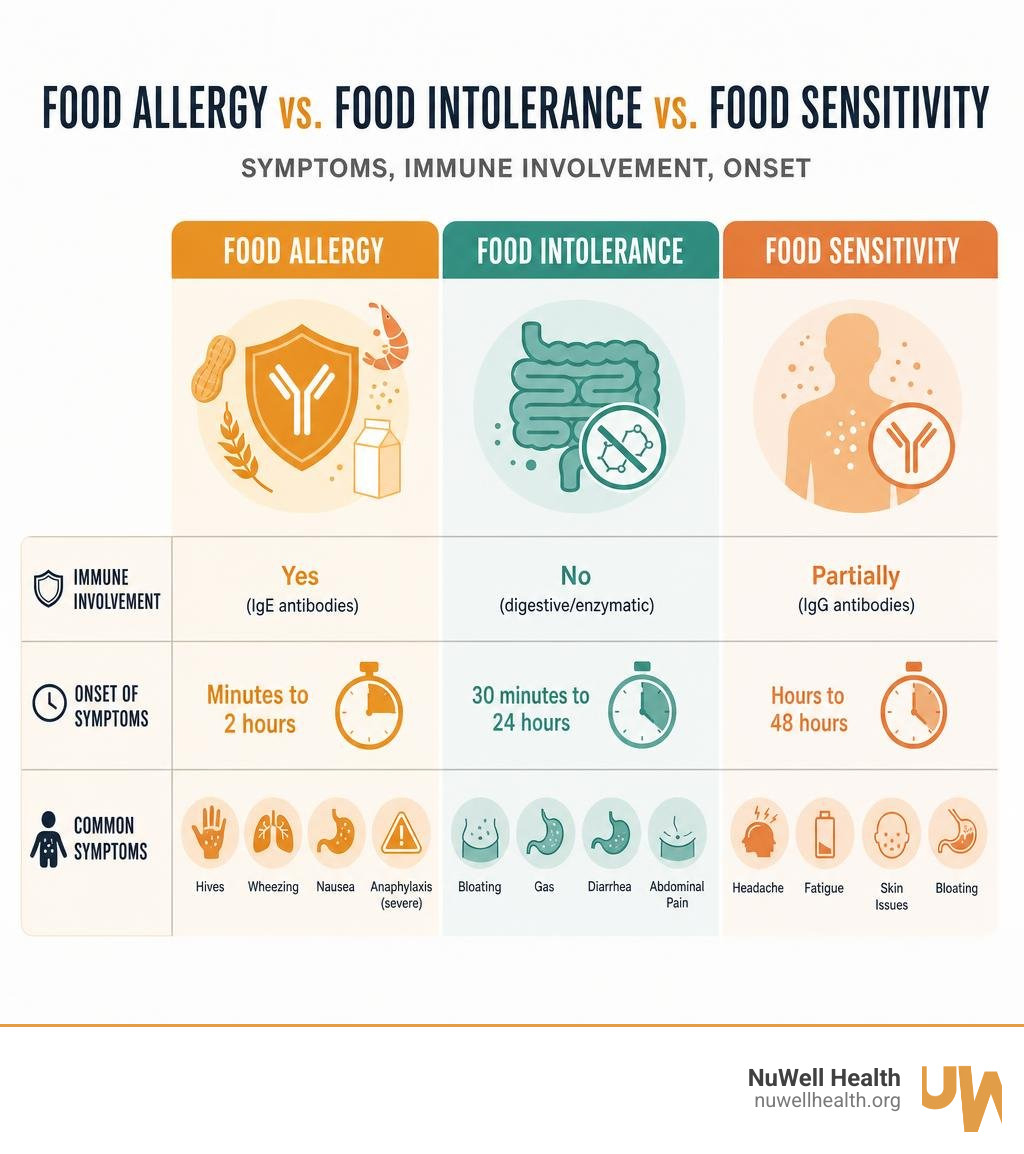
| Condition | Involves Immune System? | Life-Threatening? | Onset of Symptoms |
|---|---|---|---|
| Food Allergy | Yes (IgE antibodies) | Potentially yes | Minutes to 2 hours |
| Food Sensitivity | Partially (IgG antibodies) | No | Hours to 48 hours |
| Food Intolerance | No (digestive/enzymatic) | No | 30 min to 24 hours |
More than 33 million Americans live with life-threatening food allergies. And up to 20% of the global population experiences some form of food intolerance. That means reactions to food are not rare — they’re a widespread health reality.
Yet many people spend years managing symptoms without ever identifying the root cause.
Bloating after meals. Skin flares. Persistent headaches. Fatigue that won’t lift. These can all trace back to how your body processes — or struggles to process — certain foods.
At NuWell Health, we have found that most people dealing with these symptoms have never been given a clear map of what’s actually happening in their body. That’s exactly what this guide is for.
Whether you’re dealing with a diagnosed allergy, a suspected intolerance, or vague symptoms you can’t explain, understanding the difference is the essential first step toward real, lasting relief.
Understanding the Core Differences: Food Allergy vs. Food Intolerance
When you experience an unpleasant reaction after eating, it is easy to lump everything under the umbrella of “allergy.” However, from a physiological perspective, a true allergy and a digestive intolerance are entirely different beasts. Understanding this distinction is not just academic; it is a matter of safety and effective healing.
In our clinical experience at NuWell Health, we often see clients who have spent years mislabeling their digestive discomfort as an allergy, when in reality, a targeted natural protocol for food intolerance was what they truly needed to find relief.
To begin with, we must look at the primary systems involved. A food allergy is a rapid, immune-system-mediated response. When someone with a food allergy consumes a trigger protein, their immune system identifies it as a hostile invader and launches a full-scale counterattack.
Conversely, a food intolerance is primarily a digestive tract issue. It occurs when your body lacks the necessary tools—usually enzymes—to break down a specific component of food, or when you are sensitive to certain naturally occurring chemicals.
As outlined in the Food allergy vs. food intolerance: What’s the difference? – Mayo Clinic guide, while an intolerance can make you feel incredibly miserable, it does not carry the risk of life-threatening anaphylaxis that accompanies a true food allergy.
What is a Food Allergy?
A food allergy is a classic case of mistaken identity. The immune system mistakenly identifies a harmless food protein as a threat. Upon first exposure, the body creates Immunoglobulin E (IgE) antibodies specific to that food.
The next time you eat that food, these IgE antibodies detect it and signal your mast cells (a type of white blood cell) to release a flood of inflammatory chemicals, including histamine. According to the comprehensive review on Food Hypersensitivity: Distinguishing Allergy from Intolerance, Main Characteristics, and Symptoms—A Narrative Review, this IgE-mediated response is incredibly rapid, usually manifesting within minutes to two hours of exposure.
The symptoms of a true food allergy can range from mild to life-threatening:
- Hives, itching, or eczema
- Swelling of the lips, face, tongue, and throat
- Wheezing, nasal congestion, or trouble breathing
- Abdominal pain, diarrhea, nausea, or vomiting
- Dizziness, lightheadedness, or fainting
In severe cases, a food allergy triggers anaphylaxis—a systemic, life-threatening allergic reaction that causes airways to constrict, the throat to swell, and blood pressure to drop dangerously. This is why individuals with severe food allergies must carry an epinephrine auto-injector at all times.
What is a Food Intolerance?
If food allergies are a sudden storm, food intolerances are more like slow-burning friction. A food intolerance does not involve IgE antibodies or the immediate release of systemic histamine from mast cells. Instead, as noted by the Food Intolerance: Symptoms, Causes & Treatment – Cleveland Clinic, it is a localized digestive reaction.
The mechanisms behind food intolerance typically include:
- Enzyme Deficiencies: The most famous example is lactose intolerance, where the body does not produce enough of the lactase enzyme to break down the sugar (lactose) found in milk.
- Chemical Sensitivities: Some individuals are highly sensitive to naturally occurring chemicals in food, such as salicylates, amines (like histamine), or caffeine.
- Sensitivity to Food Additives: Sulfites (used to preserve dried fruit and wine) or monosodium glutamate (MSG) can trigger reactions in sensitive digestive tracts.
One of the defining features of food intolerance is that it is dose-dependent. While a person with a peanut allergy can experience anaphylaxis from a microscopic trace of peanut, someone with lactose intolerance might easily enjoy a splash of milk in their morning coffee but experience severe bloating and cramping after eating a large bowl of ice cream.
Root Causes and Common Types of Allergies and Food Sensitivity
Why do our bodies suddenly decide that normal, everyday foods are the enemy? To understand this, we have to look past the symptoms and dive deep into the biological terrain of the human body. At NuWell Health, we focus on identifying the root causes of physical dysfunction rather than simply masking symptoms with temporary fixes.
In our years of clinical practice at NuWell Health, we have observed that the development of allergies and food sensitivity is rarely random. We consistently find that addressing the biological terrain of the body—specifically gut health and chronic inflammation—yields the most profound, lasting recoveries. It is typically driven by an interplay of several core factors:
- The Gut Microbiome: Our digestive tracts are home to trillions of microbes that act as the gatekeepers of our immune system. When this microbiome becomes imbalanced (a state known as dysbiosis), the gut struggles to train the immune system to tolerate harmless foods.
- Genetics: Your genetic makeup influences how your immune system is wired and what enzymes your body produces.
- Age: Our digestive capacity naturally changes over time. For example, enzyme production can drop as we age, making us more susceptible to intolerances later in life.
- Chronic Inflammation: A body already burdened by environmental toxins, chronic stress, or a poor diet is in a state of high alert, making it far more likely to overreact to dietary proteins.
The Role of Gut Health, Genetics, and Age
To understand food sensitivities, we must talk about the physical barrier of the gut. The lining of your small intestine is incredibly thin—only one cell layer thick. In a healthy state, these cells are knitted tightly together by “tight junctions,” acting as a highly selective filter.
However, factors like chronic stress, poor diet, and medications can damage these tight junctions, leading to increased intestinal permeability, commonly referred to as leaky gut. When this happens, partially digested food particles and bacterial toxins escape into the bloodstream. Your immune system immediately recognizes these foreign particles and creates IgG antibodies against them, leading to delayed food sensitivities.
Genetics also play a significant role. For instance, loss-of-function mutations in the filaggrin (FLG) gene compromise the integrity of the skin barrier, which research shows is a major risk factor for developing early-childhood food allergies. Additionally, your genetics dictate your production of the diamine oxidase (DAO) enzyme, which is responsible for breaking down histamine in your digestive tract.
As we age, our bodies naturally wind down the production of certain digestive juices. Most notably, about 65% of the global population experiences a natural decline in lactase enzyme activity after early childhood, leading to lactose intolerance.
Common Food Intolerances and Their Triggers
Food intolerances are incredibly common, but because the symptoms are often delayed, identifying the specific culprit can feel like trying to solve a mystery without any clues.
Some of the most prevalent food intolerances and sensitivities include:
- Lactose Intolerance: Caused by a lack of the lactase enzyme, leading to gas, bloating, and diarrhea after consuming dairy.
- Gluten Sensitivity (Non-Celiac Gluten Sensitivity): Distinct from celiac disease (an autoimmune condition) and wheat allergy, this sensitivity causes systemic symptoms like brain fog, joint pain, and digestive distress after eating gluten.
- FODMAP Intolerance: FODMAPs (Fermentable Oligosaccharides, Disaccharides, Monosaccharides, and Polyols) are short-chain carbohydrates that are poorly absorbed in some people, fermenting in the gut and causing severe IBS-like symptoms.
- Histamine Intolerance: Occurs when the body cannot break down dietary histamine quickly enough, leading to allergy-like symptoms such as flushing, hives, headaches, and nasal congestion.
If you suspect you have histamine intolerance, avoiding high-histamine foods is a vital first step. Here is a list of common high-histamine foods to temporarily eliminate while healing your gut:
- Fermented foods (sauerkraut, kimchi, yogurt, kefir, kombucha)
- Aged cheeses (parmesan, cheddar, gouda)
- Cured and processed meats (salami, bacon, sausage)
- Canned or smoked fish (tuna, mackerel, sardines)
- Certain fruits and vegetables (tomatoes, spinach, avocados, eggplants)
- Vinegar and vinegar-containing foods (pickles, olives, mayonnaise)
- Alcoholic beverages (especially red wine, champagne, and beer)
Clinical and Holistic Approaches to Diagnosis

When you are suffering from chronic symptoms, getting an accurate diagnosis is half the battle. Because the symptoms of food allergies and food sensitivities overlap so heavily, a careful, structured clinical investigation is required to find the true root cause.
In our clinical practice at NuWell Health, we have found that diagnostic testing should never be used as a standalone answer. Instead, we interpret these tests alongside your unique personal history, lifestyle, and spiritual well-being to create a truly personalized healing plan.
Standard Medical Testing for Allergies and Food Sensitivity
If a true, IgE-mediated food allergy is suspected, standard medical testing is essential for safety. As detailed in the clinical reference Food Allergies – StatPearls – NCBI Bookshelf, these tests are designed to evaluate the immune system’s immediate response:
- Skin Prick Testing (SPT): A tiny drop of food extract is placed on the skin, which is then gently scratched. If you are allergic, a small, itchy bump (called a wheal) will appear within 15 to 20 minutes.
- Serum-Specific IgE Testing: A blood test that measures the concentration of IgE antibodies to specific foods. While helpful, a positive blood test only indicates sensitization, not necessarily a clinical allergy.
- Oral Food Challenge (OFC): Considered the gold standard of allergy diagnosis. Under strict medical supervision in an allergist’s office, the patient is given gradually increasing amounts of the suspected allergen to see if a reaction occurs. This should never be attempted at home.
- Celiac Disease Biopsy: For those experiencing severe reactions to gluten, an endoscopic duodenal biopsy remains the gold standard to check for the characteristic intestinal damage of celiac disease.
Holistic and Self-Led Screening Methods for Allergies and Food Sensitivity
While standard medical tests are excellent for identifying life-threatening IgE allergies, they are notoriously poor at identifying delayed IgG food sensitivities or enzymatic food intolerances.
To uncover these subtler reactions, we often recommend self-led and functional screening methods:
- The Food Diary: A daily log where you record everything you eat, along with any physical or emotional symptoms, their timing, and even your stress levels. This simple, free tool is often the most powerful way to spot hidden patterns.
- The Elimination Diet: Widely considered the most reliable holistic tool for identifying food sensitivities. You remove the most common inflammatory foods (such as gluten, dairy, soy, corn, eggs, and processed sugars) for 2 to 4 weeks. Once your symptoms clear, you systematically reintroduce them one by one, paying close attention to how your body responds.
- IgG Antibody Testing: Functional blood tests that measure IgG antibodies can provide a helpful starting point by identifying which foods are crossing your compromised gut barrier. However, we always recommend pairing these tests with an elimination diet to confirm real-world reactivity.
To learn more about navigating these options, you can read our detailed resources on Everything You Need to Know About Testing Your Gut for Food Sensitivities and explore The Definitive Guide to Food Sensitivity Testing. If you are curious about other methods, you might also find our article on The Truth About Saliva-Based Food Sensitivity Testing helpful for separating science from marketing hype.
Natural Management, Prevention, and Pediatric Guidelines

Once you have identified your triggers, the focus shifts to management and recovery. In conventional medicine, management often stops at “avoid this food forever.” At NuWell Health, we believe the body has an incredible, God-given capacity to heal.
While true IgE-mediated food allergies require strict avoidance for safety, many food sensitivities can be improved—or even completely resolved—by restoring balance to your digestive system and calming chronic inflammation.
Preventing Food Allergies in Children
For years, parents were told to avoid giving young children highly allergenic foods like peanuts, eggs, and fish. However, modern pediatric guidelines have completely flipped this advice on its head.
To help prevent the development of childhood food allergies, current medical guidelines recommend:
- Breastfeeding: Exclusive breastfeeding for the first 4 to 6 months of life helps establish a healthy infant gut microbiome and provides vital maternal antibodies.
- Early Allergen Introduction: Introducing potentially allergenic foods (like smooth peanut butter, cooked egg, and fish) around 6 months of age, once solid foods are started. Research shows that early exposure helps the developing immune system build natural tolerance rather than sensitivity.
- Maternal Diet: Pregnant and breastfeeding mothers should eat a diverse, nutrient-rich diet, including healthy fats and natural foods, without avoiding allergens unless they themselves are allergic.
Restoring Balance and Avoiding Complications
Through our hands-on work with hundreds of clients at NuWell Health, we have consistently found that addressing gut health is the absolute key to managing and often reversing food sensitivities in adults. If you simply eliminate foods without fixing the underlying leaky gut, your body will often just develop new sensitivities to the replacement foods you eat.
A holistic protocol for restoring digestive balance includes:
- Remove the Triggers: Temporarily avoid the foods that cause inflammation while your gut heals.
- Repair the Gut Barrier: Support the physical lining of your intestines with natural gut-healing nutrients like L-glutamine, collagen, and marshmallow root. For natural seasonal support, you can also explore our guide on Pollen vs Your Pantry: Best Home Remedies for Natural Allergy Relief.
- Restore the Microbiome: Introduce high-quality, targeted probiotics and prebiotic fibers to rebuild a diverse, friendly bacterial community that supports oral tolerance.
- Support Digestion: Use broad-spectrum digestive enzymes or temporary hydrochloric acid (HCl) support to ensure foods are fully broken down before they reach the small intestine.
By taking a proactive approach to gut healing, you can avoid the common complications of untreated food sensitivities, which include chronic nutrient deficiencies, systemic inflammation, chronic fatigue, and a severely diminished quality of life.
Frequently Asked Questions about Food Hypersensitivities
What is the most common food intolerance?
Lactose intolerance is by far the most common food intolerance worldwide, affecting an estimated 57% to 65% of the global population. It is caused by a natural decline in the production of the lactase enzyme after childhood, leaving the body unable to properly break down the sugar found in dairy products.
Can food sensitivities go away over time?
Yes! Unlike true, IgE-mediated food allergies (which are often lifelong, though some children outgrow milk and egg allergies), IgG-mediated food sensitivities can absolutely change or go away. As you heal your gut barrier, balance your microbiome, and reduce systemic inflammation, your immune system’s hyper-reactivity drops, often allowing you to reintroduce previously trigger foods without any symptoms.
How does histamine intolerance differ from a food allergy?
While histamine intolerance can look exactly like an allergic reaction (causing hives, flushing, runny nose, and headaches), it is not an allergy. A food allergy is an immediate, IgE-mediated immune response to a specific protein. Histamine intolerance is an enzymatic issue where your body lacks enough DAO enzyme to break down the natural histamine present in the foods you eat. It is cumulative—like a bucket slowly filling up until it overflows and causes symptoms.
Conclusion: Healing Mind, Body, and Spirit
Navigating allergies and food sensitivity can feel overwhelming, but you do not have to walk this path alone.
At NuWell Health, we look at health through a holistic, natural lens. We recognize that your body is a beautifully integrated system where the physical, mental, and spiritual are deeply connected. As a Christian-centered wellness practice, we believe that true healing involves restoring the temple God gave you by addressing the root causes of illness rather than settling for lifelong symptom management.
If you are ready to stop guessing, stop hurting, and start truly nourishing your body, we invite you to take the next step. Explore our dedicated resource page on Allergies and Food Sensitivity to learn how we can partner with you on your journey toward vibrant, lasting health.
This article was researched with AI and heavily edited by Jordan Oliver for accuracy and relevance.
Jordan is an author, ordained minister, and online host for His Glory TV, sharing biblically grounded insights on faith, prayer, and spiritual growth. She is the co-founder of Triple-Braided Cord Co., an intercessory prayer and healing ministry inspired by Ecclesiastes 4:12.
Jordan holds a Bachelor’s degree in Communications and Religious Studies from High Point University and is a certified Spiritual Life Coach through iCoachLife in Nashville, Tennessee. Drawing from her ministry, coaching, and academic experience, she creates trustworthy, faith-based content that helps readers grow in their relationship with God. Learn more about Jordan here.