
When Your Gut Won’t Quit: What a Food Sensitivity Stool Test Can Tell You
A food sensitivity stool test is one of the most direct ways to evaluate how your gut is responding to the foods you eat every day — and whether hidden inflammation may be driving your symptoms.
Quick Answer: What is a food sensitivity stool test?
| Feature | Details |
|---|---|
| What it measures | Immune markers in stool (like secretory IgA), fecal fat, inflammation indicators, and gut microbiome balance |
| How it differs from blood tests | Looks at local gut immunity rather than systemic antibodies (IgG/IgE) |
| Who it’s for | People with chronic bloating, IBS, diarrhea, fatigue, or unexplained digestive symptoms |
| How it’s collected | Non-invasive at-home stool sample |
| What it can detect | Gut inflammation, malabsorption, dysbiosis, and immune reactivity in the intestinal lining |
If you’ve been dealing with recurring bloating, unpredictable digestion, fatigue after meals, or skin and mood issues you can’t explain — you’re not alone, and you’re not imagining it.
The frustrating reality is that most standard lab work misses what’s happening inside the gut lining. A blood draw can measure antibodies circulating in your system. But the gut has its own immune layer — and that’s where many food reactions actually begin.
Digestive symptoms are complex. They connect to your immune system, your hormones, and even your mental health. When those connections aren’t explored, symptoms keep coming back no matter what you try.
In our clinical experience at NuWell Health, we have found that understanding the why behind digestive distress is the first step toward lasting wellness — not just managing symptoms, but resolving them at the root through natural, biology-based interventions.
What is a Food Sensitivity Stool Test?
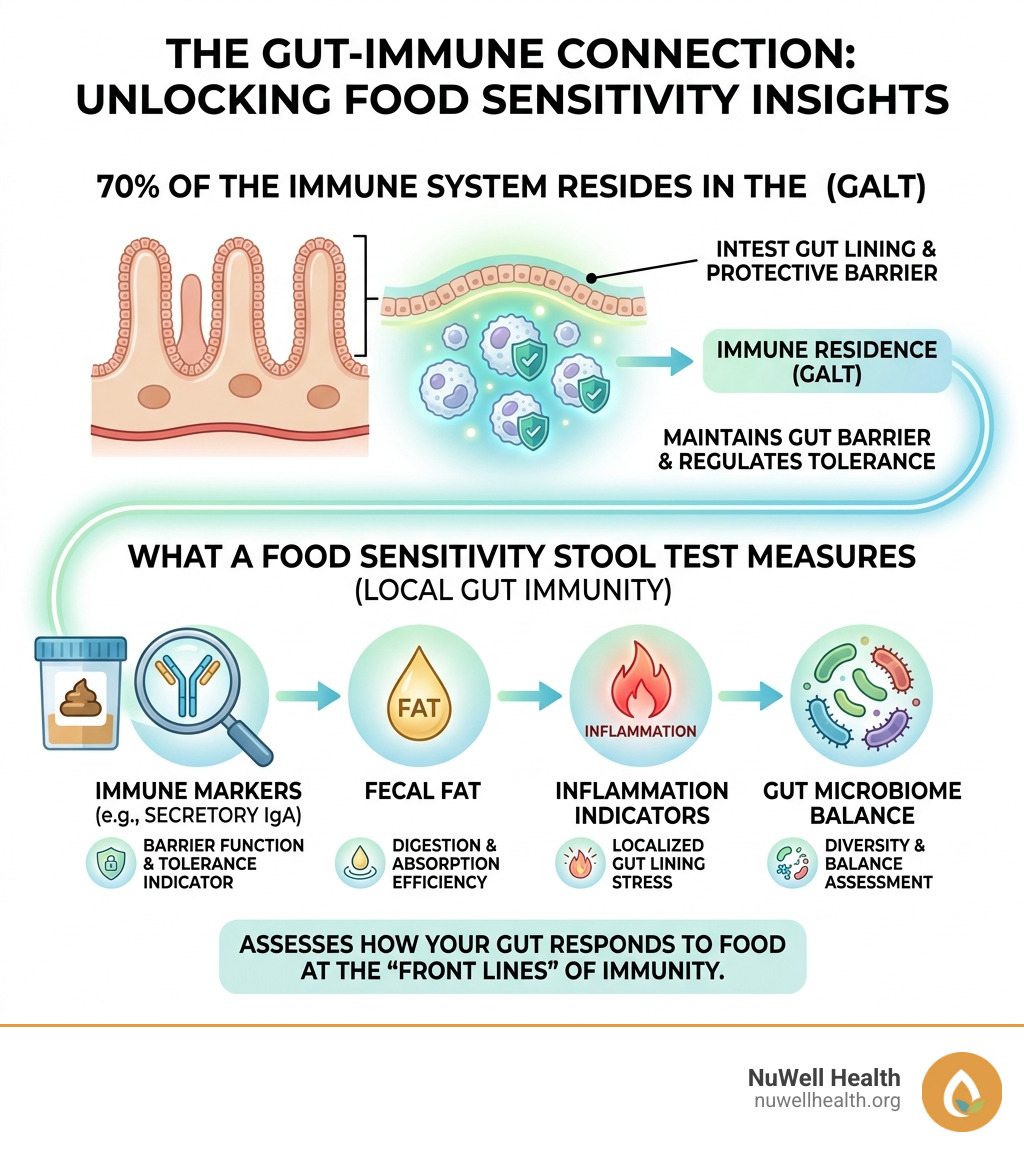
When we talk about a food sensitivity stool test, we are looking at a specialized diagnostic tool that analyzes fecal samples to identify how your immune system is behaving at the “front lines.” While most people are familiar with blood tests, the stool test offers a unique window into the Gut-Associated Lymphoid Tissue (GALT). This is significant because approximately 70% of your entire immune system resides in your gut.
Unlike a standard medical test that might only look for parasites or obvious infections, a comprehensive stool-based sensitivity panel evaluates several critical markers:
- Secretory IgA (sIgA): This is the primary antibody found in your digestive tract. It acts like a protective “paint” on your intestinal lining. If sIgA is too high, your gut is actively fighting something (like a food it doesn’t like); if it’s too low, your defenses are worn down.
- Antigen Detection: The test can identify specific food proteins (antigens) that are triggering an immune response locally in the intestines.
- Fecal Fat Markers: These indicate how well you are digesting and absorbing fats. High levels of fecal fat often point to malabsorption, which can be a side effect of chronic food sensitivities.
- Digestive Enzymes: The test measures your body’s ability to produce the enzymes needed to break down food. A lack of these enzymes is a common cause of what we call “food intolerance.”
In our clinical practice at NuWell Health, we have found that addressing the mucosal barrier—the thin layer of cells that separates your food from your bloodstream—is the first step toward true systemic healing. If this barrier is irritated by specific foods, no amount of general “healthy eating” will fix the problem until those triggers are identified.
Stool Testing vs. Blood-Based Sensitivity Tests
Understanding the difference between testing methods is crucial to getting the right answers. Most conventional doctors use blood tests to look for IgE antibodies (true allergies) or IgG antibodies (sensitivities). While these are helpful, they don’t always tell the whole story of what’s happening in your digestive tract.
| Test Type | Antibody Measured | Reaction Time | What it Tells Us |
|---|---|---|---|
| Allergy Blood Test | IgE | Seconds to 2 Hours | Immediate, potentially life-threatening reactions (hives, anaphylaxis). |
| Sensitivity Blood Test | IgG | 3 to 72 Hours | Systemic, delayed reactions like migraines, joint pain, or skin issues. |
| Sensitivity Stool Test | sIgA (Secretory IgA) | Ongoing/Local | Localized gut inflammation and “first-line” immune response to food. |
Blood-based IgG reactions are often called “delayed” because symptoms may not appear for up to three days after you eat the offending food. This makes it nearly impossible to track triggers through a simple food diary alone. However, in our experience at NuWell Health, we have found that stool-based markers often provide a more direct look at local gut inflammation than systemic blood draws alone.
For many, the problem isn’t that the whole body is reacting, but that the gut lining itself is becoming inflamed every time a certain protein (like gluten or casein) passes through. You can learn more about these distinctions in our guide on Allergies And Food Sensitivity.
Understanding the Role of IgA in a Food Sensitivity Stool Test
Secretory IgA (sIgA) is your body’s first line of defense. Think of it as the security guards standing at the gates of your body. When you consume a food that your body perceives as a threat, these guards (sIgA) increase in number to neutralize the “invader.”
If your food sensitivity stool test shows elevated sIgA in response to specific foods, it means your mucosal immunity is under stress. This can lead to poor protein digestion and a breakdown in intestinal homeostasis. Over time, this constant battle wears down the gut lining, leading to more significant issues like “leaky gut.”
Why a Food Sensitivity Stool Test is Different from Allergy Testing
It is vital to distinguish between a food allergy and a sensitivity. A food allergy is an IgE-mediated immune response. It is often immediate and can be life-threatening (anaphylaxis). If you have a peanut allergy, your body reacts the moment the protein hits your system.
Sensitivities, however, are much more subtle. They involve digestive-mediated processing issues and non-life-threatening symptoms. You might experience chronic GI issues, brain fog, or fatigue, but you won’t end up in the ER. Stool testing is designed specifically for these chronic, “low and slow” inflammatory responses that traditional allergy testing often misses.
Identifying the Root Cause: Leaky Gut and Dysbiosis

Why does the body suddenly start reacting to foods it used to tolerate? The answer usually lies in the health of the intestinal barrier and the balance of the microbiome.
Leaky Gut (Intestinal Permeability): In a healthy gut, the cells lining your intestines are held together by “tight junctions.” These act like a fine-mesh sieve, allowing nutrients through but keeping large food particles and toxins out. When these junctions fail, undigested food particles leak into the bloodstream. The immune system sees these particles as foreign invaders and attacks, creating a cycle of systemic inflammation.
Dysbiosis: This refers to an imbalance in your gut bacteria. We need a high level of microbiome diversity to maintain oral tolerance—the ability of our immune system to “ignore” harmless food proteins.
- Akkermansia muciniphila: This specific “keystone” bacteria helps maintain the protective mucus layer in your gut.
- Short-Chain Fatty Acids (SCFAs): Beneficial bacteria produce SCFAs (like butyrate) when you eat fiber. These acids fuel the cells of your gut lining and keep inflammation low.
Through our work with clients at NuWell Health, we have found that restoring the microbiome is essential for regaining tolerance to a wide variety of foods. We prioritize these natural restorative processes over restrictive diets that can lead to further nutrient deficiencies. Without addressing dysbiosis, you may find yourself becoming sensitive to more and more foods over time.
How a Food Sensitivity Stool Test Detects Gut Inflammation
A high-quality food sensitivity stool test doesn’t just look at food; it looks at the environment the food is entering.
- Calprotectin: This is a protein marker that indicates significant neutrophil (white blood cell) activity in the gut. High levels are a major red flag for inflammation, often seen in conditions like IBD or severe IBS.
- Fecal Fat: As mentioned, if you aren’t absorbing fats correctly, it suggests your intestinal villi (the tiny “fingers” that absorb nutrients) are damaged or inflamed.
By combining microbiome analysis with immune markers, we can see if your symptoms are caused by a specific food or a general breakdown in your gut’s ability to process any food correctly.
Practical Steps for Healing and Elimination
Once you receive your results, the goal isn’t just to stop eating those foods forever—it’s to heal the gut so you can eventually enjoy a diverse diet again.
- The Elimination Diet: Based on your test results, we recommend removing highly reactive foods for a period of 4 to 6 weeks. This gives your immune system a “cool down” period.
- Fiber Intake: We recommend a daily intake of 25-30 grams of fiber from whole, unprocessed sources. Fiber supports the production of SCFAs, which are vital for gut repair.
- Targeted Probiotics: Using specific strains like Saccharomyces boulardii can help protect against opportunistic organisms like Candida, which are known to promote food sensitization.
- Rotation Diets: In our practice at NuWell Health, we have found that a guided rotation diet—where you avoid eating the same foods every single day—prevents the development of new sensitivities while the gut heals naturally.
- The Add-Back Challenge: After the elimination phase, you reintroduce foods one at a time while tracking symptoms for 48-72 hours. This helps you determine which foods were true triggers and which were “false positives” caused by temporary gut leakiness.
If you feel overwhelmed by this process, it helps to work with a professional. You can consult The Ultimate Guide To Finding A Food Sensitivity Specialist for more direction.
Frequently Asked Questions about Stool Testing
How do I collect a sample for a stool test?
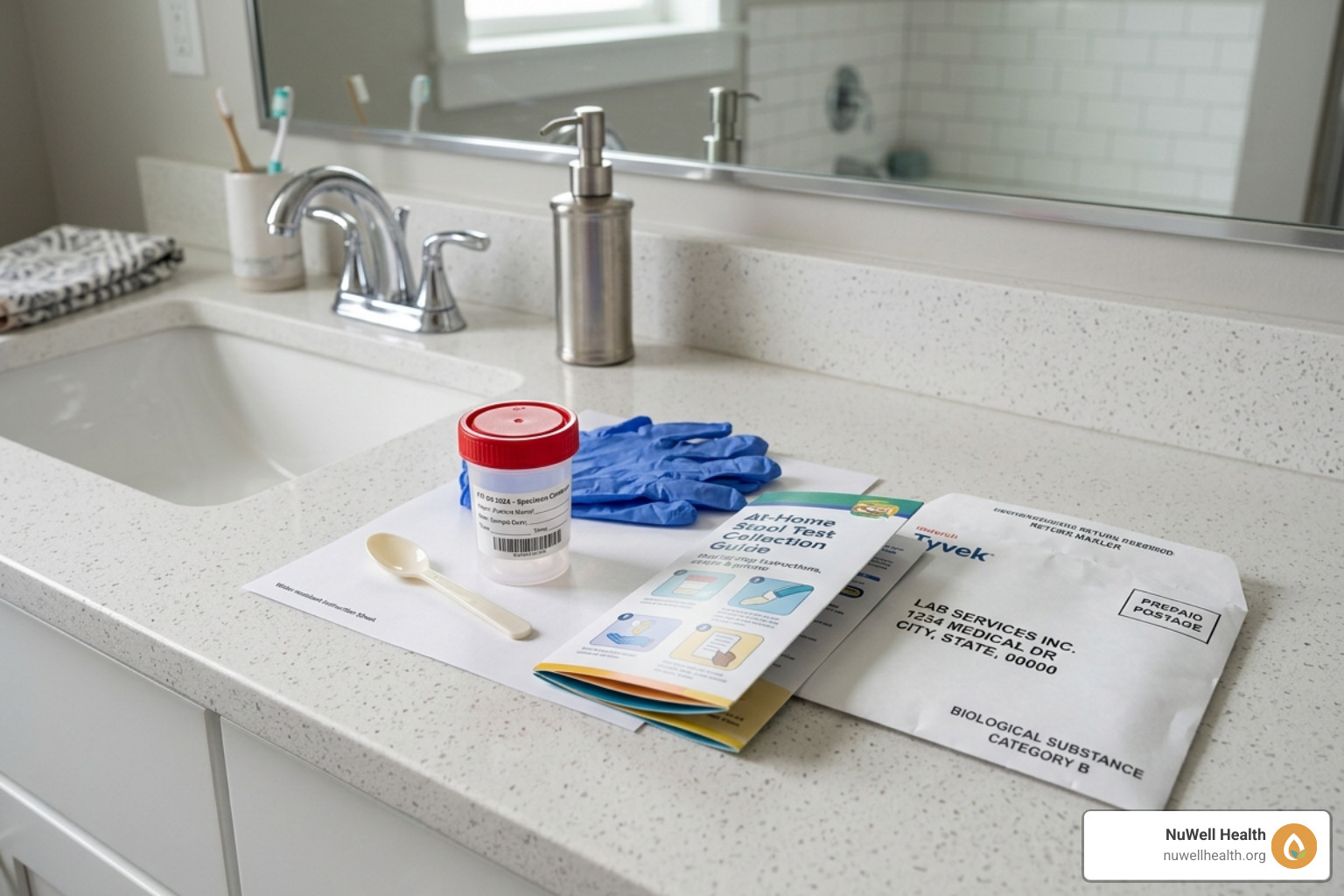
Most modern stool tests are designed for at-home collection. You will receive a kit with detailed instructions on how to collect a small sample and place it in a specialized vial that preserves the DNA and immune markers. You then mail it back to a CLIA-certified laboratory using a prepaid shipping label. It is non-invasive and much easier for those who are “needle-shy.”
Is stool testing for food sensitivities covered by insurance?
Coverage varies by provider. While many traditional insurance plans view functional stool testing as “investigational,” these tests are almost always eligible for reimbursement through Health Savings Accounts (HSA) or Flexible Spending Accounts (FSA). We recommend checking with your provider to see if they require a clinical necessity letter from a practitioner.
Can children take a food sensitivity stool test?
Absolutely. In fact, stool testing is often preferred for children because it is non-invasive. We see many pediatric cases involving colic, failure to thrive, chronic nasal congestion, or even behavioral links like ADHD. Through our pediatric consultations at NuWell Health, we have found that identifying sensitivities early in childhood can significantly improve long-term immune resilience and overall development.
Conclusion
Your journey to gut health is about more than just avoiding “bad” foods. From a Christian perspective, we believe our bodies are a temple, and caring for our physical health is a vital part of our stewardship. By addressing the root causes of inflammation—rather than just masking symptoms—we empower you to live a life of vitality and purpose.
At NuWell Health, we have seen firsthand how a food sensitivity stool test provides the data needed to move from guesswork to a preventive, holistic lifestyle. By focusing on the body’s natural ability to heal when given the right environment, we empower you to take control of your wellness. Whether you are dealing with chronic IBS or simply want to optimize your energy and mood, understanding your gut is the key.
Ready to take the next step? Explore our resources on Allergies and Food Sensitivity to learn how we can support your path to a “happy belly” and a healthier life.
This article was researched with AI and heavily edited by Jordan Oliver for accuracy and relevance.
Jordan is an author, ordained minister, and online host for His Glory TV, sharing biblically grounded insights on faith, prayer, and spiritual growth. She is the co-founder of Triple-Braided Cord Co., an intercessory prayer and healing ministry inspired by Ecclesiastes 4:12.
Jordan holds a Bachelor’s degree in Communications and Religious Studies from High Point University and is a certified Spiritual Life Coach through iCoachLife in Nashville, Tennessee. Drawing from her ministry, coaching, and academic experience, she creates trustworthy, faith-based content that helps readers grow in their relationship with God. Learn more about Jordan here.