

If you are interested in balancing hormones naturally, it helps to know what hormones do. Hormones are chemical messengers. They travel through the bloodstream and affect growth and development, metabolism, sexual function, reproduction, and mood, according to MedlinePlus. A symptom such as fatigue, poor sleep, an irregular cycle, low mood, or a weight change can have hormonal and non-hormonal causes. One symptom cannot confirm a hormone disorder.
This guide explains which daily habits may support hormone health, what self-care cannot do, and when to ask for help.
What people mean by natural hormone balance
“Hormone balance” is a common phrase, not a diagnosis. MedlinePlus explains that a hormone disorder can mean levels that are too high or too low, or a body that does not respond to a hormone the way it should. Normal levels also shift with age, time of day, menstrual-cycle stage, pregnancy, menopause, medicines, illness, and the specific hormone being measured.
That is why long symptom lists can mislead. Fatigue, for example, can be linked to sleep loss, anemia, infection, medication effects, depression, thyroid disease, blood-sugar concerns, and many other causes. Changes in weight, hair, skin, mood, libido, or menstrual cycles also need context before anyone draws a conclusion.
In plain terms, the three steps look like this:
- Support: Eat regular, varied meals, protect sleep, move in ways that fit your health, and address ongoing stress.
- Track: Note symptoms, timing, cycle changes, sleep, medicine and supplement use, and what makes symptoms better or worse.
- Check: Get a medical evaluation for persistent, severe, sudden, or concerning changes. Review supplements and medicines with a qualified professional.
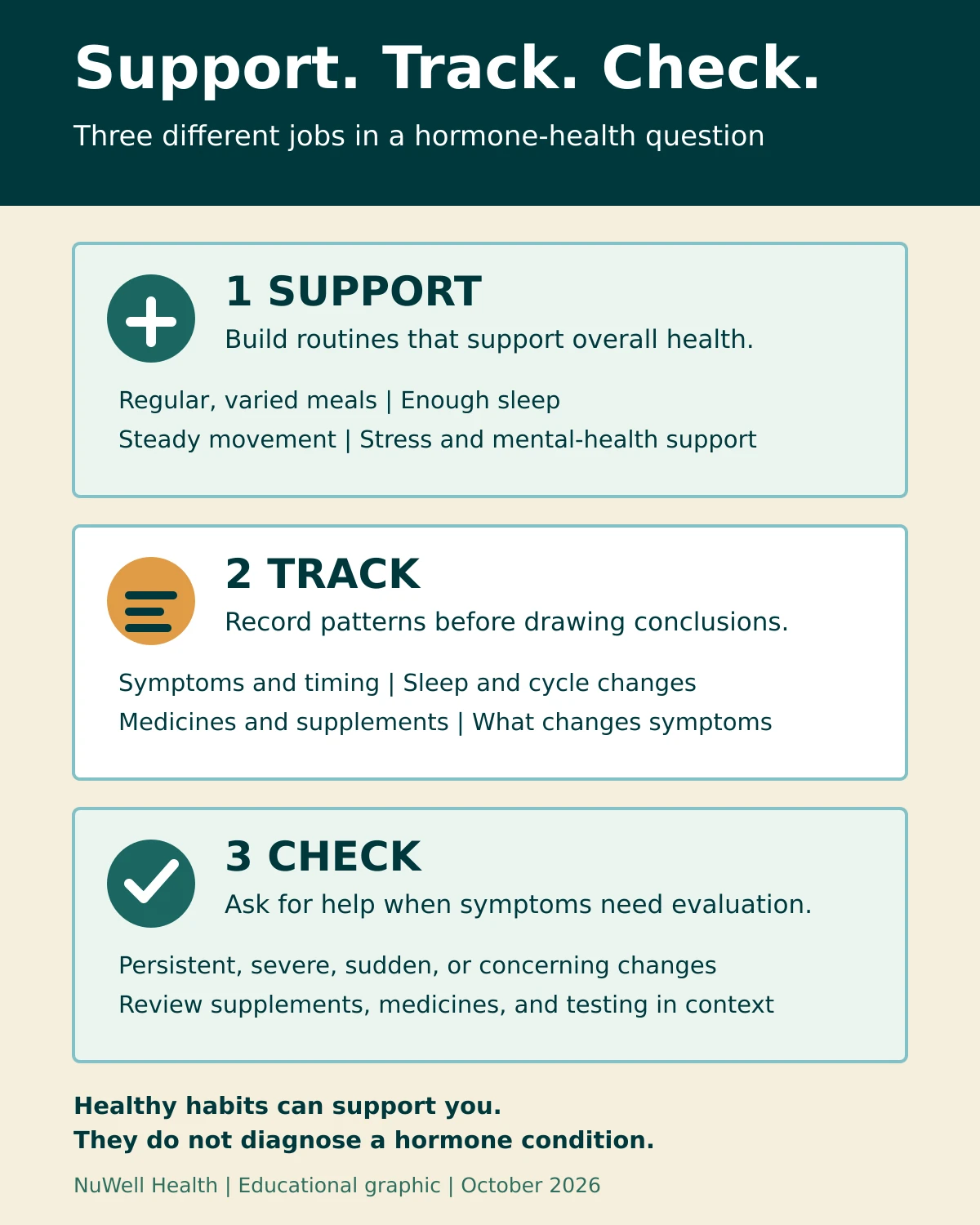
These steps work together. A healthy routine can support you while you and your care team look for other explanations.
Balancing hormones naturally with safe daily habits
Each habit below is a way of supporting your whole body. None of them is a hormone test or a treatment.
Eat regularly and build varied meals
There is no single “hormone-balancing diet.” A useful starting point is a varied eating pattern with protein foods, fiber-rich plants, fats, and carbohydrate foods that fit your needs and preferences. Regular meals may also make it easier to notice whether long gaps, very large meals, caffeine, alcohol, or certain foods affect your energy, sleep, digestion, or mood.
Avoid treating one food as a cure or one ingredient as the cause of every symptom. Very restrictive plans can be hard to keep up and may not give you enough energy or nutrients. Pregnancy, diabetes, kidney disease, an eating-disorder history, food allergies, and other health concerns call for individualized advice.
If weight or blood-sugar concerns are part of your story, NuWell’s page on metabolic and weight support explains how practitioners approach them. Medical diagnosis and treatment still belong with an appropriately licensed provider.
Protect sleep without chasing a perfect routine
The CDC says adults ages 18 to 60 generally need seven or more hours of sleep, although needs and circumstances vary. A regular sleep and wake time, morning light, a dark and quiet room, and less late-day caffeine may help some people sleep more consistently.
Poor sleep can affect energy, appetite, concentration, mood, and how manageable daily stress feels. Still, it can be a symptom rather than the cause. Talk with a medical professional if you snore loudly, stop breathing during sleep, wake gasping, have severe daytime sleepiness, or have ongoing insomnia. Do not drive when you are very sleepy.
Move regularly and adjust for your health
CDC guidance for adults is 150 minutes of moderate-intensity activity a week, plus muscle-strengthening activity on at least two days. Even so, some activity is better than none, and you can break it into smaller chunks of time (CDC: Adult Activity).
That target is a general guideline, not a test you have to pass. Start from where you are today. Pain, dizziness, pregnancy, recent illness, heart or lung concerns, disability, and a long stretch without activity may change what is right for you, so ask a qualified medical professional when you are unsure.
Address stress as part of the whole picture
Stress can affect sleep, appetite, digestion, energy, concentration, and mood. It can also make other symptoms harder to manage. Helpful support may include counseling, time outdoors, paced breathing, prayer or quiet reflection, clearer limits around work, social connection, or practical help with daily demands.
These practices do not prove that cortisol is “high,” “low,” or “depleted.” They also do not replace care for anxiety, depression, trauma, or another mental-health condition. NuWell’s page on natural health for mental well-being explains how whole-person support can work alongside counseling and medical care.
If faith matters to you, spiritual concerns can be part of the conversation. No particular belief is required, and prayer or spiritual practice does not replace medical or mental-health care.
Track patterns before drawing conclusions
A simple record often gives a clinician or practitioner better information than a long list written from memory. For two to four weeks, consider noting:
- The symptom and how strong it is
- When it starts and how long it lasts
- Sleep and wake times
- Menstrual-cycle timing, bleeding changes, hot flashes, or night sweats, when relevant
- Meals, caffeine, alcohol, and movement
- Prescription medicines, over-the-counter medicines, and supplements
- Major stressors or changes in routine
Do not use tracking to diagnose yourself. Use it to notice timing, prepare better questions, and show what has changed. If logging food or symptoms could intensify an eating disorder or health anxiety, skip the log and talk with a professional instead. For cycle-related tiredness, our guide to feeling tired before your period offers a more focused log.
Review medicines and supplements together
Medicines can affect symptoms, cycles, sleep, appetite, mood, and lab results. Supplements can also have strong effects. Bring a complete list to medical and natural-health appointments, including each product name, amount, and how often you take it.
Do not stop or change a prescription because you suspect a hormone effect. Instead, ask the prescriber who knows your history. A pharmacist can also help check for interactions.
What hormone health habits cannot do
Healthy routines may support well-being, but they cannot confirm or rule out thyroid disease, diabetes, polycystic ovary syndrome, adrenal disease, pregnancy, perimenopause, medication effects, or another medical concern. They also cannot tell you which lab test is appropriate.
Testing is most useful when it follows a thorough history, an exam, and a clear clinical question. More testing is not always better. Results can vary with time of day, cycle timing, illness, medicines, and the test method, so a qualified clinician should interpret them in context.
Natural-health support can complement diagnosis and treatment. It is not a replacement for hormone therapy, contraception, thyroid medicine, diabetes care, counseling, psychiatric care, or other appropriate treatment.
Use caution with hormone supplements and detox claims
Supplement lists for balancing hormones naturally are easy to find online. The right product, amount, and risk, however, depend on the person, the goal, other medicines, pregnancy status, health conditions, and the evidence for that use. That is why this guide does not recommend specific supplements or doses.
The FDA advises talking with a health care professional before taking a dietary supplement. Some supplements can interact with medicines, interfere with lab tests, or cause problems during surgery. The FDA also cautions that “natural” does not guarantee safety and that a supplement should not stand in for a prescription medicine or a varied diet.
Be cautious with products that promise to “reset,” “detox,” or “rebalance” hormones quickly. Some chemicals in everyday products can interfere with hormones. Even so, the National Institute of Environmental Health Sciences notes that these chemicals cannot be completely avoided, and it points to informed choices that reduce exposure. That is a very different message from a quick cleanse.
Questions worth asking before you use a supplement:
- What specific goal is this meant to address?
- What evidence supports that use?
- Could it interact with my medicines, contraception, or other supplements?
- Could it affect a medical test or surgery?
- Is it appropriate during pregnancy or breastfeeding?
- Who will watch for benefits and side effects?
When to seek medical care for possible hormone concerns
Make a medical appointment when a change is persistent, getting worse, or affecting daily life. If ongoing tiredness is your main concern, NuWell’s page on support for ongoing fatigue explains how practitioners can work alongside your medical care.
- New or ongoing fatigue, or unexplained weight change
- Frequent heart racing, or major heat or cold intolerance
- New hair loss, or marked thirst or frequent urination
- Missed or very irregular periods, or bleeding after menopause
- New sexual-function concerns
- Mood symptoms that do not improve
Abnormal bleeding deserves particular attention. The American College of Obstetricians and Gynecologists lists bleeding between periods, bleeding after sex, bleeding after menopause, bleeding that lasts more than seven days, and cycles longer than 35 days or shorter than 21 days as abnormal.
When to seek urgent help
How NuWell offers natural hormone support
NuWell offers virtual, whole-person natural-health support that looks at physical health, mental well-being, lifestyle, and spiritual concerns together. It is non-clinical and complements medical and mental-health care rather than replacing it. Practitioners may explore sleep, stress, nutrition, digestion, energy, life stage, medicines, goals, and any results you already have. Testing or supplements are not automatic.
NuWell looks for possible contributing factors without assuming that every symptom has one cause or promising that one will be found. You can learn more about NuWell’s support for hormone imbalance or meet NuWell’s practitioners. Practitioner roles and scopes differ.
Frequently asked questions
Can food help with balancing hormones naturally?
Food can support overall health and give your body energy and nutrients. It does not correct every hormone disorder, and no single food balances all hormones. Persistent symptoms may need a medical evaluation.
How long does it take to balance hormones naturally?
There is no honest universal timeline. It depends on what is causing the symptoms, whether a hormone condition is present, your overall health, and the care you are using. Be wary of fixed promises such as two weeks, 90 days, or six months.
Should I ask for a full hormone panel?
Ask what question a test is meant to answer. A clinician may choose tests based on symptoms, history, exam findings, life stage, medicines, and timing. A large panel without a clear reason can produce confusing results.
Can natural support be used with medication or counseling?
Often, yes, when the professionals involved know what you are taking and doing. NuWell’s approach is meant to complement medical care and counseling. Do not start, stop, or change medication without the prescribing professional.
Sources
- Endocrine Diseases. MedlinePlus, U.S. National Library of Medicine.
- About Sleep. Centers for Disease Control and Prevention.
- Adult Activity: An Overview. Centers for Disease Control and Prevention.
- FDA 101: Dietary Supplements. U.S. Food and Drug Administration.
- Endocrine Disruptors. National Institute of Environmental Health Sciences.
- Abnormal Uterine Bleeding. American College of Obstetricians and Gynecologists.