

Why Seeing a Food Sensitivity Specialist Could Change Your Health
A food sensitivity specialist is a medical or integrative health professional trained to identify and treat the body’s adverse reactions to specific foods — reactions that are often missed by routine checkups.
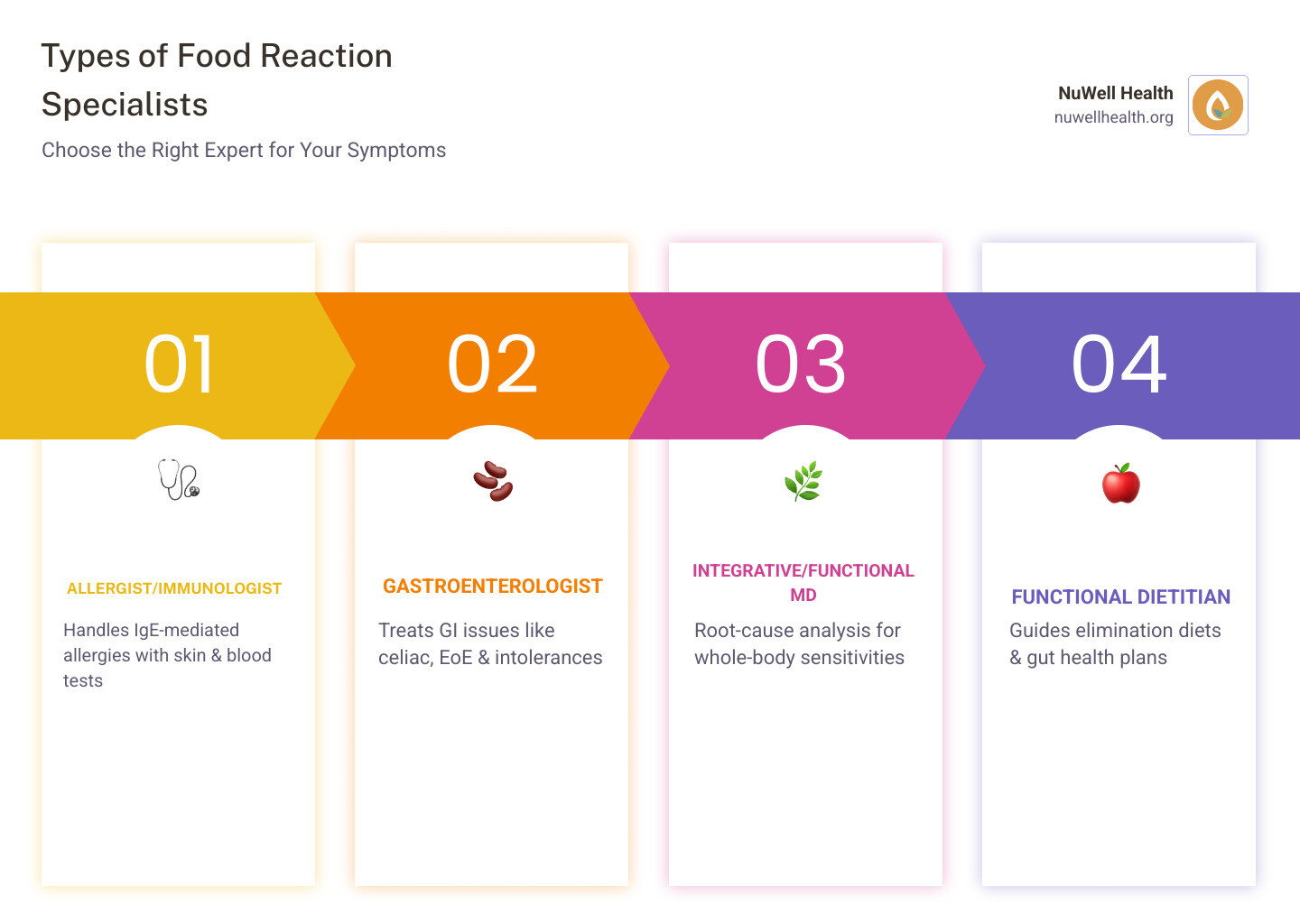
If you’re looking for the right type of specialist, here’s a quick overview:
| Type of Specialist | Best For |
|---|---|
| Allergist / Immunologist | IgE-mediated food allergies, skin and blood testing |
| Gastroenterologist | GI symptoms, celiac disease, EoE, intolerances |
| Integrative / Functional Medicine Doctor | Root-cause, whole-body approach to sensitivities |
| Registered Dietitian (Functional) | Elimination diets, nutritional planning, gut health |
Food-related symptoms are far more common than most people realize. Yet the gap between those who think they have a food issue and those who receive a proper diagnosis is enormous. Roughly 30–35% of GI patients report having a food allergy, while only 2–4% receive a confirmed diagnosis. That gap isn’t because people are imagining their symptoms — it’s because food reactions exist on a lower-level spectrum, and finding the right specialist to navigate that spectrum takes guidance.
Symptoms like bloating, brain fog, fatigue, skin flare-ups, and chronic digestive discomfort can quietly erode your quality of life. Yet many people spend years cycling through appointments without real answers.
You deserve better than that.
I’m Stephen A. Luther, MS, MEd, LPC, founder of NuWell Health, and with over 25 years of experience in integrative, whole-person care, I’ve worked alongside practitioners who address the physical roots of health — including how food sensitivities affect the mind, body, and spirit. In our years of clinical practice at NuWell Health, we have observed that identifying these hidden triggers is often the missing link for patients who have struggled with ‘unexplained’ symptoms for decades. We believe that finding the right food sensitivity specialist is one of the most important steps toward lasting wellness.
Understanding the Spectrum: Allergy, Intolerance, and Sensitivity
To find the right food sensitivity specialist, we first have to understand what is happening inside your body. The terms “allergy,” “intolerance,” and “sensitivity” are often used interchangeably in casual conversation, but in a clinical setting, they mean very different things.
Food Allergy (IgE-mediated) A true food allergy is an immediate, often severe immune response. When someone with an allergy consumes a trigger food, their immune system produces Immunoglobulin E (IgE) antibodies. This triggers a release of chemicals like histamine, leading to symptoms like hives, swelling, or even life-threatening anaphylaxis. Interestingly, while many people suspect they have an allergy, only about 2-4% of the population has a formal diagnosis.
Food Intolerance This is typically a digestive system issue rather than an immune system one. It happens when your body lacks the specific Digestive Issues enzymes needed to break down a certain food. The most famous example is lactose intolerance. An estimated 65% of the world’s population has a reduced ability to digest lactose after infancy. While uncomfortable, intolerances are generally not life-threatening.
Food Sensitivity This is the “gray area” where many of our patients at NuWell Health find themselves. Food sensitivities involve the immune system but are not IgE-mediated. They are often delayed, meaning you might eat a piece of bread on Monday and not feel the “brain fog” or joint pain until Tuesday afternoon. Because the reaction isn’t immediate, it is incredibly difficult to track without professional help.
For a deeper dive into these distinctions, explore our guide on Allergies and Food Sensitivity.
Identifying Symptoms for a Food Sensitivity Specialist
When you visit a food sensitivity specialist, they will look for symptoms that go far beyond a simple stomach ache. Because food sensitivities can trigger systemic inflammation, the symptoms can appear almost anywhere in the body.
Common signs that you are dealing with a sensitivity rather than a standard allergy include:
- Neurological: Brain fog, migraines, and chronic fatigue.
- Dermatological: Eczema, unexplained rashes, or “flushing.”
- Musculoskeletal: Joint pain and Chronic Pain and Inflammation.
- Gastrointestinal: Bloating, gas, and abdominal pain (which are the primary signs in 50% of food allergy patients).
- Immune: A feeling of being “run down” or exacerbation of Autoimmune conditions.
Common Misconceptions and Myths
There is a lot of “noise” in food testing. One of the biggest myths is that a reaction will get worse every time you have it. While this can happen with IgE allergies, sensitivities often fluctuate based on your “toxic bucket” — how much stress, environmental toxins, and other inflammatory foods you are dealing with at that moment.
Another misconception involves IgG testing. While many home kits promise to identify sensitivities via IgG blood panels, many conventional allergists argue these tests merely show what you have eaten recently rather than what you are sensitive to. However, some emerging research suggests IgG-guided diets may help with IBS. At NuWell Health, we believe in using these as one piece of a much larger puzzle, never the sole diagnostic tool.
Finally, the idea that infants should avoid all allergens is outdated. Modern research suggests that introducing allergenic foods around 4-6 months may actually help prevent allergies from developing.
When to Consult a Food Sensitivity Specialist
How do you know it’s time to stop Googling and start booking? If you find yourself adjusting your entire life around your “mystery symptoms,” it’s time.
If you are struggling with Weight Management despite eating “healthy” foods, or if you suspect a Hormone Imbalance is being driven by gut inflammation, a specialist can help. Persistent bloating that makes you look six months pregnant by the end of the day is not “just something you have to live with.”

The Role of Integrative and Functional Medicine
This is where the NuWell Health philosophy truly shines. Conventional medicine is excellent at stopping an anaphylactic reaction, but it often struggles with the “walking wounded” — people who aren’t dying but aren’t truly living either.
Integrative and functional medicine doctors look at the whole person. They don’t just ask “What food is the problem?” They ask “Why is your gut reacting this way?” They focus on:
- Microbiome Balance: Managing the 300 trillion microorganisms in your gut.
- Root-Cause Identification: Looking at stress, toxins, and nutrient deficiencies.
- Spiritual Wellness: Recognizing that chronic illness affects the spirit. We approach healing from a Christian perspective, believing that the body is “fearfully and wonderfully made” with an innate ability to heal when the right obstacles are removed.
At NuWell Health, we have found that a holistic approach, focusing on the body’s innate healing capabilities, is key to addressing food sensitivities. We don’t just want to give you a list of “bad” foods; we want to restore your gut so you can enjoy God’s bounty again.
Collaborative Care: Gastroenterologists and Allergists
In complex cases, you may need a multidisciplinary team. For example, conditions like Eosinophilic Esophagitis (EoE) — a chronic immune system disease where white blood cells build up in the esophagus — often require a gastroenterologist to perform an endoscopy and an allergist to identify the food triggers.
Leading institutions like Rush University and the Cleveland Clinic have pioneered these collaborative clinics, ensuring that the “plumbing” (the GI tract) and the “security system” (the immune system) are both addressed simultaneously.
Diagnostic Tools and Testing Methods
When you see a food sensitivity specialist, they have a toolkit of tests to help solve the mystery. No single test is 100% perfect. For instance, skin prick and IgE tests for food allergies have a sensitivity of about 50% and a specificity of 90% — meaning they are better at telling you what you aren’t allergic to than what you are.
| Test Type | How it Works | Best For |
|---|---|---|
| Skin Prick Test | Small amount of allergen placed under the skin | Immediate IgE allergies |
| Oral Food Challenge | Consuming the food in increasing doses under medical supervision | The “Gold Standard” for diagnosis |
| Elimination Diet | Removing suspect foods for 4-6 weeks, then reintroducing | Sensitivities and Intolerances |
| Blood Test (IgE) | Measures antibody levels in the blood | Confirming true allergies |
| Hydrogen Breath Test | Measures gases produced by gut bacteria | Lactose or fructose intolerance |
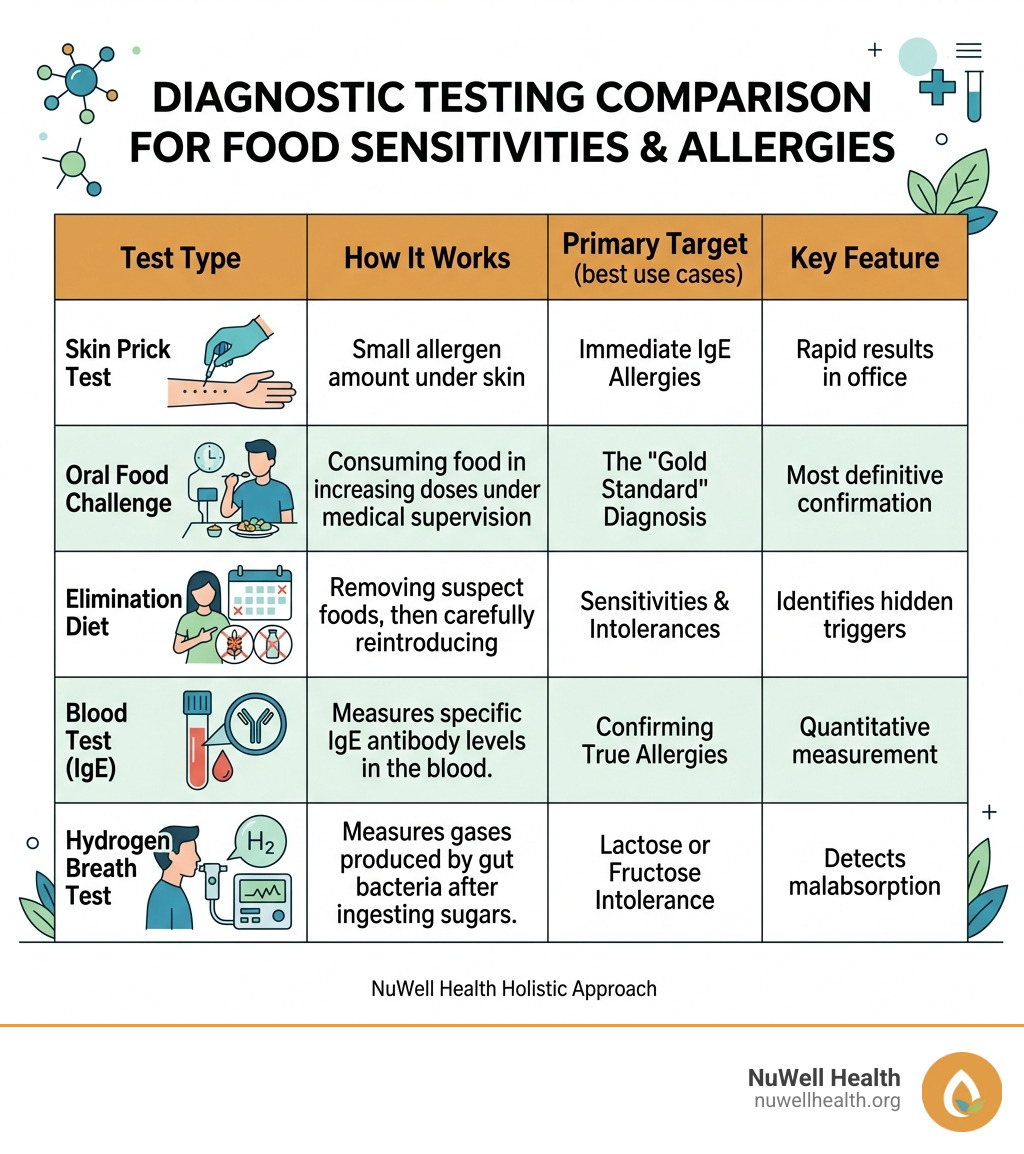
Testing Methods Used by a Food Sensitivity Specialist
The Gold Standard remains the Oral Food Challenge (OFC). This is conducted in a specialist’s office where you eat tiny, increasing amounts of a food to see if a reaction occurs. It is the most definitive way to rule an allergy in or out.
We also see the rise of Component-Resolved Diagnostics. Instead of just testing if you are allergic to “peanuts,” this test looks at the specific proteins within the peanut to determine if you are at risk for a severe reaction or a mild one (like Oral Allergy Syndrome).
At NuWell Health, we guide our patients through appropriate testing to uncover the true root causes. We often find that a strictly supervised elimination diet is the most empowering tool a patient can use, as it provides direct, lived evidence of how certain foods affect their unique body.
Preparing for Your Specialist Visit
To get the most out of your appointment with a food sensitivity specialist, you need to be a bit of a detective.
- Keep a Food Diary: Track everything you eat and every symptom you feel for at least two weeks.
- Medication Review: Some medications, like antihistamines, can interfere with skin testing. Ask your specialist when to stop taking them (usually one week prior).
- Symptom Tracking: Note the timing. Did the headache start 20 minutes after the meal or 20 hours later?
- Medical History: Bring records of any previous testing or family history of autoimmunity.
Holistic Treatments and Emerging Therapies
Once a sensitivity is identified, the goal isn’t just avoidance — it’s restoration.
At NuWell Health, we emphasize anti-inflammatory diets and gut restoration as foundational to healing; our experience has shown that when patients commit to these protocols, they often report a significant improvement in both physical comfort and mental clarity. This often involves a “4R” or “5R” protocol: Remove (triggers), Replace (enzymes), Reinnoculate (probiotics), Repair (nutrients like L-glutamine), and Relax (stress management).

Emerging Treatments: OIT and TIP
For those with severe allergies, there is new hope. Oral Immunotherapy (OIT) involves eating tiny, medically-supervised amounts of an allergen to desensitize the immune system. Programs like the Tolerance Induction Program (TIP) at the Food Allergy Institute report a 99% success rate in helping patients reach “food freedom,” where they can eventually eat the foods they once feared.
Long-Term Management and Lifestyle Support
Managing food sensitivities is a marathon, not a sprint. It requires:
- Nutritional Counseling: Working with a dietitian to ensure you aren’t missing key nutrients while avoiding certain food groups.
- Microbial Health: Prioritizing fermented foods and fiber to keep your “good” bacteria thriving.
- Stress Reduction: High stress makes the gut “leaky,” which can worsen sensitivities.
- Empowering Self-Care: Learning to read labels and advocate for yourself at restaurants.
Frequently Asked Questions about Food Sensitivities
How do I find a reputable specialist near me?
The American Academy of Allergy, Asthma & Immunology (AAAAI) and organizations like FARE (Food Allergy Research & Education) provide directories of board-certified specialists. Always call ahead to ensure the provider specifically handles non-IgE sensitivities if that is your concern.
Can food sensitivities be reversed through diet?
In many cases, yes! Unlike a true genetic allergy, a sensitivity is often a sign of a “leaky” or imbalanced gut. By removing the triggers and healing the gut lining, many people find they can eventually reintroduce those foods in moderation.
What is the difference between a sensitivity and a life-threatening allergy?
An allergy involves the IgE part of the immune system and can cause anaphylaxis (closing of the throat, drop in blood pressure). A sensitivity is a slower, non-life-threatening immune response that causes chronic symptoms like fatigue and digestive distress.
Conclusion
Navigating food reactions can feel overwhelming, but you don’t have to do it alone. Whether you are dealing with a clear-cut allergy or a frustrating, hidden sensitivity, a food sensitivity specialist is your partner in reclaiming your health.
At NuWell Health, we are dedicated to holistic natural health that treats the mind, body, and spirit. We believe that by addressing the root causes of your symptoms and focusing on preventive lifestyle changes, you can move past the limitations of food hypersensitivity. Our approach is rooted in a Christian perspective of care, empowering you to take charge of your wellness journey.
Are you ready to stop guessing and start healing? Start your journey to food freedom with us today.
This article was researched with AI and heavily edited by Stephen Luther for accuracy and relevance.
Stephen Luther is the Executive Director and Founder of NuWell Health, along with its sister programs Grace Christian Counseling, Grace Recovery Services, WPA Counseling, and NuWell Online Counseling and Coaching.
He holds a Master’s degree in Education from the University of Georgia and a Master’s degree in Marriage and Family Therapy from Duquesne University. He is a licensed professional counselor in Pennsylvania.
With over 25 years of experience, Steve specializes in whole-person healing that integrates clinical excellence with faith-honoring care. At NuWell Health, he and his team focus on helping individuals and families overcome emotional, relational, and physical challenges through a holistic mind-body-spirit approach, including attachment-based therapy, trauma-informed care, and practical strategies for lasting restoration.
This guide is for educational and spiritual encouragement and is not a substitute for personalized professional counseling. If you are in crisis, please reach out for immediate help.