

Why Mind Root Cause Treatments Are Changing How We Heal
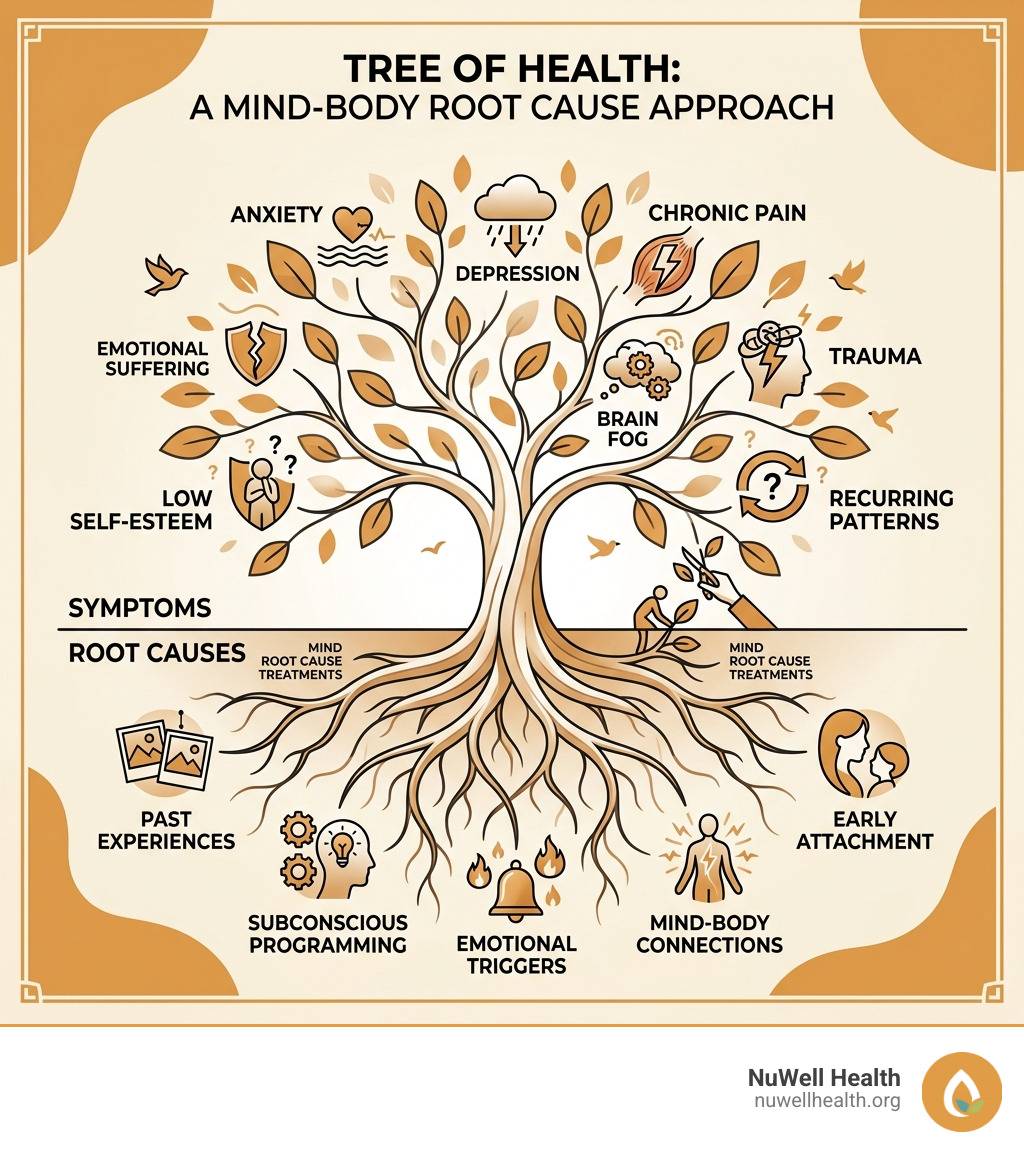
Mind root cause treatments are therapeutic approaches that go beyond managing symptoms — they identify and address the underlying causes of emotional, mental, and physical suffering.
Here is a quick overview of what they involve:
- What they are: Holistic therapies targeting the origin of symptoms, not just the surface-level experience
- Who they help: People struggling with anxiety, depression, trauma, chronic pain, low self-esteem, or recurring patterns that don’t respond to conventional treatment
- How they work: By exploring subconscious programming, past experiences, emotional triggers, and mind-body connections
- Common techniques: Cognitive Behavioral Therapy (CBT), Neuro-Linguistic Programming (NLP), guided imagery, breathwork, hypnotherapy, and emotional release work
- How they differ from talk therapy: Instead of exploring feelings week after week, root cause approaches aim to identify why the feelings exist and resolve them at the source
About 133 million Americans are living with a chronic condition — and many cycle through treatments that only dull the symptoms without ever finding real relief. If that sounds familiar, you are not alone, and it is not a personal failure. It may simply mean the root has not been reached yet.
As Anthony J. D’Angelo once wrote, “When solving problems, dig at the roots instead of just hacking at the leaves.” That single idea captures what this entire field of healing is built on.
Understanding Mind Root Cause Treatments and How They Work
At NuWell Health, we believe that the human experience is an interconnected web. When you experience “brain fog,” persistent anxiety, or chronic fatigue, your body isn’t malfunctioning by accident; it is communicating. Mind root cause treatments utilize a process called Root Cause Analysis to decode these messages.
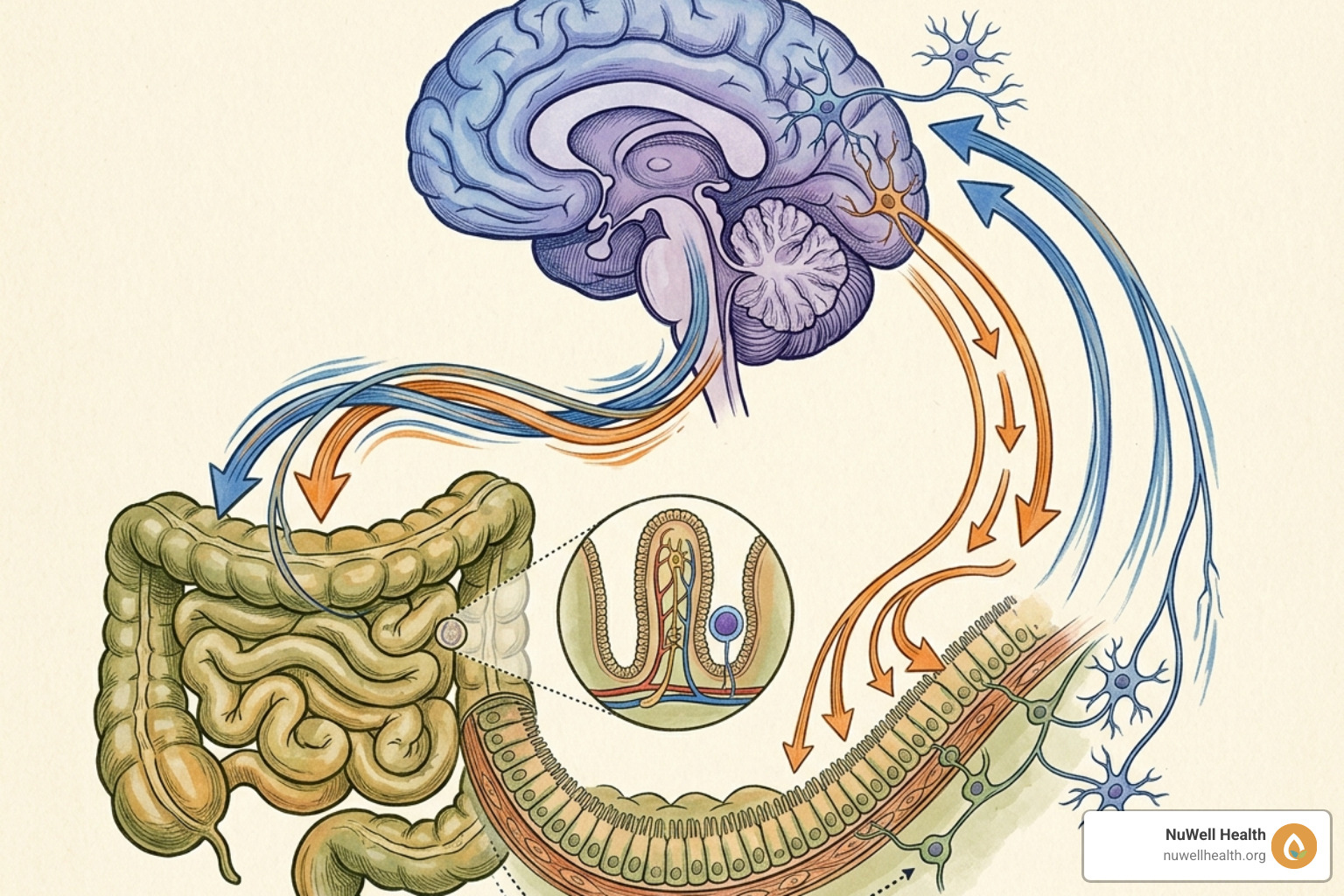
Instead of asking, “How can we suppress this feeling?” we ask, “What is the origin of this signal?” This approach recognizes the powerful brain-gut axis and the way our biology reacts to our biography. Research shows that our mental health problems are often caused by a complicated combination of life events, biological factors, and social environments.
By identifying subconscious programming—those “automatic” thoughts and behaviors we learned in childhood to survive—we can begin to rewire the brain. This is why your holistic mind-body-spirit connection matters; you cannot treat one part of the person without acknowledging the whole.
The Core Principles of Mind Root Cause Treatments
The foundation of this work rests on several core pillars:
- Holistic Balance: We don’t just look at your thoughts. We look at your nutrition, your sleep, your relationships, and your faith.
- Emotional Release: Emotions are not just “feelings”; they are physiological events. If an emotion isn’t fully processed, it can become “trapped” in the body, leading to somatic symptoms.
- Cellular Memory and Subconscious Triggers: Our bodies often remember what our conscious minds have tried to forget. These stored memories act as triggers, causing us to overreact to present-day stressors because they feel like past dangers.
Understanding the mind-body connection in mental health allows us to see that a panic attack might be a physical “re-living” of an old trauma, rather than a random chemical glitch.
Root Cause Therapy vs. Traditional Talk Therapy
While traditional talk therapy is wonderful for providing a safe space to be heard, it often operates primarily in the conscious mind. You might spend years talking about your problems without ever shifting the underlying “engine” that creates them.
| Feature | Traditional Talk Therapy | Root Cause Therapy |
|---|---|---|
| Primary Focus | Symptom management & coping | Identifying & resolving origins |
| Mind Level | Conscious/Analytical | Subconscious/Unconscious |
| Timeframe | Often long-term (years) | Targeted & goal-oriented |
| Goal | Managing daily life | Permanent pattern shifting |
| Empowerment | Therapist-led insights | Client-led self-healing |
By moving into the unconscious, we can address the treatment options for mental health that actually create long-term change. We want to put you in the “driving seat” of your own healing.
Identifying the Biological and Emotional Triggers
In April 2026, the data is clearer than ever: our physical state dictates our emotional resilience. About 81 million Americans are challenged by multiple chronic conditions, and these are often linked to a dysregulated HPA axis (the hypothalamus-pituitary-adrenal axis).
When we are under constant stress, our bodies pump out cortisol. Over time, this dysregulation leads to “burnout,” but it also creates a fertile ground for anxiety and depression. We often find that “mental” issues have “physical” roots:
- Magnesium Deficiency: Estimated to affect 50–70% of the population, this deficiency reduces GABA (our “calm” neurotransmitter) and amplifies stress.
- Sleep Deprivation: Just one night of poor sleep can amplify amygdala reactivity by 60%, making everything feel like a crisis.
- Nutritional Gaps: A 2011 study showed a 20% reduction in anxiety just by supplementing with Omega-3 fatty acids.
By focusing on natural health and mental health, we can address these biological triggers alongside emotional ones. For those seeking self-care for PTSD or depression, understanding these physical contributors is life-changing.
Addressing Anxiety and Depression through Mind Root Cause Treatments
We often hear that depression is just a “chemical imbalance.” However, recent research suggests this is an oversimplification. Depression and anxiety are frequently symptoms of neuroinflammation—essentially, the brain is “on fire” due to stress, poor gut health, or unresolved trauma.
The gut produces approximately 90% of the body’s serotonin. If your gut microbiome is out of balance, your mood will be too. We help patients stay present while we address the biological “fire” through nutrition and lifestyle changes.
The Role of Trauma and Past Experiences
Trauma isn’t just “what happened”; it’s how your nervous system processed what happened. The landmark ACE (Adverse Childhood Experiences) study found a direct link between childhood adversity and adult chronic illness.
When we are getting to the bottom of emotional pain and trauma, we look for somatic symptoms—physical pain or tension that has no clear medical cause. This is the body’s way of “holding” a memory. Through nervous system regulation, we teach the body that the danger has passed, allowing the “fight-flight-freeze” response to finally turn off.
Essential Techniques Used in Root Cause Healing
To reach the subconscious, we use a variety of specialized tools. We don’t just “talk”; we do the work.
- NLP (Neuro-Linguistic Programming): Changing the “language” of your thoughts to shift your perspective.
- CBT (Cognitive Behavioral Therapy): Identifying and challenging the distorted beliefs that keep you stuck.
- Guided Imagery: Entering a relaxed state to communicate directly with the subconscious mind.
- Regression & Future Projection: Looking back to heal the “younger self” and looking forward to “test” your new, healthy responses.
- Breathwork: Using the breath to physically discharge stored stress from the nervous system.
These techniques help individuals understand the different types of mental health problems they face and provide a roadmap for exiting those patterns.
Integrating Functional Medicine and Holistic Modalities
We don’t stop at the mind. NuWell Health integrates the principles of functional medicine to ensure your “hardware” (your body) can support your “software” (your mind).
This involves:
- Nutritional Counseling: Eating to reduce inflammation and support neurotransmitters.
- Detoxification: Clearing out “emotional toxins” and chemical environmental stressors.
- Naturopathic Principles: Utilizing the healing power of nature and personalized care plans.
If you’ve ever wondered, “What is Naturopathic Medicine?“, it is simply the practice of treating the person, not the disease, using the most natural means possible.
What to Expect: The Journey of a Root Cause Session
Preparation: We ask you to come with an open mind and a specific goal. Frequency: Most clients see the best results with weekly or bi-weekly sessions. Integration: The real healing happens between sessions as you apply your new insights to your daily life.
We prioritize roots over remedies, meaning we won’t just give you a “coping skill” to get through the day; we want to resolve the issue so you don’t need to cope with it anymore.
Finding a Qualified Practitioner and Avoiding Red Flags
Because mind root cause treatments are powerful, it is vital to work with a qualified professional.
Green Flags:
- Board-certified clinicians or licensed therapists.
- A clear explanation of their methodology.
- A focus on your empowerment, not your dependence on them.
Red Flags:
- Unrealistic promises of “instant” cures for complex trauma.
- Practitioners who ignore your physical health or medical history.
- A lack of professional boundaries.
You can explore more about choosing the right help here.
Frequently Asked Questions about Root Cause Therapy
How many sessions are typically needed for results?
Every person is unique. While some experience significant shifts in 4–6 sessions, chronic issues or deep-seated childhood trauma may require a longer commitment. We track progress consistently to ensure you are moving toward your goals.
Are there any risks or side effects to this approach?
The primary “side effect” is temporary emotional discomfort. When you stop “hacking at the leaves” and start “digging at the roots,” you might feel worse before you feel better. This is a natural part of the emotional detox process. We provide the tools to manage this safely.
How does spirituality fit into root cause healing?
At NuWell Health, we integrate spirituality from a Christian perspective. We believe that every person is created with a purpose and that true healing involves restoring your relationship with yourself, others, and God. We focus on faith-based resilience and the inner peace that comes from knowing you are valued and loved.
Conclusion
Healing is not about “fixing” a broken version of yourself; it is about removing the obstacles that prevent your true, healthy self from shining through. By choosing mind root cause treatments, you are moving away from the cycle of symptom management and toward a life of preventive wellness and empowering self-care.
Whether you are dealing with chronic pain, anxiety, or a sense of being “stuck,” there is a way forward that honors your mind, body, and spirit.
Discover Natural Health for Mental Wellness
This article was researched with AI and heavily edited by Jordan Oliver for accuracy and relevance.
Jordan is an author, ordained minister, and online host for His Glory TV, sharing biblically grounded insights on faith, prayer, and spiritual growth. She is the co-founder of Triple-Braided Cord Co., an intercessory prayer and healing ministry inspired by Ecclesiastes 4:12.
Jordan holds a Bachelor’s degree in Communications and Religious Studies from High Point University and is a certified Spiritual Life Coach through iCoachLife in Nashville, Tennessee. Drawing from her ministry, coaching, and academic experience, she creates trustworthy, faith-based content that helps readers grow in their relationship with God.
Learn more about Jordan here.