

What a Food Sensitivity Test Can and Cannot Tell You
A food sensitivity test may seem like a fast answer for bloating, headaches, fatigue, skin changes, or unexplained digestive discomfort. But the quick answer is this: many commercial blood tests that measure food IgG or IgG4 antibodies are not considered reliable tools for diagnosing food sensitivities by major allergy organizations.
- Food allergy: An immune reaction, often involving IgE antibodies, that can be serious or life-threatening.
- Food intolerance: Trouble digesting a food or ingredient, such as lactose intolerance. It does not involve an allergy immune response.
- Food sensitivity: A broad, nonstandard term often used for symptoms that appear after eating certain foods. It needs careful, individualized evaluation.
At NuWell Health, we have found that recurring symptoms are rarely solved by a single test result alone. A person’s foods, stress level, sleep, medications, gut health, and daily routines can all affect how they feel. The goal is not to create a long list of foods to fear. It is to identify meaningful patterns and support a nourishing, sustainable way of eating.
This guide explains what food sensitivity tests measure, why test claims can conflict, and what more dependable paths can help uncover possible food triggers safely.
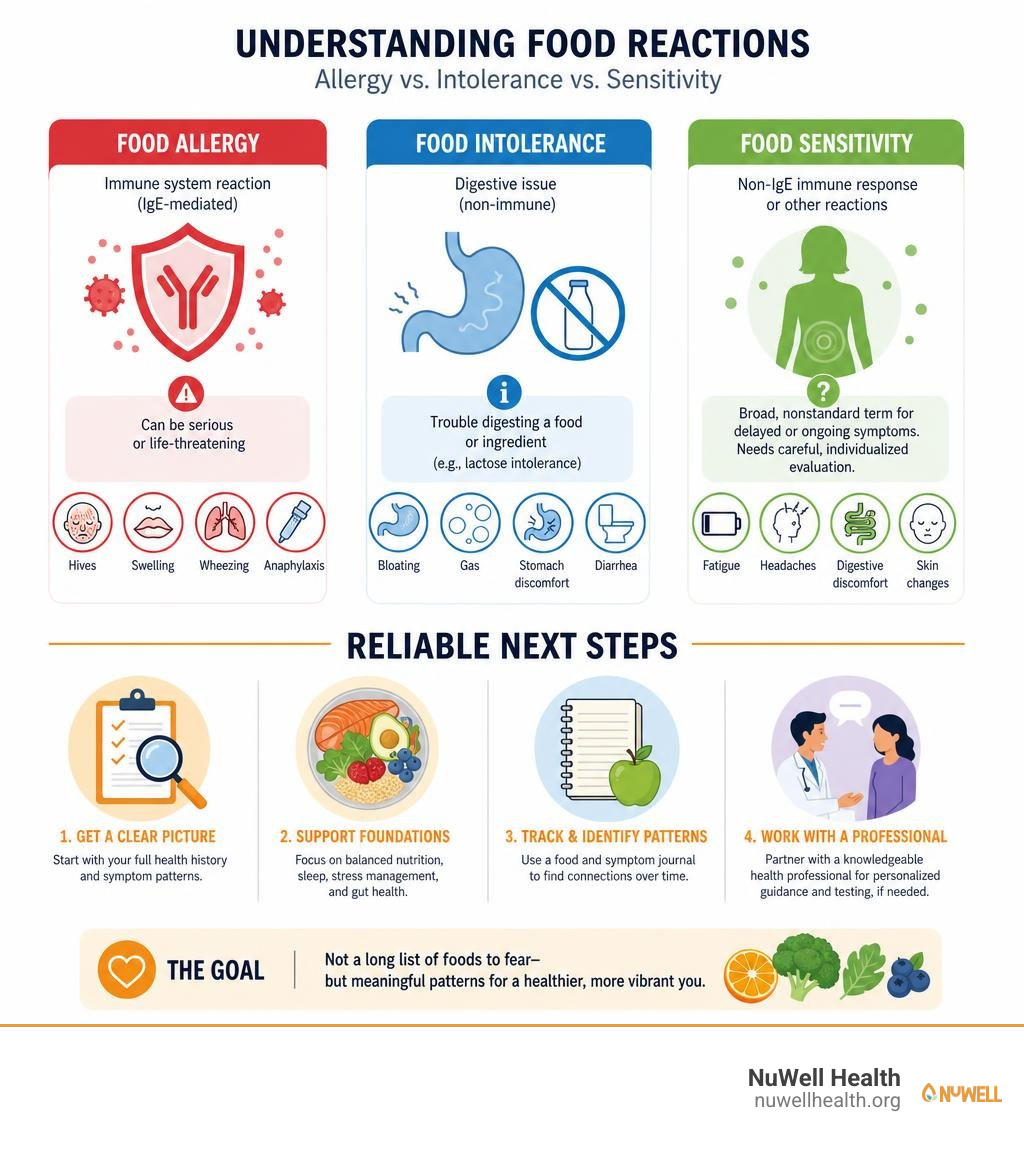
Understanding Food Reactions: Allergy vs. Intolerance vs. Sensitivity
To make sense of testing, it helps to understand how reactions to food differ inside the human body. People often use the terms “allergy,” “intolerance,” and “sensitivity” interchangeably, but they refer to completely distinct physiological mechanisms.
A true food allergy is an immune system response typically mediated by Immunoglobulin E (IgE) antibodies. When someone with a food allergy eats even a trace amount of a trigger food, IgE antibodies signal the immune system to release chemicals like histamine. This causes rapid reactions such as hives, swelling, wheezing, or life-threatening anaphylaxis.
A food intolerance is a non-immunologic reaction, meaning the immune system is not involved. Intolerances usually stem from a chemical or enzymatic digestive issue. For instance, lactose intolerance occurs when the body lacks sufficient lactase enzymes to break down milk sugars. Similarly, reactions to natural food compounds like histamine or food additives like sulfites represent digestive or metabolic challenges rather than an antibody response.
A food sensitivity is generally described as a delayed, non-IgE reaction that can cause subacute, chronic symptoms like bloating, fatigue, brain fog, or joint aching. Because the term “sensitivity” is not formally defined in medical classification systems, it is frequently used to describe any negative symptom that lacks a clear IgE allergy pathway.
| Reaction Type | Primary Mechanism | Onset of Symptoms | Key Examples |
|---|---|---|---|
| Food Allergy | Immune-mediated (primarily IgE antibodies) | Immediate (minutes to 2 hours) | Peanut anaphylaxis, severe hives from shellfish |
| Food Intolerance | Non-immunologic (enzymatic deficiency or metabolic issue) | Gradual (30 minutes to several hours) | Lactose intolerance, fructose malabsorption |
| Food Sensitivity | Varied/Non-IgE (often debated, linked to gut mucosal permeability) | Delayed (several hours up to 3 days) | Chronic bloating from specific grains, post-meal brain fog |
For a deeper look into how gut reactions develop and how they differ, read our guide on Food Allergies and Intolerances: The Ultimate Guide to Gut Reactions.
Symptoms and Associated Health Conditions
When people seek a food sensitivity test, it is usually because they are dealing with lingering, unexplained physical complaints. At NuWell Health, we have found that these delayed symptoms can span across multiple body systems:
- Gastrointestinal distress: Persistent gas, abdominal bloating, irregular bowel movements, diarrhea, or constipation. These symptoms frequently overlap with Irritable Bowel Syndrome (IBS) or Inflammatory Bowel Disease (IBD).
- Dermatological issues: Eczema flare-ups, unexplained rashes, or persistent itching. To explore how diet and skin balance connect, see our Eczema Elimination Diet Guide: Say Goodbye to the Itch.
- Musculoskeletal discomfort: Joint pain, stiffness, or systemic aches that worsen without a clear physical injury.
- Energy and mood changes: Chronic fatigue, sluggishness, difficulty concentrating, or post-meal brain fog.
- Weight management challenges: Difficulty managing weight due to systemic fluid retention and metabolic strain associated with chronic gut irritation.
Because these symptoms are diffuse and delayed, identifying the responsible food item without a clear strategy can feel overwhelming.
The Truth About Commercial Food Sensitivity Test Options

Commercial direct-to-consumer food sensitivity test kits have become widely popular. Many of these products test for Immunoglobulin G (IgG) or Immunoglobulin G4 (IgG4) antibodies using a simple finger-prick blood sample. Some broad commercial panels measure IgG reactivity against hundreds of items—including standard staples, alternative proteins, and novel foods.
However, scientific research from 2025 and earlier clinical consensus show that measuring IgG antibodies in blood is not a validated method for diagnosing food sensitivities or intolerances.
When you digest food, your immune system naturally exposes itself to food proteins. The immune system produces IgG antibodies—specifically IgG4—as a normal physiological response to this exposure. In immunology, the presence of food-specific IgG antibodies is widely recognized as a sign of immune tolerance and repeated exposure, rather than a sign of pathology or hypersensitivity. Research has demonstrated that infants with higher levels of food-specific IgG4 antibodies are actually more likely to tolerate those foods as they grow into childhood.
How At-Home Food Sensitivity Test Kits Compare to Clinical Evaluation
When comparing direct-to-consumer test kits with clinical evaluations, the primary difference lies in diagnostic accuracy and interpretation.
At-home kits evaluate blood, saliva, or stool samples against photometric binding assays. While these kits generate precise numerical scores showing high or low binding reactivity, high binding simply indicates that your body has recently encountered and recognized that food protein.
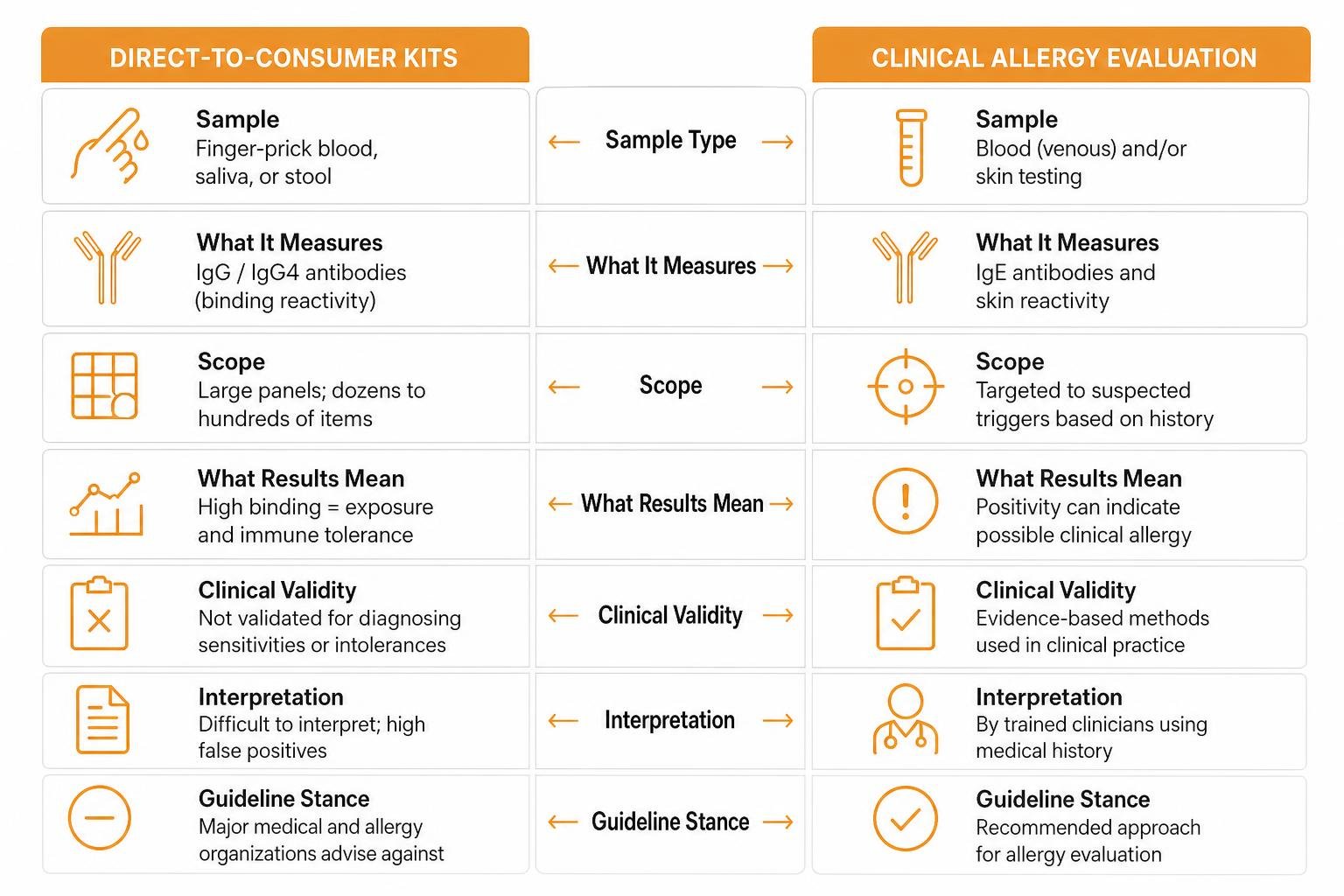
Clinicians and board-certified allergists evaluate food reactions through targeted IgE blood assays, skin prick testing, and medical history reviews. Furthermore, non-blood consumer methods like saliva testing often lack physiological plausibility for identifying food triggers. To understand why saliva tests fall short, review The Truth About Saliva-Based Food Sensitivity Testing.
Interpreting Food Sensitivity Test Results and Medical Guidelines
Major medical and allergy organizations across the globe explicitly advise against using IgG or IgG4 blood testing to diagnose food sensitivities or intolerances.
- American Academy of Allergy, Asthma & Immunology (AAAAI): Does not endorse at-home IgG allergy or sensitivity testing, noting that IgG antibodies are an expected bodily response to food ingestion.
- Canadian Society of Allergy and Clinical Immunology (CSACI): Strongly cautions against food-specific IgG testing, emphasizing that it lacks scientific validity and leads to inappropriate diagnosis.
- European Academy of Allergy and Clinical Immunology (EAACI): Confirms that IgG4 represents immunological tolerance and exposure rather than disease.
At NuWell Health, we have found that when patients receive direct-to-consumer test reports showing high reactivity to dozens of daily staples—such as eggs, wheat, milk, or almonds—they often experience significant anxiety. Discussions on patient platforms, such as those found on Mayo Clinic Connect, highlight how commercial panels frequently yield inconsistent results that do not align with real-world eating experiences.
Uncovering Root Causes: Elimination Diets and Food Diaries

Because commercial IgG tests do not accurately isolate food triggers, a structured, patient-centered elimination diet combined with detailed food logging remains the gold standard for uncovering non-IgE food reactions.
Rather than removing dozens of foods all at once based on an unvalidated panel, a clinical elimination strategy isolates suspect items systematically while maintaining proper overall nutrition.
At NuWell Health, we have found that an effective home evaluation follows a disciplined protocol:
- Establish a Clean Baseline: Eat a baseline diet composed of simple, minimally processed, fresh whole foods for 1 to 2 weeks until baseline symptoms settle.
- Select One Target Food: Choose a single suspect food or food group to evaluate (for example, dairy or specific grain varieties).
- Execute a 3-5 Day Reintroduction Window: Introduce a normal portion of the test food once or twice daily for 3 to 5 consecutive days while keeping all other dietary and lifestyle variables constant.
- Log Symptoms and Delayed Responses: Keep a daily diary recording food intake, stool consistency, energy levels, skin changes, joint aches, and mood. Delayed responses can take 24 to 72 hours to manifest.
- Observe and Wash Out: If symptoms appear, remove the food and wait until symptoms completely resolve before testing the next item. If no symptoms occur after 5 days, the food is generally well-tolerated.
During this process, it is critical to look closely at ingredient labels. Hidden non-food triggers like sugar alcohols (sorbitol, mannitol, xylitol) or specific processing oils (such as corn or soybean oil) frequently cause gastrointestinal distress that people misattribute to whole foods.
The Risks of Following Unverified Restrictive Diets
Eliminating broad categories of food based on an inaccurate food sensitivity test carries genuine health risks:
- Nutritional Deficiencies: Unnecessary removal of key food groups can lead to inadequate intake of iron, calcium, vitamin B12, or essential fatty acids.
- Microbiome Imbalance: The gut microbiome thrives on a diverse array of dietary fibers and polyphenols. Severe dietary restriction starves beneficial gut microbes, worsening digestive resilience over time.
- Food Fear and Anxiety: Restricting dozens of foods simultaneously can foster an unhealthy relationship with food, social isolation during mealtimes, and unnecessary stress—which itself triggers gut pain through the gut-brain connection.
At NuWell Health, we encourage a preventive mindset that focuses on root-cause healing, gut barrier restoration, and expanding the diet rather than living in fear of food.
Safe and Reliable Alternatives for Identifying Food Triggers
If you are dealing with persistent digestive distress, fatigue, or inflammation, work with qualified healthcare professionals who understand evidence-based diagnostics and holistic care.
- Board-Certified Allergists: An allergist can perform skin prick tests and order food-specific IgE blood tests to rule out true, life-threatening food allergies.
- Oral Food Challenges: Conducted under medical supervision, an oral food challenge is the most definitive clinical test for verifying specific food reactions.
- Registered Dietitians and Specialists: A dietitian trained in digestive health can help design an elimination protocol that meets your nutritional needs while systematically identifying root triggers. Find out more about working with a expert in The Ultimate Guide to Finding a Food Sensitivity Specialist.
At NuWell Health, we have found that combining sound clinical guidance with supportive natural lifestyle modifications yields the most sustainable improvements. By keeping stress low, prioritizing rest, eating unadulterated whole foods, and relying on natural health principles from a Christian perspective, you empower your body to heal from within.
Frequently Asked Questions About Food Sensitivity Testing
Can a food sensitivity test help with weight loss or chronic pain?
While some commercial test providers claim that eliminating IgG-reactive foods promotes rapid weight loss or relieves joint pain, these claims are not supported by rigorous clinical evidence. However, identifying genuine dietary triggers through a structured elimination protocol can reduce systemic gut irritation, fluid retention, and discomfort. At NuWell Health, we have found that addressing root causes—such as gut dysbiosis, chronic stress, and ultra-processed food consumption—leads to far more sustainable weight management and overall pain reduction than relying on quick-fix blood panels.
Are at-home IgG blood tests scientifically proven to diagnose sensitivities?
No. Leading medical bodies, including the AAAAI and CSACI, explicitly state that food-specific IgG and IgG4 blood tests do not diagnose food sensitivities or intolerances. Elevated IgG levels demonstrate normal immune exposure and tolerance to foods you eat regularly, not an adverse clinical reaction.
What is the most accurate way to discover personal food triggers?
The most reliable, evidence-based method to identify personal food triggers is a professional-guided elimination diet paired with a detailed food and symptom diary. By removing suspect foods for a short period and reintroducing them one at a time over a 3-to-5-day window, you can directly observe how your body reacts without relying on unproven lab panels.
Conclusion
A food sensitivity test promised in a commercial kit may offer convenient answers, but scientific consensus clarifies that IgG blood tests reflect peaceful immune exposure rather than underlying illness. Relying on broad, unvalidated panels often leads to unnecessary anxiety, extreme dietary restrictions, and potential nutritional deficiencies.
True health comes from listening to your body, nurturing your digestive system, and resolving the root causes of physical imbalance. By relying on structured elimination diets, wholesome single-ingredient foods, and supportive guidance from registered healthcare professionals, you can restore gut balance and enjoy a varied, nourishing diet.
At NuWell Health, we have found that integrating thoughtful, natural lifestyle choices with clinical wisdom allows individuals to recover true mind-body vitality safely and sustainably. To learn more about restoring your gut health naturally, explore The Definitive Guide to Food Sensitivity Testing.
This article was researched with AI and heavily edited by Jordan Oliver for accuracy and relevance.
Jordan is an author, ordained minister, and online host for His Glory TV, sharing biblically grounded insights on faith, prayer, and spiritual growth. She is the co-founder of Triple-Braided Cord Co., an intercessory prayer and healing ministry inspired by Ecclesiastes 4:12.
Jordan holds a Bachelor’s degree in Communications and Religious Studies from High Point University and is a certified Spiritual Life Coach through iCoachLife in Nashville, Tennessee. Drawing from her ministry, coaching, and academic experience, she creates trustworthy, faith-based content that helps readers grow in their relationship with God. Learn more about Jordan here.