

Does GERD Cause Slow Digestion? Understanding the Overlap
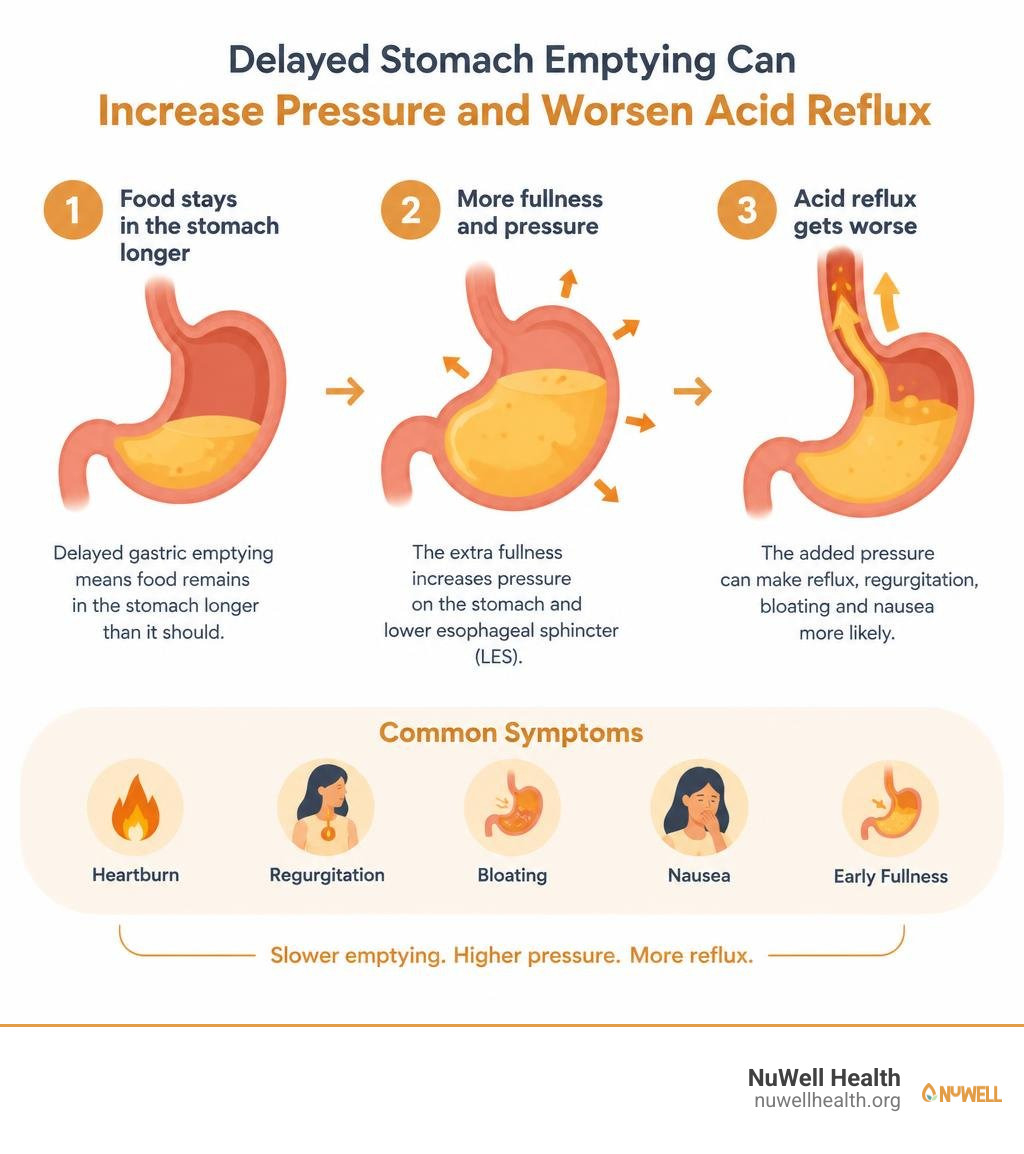
When navigating persistent upper gastrointestinal discomfort, many people wonder, does GERD cause slow digestion? GERD can be linked with slow digestion, but it does not cause it in everyone. Some people with chronic acid reflux also have delayed gastric emptying, meaning food remains in the stomach longer than it should. That extra fullness and pressure can make reflux, regurgitation, bloating, and nausea more likely.
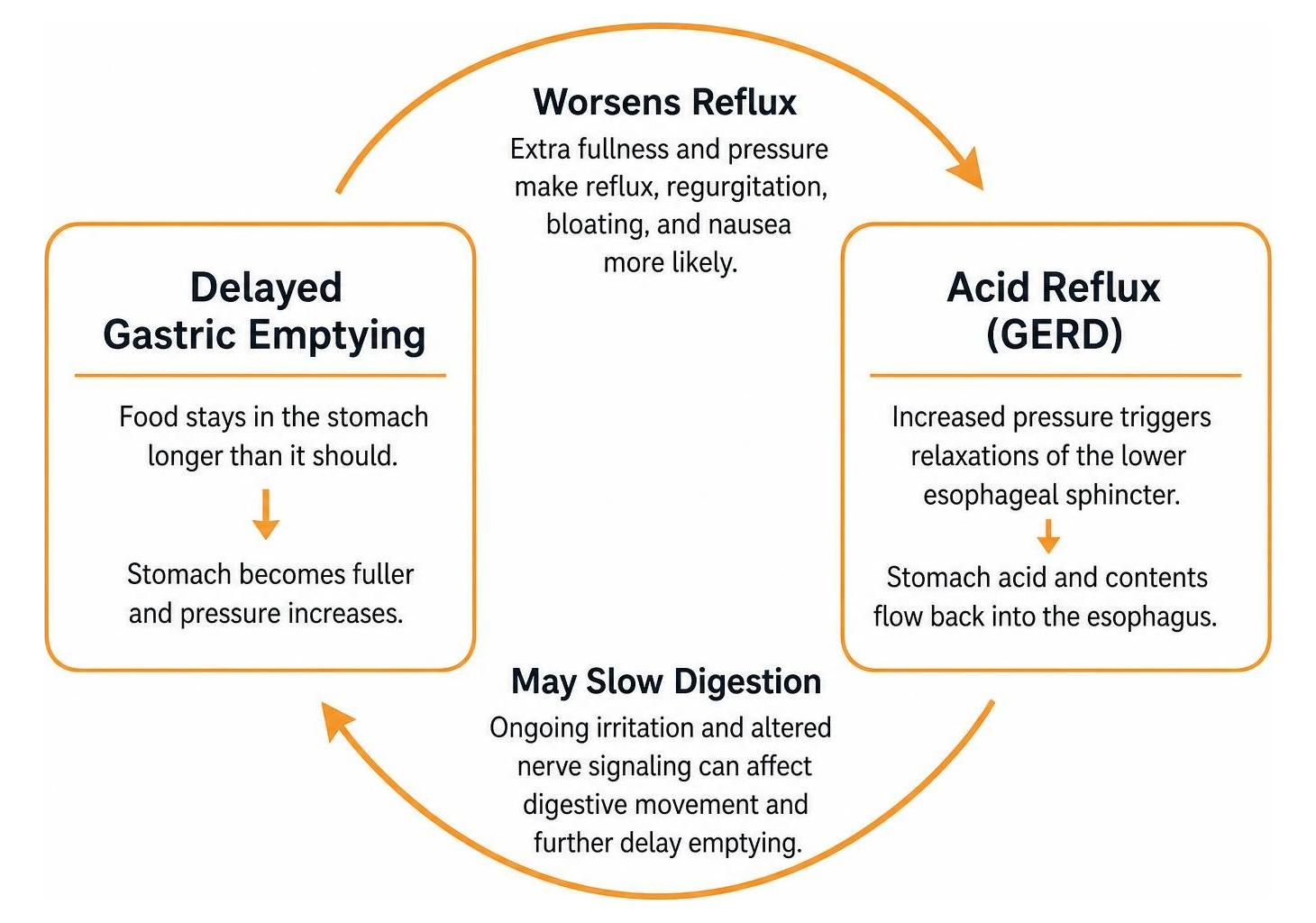
The relationship can also work in both directions: slow stomach emptying may worsen reflux, while ongoing irritation and altered nerve signaling linked with reflux may affect digestive movement. Research estimates that delayed gastric emptying occurs in roughly 10% to 33% of adults with GERD, although the exact rate varies by study and by how it is measured.
At NuWell Health, we have found that recurring reflux often deserves a wider look than acid alone. When heartburn comes with early fullness, upper-abdominal bloating, nausea, or symptoms that persist despite medication, stomach motility, meal patterns, stress, and other root contributors may matter.
Simple habits such as eating smaller lower-fat meals, chewing slowly, avoiding late meals, and taking a gentle walk after eating can support both reflux control and more comfortable digestion. Persistent or severe symptoms should be assessed by a qualified clinician, especially if there is trouble swallowing, vomiting, unexplained weight loss, or chest pain.
Understanding whole-body health also involves examining broader causes of digestive issues, assessing whether digestive issues are hereditary in your family, and exploring supportive options like natural treatments for candida overgrowth for comprehensive gut recovery.
Does GERD Cause Slow Digestion? The Physiological Link
When individuals struggle with chronic heartburn, they often wonder if gastroesophageal reflux disease is responsible for their sluggish stomach. Gastrointestinal motility is a carefully orchestrated physiological process. When food enters the stomach, smooth muscle contractions churn the contents into chyme before steadily releasing it into the duodenum. In clinical practice, understanding the primary drivers of digestive issues requires examining whether gastric stasis is an underlying culprit or an innocent bystander.
Clinical investigations show that total gastric emptying is delayed in 10% to 33% of adult patients diagnosed with GERD (Pellegrini, 2001). In broader patient cohorts presenting with persistent upper digestive complaints, researchers observe that 40% to 60% of GERD patients show delayed gastric emptying. When contents sit stagnant in the stomach, pressure builds against the lower esophageal sphincter (LES).
This pressure buildup triggers transient lower esophageal sphincter relaxations (TLESRs). Normally, TLESRs allow trapped gas to escape through belching. However, when the stomach remains distended due to delayed clearance, these relaxations permit acidic liquid and digestive enzymes to surge upward. A landmark scientific study on delayed gastric emptying in abnormal reflux notes that proximal stomach dilation shortens and weakens the functional length of the lower esophageal sphincter, directly predisposing patients to recurrent reflux events (Pellegrini, 2001).
How Does GERD Cause Slow Digestion Through Vagal Nerve Impairment?
The autonomic nervous system, specifically the vagus nerve, orchestrates digestive motility. The vagal pathways control acid secretion, receptive relaxation of the gastric fundus, and antral contractions that propel food downward.
When severe, chronic acid reflux exposes the distal esophagus to repeated chemical irritation, it incites localized mucosal inflammation. This persistent inflammation can trigger retrograde neural signaling, disrupting normal vagal motor output. Research indicates that severe reflux-induced neural irritation can slow gastric emptying by 30% to 50% through impaired vagal reflex pathways.
When inflammatory signals interrupt vagal tone, the stomach loses its coordinated rhythmic contractions. The result is a secondary gastroparesis-like state, where acid-induced mucosal injury impairs the very nerve pathways responsible for clearing stomach contents efficiently.
Esophageal Bolus Transit and Impaired Motility
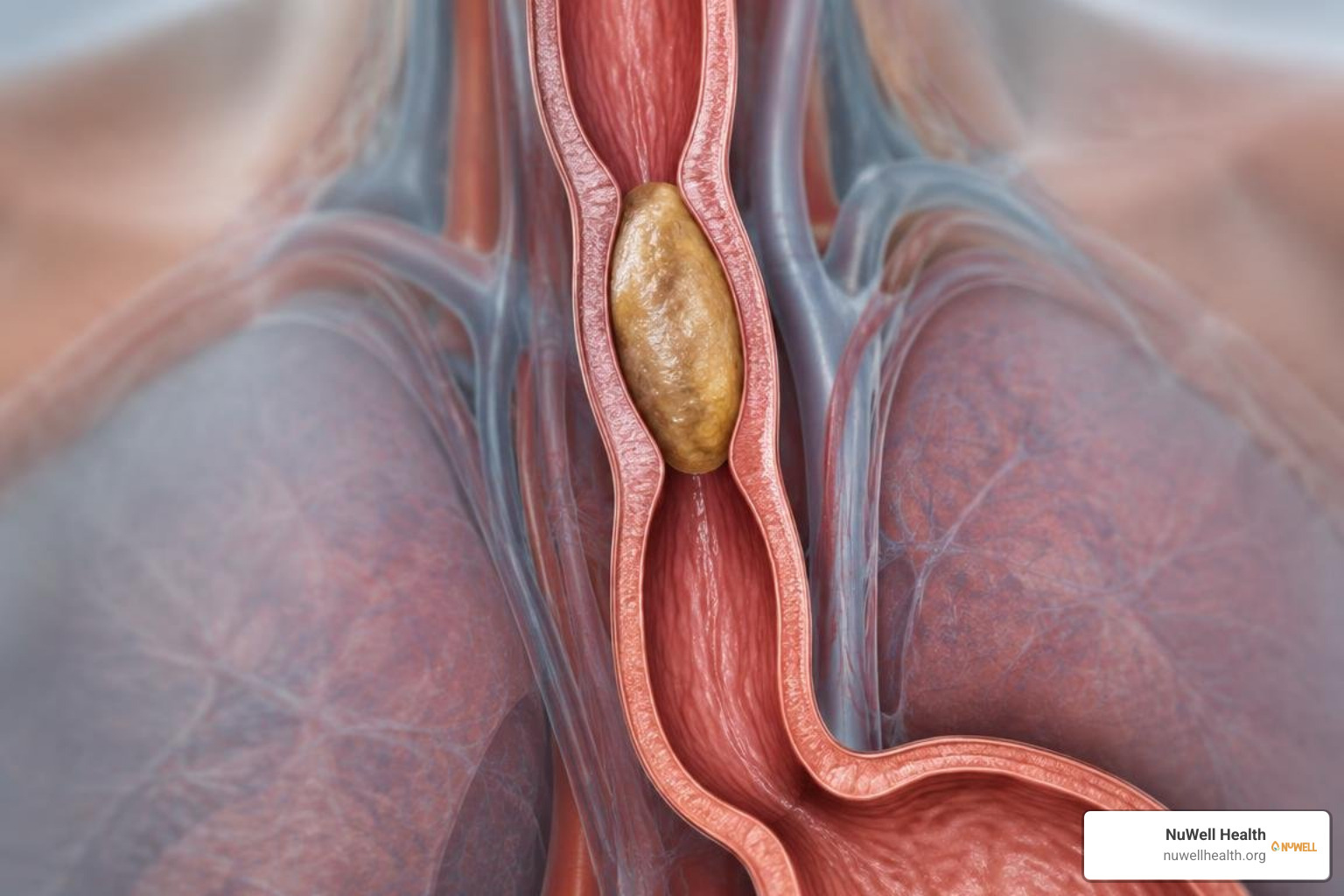
Impaired motility in GERD is not confined to the stomach; it extends directly to the esophagus itself. Effective digestion requires coordinated peristalsis to clear food boluses and swallowed acid back into the gastric reservoir.
Scientific research on gastroesophageal reflux and motility patterns reveals that patients with GERD frequently suffer from esophageal clearance failure. When evaluated using impedance-manometry, 36% of GERD patients show abnormal bolus transit compared to only 10% of asymptomatic individuals.
Furthermore, complete bolus transit occurs far less frequently in GERD patients than in healthy volunteers:
- Liquid swallows: 70% complete clearance in GERD vs. 85% in healthy individuals
- Viscous swallows: 57% complete clearance in GERD vs. 73% in healthy individuals
- Total Bolus Transit Time (TBTT): Significantly prolonged for both liquid (7.1 seconds vs. 6.4 seconds) and viscous materials (9.6 seconds vs. 8.1 seconds)
This prolonged transit time means that refluxed acid remains in contact with the esophageal lining for extended periods, deepening tissue irritation and further suppressing neuromuscular coordination.
The Bidirectional Mechanism Between Acid Reflux and Delayed Gastric Emptying
The interaction between GERD and slow stomach emptying is inherently bidirectional. Rather than a simple one-way cause-and-effect relationship, these conditions frequently reinforce each other in a self-perpetuating cycle. When exploring the common causes of chronic stomach distress, identifying this loop is essential for effective care.
Delayed emptying causes proximal gastric distension, which elevates intragastric pressure. This mechanical strain forces open the lower esophageal sphincter, resulting in reflux. Conversely, repeated acid exposure causes neurogenic inflammation, which downregulates downstream gastric contractions, delaying emptying even further.
Pathology also differs between non-erosive reflux disease (NERD) and erosive reflux disease (ERD). Patients with NERD often exhibit greater delays in gastric emptying half-times compared to those with severe erosive esophagitis, indicating that sensory and neuromuscular dysmotility plays a prominent role even when macroscopic mucosal breaks are absent.
Clinical Evidence: Does GERD Cause Slow Digestion or Does Delayed Emptying Trigger Reflux?
Objective clinical measurements shed light on how digestion speed directly dictates reflux severity. Studies combining 24-hour esophageal pH-impedance monitoring with gastric scintigraphy demonstrate a clear 3-fold higher reflux frequency in individuals with delayed gastric emptying compared to those with normal transit rates.
There is a documented 70% correlation between gastric emptying delays and overall symptom severity. Slower gastric emptying significantly increases the daily frequency of liquid and mixed postprandial reflux events and promotes greater proximal extension of the refluxate toward the throat.
A pivotal clinical study on gastric emptying in GERD and postprandial distress confirmed that gastric half-emptying time (T1/2) is substantially prolonged in patients with functional postprandial distress and reflux symptoms compared to healthy controls (54.9 minutes vs. 35.2 minutes) (Ł et al., 2009). Interestingly, when gastric emptying is normalized through motility-targeted interventions, patients experience up to 50% better reflux symptom control, underscoring the functional link between stomach clearance and esophageal health.
The Impact of Helicobacter pylori and Mucosal Inflammation
Gastric mucosal health plays a critical role in neuromuscular activity. Helicobacter pylori infection, a common bacterial colonizer of the stomach lining, contributes significantly to digestive delays when paired with reflux conditions.
Clinical evaluations show that H. pylori positivity notably prolongs gastric emptying half-times (Ł et al., 2009):
- H. pylori-positive NERD patients: Average T1/2 of 66.5 minutes vs. 43.8 minutes in uninfected individuals (Ł et al., 2009)
- H. pylori-positive Postprandial Distress Syndrome: Average T1/2 of 63.5 minutes vs. 48.0 minutes in uninfected controls (Ł et al., 2009)
Inflammation within the gastric mucosa disrupts local pacemaker cells (Interstitial Cells of Cajal), stalling smooth muscle contractions. Applying holistic methods to repair and soothe stomach lining reduces this inflammatory burden, helping to restore normal intrinsic motility and calm postprandial fullness.
Diagnostic Approaches to Evaluate Gastric Emptying in GERD
Because symptoms of delayed emptying and acid reflux overlap extensively, accurate clinical testing is essential for distinguishing mechanical obstruction, severe gastroparesis, and functional dysmotility.
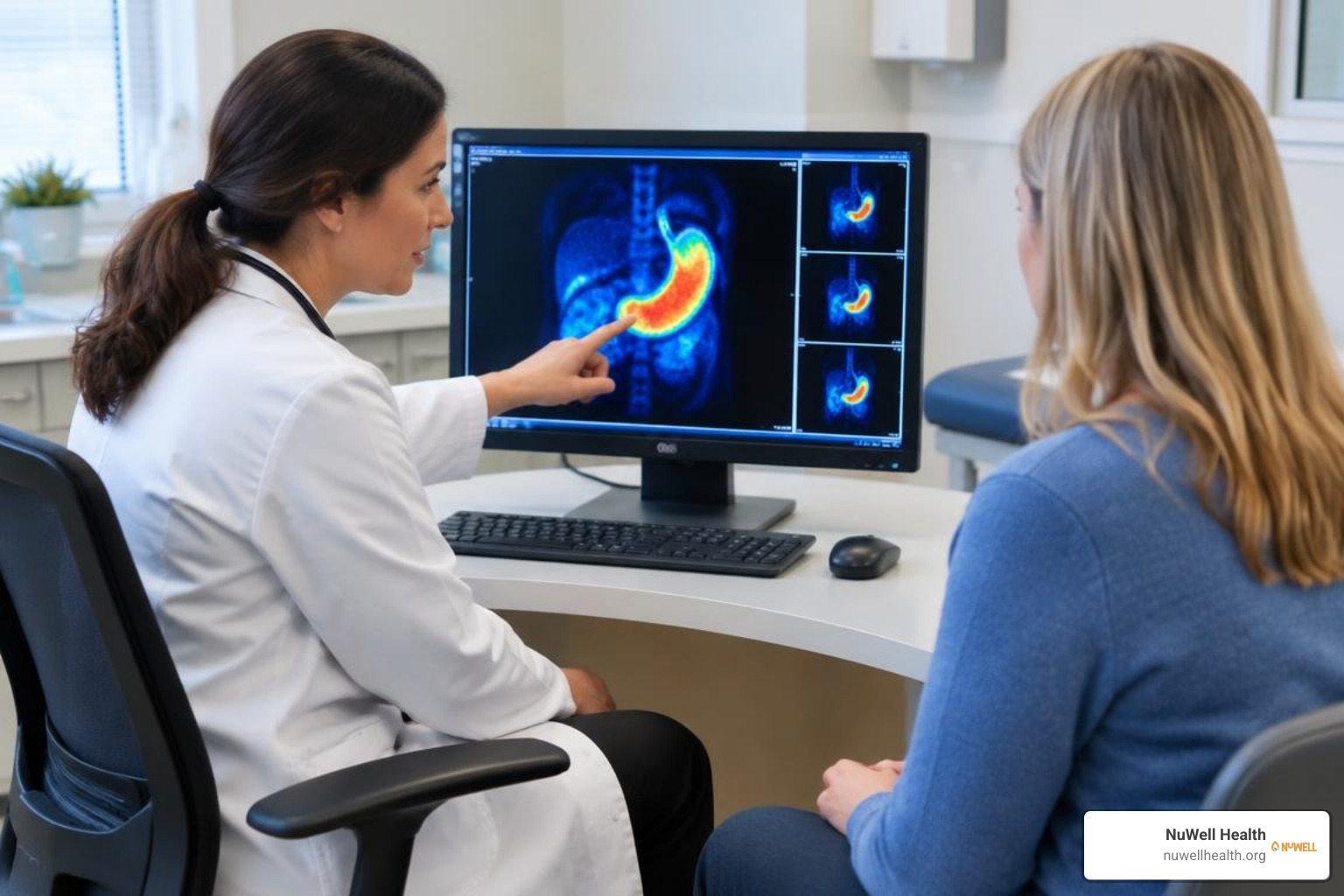
- Gastric Emptying Scintigraphy (GES): The gold standard test. The patient consumes a standardized low-fat meal (typically egg whites) labeled with a tiny amount of technetium-99m. Scintigraphic images taken at 1, 2, 3, and 4 hours measure the percentage of food retained. Retention of >10% of the meal at 4 hours confirms delayed gastric emptying.
- 13C-Octanoic Acid Breath Test: A validated, non-radioactive alternative measuring exhaled carbon dioxide isotopes over several hours to quantify solid-phase gastric clearance.
- 24-Hour Esophageal pH-Impedance Monitoring: Measures both acidic and non-acidic reflux events, documenting how high reflux travels and how rapidly the esophagus clears the liquid bolus.
- High-Resolution Esophageal Manometry (HRM): Evaluates the contractile strength of the esophageal body and measures resting pressure and relaxation dynamics of the lower esophageal sphincter.
| Diagnostic Assessment | Primary Metric Evaluated | Clinical Relevance in GERD & Slow Digestion |
|---|---|---|
| Gastric Emptying Scintigraphy (GES) | 4-hour percentage retention of solid meal | Establishes objective presence of delayed stomach emptying |
| 13C-Octanoic Acid Breath Test | Gastric half-emptying time (T1/2) | Non-invasive assessment of solid-phase digestion speed |
| Combined pH-Impedance Testing | Total reflux events & bolus clearance time | Determines if delayed emptying fuels proximal or non-acid reflux |
| High-Resolution Manometry | Distal Contractile Integral (DCI) & LES tone | Identifies ineffective esophageal motility and peristaltic failure |
Natural and Clinical Strategies to Support Gastric Motility and Relieve Reflux
Addressing the root causes of overlapping GERD and sluggish digestion requires an integrative approach. Suppressing stomach acid alone often fails to resolve symptoms when underlying motility is impaired. In fact, studies show approximately 60% symptom improvement when emptying-enhancing approaches are incorporated alongside standard care.
At NuWell Health, we have found that nurturing the body with intentional lifestyle changes, whole-food nutrition, and supportive daily rhythms yields sustainable relief. Combining natural methods to relieve acid reflux symptoms with strategies that accelerate gastric clearance relieves mechanical strain on the lower esophageal sphincter without unwanted side effects.
Dietary Adjustments for Faster Digestion and Reduced Reflux
Dietary composition directly affects the rate of gastric emptying. Fat naturally delays stomach clearance by stimulating the release of cholecystokinin (CCK), which relaxes the proximal stomach and slows pyloric opening.
- Consume Smaller, Nutrient-Dense Meals: Large meal volumes stretch the gastric fundus, initiating TLESRs. Shift from three large meals to four or five modest portions.
- Prioritize Low-Fat, Whole-Food Meals: Limit heavy animal fats, fried items, and greasy oils that stall antral pumping. Focus on tender steamed vegetables, lean proteins, and easily digestible whole grains.
- Practice Thorough Mastication: Digestion begins in the mouth. Chewing food to a pureed consistency reduces the mechanical workload of the stomach, accelerating gastric breakdown.
- Separate Liquids from Solids: Avoid drinking large glasses of water during meals. Excess liquids expand gastric volume and dilute digestive enzymes. Sip fluids 30 to 60 minutes before or after meals.
- Adopt an Early Kitchen Closing Time: Finish dinner at least 3 to 4 hours before lying down. Going to bed with an empty stomach prevents nighttime pooling and retrograde flow. Exploring practical dietary strategies for optimal digestion provides a framework for sustained gut comfort.
Holistic and Lifestyle Habits for Digestive Harmony
Lifestyle interventions support the nervous system, which regulates digestive tract movement:
- Post-Meal Gentle Walking: A 15-to-20-minute light walk following meals stimulates gastric peristalsis, accelerates stomach emptying, and reduces postprandial glucose spikes naturally.
- Diaphragmatic Breathing and Vagus Activation: Chronic mental and emotional stress shifts the autonomic nervous system into “fight-or-flight,” halting gastric motor activity. Engaging in slow, diaphragmatic breathing before meals stimulates the vagus nerve, promoting “rest-and-digest” signaling.
- Optimize Sleep Posture: Elevate the head of the bed by 6 to 8 inches (using bed risers or a firm wedge pillow). Sleeping on the left side anatomically positions the gastroesophageal junction above gastric contents, preventing overnight reflux events.
- Mindful Stress Management: At NuWell Health, we have found that incorporating quiet reflection, scripture meditation, and restful prayer brings peace to the nervous system, helping resolve somatic tension that disrupts digestive organs. Implementing evidence-based self-care strategies for digestive balance supports full-body restoration.
Frequently Asked Questions About GERD and Slow Digestion
Can acid reflux medications slow down digestion?
Yes, certain medications used for reflux can influence digestion rates. While proton pump inhibitors (PPIs) and H2 blockers effectively reduce acidity to protect esophageal tissue, stomach acid plays a role in protein denaturation and enzyme activation. Markedly reduced acid levels can slow initial protein breakdown, which may contribute to feelings of fullness or fullness after eating in sensitive individuals. Reviewing medication regimens with a physician ensures that therapy targets both inflammation and motility appropriately.
How can I tell if my GERD is caused by delayed stomach emptying?
Classic acid reflux primarily manifests as substernal heartburn and acidic regurgitation. When delayed gastric emptying is a major contributor, symptoms often include:
- Early satiety (feeling uncomfortably full after only a few bites of food)
- Persistent upper-abdominal bloating and distension
- Nausea or dry heaving following meals
- Reflux symptoms that persist despite standard acid-blocking medications
- Belching up undigested food particles hours after eating
If these symptoms are present, a clinical gastric emptying study can confirm whether sluggish motility is involved.
Does gastroparesis always lead to acid reflux?
While gastroparesis frequently causes secondary acid reflux due to increased intragastric pressure, they are distinct clinical diagnoses. Gastroparesis represents a severe neuromuscular disorder characterized by markedly delayed gastric emptying in the absence of mechanical obstruction, often stemming from diabetic neuropathy or post-viral damage. GERD, on the other hand, can occur with entirely normal gastric emptying due to localized lower esophageal sphincter dysfunction. However, severe gastroparesis almost always worsens reflux tendencies by maintaining high intragastric pressure against the esophageal junction.
Conclusion
The relationship between chronic acid reflux and slow digestion is a complex, bidirectional cycle. Delayed gastric emptying creates upward pressure that drives reflux episodes, while repeated acid exposure and chronic esophageal inflammation can disrupt vagal nerve signaling, further slowing the digestive tract.
At NuWell Health, we have found that sustainable digestive wellness requires moving beyond temporary symptom management to address whole-person health—caring for the mind, body, and spirit. By embracing balanced nutrition, mindful meal habits, stress reduction, and natural motility support, you can break the reflux-stagnation cycle and restore your digestive vitality.
Take the next step in your health journey by discovering our personalized strategies to address chronic digestive issues.
This article was researched with AI and heavily edited by Jordan Oliver for accuracy and relevance.
Jordan is an author, ordained minister, and online host for His Glory TV, sharing biblically grounded insights on faith, prayer, and spiritual growth. She is the co-founder of Triple-Braided Cord Co., an intercessory prayer and healing ministry inspired by Ecclesiastes 4:12.
Jordan holds a Bachelor’s degree in Communications and Religious Studies from High Point University and is a certified Spiritual Life Coach through iCoachLife in Nashville, Tennessee. Drawing from her ministry, coaching, and academic experience, she creates trustworthy, faith-based content that helps readers grow in their relationship with God. Learn more about Jordan here.
References
Pellegrini CA. “Delayed gastric emptying in patients with abnormal gastroesophageal reflux.” Annals of Surgery. 2001. PMCID: PMC1422000.
Dobrek Ł, Nowakowski M, Syguła A, Thor PJ. “Gastric emptying in patients with gastroesophageal reflux disease and postprandial distress syndrome—preliminary results.” Przegląd Lekarski. 2009. PMID: 20043587.