
Understanding Reflux: Occasional Symptoms vs. GERD
Many people experience heartburn after a heavy holiday dinner or an extra-spicy late-night meal. Occasional acid reflux is a common nuisance, but when it becomes a frequent visitor, it is important to distinguish simple indigestion from gastroesophageal reflux disease (GERD). GERD affects roughly 20% of adults, making it one of the most common digestive complaints today. In our practice at NuWell Health, we frequently observe that individuals who recognize early subtle reflux signals and implement natural daily self-care achieve significantly better long-term comfort.
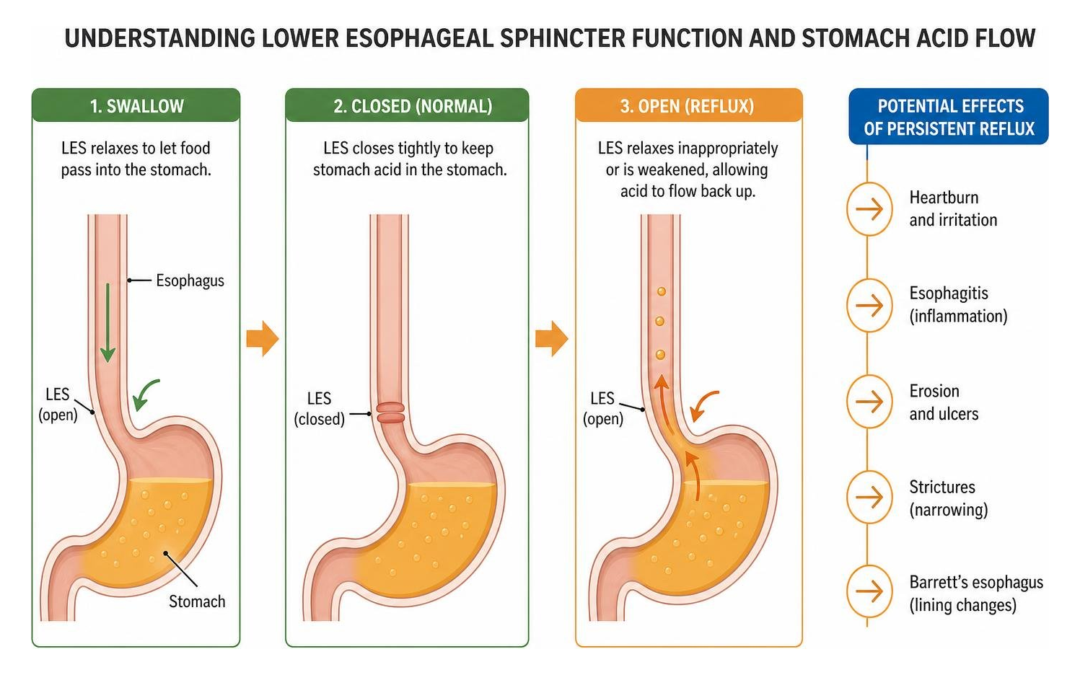
The primary mechanical player in acid reflux is the lower esophageal sphincter (LES). Think of the LES as a specialized ring-like muscular valve at the bottom of the esophagus. Its job is to open up to let food drop into the stomach and then clamp shut to keep stomach acid and digestive enzymes where they belong. When the LES relaxes inappropriately or becomes physically weakened, acidic stomach contents can surge back upward, irritating the delicate esophageal lining.
While occasional heartburn usually produces a mild burning sensation behind the breastbone that subsides on its own, GERD involves persistent reflux—typically occurring more than twice a week—that disrupts daily life or damages tissue over time. Prolonged exposure to stomach acid can lead to esophageal erosion, inflammation (esophagitis), narrowing of the esophagus (strictures), or changes in the lining known as Barrett’s esophagus, which requires ongoing clinical monitoring.
Understanding the root drivers behind these digestive challenges is crucial for effective relief. You can explore our deep dive into digestive issue causes to learn more about how gut health impacts the rest of the body.
It is equally essential to know when self-care must take a back seat to medical evaluation. Red flag symptoms that require immediate clinical care include:
- Difficulty or pain when swallowing (dysphagia or odynophagia)
- Unintended, unexplained weight loss
- Persistent vomiting or choking sensations
- Black, tarry stools or vomiting material that looks like coffee grounds (signs of GI bleeding)
- Chronic hoarseness, persistent cough, or chest pain that radiates to your arm, neck, or jaw (which always requires immediate emergency assessment to rule out heart issues)
For further clinical context on formal diagnosis, tests, and medical monitoring, review the official Mayo Clinic guidance on GERD.
Comprehensive Self Care Acid Reflux Strategies for Daily Relief

When addressing digestive distress, lifestyle modifications form the bedrock of long-term healing. Research shows that up to 80% of individuals with mild-to-moderate acid reflux achieve meaningful symptom relief through simple daily self-care adjustments alone. At NuWell Health, we have found that treating the body gently by relieving unnecessary mechanical strain on the stomach allows the digestive tract to restore its natural rhythm.
To prevent acid from backing up, we need to minimize intra-abdominal pressure—the physical force pushing up on the stomach from the inside out. When you fill the stomach to capacity, wear restrictive clothing, or lie down immediately after a meal, gravity can no longer assist your digestion, and the pressure overcomes the lower esophageal sphincter.
Taking a holistic approach to gut care is essential to maintaining daily comfort. For a broader overview of how various gastrointestinal conditions interact, see our guide to digestive system diseases.
Dietary Adjustments and Self Care Acid Reflux Triggers
What and how you eat plays a massive role in self care acid reflux management. Certain foods relax the LES valve, while others increase stomach acid production or delay how fast the stomach empties its contents.
Common trigger foods and beverages include:
- High-fat and fried foods: These slow down stomach emptying, leaving food in the stomach longer and increasing pressure.
- Caffeine and chocolate: Both contain compounds that chemically relax the LES muscle ring.
- Citrus fruits and tomatoes: Highly acidic foods that directly irritate an already sensitive esophageal lining.
- Peppermint and spearmint: Though often thought of as digestive soothers, mint actually relaxes the LES and can worsen acid reflux.
- Alcohol and carbonated drinks: Alcohol relaxes the sphincter muscle and stimulates acid, while carbonation expands the stomach with air bubbles, forcing the valve open.
Rather than eliminating entire food groups forever, we recommend keeping a detailed food diary for two weeks. Log what you eat, the time of your meals, your stress levels, and any symptoms on a scale of 0 to 5. Reintroducing foods one by one helps you pinpoint your unique personal triggers without needlessly restricting your diet.
In addition to avoiding specific triggers, focus on incorporating naturally low-acid, soothing options like oatmeal, bananas, melons, root vegetables, and lean proteins. Eating smaller, more frequent meals—often described as “grazing”—prevents the stomach from stretching excessively. For more detailed practical insights on diet and habit changes, check out the Harvard Health guide on non-medication reflux strategies.
Nighttime Self Care Acid Reflux Remedies and Sleep Ergonomics
For many, nocturnal reflux is the most disruptive symptom, causing nighttime awakening, sour tastes, morning hoarseness, and poor sleep quality. Gravity is your greatest ally during the day, but when you lie flat at night, acid can easily flow horizontally into the esophagus.
The single highest-yield night-time rule is enforcing a strict fast before bed: stop eating all food and caloric beverages at least 3 to 4 hours before lying down. This allows the stomach adequate time to process and empty its contents.
Furthermore, physical sleep positioning matters tremendously:
- Elevate the head of your bed: Raise the head of your bed frame by 6 to 8 inches (about 10 to 20 cm) using physical bed risers, wooden blocks under the legs, or a firm, full-torso mattress wedge pillow.
- Avoid extra head pillows: Stacking regular pillows raises only your neck and head, which bends your torso at the waist. This torso bend actually squeezes the stomach, increasing intra-abdominal pressure and forcing acid upward.
- Sleep on your left side: Anatomically, sleeping on your left side positions the stomach below the gastroesophageal junction, making it physically harder for acid to splash up into the esophagus compared to sleeping on your right side or back.
Weight Management, Exercise, and Posture
Excess body weight—particularly visceral fat around the abdomen—acts like a tight belt permanently squeezed around your internal organs. This constant physical pressure pushes stomach contents upward against the lower esophageal sphincter. Clinical research shows that losing even 5% to 10% of total body weight can dramatically decrease reflux frequency and severity, often resolving symptoms completely for overweight individuals.
Exercise is fantastic for overall health, but timing and intensity require smart adjustments:
- Avoid vigorous post-meal workouts: High-impact running, heavy weightlifting, or exercises requiring frequent bending over (like gymnastics or certain yoga poses) right after eating can trigger severe reflux.
- Choose low-impact movement: A gentle 15-to-20-minute walk after dinner leverages gravity, stimulates stomach motility, and lowers post-meal blood sugar without jarring the stomach.
- Mind your posture: Avoid slouching while eating or sitting at your desk immediately afterward. Slouching compresses the abdominal cavity. Furthermore, choose loose-fitting clothing and avoid tight belts or waistbands that pinch the midsection.
For guidance on combining sound nutrition with healthy movement, read our article on science-backed nutrition and weight management.
Evidence-Based Natural Remedies and Herbal Protocols

At NuWell Health, our philosophy centers on empowering self-care that treats the whole person while addressing root causes naturally. Botanicals and mind-body practices offer wonderful support by reinforcing the protective mucus layer of the digestive tract rather than simply suppressing acid production mechanically.
Here are the natural interventions backed by evidence:
- Deglycyrrhizinated Licorice (DGL): Unlike standard licorice, DGL has had the glycyrrhizin compound removed to prevent elevated blood pressure. Chewable DGL tablets (typically 380–400 mg taken 20 minutes before meals) stimulate the body’s natural saliva and mucus production, coating the esophageal and gastric lining to shield it against acid.
- Slippery Elm Bark: Rich in mucilage, slippery elm powder mixes with water to form a soothing gel that coats irritated esophageal tissues. It acts as a soothing physical cushion for active flare-ups.
- Ginger Root: Known for centuries as a digestive aid, 1 to 2 grams of ginger root (taken as tea or a supplement before large meals) accelerates gastric emptying, helping the stomach process food faster so it cannot back up.
- Alginates: Extracted from natural brown seaweed, alginates react with stomach acid to create a light, floating foam “raft” on top of the stomach contents. This physical raft blocks acid from splashing upward without altering stomach chemistry.
- Diaphragmatic Breathing: Practicing deep abdominal breathing for 10 minutes daily strengthens the muscular crural diaphragm, which physically wraps around and reinforces the lower esophageal sphincter.
To dive deeper into integrative protocols and botanical dosing schedules, explore the Pilora protocol on acid reflux supplements. For more on aligning natural remedies with your overall wellness journey, see our approach to empowered root cause healing.
Comparing Medical Options: OTC Medications, PPI Usage, and Surgery
While natural habits and herbal support work exceptionally well for many, over-the-counter and prescription options exist for managing acute flare-ups and severe cases. Understanding how these choices differ helps you make informed decisions alongside your healthcare team.
| Medication Class | Mechanism of Action | Speed of Relief | Duration of Action | Best Use Case / Notes |
|---|---|---|---|---|
| Antacids (e.g., Tums, Rolaids) | Neutralizes existing stomach acid chemically | Immediate (minutes) | Short (30–60 minutes) | Occasional breakthrough heartburn; does not heal esophagitis. |
| H2 Blockers (e.g., Famotidine / Pepcid) | Blocks histamine receptors to lower acid production | Moderate (30–60 mins) | Up to 12 hours | Mild-to-moderate frequent reflux; good for evening prevention. |
| Proton Pump Inhibitors (PPIs) (e.g., Omeprazole) | Shuts down active acid-producing pumps in the stomach | Slow (1–4 days for full effect) | 24 hours | Short-term healing course (4–8 weeks) for severe GERD/erosive tissue. |
| Alginate Rafts (e.g., Gaviscon Advance) | Forms a physical barrier floating on stomach contents | Fast (15–30 minutes) | Several hours post-meal | Excellent non-systemic physical protection after eating. |
Over-the-Counter Medications and PPI Protocols
When over-the-counter options are needed, using them correctly ensures maximum safety and benefit.
Antacids offer rapid, short-term relief by neutralizing acid already present in the stomach, but overusing calcium-rich antacids can cause constipation or kidney stress. H2 blockers reduce acid production for up to 12 hours, making them helpful for predictable triggers.
Proton Pump Inhibitors (PPIs) are the strongest acid-reducing drugs available. However, proper timing is essential: PPIs must be taken 30 to 60 minutes before the first meal of the day (breakfast). This is because PPIs only bind to and deactivate acid pumps that are actively being turned on by food intake.
Standard medical guidelines state that PPI courses should typically last 4 to 8 weeks under clinical supervision. Long-term, unmonitored PPI usage carries potential risks, including reduced absorption of vitamin B12, magnesium, and calcium, as well as alterations in the gut microbiome.
Stopping PPIs suddenly after weeks of use can cause a “rebound hyperacidity” effect, where the stomach temporarily overproduces acid for 1 to 2 weeks. In our practical experience at NuWell Health, supporting clients with a structured natural regimen and gradual tapering process significantly minimizes rebound symptoms while restoring inherent digestive strength. To avoid sudden rebound issues, work with your doctor to taper down off PPIs gradually while leaning into natural support habits. For official guidance on over-the-counter options, refer to the NHS treatment recommendations for heartburn.
Surgical Interventions and Advanced Procedures
When comprehensive lifestyle adjustments and medications fail to provide relief, or when patients prefer not to take long-term medication, surgical and minimally invasive procedural options exist:
- Nissen Fundoplication: The traditional surgical gold standard, where the top portion of the stomach (fundus) is wrapped around the lower esophagus to reinforce the weakened lower esophageal sphincter valve.
- LINX Device Procedure: A minimally invasive procedure where a small, flexible ring of magnetic titanium beads is placed around the lower esophageal sphincter. The magnetic attraction keeps the valve closed to acid, but opens easily when you swallow food.
- Transoral Incisionless Fundoplication (TIF): An endoscopic procedure performed through the mouth without external incisions, rebuilding the valve using a specialized device.
Surgical approaches are typically reserved for severe, chronic GERD, large hiatal hernias, or cases with confirmed tissue damage.
Frequently Asked Questions About Acid Reflux
How long does it take for natural acid reflux lifestyle changes to work?
Many people feel initial relief within 24 to 48 hours of implementing core rules like stopping pre-bedtime eating and elevating the head of the bed. However, full healing of irritated esophageal tissues typically takes 2 to 4 weeks of consistent dietary and lifestyle changes. At NuWell Health, we have found that consistency is key—sticking with habits like smaller meal portions and daily diaphragmatic breathing yields steady, progressive improvement.
Why are extra pillows ineffective for preventing nighttime heartburn?
Stacking standard bed pillows raises only your head and upper neck, causing your neck to flex and your waist to bend. This physical torso bend compresses your abdomen and increases pressure on your stomach, forcing stomach acid upward through the lower esophageal sphincter valve. To prevent nighttime reflux effectively, you must elevate your entire upper body uniformly at a 30-to-45-degree angle using bed risers under the headboard legs or a structured mattress wedge.
Can low stomach acid cause symptoms similar to acid reflux?
Yes, surprisingly! Hypochlorhydria (insufficient stomach acid) can mimic hyperacidity. When stomach acid is too low, food is not digested efficiently and lingers in the stomach longer, causing fermentation, gas, and abdominal bloating. This upward gas pressure can push even small amounts of stomach acid into the esophagus, producing classic heartburn burning. If you suspect low stomach acid, work with a practitioner to test your digestive function safely before taking strong acid suppressants.
Conclusion

Managing acid reflux naturally is not about rigid restriction—it is about restoring harmony to your digestive system. By understanding how gravity, portion sizes, meal timing, and stress affect your body, you can take control of your digestive health and enjoy daily life without constant heartburn.
At NuWell Health, we believe that true wellness treats the mind, body, and spirit as an interconnected whole. Sustainable relief happens when we shift from simply suppressing symptoms to nourishing root-cause vitality through preventive lifestyle choices. Start by picking one or two easy habits today—such as stopping meals three hours before sleep or taking a gentle post-dinner walk—and build your path to lasting comfort.
To learn more about nurturing your gut and exploring natural solutions tailored to your life, visit our Digestive Issues Hub.
This article was researched with AI and heavily edited by Jordan Oliver for accuracy and relevance.
Jordan is an author, ordained minister, and online host for His Glory TV, sharing biblically grounded insights on faith, prayer, and spiritual growth. She is the co-founder of Triple-Braided Cord Co., an intercessory prayer and healing ministry inspired by Ecclesiastes 4:12.
Jordan holds a Bachelor’s degree in Communications and Religious Studies from High Point University and is a certified Spiritual Life Coach through iCoachLife in Nashville, Tennessee. Drawing from her ministry, coaching, and academic experience, she creates trustworthy, faith-based content that helps readers grow in their relationship with God. Learn more about Jordan here.