

When Tomatoes Become the Enemy: What You Need to Know Before Getting Tested
A tomato allergy test measures the level of IgE antibodies in your blood that are specific to tomato proteins — helping identify whether your immune system is treating tomatoes as a threat.
Quick answer: What is a tomato allergy test?
- It is a blood test that detects allergen-specific IgE antibodies to tomato
- Results are reported in kU/L and grouped into classes (0–6) from negative to extremely high
- No fasting or dietary changes are needed before the test
- Results typically return within 1–5 business days
- A positive result indicates sensitization — not necessarily a confirmed allergy
- Follow-up with a clinician is recommended for any borderline or positive result
If you have ever eaten a tomato and immediately noticed tingling lips, hives, or stomach cramps, your immune system may be flagging tomato proteins as dangerous. That reaction is worth taking seriously.
Tomatoes are everywhere — in sauces, soups, ketchup, salsas, and dozens of packaged foods. For most people, they are a nutritious everyday food. But for some, they trigger real and sometimes severe immune reactions. Research has found tomato allergy in roughly 1 in 3 adults studied in plant food allergy cohorts, making it more common than many people realize.
What makes tomato reactions tricky is that they do not always look the same. One person might get an itchy mouth after eating a fresh tomato but tolerate pasta sauce just fine. Another might break out in hives after both. And others may feel bloated or crampy — symptoms that look more like intolerance than true allergy.
At NuWell Health, our clinical experience has shown us that understanding why your body reacts — and to what — is the essential first step toward real relief. We have consistently found that focusing on natural, human-centered health solutions and restoring gut integrity is far more effective for long-term wellness than simply managing symptoms. That journey starts with the right test.
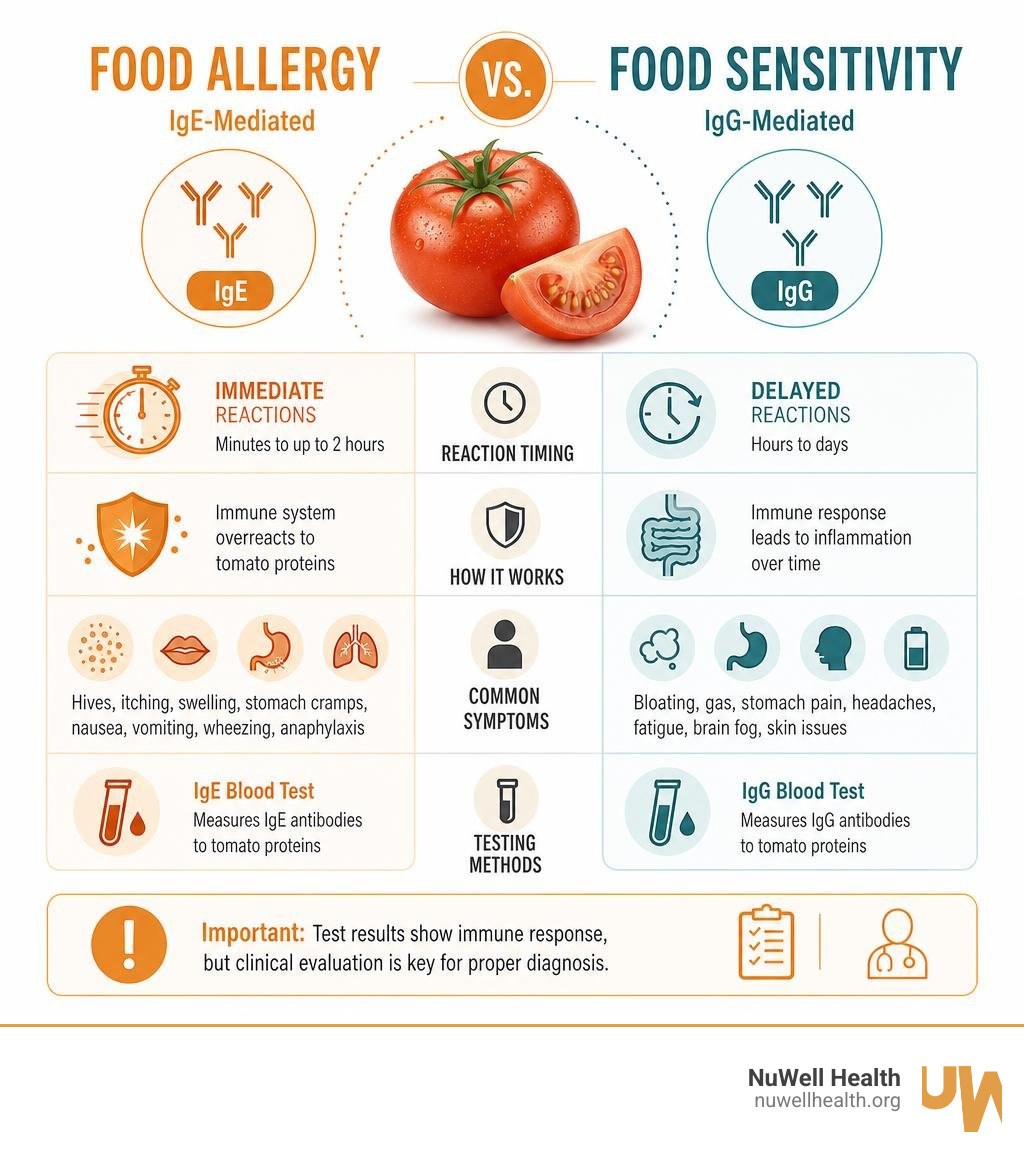
Understanding the Tomato Allergy Test: What It Measures
When we talk about a tomato allergy test, we are typically referring to an allergen-specific IgE blood test. This diagnostic tool measures the concentration of Immunoglobulin E (IgE) antibodies in your blood serum that are specifically designed to target tomato proteins.
IgE is a type of antibody produced by your immune system. If you are allergic to tomatoes, your immune system mistakenly identifies certain harmless tomato proteins as dangerous invaders. In response, it produces IgE antibodies. The next time you eat a tomato, these antibodies signal your mast cells to release histamine and other inflammatory chemicals, leading to the rapid onset of allergic symptoms.
Modern laboratory testing utilizes advanced ImmunoCAP Fluorescence Enzyme Immunoassay (FEIA) technology. This methodology is highly sensitive and specific, making it the industry gold standard for in vitro allergy testing. By introducing standardized tomato allergen extracts to your blood sample, the lab can precisely quantify how many IgE antibodies bind to the tomato proteins.
At NuWell Health, we look at the body as an interconnected system. Food reactions are not just random inconveniences; they are signals that your immune system is in a state of hyper-reactivity. To understand how these immune reactions fit into your overall wellness, we recommend reading A Practical Guide to Allergies and Food Sensitivity.
It is crucial to understand that a Tomato Allergy IgE Blood Test measures sensitization, which is your immune system’s potential to react. It does not automatically mean you will experience a clinical allergic reaction when you eat a tomato. The presence of IgE antibodies shows your immune system has built a defense system against tomato, but clinical context — how you actually feel when you consume the food — is what decides whether you have a true clinical allergy.
Who Should Consider a Tomato Allergy Test?
You should consider getting a tomato-specific IgE test if you experience immediate, reproducible symptoms within minutes to two hours after eating raw or cooked tomatoes. These immediate-type reactions are characteristic of IgE-mediated responses and can range from mild discomfort to life-threatening emergencies.
Key reasons to consider testing include:
- Immediate Skin Reactions: Developing hives (urticaria), eczema flare-ups, redness, or swelling of the lips, face, or tongue shortly after tomato exposure.
- Oral Symptoms: Experiencing itching, tingling, or mild swelling of the mouth, tongue, or throat (often linked to Oral Allergy Syndrome).
- Digestive Distress: Sudden onset of abdominal pain, nausea, vomiting, or diarrhea after eating tomato-containing foods.
- Respiratory Issues: Wheezing, coughing, shortness of breath, or a runny, congested nose that begins during or immediately after a meal.
- Anaphylaxis Risk: If you have ever experienced a systemic, multi-system reaction (such as difficulty breathing combined with hives and dizziness) after eating pizza, pasta sauce, or fresh tomatoes, immediate testing is critical to establish a safety and emergency plan.
If you are trying to navigate whether your symptoms warrant an IgE allergy panel or a broader look at your digestive wellness, you may find our resource, The Definitive Guide to Food Sensitivity Testing, highly valuable.
How to Prepare for Your Tomato Allergy Test
Preparing for a Tomato IgE blood test is remarkably simple, especially when compared to traditional skin testing.
- No Fasting Required: You do not need to fast. You can eat and drink normally before your blood draw.
- No Dietary Restrictions: You do not need to avoid tomatoes before the test to make it work, nor do you need to actively eat them. Continue with your normal, comfortable diet.
- Medications Are Fine: Unlike skin prick tests, blood IgE tests are not affected by antihistamines, oral steroids, or other allergy medications. You do not need to stop taking your daily allergy relief to get accurate results.
- Comfortable Clothing: Wear a shirt with sleeves that can be easily rolled up, as the sample is drawn from a vein in your arm.

Once you order the test, you simply visit a local laboratory. The blood draw takes less than ten minutes, and the sample is processed at a certified lab. Your results are typically ready in 1 to 5 business days.
Symptoms of Tomato Allergy vs. Intolerance
It is incredibly common to confuse a true tomato allergy with a tomato intolerance or a chemical sensitivity. However, these conditions involve entirely different pathways in the body.
An IgE-mediated tomato allergy involves the immune system. Symptoms occur rapidly and can affect multiple organ systems, including your skin, respiratory tract, and cardiovascular system. At its worst, it can cause anaphylaxis, which requires immediate emergency intervention.
A tomato intolerance, on the other hand, is a non-immunological reaction. It typically occurs in the digestive tract. Because tomatoes are highly acidic, they can cause severe acid reflux, heartburn, and stomach irritation. Furthermore, tomatoes are naturally high in histamines and organic compounds called salicylates, which can trigger symptoms in sensitive individuals without involving IgE antibodies.
Another common culprit is histamine intolerance. If your body lacks sufficient amounts of the diamine oxidase (DAO) enzyme—which is produced in your gut to break down histamine from foods—eating histamine-rich foods like tomatoes can cause a “bucket effect.” This leads to symptoms that mimic an allergy, such as headaches, bloating, hives, congestion, and digestive cramping.
At NuWell Health, we believe that gut health is the cornerstone of overall wellness. When your intestinal barrier is compromised, you are far more likely to react to everyday foods. To explore how gut health influences these reactions, read Everything You Need to Know About Testing Your Gut for Food Sensitivities.
To help you distinguish between these conditions, we have outlined the primary differences below:
| Feature | IgE-Mediated Tomato Allergy | Tomato Intolerance / Acid Irritation | Histamine Intolerance (DAO Deficiency) |
|---|---|---|---|
| System Involved | Immune System (IgE antibodies) | Digestive System (Chemical/Acid irritation) | Metabolic/Enzymatic (Lack of DAO enzyme) |
| Typical Onset | Immediate (minutes up to 2 hours) | Gradual (30 minutes to several hours) | Variable (depends on overall histamine load) |
| Key Symptoms | Hives, swelling, wheezing, itchy mouth, anaphylaxis | Heartburn, acid reflux, stomach ache, bloating | Headaches, flushing, nasal congestion, bloating, hives |
| Amount Needed | Even trace amounts can trigger a reaction | Usually requires a normal serving size | Depends on cumulative histamine intake |
| Severe Threat | Yes, can be life-threatening | No, uncomfortable but not life-threatening | No, but can cause chronic, widespread symptoms |
Interpreting Your IgE Blood Test Results
When you receive your laboratory report for a tomato IgE test, the results will be displayed as a numerical concentration of antibodies, measured in kilo-units per liter (kU/L). These numbers are categorized into standardized “classes” that indicate your level of sensitization.
According to standard laboratory references, such as those provided by Marshfield Labs and Mayo Clinic Laboratories, the reference ranges are generally structured as follows:
- Class 0 (< 0.10 kU/L) - Negative: No detectable IgE antibodies to tomato. A true allergy is highly unlikely.
- Class 0/1 (0.10–0.34 kU/L) – Borderline/Equivocal: Very low level of antibodies. Clinical significance is highly variable and requires professional assessment.
- Class 1 (0.35–0.69 kU/L) – Equivocal: Low level of sensitization. May or may not correlate with real-world symptoms.
- Class 2 (0.70–3.49 kU/L) – Positive: Moderate sensitization. Increased likelihood of clinical allergy.
- Class 3 (3.50–17.4 kU/L) – Strongly Positive: High level of IgE antibodies. Strong probability of an allergic reaction.
- Class 4 to 6 (≥ 17.5 kU/L) – Very Strongly Positive: Very high level of sensitization. Extremely likely to experience a reaction upon exposure.
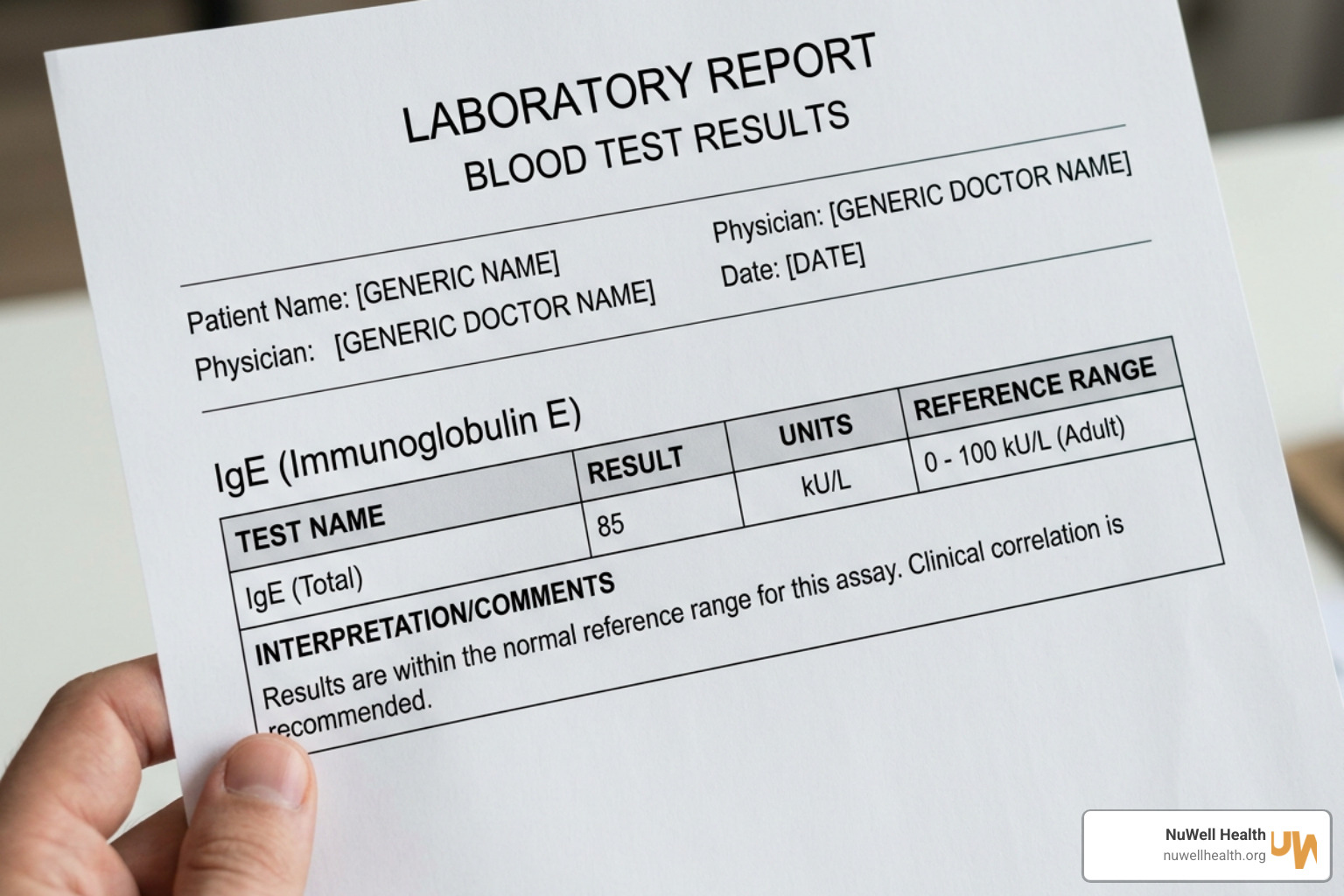
At NuWell Health, we always remind our clients: treat the patient, not the lab paper. A high IgE number indicates a strong immune sensitization, but it does not perfectly predict the severity of a physical reaction. Some individuals with Class 2 results might experience severe hives, while someone with a Class 4 result might only experience mild lip tingling.
Furthermore, if your total IgE levels are exceptionally high (above 2500 kU/L) due to severe eczema or environmental allergies, it can cause non-specific binding in the lab, leading to a false-positive tomato result. This is why interpreting these numbers must always be done alongside your personal medical history.
Cross-Reactivity: Nightshades and Pollen-Food Syndrome
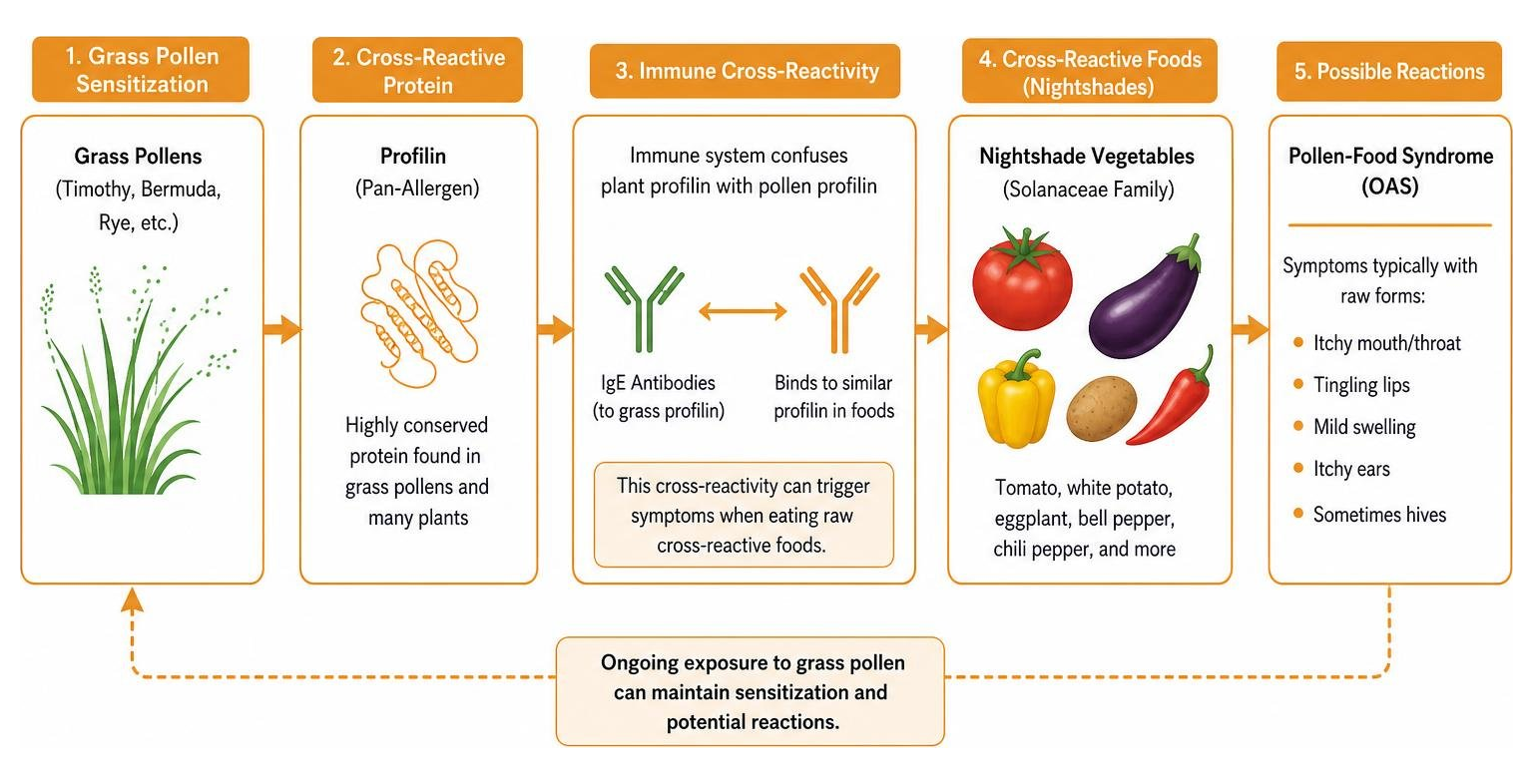
To truly understand a tomato allergy, we have to look at the botanical family tree and the concept of cross-reactivity. Tomatoes belong to the Solanaceae (nightshade) family, which also includes white potatoes, eggplants, bell peppers, and chili peppers. If you are sensitized to tomato, your immune system might also react to these related vegetables because they share similar protein structures.
Another common pathway is Pollen-Food Syndrome (PFS), also known as Oral Allergy Syndrome (OAS). This occurs when your immune system confuses the proteins in raw fruits or vegetables with environmental pollens you are allergic to.
For instance, tomato sensitization is strongly linked to grass pollens (like Timothy or Bermuda grass) and birch tree pollen. A Spanish cohort study published in Clinical and Molecular Allergy found that tomato sensitization was significantly associated with profilin hypersensitivity (P < .001) in adults with plant food allergies. Profilins are highly cross-reactive "pan-allergens" found across many plants, which explains why grass-allergic individuals often get an itchy mouth when eating raw tomatoes.
Additionally, tomatoes contain several key allergen proteins:
- Sola l 3 (Lipid Transfer Protein / LTP): This is a robust, heat-stable protein found primarily in the tomato peel. Because it survives cooking and digestive enzymes, LTP sensitization is associated with more severe, systemic allergic reactions and reactions to cooked tomato products.
- PR-10 Proteins: These are heat-sensitive proteins. If you are sensitized to PR-10, you will likely experience mild oral itching with raw tomatoes, but you can eat cooked tomato sauce without any issues because heat breaks these proteins down.
Understanding these cross-reactive patterns is a core part of our holistic approach. In our practice at NuWell Health, we prioritize natural human health solutions over agricultural classifications; we have observed that a blanket elimination of all nightshades based on a single test is often unnecessary and can restrict vital dietary nutrients. Instead, we focus on supporting the body’s natural immune tolerance.
To dive deeper into this topic, we recommend reading the study on manufactured tomato extracts and exploring how different diagnostic methods compare.
Frequently Asked Questions About Tomato Allergies
Can I eat cooked tomatoes if I am allergic to raw tomatoes?
In many cases, yes! Many people who react to raw tomatoes can safely enjoy cooked tomato products like marinara sauce, ketchup, and paste. This is because the heat from cooking breaks down (denatures) fragile, heat-sensitive proteins (such as PR-10 and profilins) that trigger oral allergy syndrome.
However, if you are sensitized to Lipid Transfer Proteins (LTPs) like Sola l 3, cooking will not make the tomato safe. LTPs are highly stable and resist heat and digestion. If you experience systemic symptoms like hives or wheezing after eating cooked tomato sauce, you are likely reacting to these heat-stable proteins and should avoid both raw and cooked forms.
How often should I retest my tomato IgE levels?
At NuWell Health, we recommend evaluating your clinical status periodically. Children often outgrow food allergies as their immune systems mature, making retesting every 12 to 18 months highly beneficial for young ones.
For adults, a baseline test is valuable when symptoms first appear. If you are actively avoiding tomatoes, retesting every 1 to 2 years can help you and your allergist determine if your IgE levels are falling, which might indicate that it is safe to attempt a supervised oral food challenge.
What is the difference between IgE and IgG testing for tomatoes?
This is one of the most important distinctions in modern wellness testing:
- IgE Testing: Measures immediate, classical allergy antibodies. High IgE levels indicate a risk for rapid, potentially severe reactions like hives, swelling, and anaphylaxis.
- IgG Testing: Measures food sensitivity or exposure. IgG antibodies are generally considered a normal marker of food exposure rather than a sign of disease.
Using IgG tests to diagnose true food allergies can lead to highly inaccurate, overly restrictive diets. To understand the science behind these different testing methods, read The Truth About Saliva-Based Food Sensitivity Testing.
Conclusion
Discovering the root cause of your physical symptoms is a deeply empowering step. If you suspect that tomatoes are triggering your discomfort, getting a tomato allergy test can provide the clear, objective data you need to make informed decisions about your health.
If your test comes back negative, you can explore other potential root causes, such as acid irritation, histamine intolerance, or general gut imbalances. If your test is positive, it is a valuable signal to work with a clinical specialist. For safety, a positive IgE test combined with a history of severe reactions should always be managed with the guidance of an allergist, who may recommend a highly controlled, medically supervised oral food challenge to confirm the allergy.
At NuWell Health, we look beyond the symptoms to help you restore balance to your mind, body, and spirit. By focusing on gut health, reducing systemic inflammation, and choosing clean, natural alternatives, we help you live a vibrant life free from fear.
If you are ready to take control of your wellness and explore our comprehensive testing options, visit our dedicated page on Allergies and Food Sensitivity.
This article was researched with AI and heavily edited by Jordan Oliver for accuracy and relevance.
Jordan is an author, ordained minister, and online host for His Glory TV, sharing biblically grounded insights on faith, prayer, and spiritual growth. She is the co-founder of Triple-Braided Cord Co., an intercessory prayer and healing ministry inspired by Ecclesiastes 4:12.
Jordan holds a Bachelor’s degree in Communications and Religious Studies from High Point University and is a certified Spiritual Life Coach through iCoachLife in Nashville, Tennessee. Drawing from her ministry, coaching, and academic experience, she creates trustworthy, faith-based content that helps readers grow in their relationship with God. Learn more about Jordan here.