

Why Natural Hormone Balance Matters More Than You Think
Natural hormone balance is the state where your body’s chemical messengers — estrogen, progesterone, cortisol, insulin, and others — are working together in the right amounts, at the right times, to keep you feeling energized, clear-headed, and well.
Here’s a quick overview of the most effective ways to support it:
- Eat to stabilize blood sugar — pair protein, fat, and fiber at every meal
- Prioritize sleep — aim for 7.5–9 hours in a cool, dark room
- Manage stress — chronic stress directly depletes progesterone and disrupts cortisol
- Support gut health — your microbiome plays a direct role in estrogen metabolism
- Reduce toxic load — cut exposure to plastics and synthetic chemicals that mimic hormones
- Fill nutrient gaps — magnesium, vitamin D, zinc, and omega-3s are commonly deficient
- Move consistently — a mix of strength training, walking, and restorative movement works best
Your body produces more than 50 different hormones. They regulate everything from your mood and metabolism to your sleep and reproductive health. Think of them like instruments in an orchestra — when even one is slightly off, the whole performance suffers.
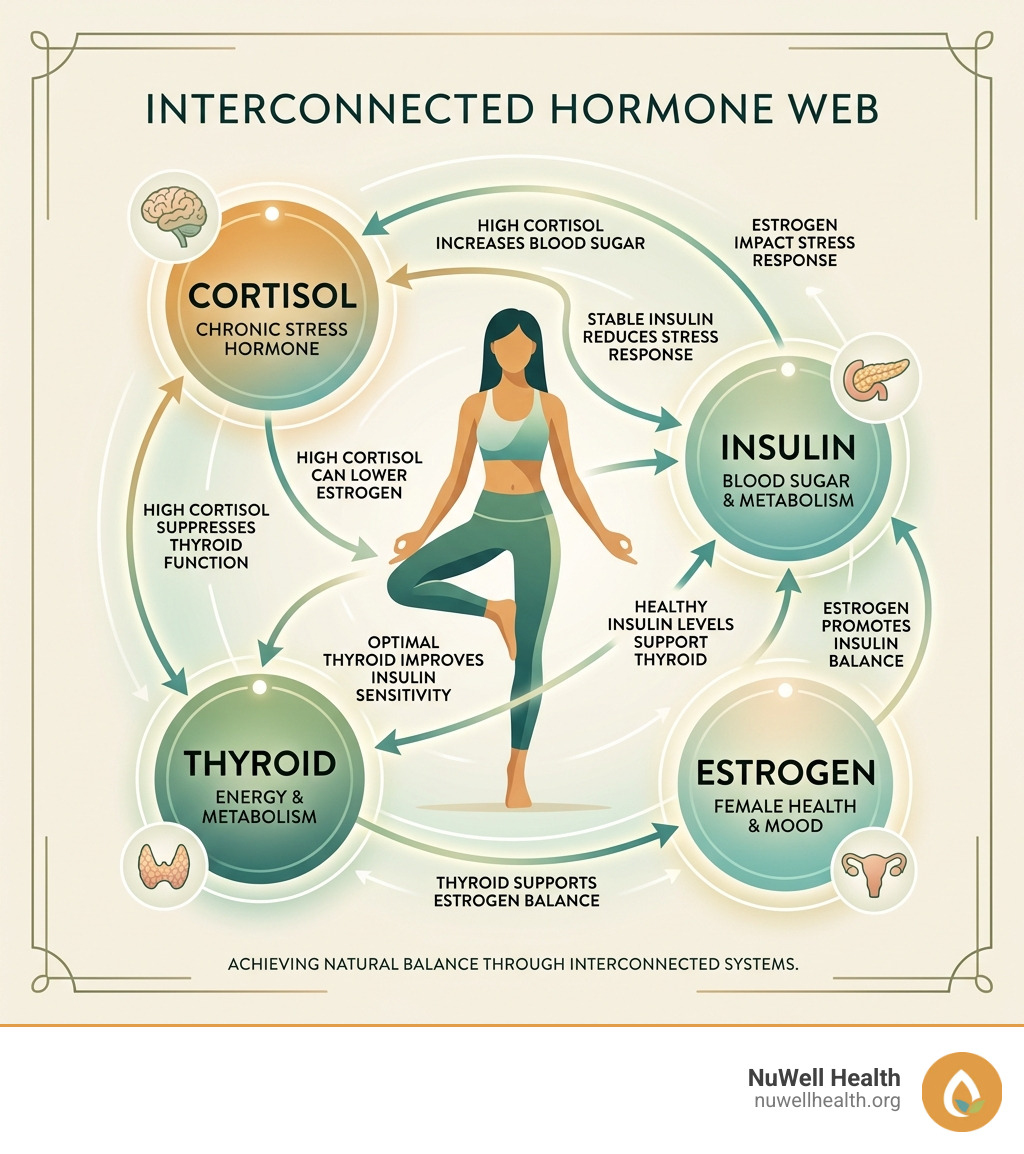
Most people don’t realize how interconnected these systems are. A spike in cortisol from chronic stress doesn’t just make you anxious — it can suppress progesterone, impair thyroid function, and drive insulin resistance, all at the same time.
At NuWell Health, we have found that the most frustrated clients are those who’ve been told their lab work looks “normal” while their body clearly signals otherwise. Fatigue, weight gain, mood swings, brain fog, irregular cycles — these aren’t just inconveniences. They’re messages worth listening to.
The encouraging reality is this: for many people, meaningful hormonal improvement doesn’t require a prescription. It starts with understanding why the imbalance is happening and addressing the root cause — through food, sleep, stress management, and targeted support.
This guide walks you through all of it, step by step.
Understanding Hormonal Imbalance and Its Common Symptoms
A hormone imbalance occurs when your body has too much or too little of a specific hormone. Because these chemicals are so potent, even a tiny shift can cause significant changes throughout your entire body.

Common Signs of Disruption
When our hormones are out of sync, the body doesn’t stay quiet about it. While everyone’s experience is unique, at NuWell Health, there are 7 signs of a hormonal imbalance that we frequently see in our practice:
- Persistent Fatigue: This isn’t just “long day” tired; it’s a deep exhaustion that doesn’t resolve with a good night’s sleep, often linked to adrenal or thyroid issues.
- Unexplained Weight Gain: Specifically, stubborn abdominal fat can be a signal of high cortisol or insulin resistance.
- Mood Swings and Anxiety: Feeling like you’re on an emotional rollercoaster is a common sign of fluctuating estrogen and progesterone.
- Brain Fog: Difficulty concentrating or “fuzzy” thinking often points toward thyroid dysfunction or a drop in estrogen.
- Skin and Hair Changes: Adult acne, thinning hair, or excessively dry skin are classic indicators of androgen or thyroid imbalances.
- Digestive Distress: Since hormones influence gut motility, an imbalance can lead to bloating, constipation, or diarrhea.
- Sleep Disturbances: Difficulty falling or staying asleep is often the result of evening cortisol spikes or low progesterone.
Causes Across Life Stages: From Puberty to Menopause
Hormonal shifts are a natural part of the human experience, but they can become “stuck” or exaggerated due to lifestyle factors.
- Puberty: The initial surge of estrogen and progesterone can be rocky, often leading to acne or irregular cycles as the body learns to regulate its new chemical environment.
- PCOS (Polycystic Ovary Syndrome): This condition causes unusually high levels of male hormones (androgens) in people AFAB, leading to irregular periods and metabolic challenges.
- Perimenopause and Menopause: As women approach April 2026 and beyond, the natural decline in sex hormones can trigger hot flashes, night sweats, and mood changes.
- The Modern Lifestyle: Chronic stress, poor diet, and environmental toxins (like xenoestrogens in plastics) create a “hormonal chaos” that the body wasn’t designed to handle.
Foundational Pillars for Natural Hormone Balance
To achieve natural hormone balance, we must look at the body as a whole. At NuWell Health, we follow a roots over remedies approach. This means we don’t just want to mask your symptoms; we want to address the biological foundations of your health.

Nutrition Strategies for Natural Hormone Balance
At NuWell Health, we have found that food is information for your cells. Every bite you take either helps stabilize your hormones or sends them into a tailspin. The most critical factor is blood sugar stability. When your blood sugar spikes and crashes, it forces insulin to work overtime, which in turn disrupts your sex hormones and cortisol.
We recommend the PFF Formula: Protein, Fat, and Fiber at every meal. This combination slows the absorption of sugar and keeps your energy levels steady.
| Food Category | Key Nutrients | Hormone Benefit |
|---|---|---|
| Cruciferous Veggies | DIM, Indole-3-carbinol | Supports healthy estrogen metabolism in the liver |
| Healthy Fats | Omega-3s, MCTs | Provides the building blocks for steroid hormones |
| High-Fiber Foods | Soluble/Insoluble Fiber | Binds to excess estrogen and helps excrete it |
| Phytoestrogens | Lignans (Flaxseeds) | Modulates estrogen receptors to prevent “dominance” |
The Role of Gut Health and the Estrobolome
Your gut contains more than 100 trillion friendly bacteria. Within this massive community is a specialized group called the estrobolome. These bacteria produce an enzyme that helps metabolize and eliminate estrogen.
If your gut health is poor, estrogen that was supposed to be excreted can be reabsorbed into the bloodstream. This leads to “estrogen dominance,” which is associated with heavy periods and mood swings. To support this pathway, we recommend:
- Including fermented foods like sauerkraut or kimchi daily.
- Aiming for 30+ different plant foods per week to maximize microbial diversity.
- Ensuring daily elimination (constipation is a major enemy of natural hormone balance).
Lifestyle Interventions: Stress, Sleep, and Movement
Your lifestyle is the loudest signal your endocrine system receives. If you are constantly in “fight or flight” mode, your body will prioritize survival hormones (like cortisol) over thriving hormones (like progesterone). This is often called the “cortisol steal.”
Regulating Cortisol Through Stress Management
Chronic stress is perhaps the biggest disruptor of natural health and mental health. When cortisol is chronically high, it impairs insulin sensitivity and suppresses the thyroid.
At NuWell Health, we encourage a lifestyle medicine approach to stress. We have found that integrating a Christian perspective on meditation—focusing on prayer and the peace of God—can profoundly calm the nervous system. Other effective tools include:
- Box Breathing: Inhale for 4, hold for 4, exhale for 4, hold for 4. This simple act tones the vagal nerve and shifts you out of “fight or flight.”
- Nature Therapy: Even 20 minutes outside can measurably lower cortisol levels.
- Grounding: Physically connecting with the earth to reset your body’s electrical rhythm.
Optimizing Sleep and Exercise for Natural Hormone Balance
Sleep is when your body does its heavy lifting for hormone repair. Even partial sleep deprivation can raise evening cortisol levels by up to 45%. This triggers a chain reaction that depletes progesterone and disrupts your metabolism.
To build a preventive health plan that lasts, prioritize these habits:
- Sleep Hygiene: Keep your bedroom at 65–68°F and eliminate all blue light (screens) at least 60 minutes before bed.
- Cycle Syncing: For those with a menstrual cycle, match your exercise to your phase. Use strength training and HIIT during the follicular phase when energy is high, and switch to yoga or walking during the luteal phase when the body needs more rest.
- Strength Training: Building muscle is one of the best ways to improve insulin sensitivity and support growth hormone production.
Targeted Support: Supplements and Environmental Detox
At NuWell Health, we have found that once the foundations of diet and lifestyle are in place, targeted supplements can help bridge the gap by providing the specific building blocks your endocrine system needs. However, we must also be mindful of what we are taking out of our environment.
Evidence-Based Supplements for Hormonal Health
While you should always consult with a professional before starting a new regimen, research supports several key nutrients for natural health and mental health:
- Magnesium: Involved in over 300 reactions, it’s essential for clearing cortisol and improving insulin sensitivity.
- Vitamin D3: Actually a pro-hormone, 41% of Americans are deficient. It is crucial for sex hormone production and mood regulation.
- Ashwagandha: An adaptogen that helps the HPA axis (your stress control center) respond more appropriately to pressure.
- DIM (Diindolylmethane): Found in broccoli, this supplement helps the liver safely process estrogen.
- Inositol: Particularly helpful for those with PCOS to improve ovulation and insulin response.
Reducing the Toxic Burden
We live in a world full of xenoestrogens—synthetic chemicals found in plastics, pesticides, and “fragrance” that mimic estrogen in the body. These “endocrine disruptors” can latch onto your hormone receptors and send confusing signals.
- Swap Plastics: Move to glass or stainless steel for food storage.
- Filter Your Water: Use a high-quality filter to remove hormone-disrupting chemicals.
- Clean Beauty: Choose fragrance-free and phthalate-free personal care products.
Frequently Asked Questions about Hormonal Health
How long does it take to balance hormones naturally?
Hormones operate on cycles, so patience is key. At NuWell Health, we have observed that while clients often feel better in terms of energy and sleep within 2 weeks, it generally takes three full menstrual cycles (about 90 days) to see systemic recalibration. Deep-seated issues like thyroid dysfunction or severe insulin resistance may take 6 months or longer of consistent effort.
Can diet alone fix a hormonal imbalance?
At NuWell Health, we have found that nutrition is the most powerful tool in your kit, but it’s rarely enough on its own if you are chronically underslept or under extreme stress. A holistic approach that addresses the mind, body, and environment together is always the most effective path.
When should I seek professional medical help?
If you experience “red flag” symptoms like sudden, extreme hair loss, debilitating pelvic pain, heart palpitations, or severe depression, seek professional help immediately. At NuWell Health, we find that functional testing (like the DUTCH test or a full thyroid panel) can provide a much clearer picture than standard “normal” lab ranges.
Conclusion
Achieving natural hormone balance is not about a single “magic pill.” It is a journey of returning to the basics: nourishing your body with real food, honoring your need for rest, and managing the stressors of modern life.
At NuWell Health, we believe you were created to thrive. By addressing the root causes of your symptoms and treating your body as an interconnected whole, you can regain your energy, stabilize your mood, and feel like yourself again. You don’t have to navigate this alone.
If you’re ready to stop guessing and start healing, take control of your hormonal health today. Your body is speaking—it’s time to listen.
This article was researched with AI and heavily edited by Jordan Oliver for accuracy and relevance.
Jordan is an author, ordained minister, and online host for His Glory TV, sharing biblically grounded insights on faith, prayer, and spiritual growth. She is the co-founder of Triple-Braided Cord Co., an intercessory prayer and healing ministry inspired by Ecclesiastes 4:12.
Jordan holds a Bachelor’s degree in Communications and Religious Studies from High Point University and is a certified Spiritual Life Coach through iCoachLife in Nashville, Tennessee. Drawing from her ministry, coaching, and academic experience, she creates trustworthy, faith-based content that helps readers grow in their relationship with God. Learn more about Jordan here.