

When Pollen Season Hits Hard: What You Need to Know About Allergy Meds
The best allergy meds for pollen depend on your specific symptoms, how fast you need relief, and how long you need it to last. Here is a quick overview:
| Medication Type | Best For | Onset Time |
|---|---|---|
| Oral antihistamines (Zyrtec, Allegra, Claritin) | Sneezing, itchy eyes, runny nose | 1-2 hours |
| Antihistamine nasal spray (Astepro) | Fast nasal relief | 15-30 minutes |
| Steroid nasal spray (Flonase, Nasacort) | Persistent or severe congestion | Days to 2 weeks |
| Decongestants (Sudafed, Afrin) | Short-term congestion relief | 10-60 minutes |
| Mast cell stabilizers (NasalCrom) | Prevention before season starts | 2-6 weeks |
| Immunotherapy (shots or sublingual tablets) | Long-term desensitization | Months to years |
It is late spring. The pollen count is high. You are sneezing every few minutes, your eyes will not stop itching, and you feel completely wiped out. Sound familiar?
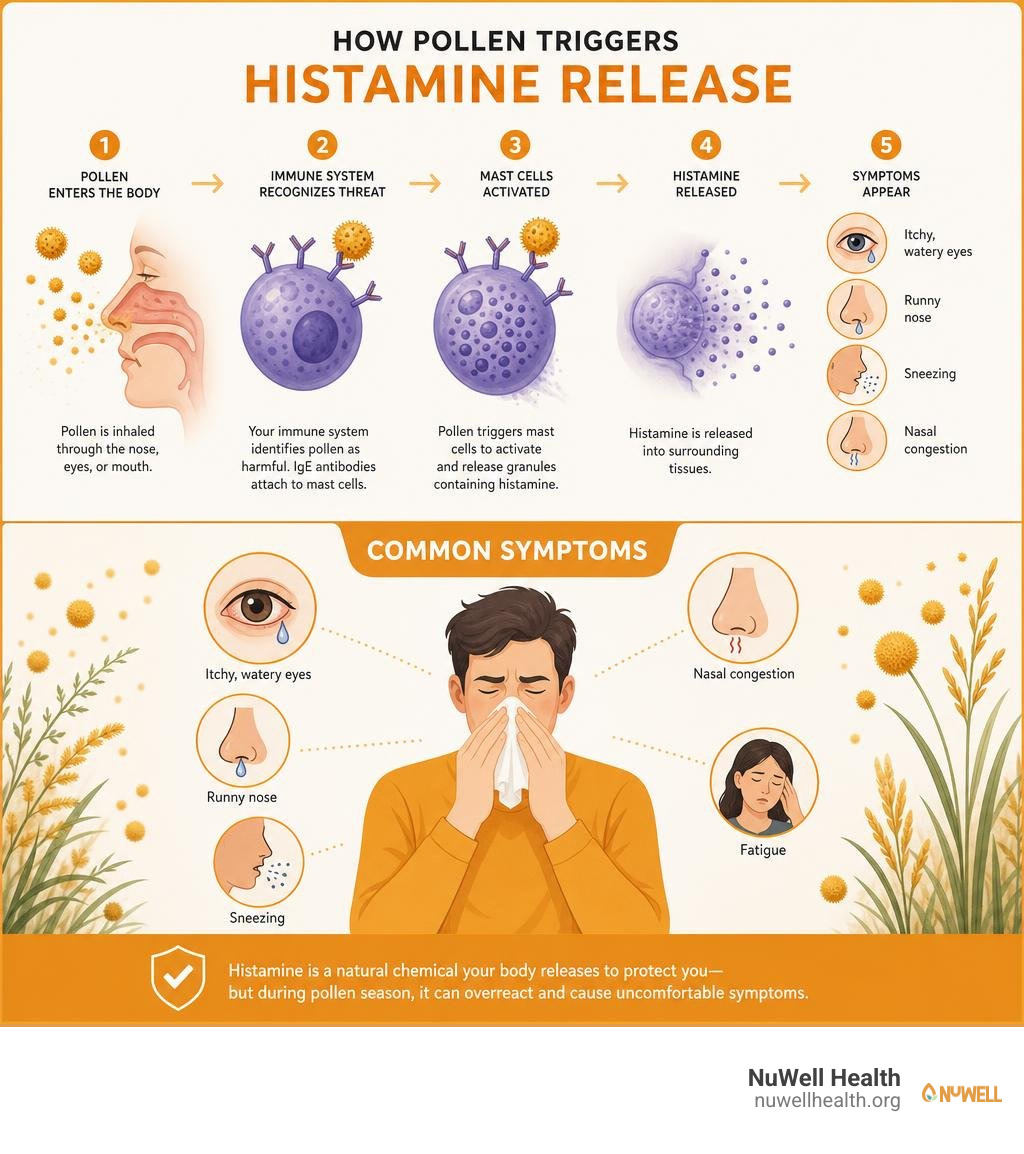
Seasonal allergies — officially called seasonal allergic rhinitis — happen when your immune system mistakes harmless pollen for a threat. It then releases a chemical called histamine, which triggers all those miserable symptoms: runny nose, watery eyes, sneezing, and congestion.
And it happens in waves throughout the year. Tree pollen dominates early spring. Grass pollen takes over in late spring and early summer. Then weed pollen — including the notorious ragweed — arrives in late summer and fall.
The challenge is that not all allergy medications work the same way. Some work in minutes. Others take weeks. Some are safe for daily use. Others carry real risks if used too long. Choosing the wrong one can leave you groggy, congested, or no better off than before.
At NuWell Health, we have found that many people cycling through multiple allergy medications are simply not matched to the right treatment for their symptoms — or are unaware of the risks that come with some of the most common options.
This guide breaks it all down clearly, so you can make a confident, informed decision.
Understanding Your Options: The Main Types of Allergy Meds for Pollen
When you walk down the pharmacy aisle, the sheer volume of boxes, bottles, and sprays can feel completely overwhelming. To find the right allergy meds for pollen, it helps to understand that these treatments are grouped into distinct classes. Each class targets a different part of your body’s immune response.
If you are tired of feeling like a heavily medicated zombie just to survive a high-pollen day, you are not alone. You can learn more about finding relief without the brain fog in our guide on how to treat hay fever at home without turning into a zombie.
Let’s break down the primary categories of over-the-counter (OTC) and prescription options:
- Antihistamines: These block histamine, the chemical responsible for itching, sneezing, and watery eyes. They are available as pills, liquids, nasal sprays, and eye drops.
- Nasal Corticosteroids: These anti-inflammatory sprays treat the root of nasal symptoms by reducing swelling, mucus, and congestion directly in your nasal passages.
- Decongestants: These narrow the blood vessels in your nose to temporarily relieve stuffiness. They do not treat the underlying allergy, but they can clear a blocked airway quickly.
- Mast Cell Stabilizers: These prevent your immune cells from releasing histamine in the first place, acting as a preventative shield.
- Immunotherapy: This long-term approach (like allergy shots or sublingual tablets) gradually trains your immune system to tolerate pollen.
Oral Antihistamines: First-Generation vs. Second-Generation
If you have ever taken an allergy pill and immediately felt the urge to take a four-hour nap, you likely took a first-generation antihistamine.
The most common first-generation antihistamine is diphenhydramine (commonly known by the brand name Benadryl). These older medications easily cross the blood-brain barrier, which is why they cause severe drowsiness, dry mouth, and cognitive impairment.
In fact, the Federal Aviation Administration (FAA) does not allow pilots to fly an airplane for 30 hours after taking a first-generation antihistamine due to its profound impact on coordination and mental clarity. Even worse, long-term use of first-generation antihistamines has been associated with an increased risk of early-onset dementia.
Because of these risks, we highly recommend avoiding older antihistamines like Benadryl for seasonal allergies.
Instead, opt for second-generation antihistamines. These newer medications are formulated to be highly selective, meaning they target peripheral histamine receptors without easily crossing into your brain. This makes them significantly less sedating (and in many cases, completely non-drowsy).
Furthermore, second-generation antihistamines last 4 times as long as first-generation antihistamines, giving you 24 hours of continuous coverage rather than a brief 4-to-6-hour window. Popular and effective second-generation options include:
- Cetirizine (Zyrtec): Known for being highly effective and fast-acting, though it carries a very small risk of mild drowsiness in sensitive individuals. You can read more about its clinical application via the ZYRTEC® Allergy Relief Tablets with 10 mg Cetirizine | ZYRTEC® product page.
- Fexofenadine (Allegra): Widely considered the least sedating option available, making it excellent for daytime use.
- Loratadine (Claritin): A gentle, reliable option, though some clinical studies suggest it may be slightly less potent overall than cetirizine or fexofenadine.
Nasal Sprays: Steroids vs. Antihistamines
Many people assume all nasal sprays are identical, but pairing the wrong spray with your symptoms can lead to frustration or unwanted side effects.
Steroid Nasal Sprays (e.g., Flonase/fluticasone, Nasacort/triamcinolone): These are the gold standard for moderate to severe seasonal allergies. Unlike oral antihistamines, which are relatively ineffective at clearing a stuffy nose, steroid sprays reduce overall tissue inflammation. This makes them highly effective for treating chronic nasal congestion, post-nasal drip, and sinus pressure.
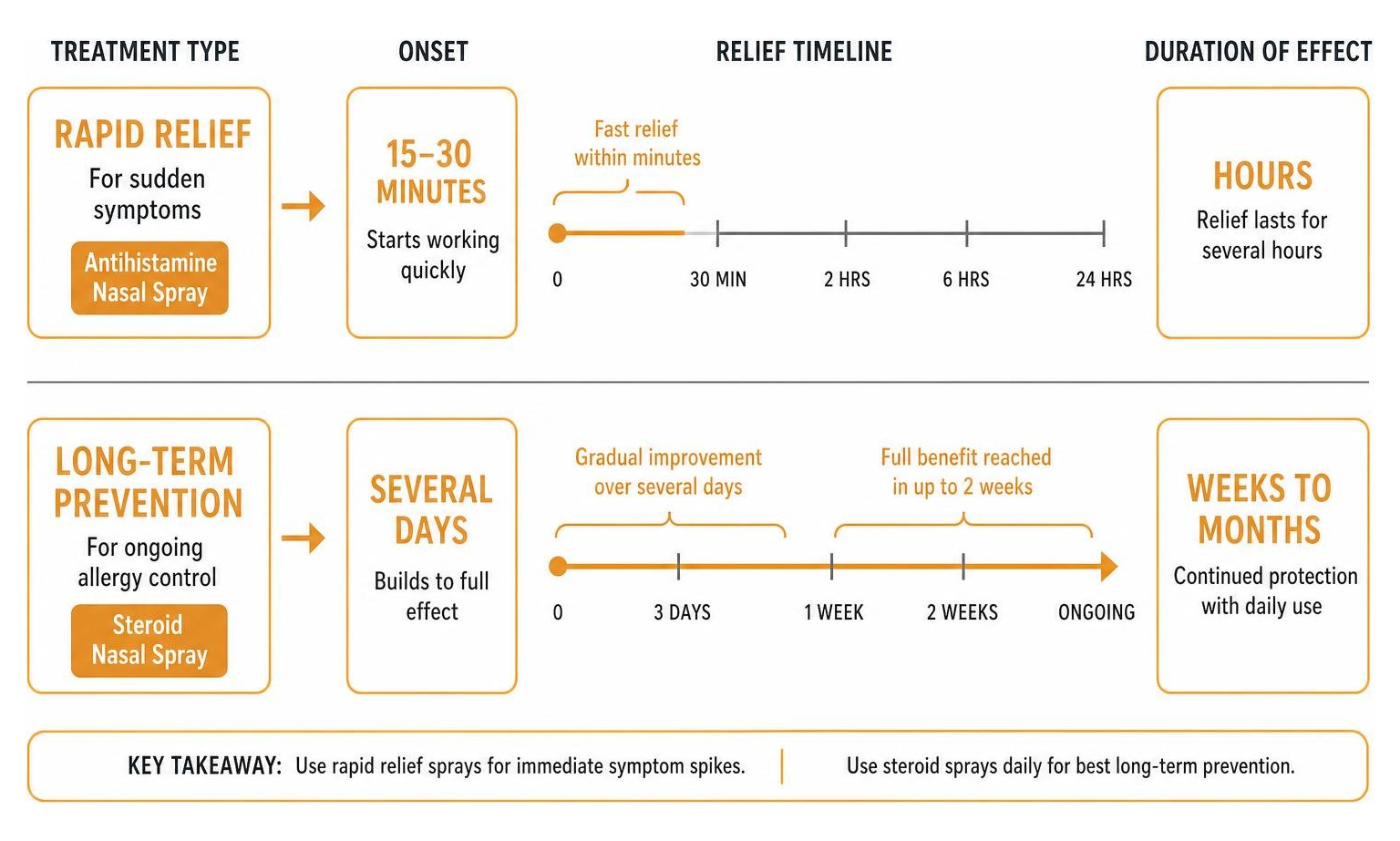
However, they do not offer instant gratification; it can take anywhere from a few days to 2 full weeks of daily use to reach their full therapeutic effect.
Antihistamine Nasal Sprays (e.g., Astepro/azelastine): If you need fast nasal relief, antihistamine nasal sprays are a fantastic option. Azelastine starts working within 15 to 30 minutes. It delivers a concentrated dose of antihistamine directly to your nasal tissues, making it highly effective for sudden runny noses and itchy sneezes.
The catch? Azelastine is notorious for leaving a bitter, metallic taste in your mouth if it drains down your throat. To minimize this, drink a beverage immediately after spraying to wash the medicine down.
Proper Nasal Spray Technique: To avoid common side effects like nasal dryness, irritation, and nosebleeds, you must use the proper application technique. Never point the nozzle straight up or toward your nasal septum (the middle wall of your nose). Instead:
- Tip your head slightly forward, looking down at your toes.
- Hold the spray in your right hand to spray your left nostril, and your left hand to spray your right nostril.
- Angle the nozzle outward, pointing toward your ear on that side.
- Press the pump and sniff gently—do not snort deeply, as you want the medicine to stay in your nasal passages, not go straight to your stomach.
For a deeper dive into how allergies manifest in your body and how to safely manage them, check out a practical guide to allergies and food sensitivity.
How Speed and Duration Affect Your Choice of Pollen Relief
Finding the best allergy meds for pollen requires matching the medication’s timeline to your lifestyle. Are you trying to stop a sudden sneezing fit before an outdoor wedding, or are you preparing for a grueling three-month grass pollen season?
If you wait until you are already congested and miserable to start your seasonal allergy regimen, you are playing catch-up. For the best preventative results, we recommend starting daily preventative allergy medications at least 2 weeks before your regional pollen season begins. This builds up a protective barrier in your system, preventing the inflammatory cascade before it even starts.
Fast-Acting Allergy Meds for Pollen Spikes
When pollen counts suddenly spike on a windy spring afternoon, you need relief that works in minutes, not days.
For rapid relief of localized nasal symptoms, antihistamine nasal sprays like Astepro (azelastine) are your best bet, beginning to clear your passages in 15 to 30 minutes.
If you prefer an oral tablet for full-body relief (including itchy eyes and throat), fexofenadine is a highly reliable, non-drowsy choice. For temporary relief of seasonal symptoms, a 60 mg dose of fexofenadine can be taken every 12 hours.
However, you must be mindful of drug and food interactions. For example, you should not take fexofenadine with fruit juices (like orange, apple, or grapefruit juice), as they can significantly decrease the drug’s absorption and make it less effective. Additionally, avoid taking it at the same time as antacids containing aluminum or magnesium, which also block its absorption. You can review the official safety warnings and drug facts via the 1191A-TCR-2022-1118 drug label.
Long-Term Allergy Meds for Pollen Season Prevention
For sustained, season-long defense, your strategy should shift from quick fixes to daily maintenance.
Steroid nasal sprays are highly effective for daily, long-term control because they work early in your body’s immune cascade, stopping inflammation before histamine can even be produced.
Another excellent preventative option is a mast cell stabilizer like NasalCrom (cromolyn sodium). This spray coats your nasal mast cells, preventing them from bursting open and releasing histamine when they encounter pollen. However, mast cell stabilizers require patience—they must be used consistently 3 to 4 times a day for 2 to 6 weeks to become fully effective.
If you prefer a simple, once-daily pill for round-the-clock defense, a 180 mg daily dose of fexofenadine provides reliable, non-drowsy 24-hour protection. As with the 12-hour version, keep it away from fruit juices and antacids to ensure you get the full dose. For more details on daily dosing, refer to the DailyMed – ALLERGY RELIEF- fexofenadine hydrochloride tablet documentation.
For those with severe, life-disrupting pollen allergies, immunotherapy offers a way to address the root cause of the immune response. This can be done via traditional allergy shots (which involve weekly injections for several months, followed by monthly maintenance for 3 to 5 years) or sublingual immunotherapy (under-the-tongue tablets). Sublingual tablets are taken daily at home, but they must be started 3 to 4 months before the specific pollen season begins to train your immune system in time.
The Hidden Risks of Conventional Allergy Treatments
While over-the-counter allergy meds for pollen are widely available, “over-the-counter” does not mean “free of risk.” Many common treatments carry hidden side effects that can make you feel worse if used incorrectly.
One of the most common pitfalls is the misuse of decongestant nasal sprays, such as Afrin (oxymetazoline). These sprays are incredibly effective at clearing a blocked nose within minutes, but they come with a severe warning: do not use them for more than 3 to 5 consecutive days.
Using them longer causes your blood vessels to become dependent on the medication to stay constricted. When the spray wears off, the vessels swell up even more than before, leading to a vicious cycle of chronic stuffiness known as rebound congestion (rhinitis medicamentosa).
Oral decongestants like Sudafed (pseudoephedrine) also carry significant risks. Because they constrict blood vessels systemic-wide, they can cause dangerous spikes in blood pressure, rapid heart rate, anxiety, and insomnia.
Because of these cardiovascular risks, oral decongestants should not be taken for longer than 7 days in a row. If you are dealing with a pounding sinus headache from your seasonal allergies, you may want to explore pill-free relief options. Read our guide on how to treat an allergy headache naturally without pills to learn how.
Pediatric safety is another crucial area of concern. Parents should always read the Drug Facts Label closely and consult a pediatrician before giving adult allergy medications to children.
Of particular note, long-term use of nasal corticosteroid sprays in children has been shown to potentially cause minor growth suppression. If your child requires a steroid nasal spray for more than two months out of the year, their growth should be monitored closely by a healthcare professional.
A Holistic Approach to Managing Pollen Allergies
At NuWell Health, our hands-on clinical experience has shown that addressing the root causes of immune reactivity yields far more sustainable relief than relying solely on suppressive drugs. We believe in treating the whole person—mind, body, and spirit. While conventional allergy meds for pollen can be incredibly helpful for managing acute symptoms, they only mask the problem. They do not address why your immune system is overreacting to natural plant pollen in the first place.
Often, seasonal allergies are a sign of systemic inflammation and an imbalanced immune system, which frequently traces back to the health of your gut microbiome. By supporting your gut health and reducing overall inflammatory triggers, you can help calm your body’s hyper-reactive immune response.
In addition to lifestyle changes, several natural antihistamines and mast cell stabilizers can support your body during pollen season with fewer side effects:
- Quercetin: A natural antioxidant found in foods like onions and apples, quercetin acts as a natural mast cell stabilizer, helping to reduce the release of histamine.
- Stinging Nettle: Often consumed as a warm, soothing tea, stinging nettle has natural anti-inflammatory properties that can help clear nasal congestion.
- Vitamin C: A powerful natural antihistamine, high-quality Vitamin C helps break down histamine molecules in the bloodstream.
- Hydration: Simply drinking plenty of pure water throughout the day helps thin out thick, pollen-induced mucus, making it easier for your body to clear.
We also highly recommend implementing environmental and physical controls to limit your pollen exposure naturally:
- Keep windows closed in your home and car during high-pollen seasons, utilizing air conditioning instead.
- Use HEPA air purifiers in your bedroom and main living spaces to pull microscopic pollen spores out of the air.
- Shower and wash your hair before bed to rinse away any pollen you collected during the day, preventing it from transferring to your pillow and bedding.
- Wear a protective mask when mowing the lawn or gardening on windy, high-pollen days.
To explore more pantry-safe, natural alternatives that work in harmony with your body, take a look at pollen vs your pantry best home remedies for natural allergy relief.
Frequently Asked Questions About Pollen Allergy Medications
What is the safest allergy medicine to use during pregnancy?
When you are pregnant, managing seasonal allergies requires extra caution, as many systemic medications can cross the placenta.
NasalCrom (cromolyn sodium) is widely considered one of the safest allergy medicines to use during pregnancy. Because it is a localized nasal spray with very low systemic absorption, it delivers relief directly to your nasal passages without exposing your entire body to the drug.
Always consult your obstetrician or healthcare provider before starting any new medication regimen during pregnancy.
Why are some decongestants kept behind the pharmacy counter?
If you have ever had to show your ID and sign a logbook to buy a box of cold or allergy medicine, you were likely purchasing a product containing pseudoephedrine (such as Sudafed).
Under the federal Combat Methamphetamine Epidemic Act, pseudoephedrine is kept behind the pharmacy counter because it is a key precursor chemical used in the illicit manufacture of methamphetamine.
While it remains legal to purchase without a prescription in most states, the daily and monthly purchase amounts are strictly regulated and tracked to prevent abuse.
Can I take oral decongestants daily for my pollen allergies?
No, you should not take oral decongestants daily to manage seasonal pollen allergies.
Because medications like pseudoephedrine constrict blood vessels throughout your entire body, daily use can lead to chronic elevated blood pressure, heart palpitations, severe insomnia, and urinary retention.
Limit oral decongestants to a maximum of 7 consecutive days for acute, severe blockages. For daily, ongoing seasonal symptoms, safer long-term options include steroid nasal sprays or non-drowsy second-generation antihistamines.
Conclusion: Finding Lasting Relief Beyond the Pill
Managing your seasonal allergies does not have to mean choosing between constant sneezing and a medication-induced brain fog. By understanding how different allergy meds for pollen work—and being mindful of their onset times, durations, and potential side effects—you can build a targeted, safe strategy that works for your unique body.
At NuWell Health, our years of experience helping clients overcome chronic allergies have proven that the most vibrant, lasting health comes from combining sensible, short-term conventional relief with deep, root-cause holistic care. Supporting your immune system through gut health, reducing environmental triggers, and utilizing natural remedies can help you reclaim your vitality and enjoy God’s beautiful creation without the constant sniffles.
If you are ready to stop masking your symptoms and start healing your body from the inside out, we invite you to take the next step. Explore our comprehensive resources on allergies and food sensitivity and discover how a personalized, holistic approach to wellness can transform your health.
This article was researched with AI and heavily edited by Jordan Oliver for accuracy and relevance.
Jordan is an author, ordained minister, and online host for His Glory TV, sharing biblically grounded insights on faith, prayer, and spiritual growth. She is the co-founder of Triple-Braided Cord Co., an intercessory prayer and healing ministry inspired by Ecclesiastes 4:12.
Jordan holds a Bachelor’s degree in Communications and Religious Studies from High Point University and is a certified Spiritual Life Coach through iCoachLife in Nashville, Tennessee. Drawing from her ministry, coaching, and academic experience, she creates trustworthy, faith-based content that helps readers grow in their relationship with God. Learn more about Jordan here.