

When Faith Meets the Darkness: Understanding a Christian Approach to Depression
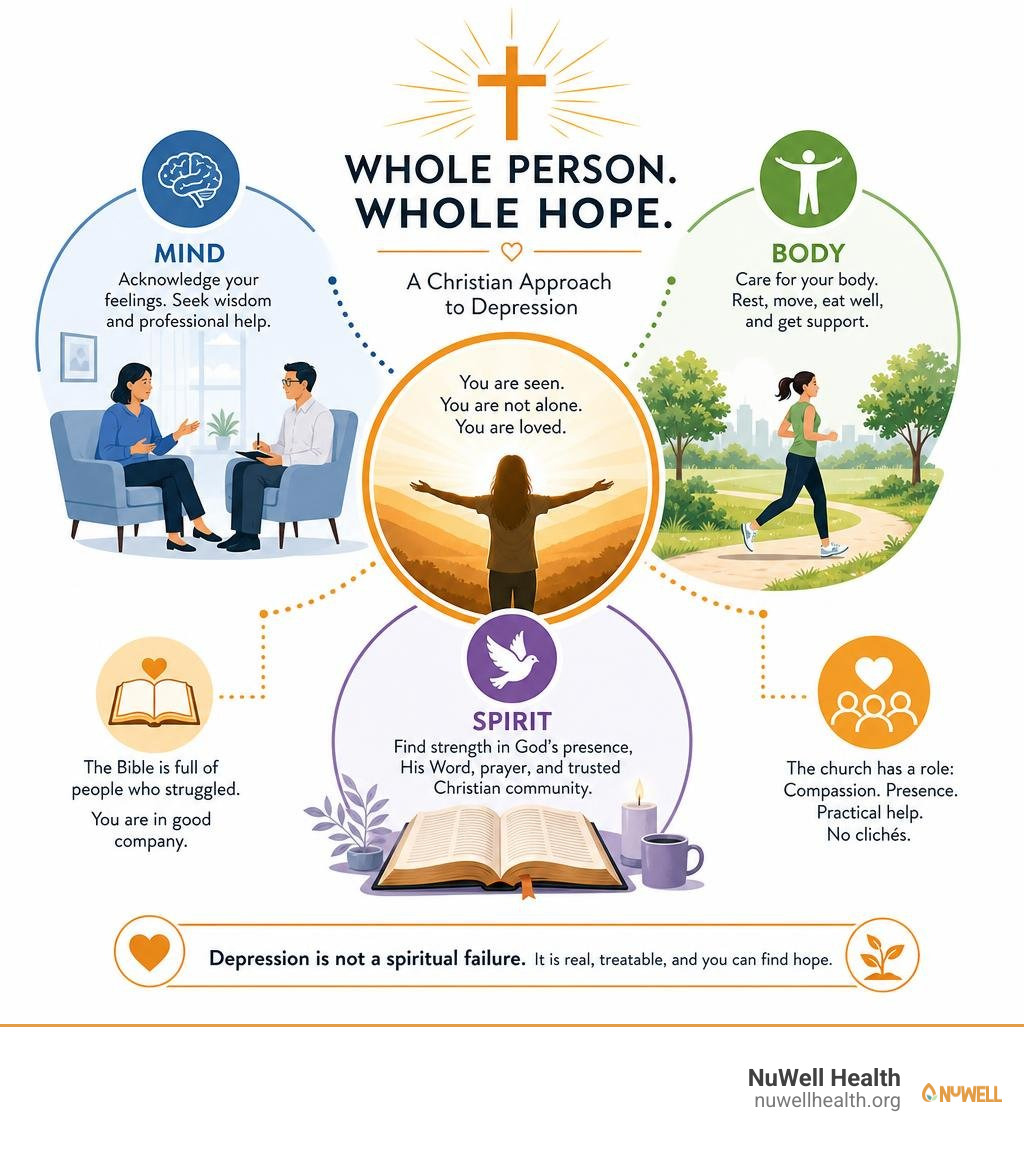
The Christian approach to depression recognizes it as a real, complex condition — not a sin, not a sign of weak faith, and not something prayer alone will always fix.
Here is what that approach looks like in practice:
- Depression is not a spiritual failure. It has biological, emotional, and spiritual dimensions — all of which matter.
- The Bible is full of people who struggled. Elijah, David, Jeremiah, and even Jesus experienced deep anguish.
- Professional help is biblical. Seeking therapy, medication, or a doctor is consistent with Christian faith — not a contradiction of it.
- Spiritual disciplines still matter. Prayer, Scripture, and community provide real support, even when they feel hard to access.
- The church has a role. Believers need compassion and practical help, not clichés.
An estimated 7 million Christians in the United States are living with depression right now. And yet, for many of them, walking through that darkness inside a faith community can feel isolating — even shameful.
You may have heard things like “just pray more” or “you wouldn’t feel this way if your faith were stronger.” Those words, however well-meaning, can do real harm.
At NuWell Health, we have found that the people who heal most fully are those who are seen as whole persons — mind, body, and spirit — not just given a Bible verse and sent home.
The truth is, depression doesn’t care how often you go to church. It is not a measure of your relationship with God. And you don’t have to choose between your faith and getting real help.
This guide is for the Christian who is struggling and needs to know they are not alone — and that there is a path forward that honors both their faith and their health.
Is Depression a Sin? Debunking Misconceptions with a Christian Approach to Depression
One of the heaviest burdens a depressed Christian carries is the nagging fear that their emotional darkness is a sin. Well-meaning friends or misinformed teachings might suggest that if you only had enough faith, or if you confessed some hidden transgression, the heavy fog would instantly lift.
But this is a profound misunderstanding of both Scripture and human biology. Depression is not a sin, nor is it a reliable indicator of weak faith.
We are not disembodied spirits; we are “embodied souls.” As explored in A Soul Beset: Anxiety and Depression in the Christian Life, our physical limitations, genetic makeup, and the general brokenness of a fallen world affect both our minds and our bodies. Just as a believer is not accused of lacking faith when they develop a stomach ulcer or experience a heart attack, they should not face spiritual condemnation for a chemical or physiological imbalance in the brain.
At NuWell Health, we emphasize that true wellness requires looking at how these physical and spiritual elements interact. When you understand The Vital Link Between Spiritual Health and Your Daily Well-Being, you can see that a struggling mind is often a cry for holistic care rather than a sign of a rebellious heart.

Elijah, David, and Jesus: Biblical Figures Who Walked Through the Darkest Valleys
If you feel overwhelmed by sorrow, you are in highly esteemed company. The Bible does not present a sanitised version of faith where everyone is constantly happy. Instead, it is filled with raw, vulnerable accounts of spiritual and emotional distress.
- Elijah’s Burnout: In 1 Kings 19, after a major spiritual victory, the prophet Elijah collapsed under a broom tree and prayed that he might die. He was exhausted, terrified, and utterly isolated. God did not lecture him or accuse him of weak faith. Instead, God sent an angel to provide physical care first—giving him food, water, and sleep.
- David’s Laments: King David, a man after God’s own heart, wrote extensively in the Psalms about his overwhelming grief. In Psalm 42, he asks, “Why, my soul, are you downcast? Why so disturbed within me?” He was intimately acquainted with emotional valleys.
- Jesus in Gethsemane: On the night before His crucifixion, Jesus experienced such intense emotional agony that He told His disciples, “My soul is overwhelmed with sorrow to the point of death.” Luke’s Gospel records that He sweat drops of blood—a rare medical phenomenon known as hematidrosis, triggered by extreme stress.
Jesus understands the pit of depression because He stepped down into it Himself. As beautifully articulated in When Faith Breaks: What Jesus Would Tell You in the Pit of Depression – Exaudi, our Savior does not stand over us in judgment when we are broken; He sits beside us in the dust.
Distinguishing Between Clinical Depression and Spiritual Struggles
While physical and spiritual health are deeply intertwined, it is vital to distinguish between clinical depression and a temporary spiritual dry spell. Treating a biological illness solely as a spiritual battle—or vice versa—can lead to immense frustration.
Clinical depression (such as Major Depressive Disorder) is characterized by specific biological symptoms that persist for weeks or months. These include anhedonia (the complete inability to feel pleasure), chronic fatigue, changes in sleep and appetite, and a persistent “gray fog” that distorts reality.
In contrast, a spiritual struggle might stem from a specific crisis of belief, unconfessed sin, or a period of feeling distant from God, but it generally does not paralyze your physical body or strip away your physiological capacity to experience joy.
Sometimes, depression can mimic spiritual warfare. The early church fathers often spoke of incurvatus in se—the soul curved in upon itself. Depression forces a terrible inward focus, making you feel entirely cut off from God and others. For an in-depth look at how these emotional patterns take root, you can read about Getting to the Bottom of Emotional Pain and Trauma. The classic resource Depression: Looking Up from the Stubborn Darkness – PDF Free Download also offers a wonderful framework for navigating these dark intersections of the heart and mind.
| Feature / Symptom | Clinical Depression | Spiritual Dry Spell / Struggle |
|---|---|---|
| Primary Cause | Multifactorial (genetic, biological, hormonal, trauma) | Relational distance from God, doubts, or lack of discipline |
| Physical Toll | Brain fog, insomnia, chronic fatigue, appetite changes | Generally none, though spiritual grief can cause mild fatigue |
| Ability to Feel Joy | Chemically blocked (anhedonia); cannot “force” happiness | Can still enjoy earthly pleasures (hobbies, food, family) |
| Response to Truth | Intellectual agreement with Scripture but zero emotional connection | convicting or comforting when engaged with the Word |
How a Holistic Christian Approach to Depression Integrates Mind, Body, and Spirit
At NuWell Health, we believe that you cannot treat the soul while ignoring the physical vessel it inhabits. In our clinical experience, we have found that many individuals struggling with what they believed was a spiritual crisis were actually experiencing severe physiological imbalances. Our brains are physical organs, subject to the same physiological imbalances as our thyroid, gut, or heart.
For example, clinical issues like hypothyroidism, systemic inflammation, or severe gut dysbiosis can directly trigger depressive symptoms. When we address the Mind-Body Connection in Mental Health and understand Why Your Holistic Mind Body Spirit Connection Matters, we open the door to true, lasting restoration that honors how God uniquely designed us. Our team at NuWell Health has repeatedly witnessed how restoring gut health and reducing systemic inflammation through natural, targeted nutrition can lift the heavy mental fog that prayer alone could not resolve.
Beyond “Just Pray More”: A Compassionate Response to Well-Meaning Advice
When you are in the depths of depression, hearing clichés like “just pray more,” “have more joy,” or “count your blessings” can feel like a slap in the face. This is often called “spiritual bypassing”—using spiritual platitudes to avoid the messy, complicated reality of human suffering.
We see this clearly in the story of Job. When Job lost everything, his friends sat with him in silence for seven days. That was their most comforting moment. But when they started talking—accusing Job of hidden sin and offering simplistic theological formulas to “fix” his grief—they became, in Job’s words, “miserable comforters.”
If you are on the receiving end of this advice, it usually comes from a place of fear or helplessness. People want to fix what they do not understand. However, you do not have to accept their simple answers. It is perfectly okay to say, “I know you want me to feel better, but right now, I need you to just walk beside me, not try to fix me.” At NuWell Health, we have worked with hundreds of believers who felt crushed by this spiritual pressure; we have found that introducing gentle, natural health solutions—such as nervous system regulation techniques and herbal adaptogens—provides the physical relief needed to quiet the mind. For those looking for a comprehensive view of how to care for the mind naturally, our resources on Natural Health Mental Health offer a gentle, evidence-based alternative to empty clichés.

Practicing Spiritual Disciplines When You Feel Too Depressed to Engage
When your emotions are completely frozen, standard spiritual disciplines can feel like climbing Mount Everest. Reading a chapter of the Bible might result in zero comprehension, and prayer can feel like talking to a brick wall.
In these moments, we must shift our focus from internal feelings to external realities. In the article Depressed Christians and the Good News of Outwardness – Christian Psychology Institute, the author highlights that when our internal emotional world is broken, we must lean on the objective, physical promises of God.
Here is how you can engage when you have no strength:
- Pray in shorthand: When long prayers are impossible, cry out simple phrases: “Lord, have mercy,” or “Jesus, help.” God hears the groans of our hearts.
- Focus on the physical sacraments: Touch the water of your baptism, take Holy Communion, and listen to the spoken words of Scripture read aloud by others. Let the physical senses carry the weight when your mind is tired.
- Let others carry your faith: If you cannot pray, ask a trusted brother or sister in Christ to pray over you. Let their voices carry you to the throne of grace.
Is It Biblical to Seek Professional Help, Therapy, and Medication?
Some Christian circles harbor a deep suspicion of psychiatric medication and professional counseling, viewing them as a lack of trust in God. However, a truly biblical worldview recognizes that God is the author of all truth and healing.
God has provided us with “common grace”—the gifts of science, medicine, and clinical wisdom that help relieve human suffering. Luke, the author of one of the Gospels and the book of Acts, was openly referred to as “the beloved physician.”
When it comes to psychiatric medication, we must avoid both uncritical enthusiasm (treating pills as a spiritual cure-all) and moralistic suspicion (treating pills as a sin). In church history, theologians like Basil of Caesarea taught that physical medicine is a gift from God designed to model the care of the soul.
Medication is a helpful but limited tool. It can quiet the overwhelming physical symptoms of depression—like a biological buffer—giving you the mental space to engage in the deeper, transformative work of Healing from Within a Deep Dive into Mind Root Cause Treatments.
Integrating Natural Healing and a Christian Approach to Depression
At NuWell Health, our goal is always to uncover and resolve the root causes of physical and mental distress rather than simply masking the symptoms. In our years of practice, we have observed that combining a solid Christian faith with a focus on natural, preventive lifestyle medicine supports the body’s natural capacity to heal far more effectively than relying on synthetic interventions alone.
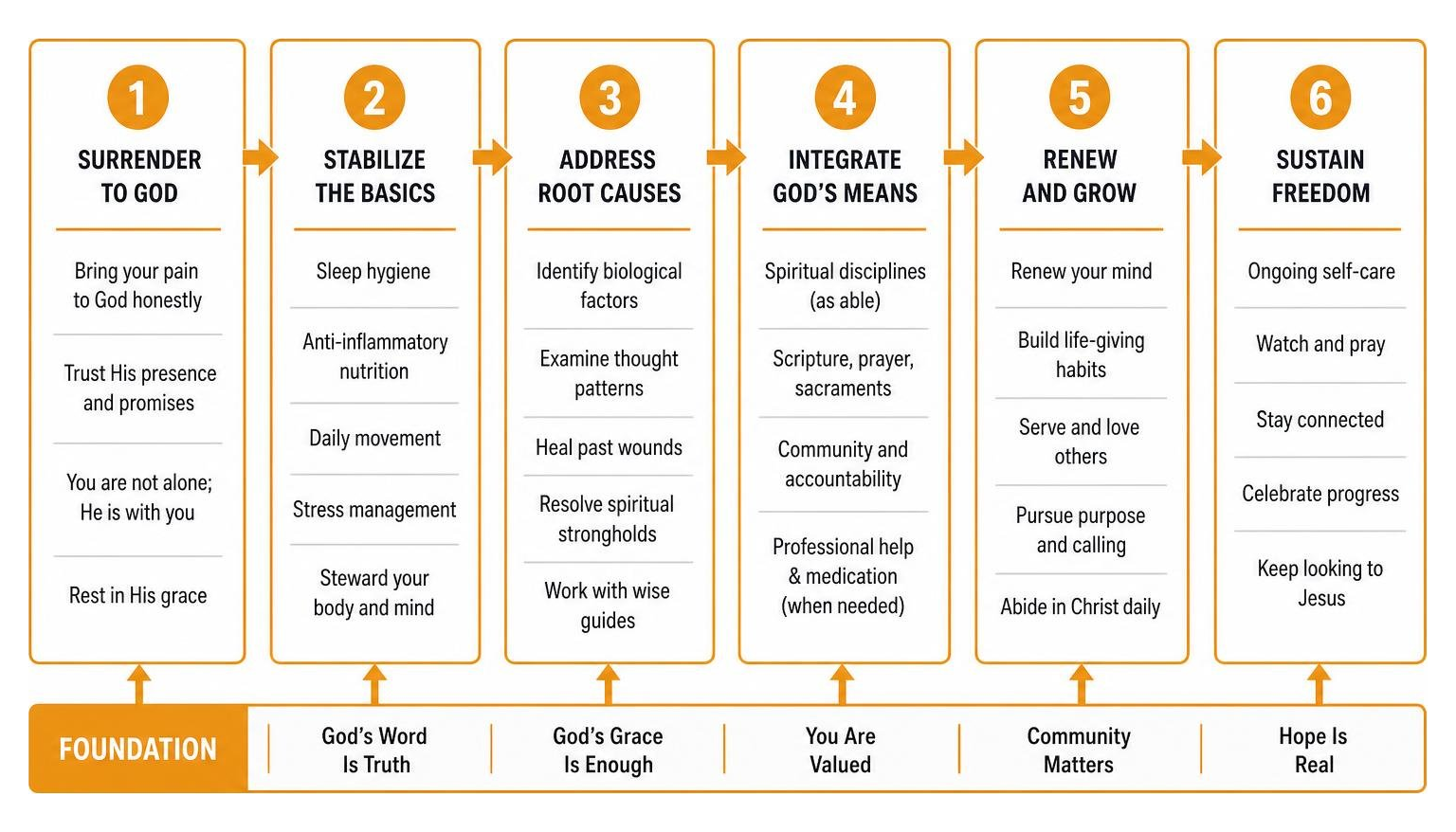
Our clinical experience at NuWell Health shows that when clients prioritize human natural health solutions—such as optimizing sleep hygiene, adopting an anti-inflammatory diet, engaging in daily movement, and practicing stress management—they experience a profound restoration of both mental clarity and spiritual vitality. To explore how these natural therapies can complement your journey of faith, read our Natural Health for Mental Health Complete Guide. Taking care of your physical body is a holy act of stewardship, and The Power Is Yours a Guide to Empowered Root Cause Healing.
How the Church Can Destigmatize Mental Illness and Support Struggling Believers
For the church to become a true sanctuary for those with depression, we must move past the fear of mental illness. We need to cultivate a culture where talking about emotional pain is met with the same tenderness as talking about a cancer diagnosis.
Here are practical ways a church community can support those walking through darkness:
- Keep confidences: Never disguise gossip as a “prayer request.” If someone shares their mental health struggles, protect their story.
- Offer practical help: Don’t just say, “Let me know if you need anything.” Instead, offer specific help. Clean their apartment, drop off a home-cooked meal, or offer to drive them to their therapy appointments.
- Allow space to step back: If a volunteer or leader is struggling with severe depression, allow them to step down from their responsibilities without guilt. Prioritize their healing over their church service.
- Normalize professional care: Pastors can play a massive role by openly speaking about counseling and mental health from the pulpit, showing that seeking help is a courageous step of wisdom.
Caring for ourselves and others in this way is a beautiful form of stewardship. To learn more about building these healthy boundaries and habits, check out The Ultimate Guide to Self-Care Empowerment.
Frequently Asked Questions about Faith and Depression
What if I do all the “right” spiritual things and still feel depressed?
If you are praying, reading Scripture, attending church, and still find yourself in darkness, please do not question your salvation or assume God has rejected you. Depression is a physical and emotional trial, not a spiritual report card.
In these moments, rest in the truth of God’s grace rather than your spiritual performance. Your standing with God is based entirely on what Christ has done, not on how happy you feel today. If you are feeling spiritually exhausted and need a safe space to reset, you can explore how to Cleanse Your Soul a Guide to Total Healing.
Is taking antidepressants a sign of weak faith?
No, absolutely not. Taking prescribed medication to correct a physiological imbalance in the brain is a form of creaturely care and stewardship of the body God gave you. It is no more a sign of weak faith than taking insulin for diabetes.
How can I find hope when I feel completely abandoned by God?
When you are deeply depressed, your feelings will lie to you. They will tell you that you are entirely alone and that God has forgotten you. In these moments, you must cling to unchanging biblical truths rather than your fleeting emotions.
Psalm 139 promises us that there is nowhere we can go to flee from God’s presence—even if we make our bed in the depths of the pit, He is there. Take small, gentle steps each day. Focus on getting through just the next hour, resting in the promise that God is close to the brokenhearted. If you are looking to rebuild that inner connection and find peace, consider reading about Alignment 101 Reconnecting Your Inner Self.
Conclusion
At NuWell Health, we walk alongside you on this journey toward wholeness. We believe that your faith is a powerful anchor, but we also know that your physical body and mind require gentle, root-cause care to truly thrive.
“At NuWell Health, we have found that addressing the root causes of depression through a holistic, Christian-centered framework brings lasting restoration to the mind, body, and spirit.”
If you are ready to take a compassionate, natural, and faith-aligned approach to your mental well-being, we invite you to read The Ultimate Guide to Christian Faith and Natural Healing Practices. You do not have to walk through the dark valley alone—hope and healing are within reach.
This article was researched with AI and heavily edited by Jordan Oliver for accuracy and relevance.
Jordan is an author, ordained minister, and online host for His Glory TV, sharing biblically grounded insights on faith, prayer, and spiritual growth. She is the co-founder of Triple-Braided Cord Co., an intercessory prayer and healing ministry inspired by Ecclesiastes 4:12.
Jordan holds a Bachelor’s degree in Communications and Religious Studies from High Point University and is a certified Spiritual Life Coach through iCoachLife in Nashville, Tennessee. Drawing from her ministry, coaching, and academic experience, she creates trustworthy, faith-based content that helps readers grow in their relationship with God. Learn more about Jordan here.