
If you keep asking, “Why am I tired but wired at night?” the feeling can come from more than one place. Stress and worry, a body clock that runs late, caffeine or alcohol, medicines, pain, sleep disorders, mental-health concerns, and the pressure to force sleep can all keep the mind or body alert even when you feel exhausted. A short sleep note can show what repeats, and a frequent or worsening pattern is worth a conversation with a healthcare professional.
Why am I tired but wired at night when I have been exhausted all day? The phrase describes a pattern, not a diagnosis. A simple one- to two-week sleep note can help you see what repeats. If the problem is frequent, worsening, or affecting daytime safety, talk with a healthcare professional. New mood changes, severe physical symptoms, or thoughts of self-harm need faster help.
What Feeling Tired but Wired at Night Means
“Tired but wired” is everyday language for feeling worn out while your mind, body, or both still feel alert. You might have racing thoughts, tense muscles, a fast heartbeat, an urge to keep doing things, or a sudden burst of energy when you get into bed. In other words, you may feel sleepy on the couch, then wide awake once you try to sleep.
This is not the same as feeling refreshed after very little sleep. It is also not proof of a cortisol, thyroid, adrenal, or other hormone problem, because symptoms alone cannot identify the cause. If your main concern is poor recovery after a full night in bed, NuWell’s guide to being tired after sleeping enough addresses that different pattern.
Insomnia means trouble falling asleep, staying asleep, or getting good-quality sleep. According to the National Heart, Lung, and Blood Institute (NHLBI), chronic insomnia happens three or more nights a week, lasts more than three months, and is not fully explained by another health problem. An occasional hard night is common; a repeating pattern deserves attention.
Why Am I Tired but Wired at Night?
Several things can keep you tired but wired at night, and more than one may be involved at once.
Stress, worry, and the effort to force sleep
A quiet room can be the first time all day that unfinished thoughts become noticeable. Work, caregiving, conflict, finances, health concerns, grief, or tomorrow’s tasks may hold your attention. Your body can also stay tense without one clear thought attached to it.
Then a second layer may appear: worry about sleep itself. Watching the clock, calculating the hours left, or thinking “I must sleep now” can make the bed feel like a place for effort and frustration. NHLBI lists stress, along with worry about getting enough sleep, among factors that can raise the risk of insomnia or make it worse. If anxiety is strongest after waking instead, see NuWell’s guide to why you may wake up anxious.
Your body clock may be running later than your schedule
Sleep is shaped by both sleep pressure, which builds while you are awake, and your internal body clock. Light and dark have the biggest influence on that clock. The National Institute of General Medical Sciences explains that the brain signals more melatonin in the evening, and that bright light or device light at night can confuse that timing.
Late work, shift work, travel, irregular weekend schedules, bright rooms, and screens close to the face can push alerting signals later for some people. As a result, timing and light exposure are useful parts of the pattern to notice.
Caffeine, nicotine, alcohol, cannabis, or medicines may matter
NHLBI lists caffeine, nicotine, alcohol, and recreational drugs among lifestyle factors that can contribute to insomnia. Caffeine can stay active for hours, and sensitivity varies. Coffee is not the only source; tea, soda, energy drinks, chocolate, workout products, and some medicines can add to the total. Alcohol may make you drowsy at first, yet it can still disrupt sleep later in the night.
Some prescription and over-the-counter medicines can affect sleep or alertness. So can withdrawal from alcohol, sedatives, or other substances. Make a timing list and review it with a pharmacist or prescriber. Do not stop, start, or change a medicine or supplement because of this article. If regular alcohol or drug use may cause withdrawal, get medical advice before cutting back.
Pain, breathing problems, reflux, or hot flashes can block the transition to sleep
A body that is uncomfortable may stay alert for a good reason. Pain, itching, reflux, coughing, breathing trouble, hot flashes, frequent urination, restless legs, and other symptoms can make settling difficult. Loud snoring, gasping, or pauses in breathing may point to a sleep-related breathing problem that needs medical assessment.
Mental health and mood changes may be part of the picture
Anxiety, depression, trauma-related distress, grief, and a stressful season can affect sleep. Sleep and mental well-being influence each other, so both may deserve care in the same plan.
One distinction matters. Feeling exhausted but unable to sleep is different from needing much less sleep and still feeling unusually energized. The National Institute of Mental Health lists decreased need for sleep, feeling very up or extremely irritable, racing thoughts, fast speech, and being more active than usual among signs of a manic episode. New or marked changes like these call for prompt mental-health or medical evaluation.
A Four-Part Pattern Check for Tired but Wired Nights
For one or two weeks, make a brief note on nights you feel tired but wired. The goal is to make a professional conversation clearer, not to monitor every sensation.
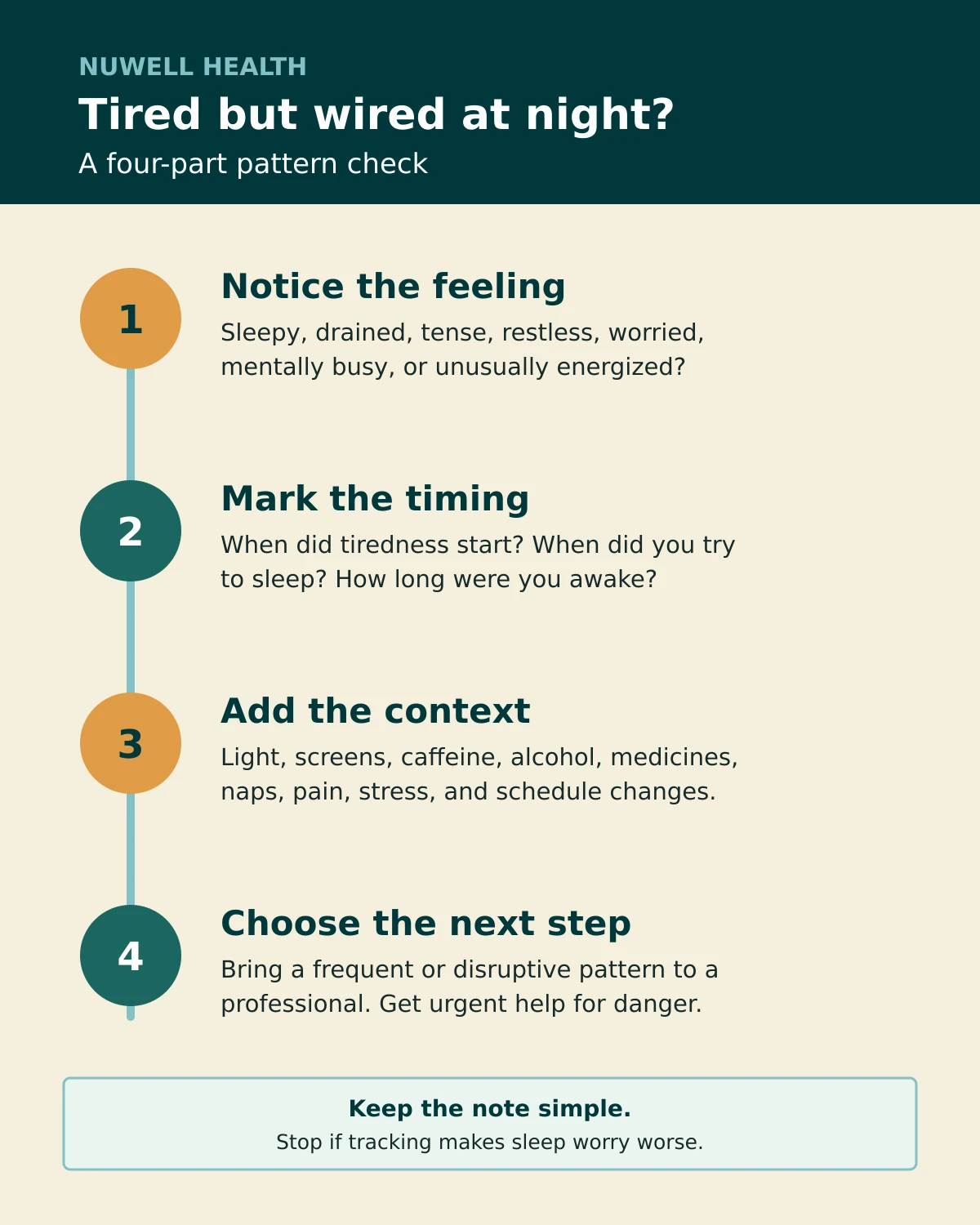
If tracking increases anxiety or compulsive clock-checking, stop the log and speak with a professional. Skip the log entirely if tracking food, sleep, or symptoms could intensify an eating disorder or health anxiety.
What May Help When You Feel Tired but Wired at Night
Small, steady changes usually work better than an overhaul. Pick one or two of these ideas to try first.
Anchor the morning before chasing a perfect bedtime
A fairly steady wake time can give your body clock a consistent daily signal. Get daylight during the morning when you can, and keep large shifts between workdays and days off modest. Your job, caregiving, disability, or health may limit control over the schedule, so aim for one practical change, not a rigid routine.
Create a clear transition into rest
Use the last part of the evening for lower-light, lower-demand activities. Put tomorrow’s tasks on paper, finish urgent messages, and choose something quiet that does not ask you to solve more problems. The CDC also recommends going to bed and getting up at the same time every day, keeping the bedroom quiet, relaxing, and cool, avoiding caffeine in the afternoon or evening, and turning off electronic devices at least 30 minutes before bedtime.
Do not turn the bed into a place for long battles
If you are awake and growing frustrated, get out of bed and do something quiet in dim light until sleepiness returns. Avoid checking the clock. This idea comes from stimulus control, one part of cognitive behavioral therapy for insomnia (CBT-I), which aims to reconnect the bed with sleep rather than worry and wakefulness.
NHLBI notes that CBT-I is usually recommended as the first treatment for long-term insomnia, and it includes more than basic sleep tips. A trained clinician can tailor it to your health, work, caregiving, and safety needs. Do not attempt strict sleep restriction on your own if you have bipolar disorder, seizures, a fall risk, dangerous daytime sleepiness, or another concern that calls for professional oversight.
Review timing instead of making abrupt changes
For a week or two, notice when you use caffeine, nicotine, alcohol, cannabis, cold medicines, stimulants, or sleep products. Then ask a pharmacist or prescriber whether any item or combination may be relevant. “Natural” sleep aids can cause side effects and interactions, and NHLBI advises talking with your provider before using dietary supplements. Do not treat a bedtime supplement as risk-free.
When to Talk With a Health Professional
Talk with a primary-care clinician, sleep professional, or mental-health professional when trouble falling asleep happens often, lasts for several weeks, is getting worse, or affects mood, memory, work, relationships, or safety. Seek assessment sooner for:
- Loud snoring, gasping, or pauses in breathing during sleep
- Restless legs or new pain that keeps you awake
- Breathing trouble, marked reflux, or hot flashes that disrupt sleep
- A pattern that began after a medicine change
- Daytime sleepiness strong enough to affect driving or work; do not drive when you feel very sleepy
A sleep diary can help. NHLBI suggests keeping one for one to two weeks before an appointment, recording sleep and wake times, naps, daytime sleepiness, caffeine or alcohol, and exercise. A clinician can then decide whether the next step is CBT-I, a medicine review, evaluation for another sleep disorder, mental-health care, medical testing, or a combination.
When to Get Urgent Help
Call 911 or seek emergency care for chest pain, severe trouble breathing, fainting, a seizure, sudden confusion, new one-sided weakness, or another symptom that may be life-threatening.
Get prompt evaluation for a new decreased need for sleep with unusually elevated or irritable mood, racing thoughts, fast speech, risky behavior, or a major increase in activity.
If you are having thoughts of suicide or urges to hurt yourself, call or text 988 for the Suicide & Crisis Lifeline in the United States. Call 911 if there is immediate danger. NuWell Health does not provide emergency or crisis services.
How Whole-Person Support May Fit When You Feel Wired at Night
Feeling tired but wired at night can involve sleep timing, daily demands, nourishment, stress, mental well-being, medicines, physical symptoms, and the care you already receive. NuWell’s mental-health-informed natural health support and the NuWell Method can help you organize that larger story within each practitioner’s role. Virtual support is available nationwide, subject to practitioner availability, professional scope, and your individual needs.
Root-cause care here means exploring possible contributing factors. It does not promise that one hidden cause will be found or that natural care will replace medical treatment, counseling, psychiatric care, or prescribed medication. Testing and supplements are not automatic. Faith, meaning, or spiritual well-being may be included if you want them to be; no particular belief is required.
Frequently Asked Questions
Why do I get a burst of energy right before bed?
A late burst of alertness may relate to your body-clock timing, evening light, stress, a second wind after pushing through fatigue, caffeine or other substances, or a learned pattern of becoming alert in bed. Timing alone cannot identify the cause. Track the pattern briefly and seek care if it is frequent or disruptive.
Does being tired but wired mean my cortisol is too high?
No. Cortisol follows a daily rhythm and responds to stress, but this symptom does not diagnose high cortisol, adrenal disease, or a “cortisol imbalance.” A qualified healthcare professional can decide whether any medical evaluation is appropriate based on your full history.
Should I take melatonin when I cannot wind down at night?
Melatonin is not right for everyone. NHLBI notes that research has not proven melatonin is an effective treatment for insomnia, and it can cause side effects such as daytime sleepiness, headaches, and upset stomach. Ask a pharmacist or qualified healthcare professional before using it, especially if you are pregnant, take prescription medicines, or have a complex health history.
When is feeling tired but wired at night a sign of insomnia?
Insomnia involves trouble falling asleep, staying asleep, or getting good-quality sleep. Chronic insomnia occurs three or more nights a week and lasts more than three months. A clinician can assess whether insomnia or another concern better explains your pattern.
Can NuWell diagnose or treat my sleep problem?
No. NuWell offers virtual, whole-person natural health support within each practitioner’s professional role. It may complement medical and mental-health care by helping you review sleep, stress, nutrition, daily rhythms, and related concerns. It does not replace diagnosis, treatment, counseling, psychiatric care, or emergency services.
Sources
- Insomnia: What Is Insomnia? National Heart, Lung, and Blood Institute. Accessed October 23, 2026.
- About Sleep. Centers for Disease Control and Prevention, May 15, 2024. Accessed October 23, 2026.
- Insomnia Causes and Risk Factors. NHLBI. Accessed October 23, 2026.
- Circadian Rhythms. National Institute of General Medical Sciences. Accessed October 23, 2026.
- Insomnia Diagnosis. NHLBI. Accessed October 23, 2026.
- Bipolar Disorder. National Institute of Mental Health. Accessed October 23, 2026.
- Insomnia Treatment. NHLBI. Accessed October 23, 2026.