
The short answerCan low blood sugar feel like anxiety? Yes. Low blood glucose can cause shaking, sweating, hunger, dizziness, irritability, and a fast heartbeat, and both the American Diabetes Association and the CDC list nervousness or anxiety as a symptom. But symptoms alone can’t tell you which one is happening. Your next step depends on whether you have diabetes or use glucose-lowering medicine, whether a low reading was actually documented, and whether any signs need urgent care.
Can low blood sugar feel like anxiety? It can, and the overlap confuses a lot of people. A medical concern can create anxious feelings. Anxiety can create strong physical sensations. Sometimes both deserve attention. This guide explains the overlap without asking you to choose between physical and emotional health, and it covers what actually confirms low blood sugar, what to note during an episode, and when to get help.
Can Low Blood Sugar Feel Like Anxiety? Why the Symptoms Overlap
Glucose is an important fuel for the brain and body. When blood glucose falls, the body releases epinephrine (adrenaline), the “fight-or-flight” hormone, to help bring it back up. According to the American Diabetes Association, that hormone is what causes many early low-glucose symptoms, including shakiness, sweating, a fast heartbeat, and feeling nervous or anxious.
If glucose drops further, the brain may stop working as it should. The NIDDK lists trouble seeing or speaking clearly, confusion, loss of consciousness, and seizures among the more serious signs. Severe hypoglycemia needs immediate help.
Anxiety and panic can mimic low blood sugar symptoms
The National Institute of Mental Health describes panic attacks with a pounding or racing heart, sweating, chills, trembling, trouble breathing, weakness or dizziness, tingly or numb hands, chest pain, and stomach pain or nausea. That overlap is why a strong body sensation is not a diagnosis. Timing, setting, a glucose reading when appropriate, your medical history, and how the episode unfolds all matter.
Anxiety symptoms are real physical experiences. They shouldn’t be dismissed as “all in your head.” At the same time, treating every anxious feeling as a blood-sugar problem can delay the right mental-health or medical care. If your anxious feelings tend to hit first thing in the day, NuWell’s guide to waking up anxious looks at that pattern.
Hypoglycemia or Anxiety: Clues That Help Organize the Pattern
No single clue settles whether low blood sugar or anxiety is behind what you feel. These differences can help you describe an episode to a qualified professional.
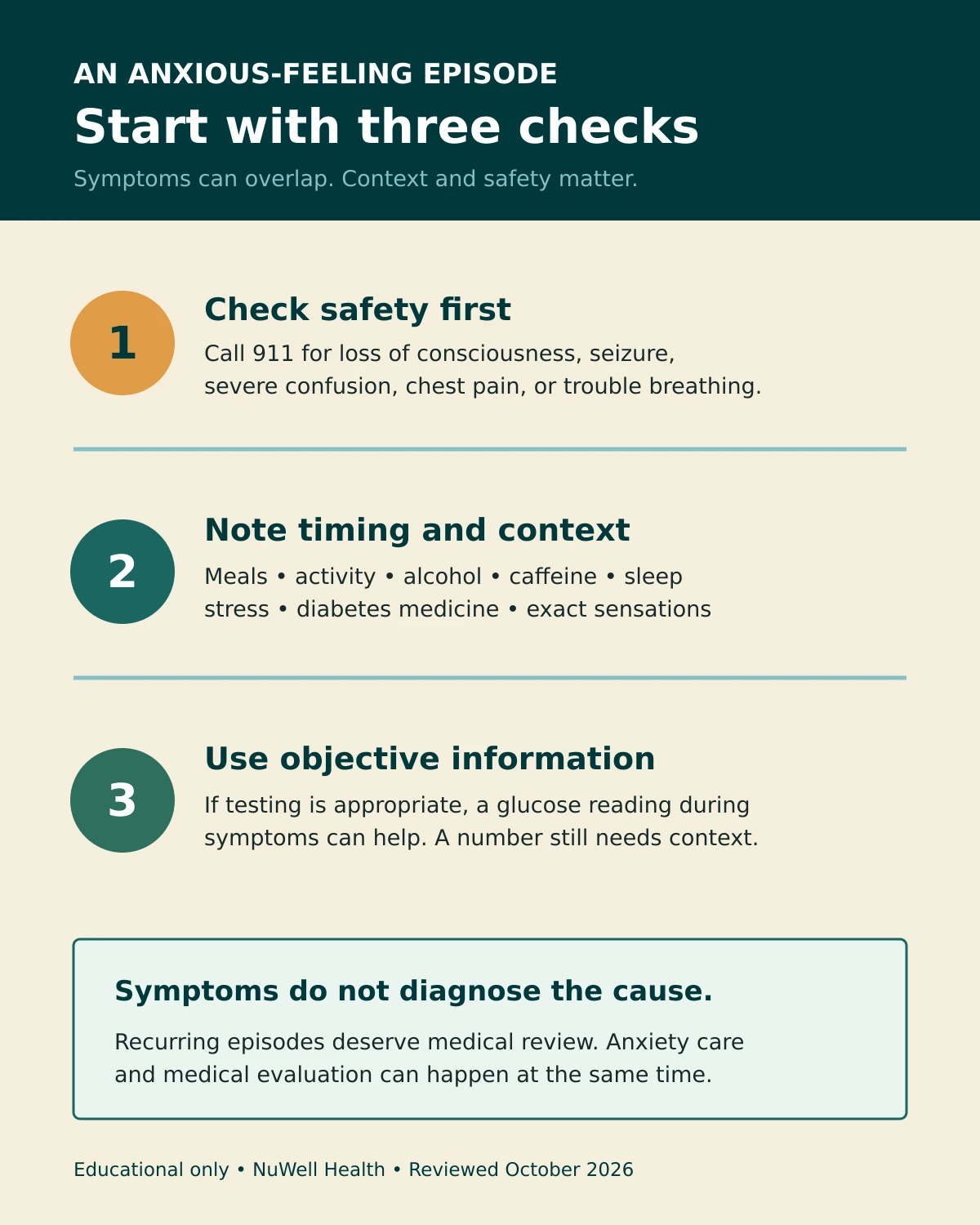
If your main symptom is sleepiness or fatigue after a meal rather than shakiness or fear, NuWell’s guide on being tired after eating covers that different pattern.
What Actually Confirms Low Blood Sugar
For many people with diabetes, a blood glucose reading below 70 mg/dL is considered low and calls for action under their care plan, according to the CDC and NIDDK. The CDC describes readings below 54 mg/dL as a severe low. Personal targets and treatment instructions differ, so follow the plan from your diabetes care team.
Mayo Clinic notes that hypoglycemia in people without diabetes is much less common. In someone not taking diabetes medicine, clinicians don’t diagnose it from shakiness or anxiety alone. Mayo Clinic describes a guideline called the Whipple triad, which looks for all three of these:
- Symptoms of hypoglycemia.
- A laboratory blood test showing low plasma glucose.
- Relief of symptoms when the low glucose is corrected.
A home meter or continuous glucose monitor can give useful context for some people, but a reading doesn’t explain why a low happened, and a single number can mislead. Mayo Clinic reports that about 1 in 10 healthy people has a glucose level below 70 mg/dL after a sugary drink with no symptoms at all. If you don’t have diabetes and keep having suspected episodes, ask a medical clinician how the pattern should be evaluated rather than trying to prove the cause on your own.
Reactive hypoglycemia vs. after-meal anxiety
Reactive (postprandial) hypoglycemia means low blood glucose that happens after a meal. Similar shaky or anxious feelings can happen after eating without a confirmed low. Calling every post-meal episode “reactive hypoglycemia” skips the measurement and medical review needed to know what’s going on.
Other things can also cause palpitations, dizziness, weakness, sweating, or anxiety-like symptoms. Mayo Clinic lists some medicines, heavy alcohol use without food, and certain serious medical conditions among the non-diabetes causes of true lows. Other possible contributors to look-alike symptoms include dehydration, anemia, thyroid problems, heart rhythm problems, infection, sleep loss, caffeine or stimulant use, and anxiety disorders. A clinician can decide what needs checking based on your full history.
Signs worth a medical conversation
- Lows that repeat, happen during sleep, or happen without warning symptoms
- Suspected low-glucose episodes when you don’t have diabetes
- Episodes after weight-loss or stomach surgery
- Fainting or near-fainting, or episodes that interfere with driving, work, or exercise
- Panic-like attacks that keep coming back or make you avoid places, food, or activity
What to Do When Low Blood Sugar or Anxiety Symptoms Hit
If you have diabetes or use glucose-lowering medicine
Follow the low-glucose plan from your diabetes care team. Check your glucose if your plan says to and it’s safe to do so, then use the treatment and follow-up check your clinician taught you. Don’t change insulin or other medicine on your own because of one episode. Contact your care team when lows repeat, happen during sleep, come without warning, or interfere with driving, exercise, work, or daily life.
If you have not been diagnosed with hypoglycemia
Pause what you’re doing and get to a safe place. Don’t drive, operate machinery, climb, or bathe alone while you feel shaky, dizzy, or confused. Note when the episode started and what you feel. You may feel sure it’s low blood sugar, or sure it’s anxiety, but that isn’t the same as knowing. If symptoms are mild and settle, book a routine medical appointment when they recur or disrupt your life.
Avoid treating every anxious sensation with sugar or jumping into a restrictive eating plan. That can hide the pattern, make nutrition harder, or increase fear around food. A clinician can help decide whether glucose testing, a medication review, a heart evaluation, nutrition support, or a mental-health assessment makes sense. Testing is not automatic.
When to Seek Urgent Help
Call 911 or seek emergency care for loss of consciousness, a seizure, severe confusion, inability to swallow safely, new trouble speaking or seeing, chest pain, severe trouble breathing, signs of a stroke, or another symptom that feels life-threatening. Do not give food or drink to someone who is unconscious or can’t swallow safely.
If you have diabetes, follow your emergency hypoglycemia plan and use prescribed rescue treatment, such as glucagon, as directed. Someone who can’t treat themselves needs prompt help.
If the episode comes with thoughts of suicide, self-harm, or immediate emotional danger, call or text 988 for the Suicide & Crisis Lifeline in the United States. Call 911 when there is immediate danger. NuWell does not provide emergency or crisis care.
Track the Pattern Without Letting the Log Take Over
A short record can help a clinician see whether the anxiety you feel lines up with low blood sugar, or doesn’t. For one or two weeks, note:
- When symptoms started and how long they lasted
- The exact sensations: hunger, sweating, shaking, fear, breathlessness, chest discomfort, confusion, or faintness
- Meal timing and general meal contents, without labeling foods good or bad
- Activity, alcohol, caffeine, sleep, illness, and stress that day
- Medicines or supplements taken near the episode, without changing them
- A glucose reading, only if you already have appropriate equipment and know how to use it
Bring the record to a primary-care or diabetes professional. If fear of symptoms is leading you to avoid food, check your body over and over, or pull back from daily life, tell a mental-health professional too. Skip the food log altogether if tracking could intensify an eating disorder, health anxiety, or compulsive checking.
Low-Risk Habits When Low Blood Sugar and Anxiety Symptoms Overlap
Keep meals reasonably regular
Long gaps between meals can leave some people hungry, lightheaded, or more aware of body sensations. A steady meal pattern may help, but no schedule fits everyone. People with diabetes, pregnancy, kidney disease, digestive conditions, an eating-disorder history, or other medical needs should follow individualized guidance.
Build balanced meals without chasing a perfect formula
Meals that include protein, fiber-rich foods, and a satisfying source of carbohydrate may support steadier energy for many people. This is general education, not a treatment plan. You don’t need to cut out sugar, carbohydrates, gluten, dairy, or another food group because of one symptom.
Notice caffeine, alcohol, sleep, and stress
Caffeine can cause jitteriness, sweating, and a fast heartbeat. Alcohol can lower glucose, especially for people taking insulin or certain diabetes medicines, and the CDC lists drinking at night as a cause of overnight lows. Poor sleep and ongoing stress can make body sensations feel louder. Change one thing at a time when it’s safe, and talk with a professional about recurring symptoms.
Keep up appropriate anxiety care
Don’t stop counseling, psychiatric care, or medication while you explore physical contributors. A medical evaluation and anxiety treatment can happen at the same time. NuWell’s mental-health-informed natural health support is designed to complement appropriate medical and mental-health care, not replace it.
How NuWell Can Help You Look at the Whole Pattern
Episodes where low blood sugar and anxiety seem to feel the same can be hard to explain in a short appointment. The NuWell Method looks at physical health, mental well-being, lifestyle, and spiritual well-being together. A practitioner can help you organize symptom timing, nutrition, sleep, stress, existing test results, the medicines and supplements you already take, and the care you already receive, then sort out which questions belong with your medical team.
Root-cause care means exploring possible contributing factors. It doesn’t promise that every episode has one hidden cause. NuWell’s support is non-clinical: diagnosis and treatment of hypoglycemia, diabetes, heart conditions, and anxiety disorders belong with qualified medical or mental-health professionals. Supplements and testing are not automatic.
Faith, meaning, or prayer can be part of the conversation if you want them to be. No particular belief is required. You can meet NuWell’s practitioners to learn about their roles and training.
Frequently Asked Questions
Can low blood sugar feel like a panic attack?
Yes. Low blood glucose and a panic attack can both cause shaking, sweating, a racing heart, dizziness, weakness, and an anxious feeling. Symptoms alone cannot confirm the cause. A glucose reading during symptoms may help when testing is appropriate, and recurring episodes deserve professional review.
How can I tell whether it is hypoglycemia or anxiety?
Look at the full pattern: diabetes and medication history, meal and activity timing, the presence of intense fear or breathlessness, an appropriate glucose reading during symptoms, and what happens next. No single symptom reliably separates them. A medical clinician can evaluate physical causes, while a mental-health professional can assess recurring panic or anxiety.
Can anxiety make blood sugar drop?
Anxiety can create sensations that resemble low blood glucose, but those sensations do not prove that glucose has dropped. Stress hormones can affect glucose regulation in complex ways. If you suspect true low blood glucose, ask a clinician how to document and evaluate it.
Should I buy a continuous glucose monitor for anxiety-like episodes?
Not necessarily. Continuous glucose monitors are important tools for many people with diabetes, but their readings need context. A device cannot diagnose anxiety or explain an episode by itself. Ask a qualified clinician whether glucose monitoring is appropriate for you.
Can people without diabetes have reactive hypoglycemia?
Yes, but hypoglycemia in people without diabetes is much less common. It is confirmed by showing that symptoms occur with a low glucose level and improve when glucose returns to normal. Similar post-meal symptoms can occur without a true low.
Sources
- American Diabetes Association. Signs, Symptoms, and Treatment for Hypoglycemia (Low Blood Glucose). Accessed October 21, 2026.
- Centers for Disease Control and Prevention. Low Blood Sugar (Hypoglycemia). Reviewed May 16, 2024.
- Mayo Clinic. Hypoglycemia: Diagnosis and treatment. Accessed October 21, 2026.
- Mayo Clinic. Hypoglycemia: Symptoms and causes. Accessed October 21, 2026.
- National Institute of Diabetes and Digestive and Kidney Diseases. Low Blood Glucose (Hypoglycemia). Accessed October 21, 2026.
- National Institute of Mental Health. Panic Disorder: What You Need to Know. Accessed October 21, 2026.

This article was researched with the help of AI and reviewed and edited by Stephen A. Luther, MEd, MSEd, LPC, for accuracy, Scripture references, and faithfulness to NuWell’s non-clinical scope.
Steve brings decades of counseling and leadership experience to the NuWell Method, helping connect mental-health insight, faith, and whole-person collaboration around each client’s lived experience. Read Steve’s profile.
Educational scope: This article provides general education. It does not diagnose or treat a condition, provide emergency care, or replace individualized advice from a qualified medical, nutrition, or mental-health professional. Do not start, stop, or change medication, supplements, testing, or treatment based on this article.