

Why Digestive System Diseases Deserve Your Full Attention
Digestive system diseases affect more than 60 million people in the United States alone — and yet most people don’t take them seriously until symptoms become impossible to ignore.
Here’s a quick look at the most common digestive diseases you should know:
| Disease | Type | Key Symptom |
|---|---|---|
| IBS | Functional, Chronic | Bloating, cramping, irregular bowel habits |
| GERD | Structural, Chronic | Heartburn, acid reflux |
| Celiac Disease | Autoimmune, Chronic | Gluten intolerance, malabsorption |
| Crohn’s Disease | Inflammatory, Chronic | Abdominal pain, diarrhea, weight loss |
| Ulcerative Colitis | Inflammatory, Chronic | Bloody diarrhea, urgency |
| Gastroenteritis | Acute | Nausea, vomiting, diarrhea |
| Diverticulitis | Can be acute or chronic | Lower abdominal pain, fever |
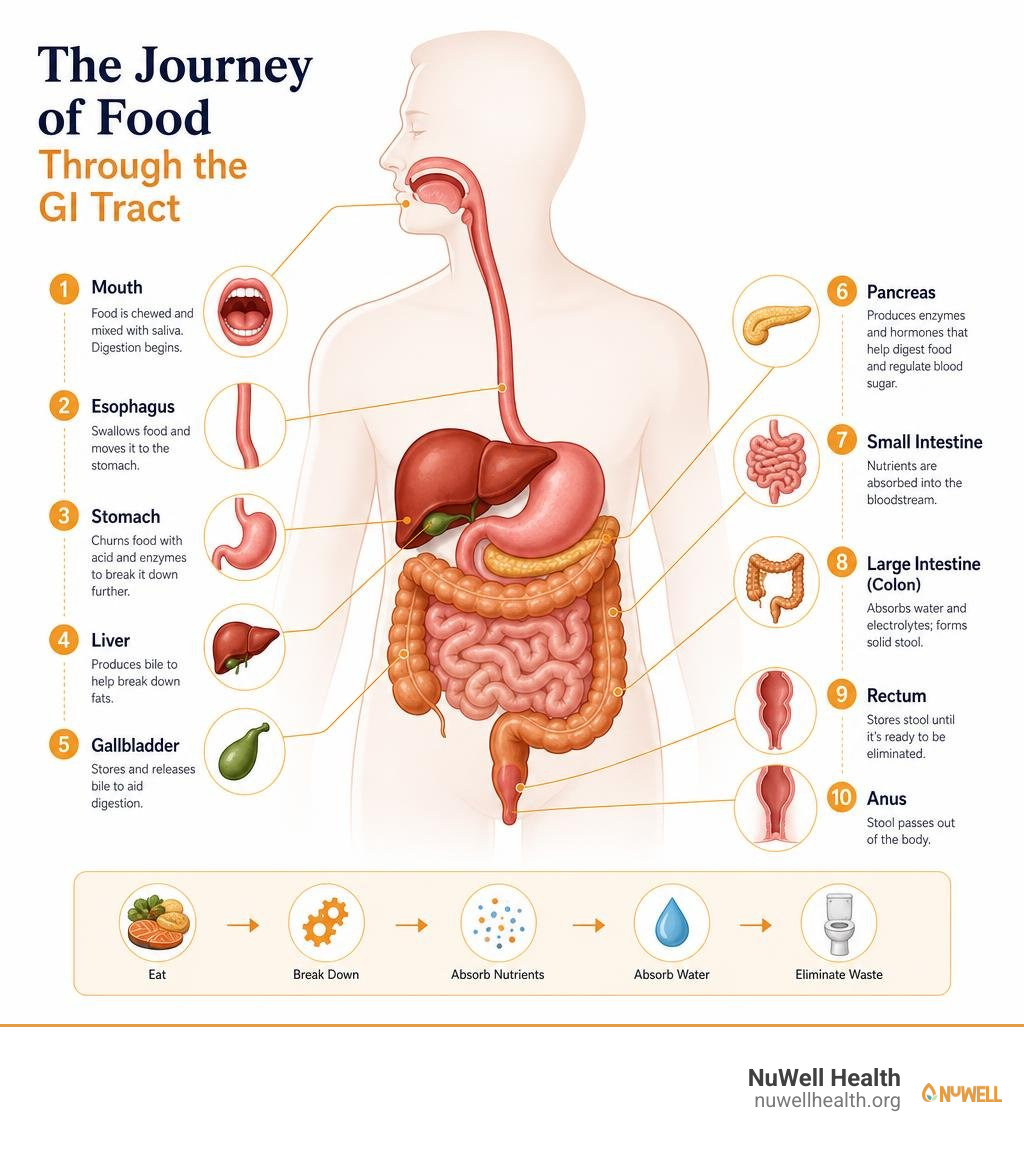
Your digestive system — made up of the GI tract, liver, pancreas, and gallbladder — does far more than process food. It breaks down nutrients your body needs for energy, growth, and cell repair. When something goes wrong in that system, the effects ripple far beyond your gut.
In our clinical experience at NuWell Health, we have found that many people suffer for years before getting real answers. We regularly see clients who have cycled through multiple medications that merely mask symptoms without addressing the underlying drivers. Our natural, whole-body approach is designed to change that.
Whether you’re dealing with occasional discomfort or a diagnosed chronic condition, understanding what’s happening down there is the first step toward lasting relief.
Digestive system diseases terms to learn:
Understanding digestive system diseases: Classifications and Key Differences
When navigating gut health, the sheer number of medical terms can feel overwhelming. To make sense of it all, gastroenterologists group digestive system diseases into clear categories. Understanding these classifications helps us look past the symptoms to find the true root causes.
| Classification Type | Description | Key Examples |
|---|---|---|
| Acute | Sudden onset, short-lived, often completely curable | Gastroenteritis, Acute Appendicitis |
| Chronic | Long-lasting, progressive, requires ongoing management | Crohn’s Disease, GERD, Celiac Disease |
| Functional | GI tract looks structurally normal but does not function properly | Irritable Bowel Syndrome (IBS), Functional Constipation |
| Structural | Visible physical abnormalities, inflammation, or tissue damage | Colon Polyps, Hemorrhoids, Diverticular Disease |
According to a major epidemiological study published on the Global burden of digestive diseases, non-malignant digestive disorders represent a massive 32.04% of the global non-communicable disease prevalence. This highlights why understanding your gut is so critical to your overall well-being. If you are currently searching for answers regarding your own symptoms, you can find More info about digestive issues to help guide your journey.

Acute vs. Chronic digestive system diseases
The first major distinction is how long the disease lasts.
Acute conditions strike suddenly and typically resolve within a few days or weeks once treated. A classic example is acute gastroenteritis (often called the “stomach flu”), which is usually a brief viral or bacterial infection. Another is acute appendicitis, a sudden inflammation of the appendix that requires immediate surgical removal.
Chronic conditions, on the other hand, are lifelong companions that develop slowly and persist over months, years, or decades. Gastroesophageal Reflux Disease (GERD), Crohn’s disease, ulcerative colitis, and celiac disease fall squarely into this category. These require sustained, proactive lifestyle management and targeted therapies to keep symptoms in check and prevent permanent tissue damage. For a deeper dive into what sets these long-term issues in motion, take a look at An Essential Guide to Digestive Issues Causes.
Functional vs. Structural digestive system diseases
The second major distinction is whether there is physical damage to the digestive tract.
Functional GI disorders are conditions where the digestive system looks entirely normal under a microscope, during an endoscopy, or on an MRI, yet it does not function properly. Irritable Bowel Syndrome (IBS) and chronic functional constipation are the most common examples. Because there are no visible physical lesions, conventional tests often come back “normal,” leaving patients feeling frustrated and dismissed. At NuWell Health, we recognize that functional disorders are deeply tied to the gut-brain axis, nervous system dysregulation, and cellular-level imbalances that standard imaging simply cannot capture.
Structural GI diseases feature clear, visible physical abnormalities. If a doctor performs a colonoscopy and finds colon polyps, hemorrhoids, or the small inflamed pouches characteristic of diverticulitis, they are looking at structural changes. These conditions involve actual physical alterations, tissue erosion, or structural blockages within the GI tract. To better understand how these differences impact your health, read our guide on Digestive Issues Causes Demystified.
The Big Five: Common Gastrointestinal Disorders Demystified
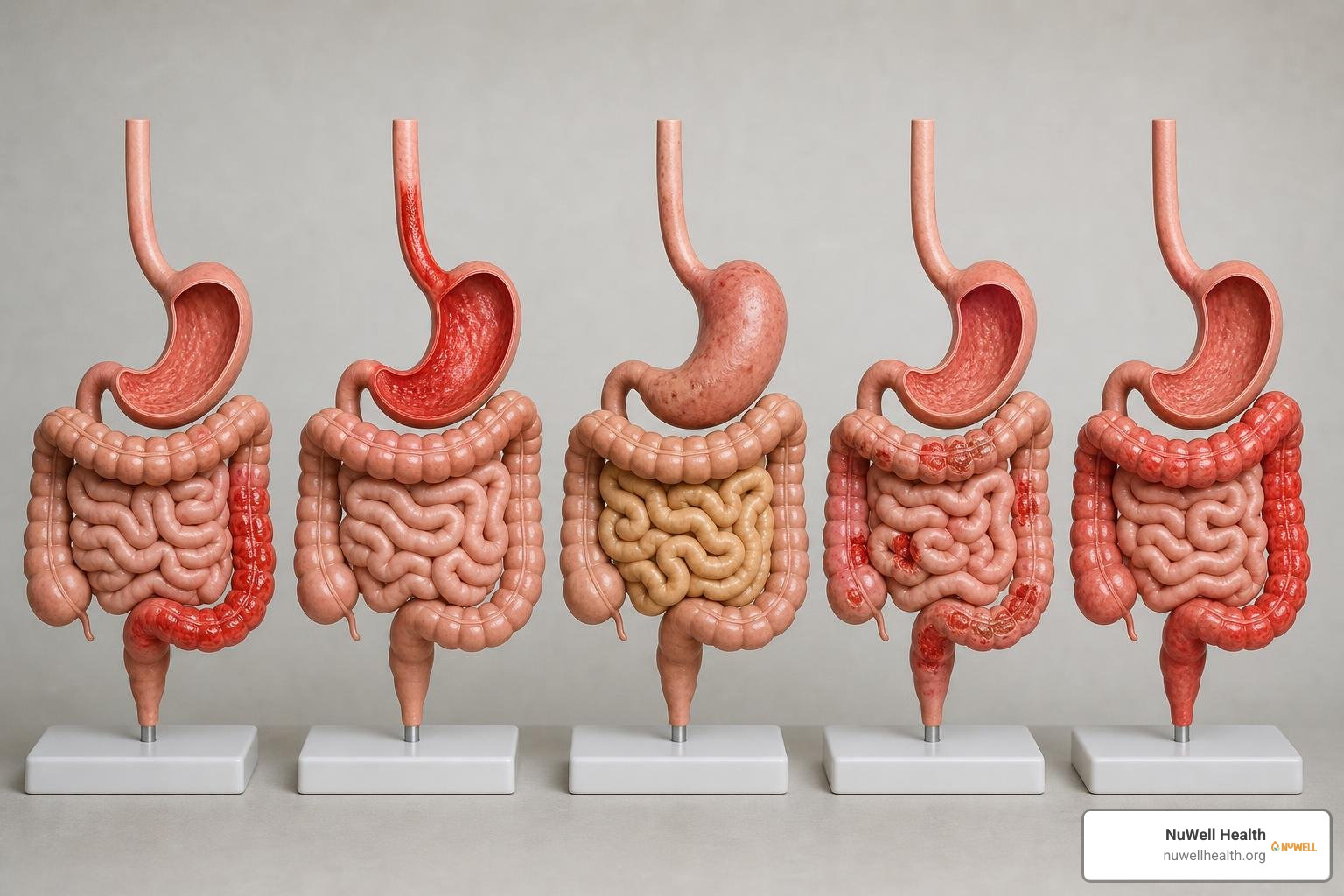
While there are dozens of different digestive system diseases, five specific chronic conditions make up the vast majority of gastroenterology visits. Let’s demystify these common disorders.
Irritable Bowel Syndrome (IBS) and GERD
Irritable Bowel Syndrome (IBS) is a classic functional disorder of gut-brain interaction. Instead of structural damage, IBS is characterized by hypersensitive nerves in the gut wall and abnormal motility (the way food is moved through the intestines). This leads to abdominal pain, bloating, gas, and irregular bowel habits (diarrhea, constipation, or a frustrating mix of both). People with IBS also frequently notice a harmless but alarming white mucus in their stool. To start managing these symptoms naturally, explore these Tame Your Tummy with These Proven IBS Self-Care Strategies.
Gastroesophageal Reflux Disease (GERD) occurs when the lower esophageal sphincter (LES) — the muscular valve between your esophagus and stomach — becomes weak or relaxes inappropriately. This allows highly acidic gastric juices to flow backward into the esophagus, causing severe, burning pain commonly known as heartburn. Over time, chronic exposure to stomach acid can alter the cellular lining of the esophagus, a pre-cancerous condition known as Barrett’s esophagus.
Inflammatory Bowel Disease (IBD) vs. Celiac Disease
It is common to confuse Inflammatory Bowel Disease (IBD) and Celiac Disease, but they have entirely different mechanisms.
Celiac Disease is a strict autoimmune reaction. When someone with celiac disease consumes gluten (a protein found in wheat, barley, and rye), their immune system mistakenly attacks the lining of the small intestine. This flattens the tiny, finger-like villi responsible for nutrient absorption, leading to severe malnutrition and systemic inflammation. The only treatment is a lifelong, strict gluten-free diet.
Inflammatory Bowel Disease (IBD) is a term that primarily encompasses two distinct conditions: Crohn’s disease and ulcerative colitis.
- Crohn’s Disease is characterized by transmural inflammation, meaning it penetrates through all layers of the intestinal wall. It can strike anywhere from the mouth to the anus, though it most commonly affects the distal ileum (the end of the small intestine). Crohn’s is famous for presenting with “skip lesions” — segments of healthy tissue cleanly demarcated between patches of severe inflammation. For a deep clinical dive, you can read this Scientific overview of Crohn Disease.
- Ulcerative Colitis (UC) is limited strictly to the colon and rectum. Unlike Crohn’s, the inflammation in UC is continuous (no skip lesions) and affects only the innermost mucosal and submucosal layers of the bowel wall. It frequently presents with painful bloody diarrhea and urgent bowel movements. To learn more about how clinicians differentiate and treat these complex conditions, refer to this Inflammatory Bowel Disease clinical reference.
Beyond the Gut: How Digestive Health Impacts the Whole Body
We often think of the digestive system as an isolated plumbing system. In reality, your gut is the central hub of your entire physical, mental, and spiritual well-being.
According to clinical insights on the Physiology of the Gastrointestinal system, 90% of all nutrient absorption occurs in the small intestine. When digestive system diseases disrupt this process, the entire body suffers from malabsorption. For instance, parietal cells in the stomach secrete a glycoprotein called intrinsic factor, which is the absolute gatekeeper for Vitamin B12 absorption in the ileum. Without it, you can develop pernicious anemia, leading to severe fatigue, brain fog, and neurological damage.
Furthermore, chronic gut inflammation doesn’t stay in the gut. Inflammatory cytokines can cross into the bloodstream, triggering systemic inflammation that manifests as:
- Joint pain and arthritis
- Skin conditions like eczema, psoriasis, or erythema nodosum
- Intestinal dysbiosis affecting kidney function, a pathway explored in The Gut-Kidney Connection: Why Kidney Disease Causes Digestive Issues
- Accelerated cognitive and physical decline in older adults, as detailed in Aging and Aching: Digestive Problems in the Elderly
The gut-brain axis also plays a massive role. The gut contains its own nervous system — the enteric nervous system — which communicates constantly with your brain. When your gut is inflamed or unbalanced, it sends distress signals to the brain, frequently manifesting as anxiety, depression, and chronic fatigue.
Holistic and Medical Approaches to Managing Chronic GI Conditions

When managing chronic digestive system diseases, conventional medicine often relies on a “step-up” or “step-down” pharmacological approach.
For mild cases, doctors may use localized anti-inflammatories. For moderate-to-severe IBD, they often prescribe powerful immunosuppressants or biologics (such as anti-TNF therapies) to calm the immune system.
When medications fail, surgery may be necessary. Up to 25% of all ulcerative colitis patients eventually require a total colectomy (removal of the colon) to control their disease. Similarly, 30% to 55% of Crohn’s disease patients will ultimately require a major abdominal operation to remove severely strictured or obstructed segments of the bowel. You can read more about these conventional treatment pathways in this Crohn Disease clinical management guide.
Through our hands-on work with hundreds of clients at NuWell Health, we have seen firsthand that there is a better, more complete way to heal. While conventional medical interventions are sometimes necessary to manage acute crises, our experience shows they often come with significant side effects and fail to address the root causes of the disease.
We advocate for a holistic, natural approach that prioritizes human natural health solutions over synthetic suppression, focusing on:
- Dietary Reconstruction: Transitioning to an anti-inflammatory, nutrient-dense diet (such as a clean Mediterranean diet) to heal the gut lining and support a diverse microbiome.
- Nervous System Regulation: Managing stress biologically to prevent the nervous system from triggering inflammatory cascades in the gut.
- Gentle, Natural Therapies: Utilizing targeted herbal supports, lifestyle modifications, and self-care strategies that work with the body’s natural healing design rather than suppressing it.
To explore how to implement these changes in your daily life, read The Ultimate Guide to Lifestyle Changes for IBS and Happy Digestion.
Warning Signs and Diagnostic Tests: When to See a Gastroenterologist
While occasional gas or mild indigestion is normal, certain “red-flag” symptoms should never be ignored. If you experience any of the following, you should consult a gastroenterologist promptly:
- Blood in your stool (either bright red or dark, tarry stools)
- Unexplained, rapid weight loss
- Difficulty swallowing (dysphagia) or a feeling that food is stuck in your chest
- Persistent, severe abdominal pain that wakes you up at night
- Chronic, unexplained diarrhea or vomiting
To evaluate these symptoms, specialists use a variety of diagnostic tools:
- Colonoscopy: A thin, flexible tube with a camera is used to inspect the entire length of the large intestine. This is the gold standard for detecting colon polyps and preventing colorectal cancer (which is one of the most common and preventable cancers in the U.S.).
- Upper Endoscopy (EGD): Allows doctors to examine the lining of your esophagus, stomach, and duodenum.
- Fecal Calprotectin: A simple, non-invasive stool test that measures intestinal inflammation, helping doctors differentiate between functional disorders like IBS and inflammatory diseases like IBD.
Frequently Asked Questions about Digestive Health
What is the difference between diverticulosis and diverticulitis?
Diverticulosis refers to the presence of small, outward-bulging pouches (called diverticula) along the walls of the large intestine. These pouches are incredibly common as we age and usually cause no symptoms at all.
Diverticulitis occurs when these pouches become inflamed or infected, often because fecal material or bacteria becomes trapped inside them. This results in severe lower abdominal pain (usually on the left side), fever, and nausea, requiring immediate medical attention.
How does stress biologically trigger IBD and IBS flare-ups?
The link between stress and gut flares is entirely physical. When you experience psychological stress, your brain activates the sympathetic nervous system and releases cortisol.
This hormonal shift directly signals the intestinal cells to decrease the production of the protective mucus layer in your gut. Without this protective barrier, the gut becomes more permeable (often called “leaky gut”), allowing bacteria to cross into the intestinal wall, triggering acute inflammation and severe muscle cramping.
Can lifestyle changes completely reverse chronic digestive issues?
In our practice at NuWell Health, we have consistently observed that addressing root causes leads to lasting wellness. While genetic conditions like Celiac disease require lifelong dietary management (avoiding gluten), our clinical experience shows that many chronic functional and inflammatory conditions can be brought into deep, long-term remission through targeted lifestyle changes. By optimizing your diet, managing stress, restoring your gut microbiome, and prioritizing restful sleep, you give your body the environment it needs to repair and heal itself.
Conclusion
Your digestive health is not just about what you eat; it is a reflection of how you care for your mind, body, and spirit. At NuWell Health, we are dedicated to helping you move beyond symptom management and guide you toward true, root-cause healing.
By integrating a compassionate, Christian perspective on wellness with evidence-based natural health practices, we empower you to take control of your health with fewer side effects and a focus on long-term prevention.
If you are ready to stop guessing and start healing, we invite you to take the first step today. Take control of your digestive health and partner with us on your journey to lasting wellness.