
Why Digestive Issues Affect More People Than You Think
Digestive issues are among the most common health complaints in the United States — and they range from occasional bloating after a meal to chronic conditions that disrupt daily life.
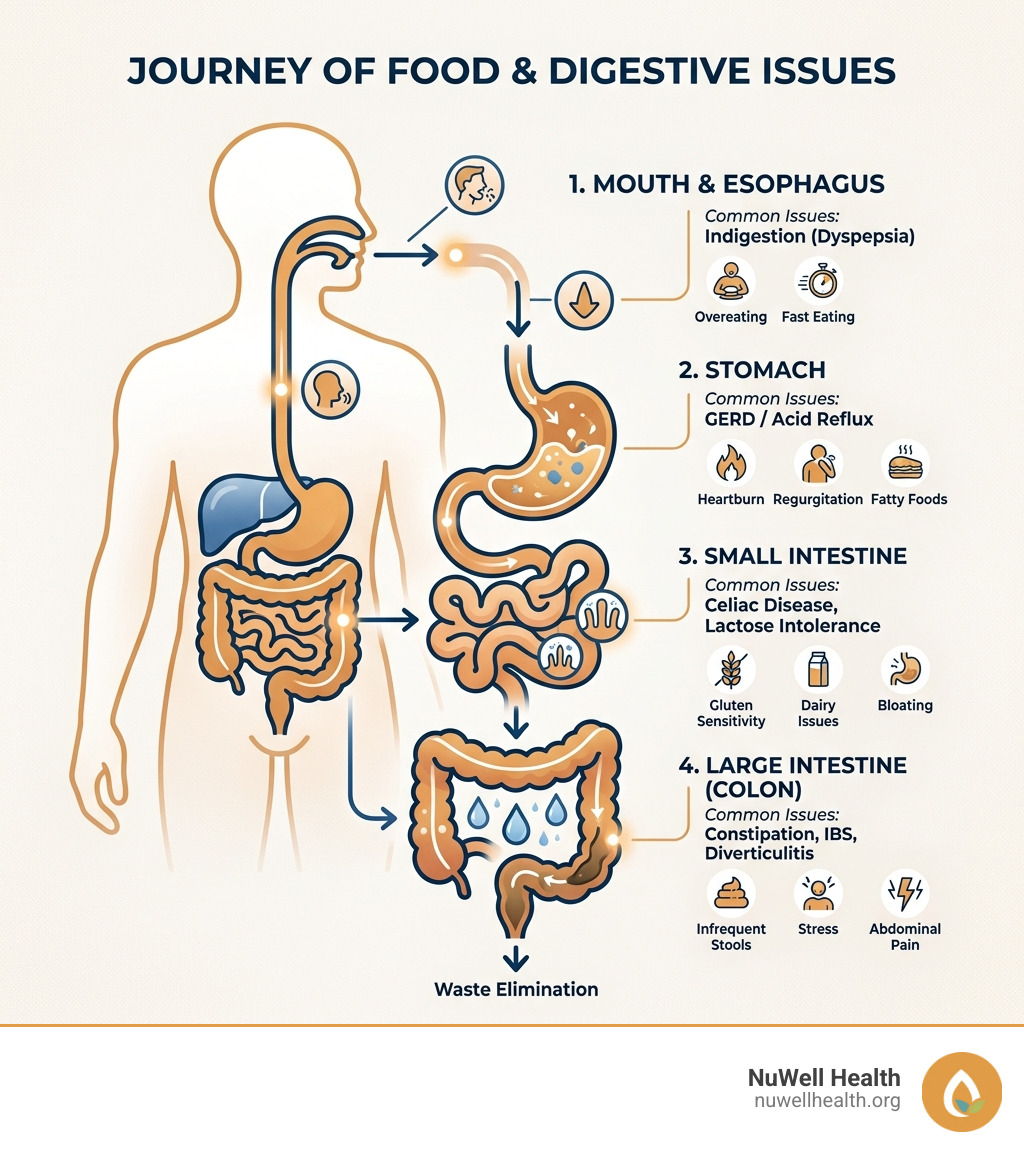
Here is a quick overview of the most common digestive issues and what causes them:
| Digestive Issue | Key Symptoms | Common Triggers |
|---|---|---|
| GERD / Acid Reflux | Heartburn, regurgitation | Fatty foods, lying down after eating |
| IBS | Cramping, bloating, diarrhea or constipation | Stress, food sensitivities |
| Indigestion (Dyspepsia) | Upper abdominal discomfort, nausea, fullness | Overeating, H. pylori, medications |
| Celiac Disease | Diarrhea, fatigue, bloating | Gluten consumption |
| Lactose Intolerance | Gas, bloating, diarrhea | Dairy products |
| Constipation | Infrequent or difficult stools | Low fiber, dehydration, stress |
| Diverticulitis | Abdominal pain, fever | Low-fiber diet, aging |
More than 60 million Americans are affected by a digestive disease. That is nearly one in five people. Yet many suffer for years without understanding why their symptoms keep coming back.
The digestive system is more than just your stomach. It includes the entire gastrointestinal (GI) tract — from your mouth to your rectum — plus the liver, pancreas, and gallbladder. Together, these organs break down food into nutrients your body uses for energy, growth, and cell repair.
When something disrupts that process, the effects ripple outward. Poor digestion can drain your energy, affect your mood, and compromise your immune system.
At NuWell Health, we have found that understanding the “why” behind your symptoms is the first step toward lasting relief — not just managing discomfort, but resolving it at the root.
Understanding Common Digestive Issues and Symptoms

When we talk about digestive issues, we are referring to a broad spectrum of disorders that can affect any part of the GI tract. According to Johns Hopkins Medicine, these disorders range from mild annoyances to severe, life-altering conditions.
Identifying the signals your body is sending is the first step in our journey together. Your body doesn’t just “act up” for no reason; symptoms like bloating, nausea, and heartburn are messages. For instance, Gastroesophageal Reflux Disease (GERD) affects an estimated 20 percent of the U.S. population, causing persistent heartburn and potential damage to the esophagus if left unaddressed.
Identifying Common Digestive Issues
Many of our clients come to us feeling frustrated because their symptoms don’t always fit into a neat little box. However, several conditions appear more frequently than others:
- Irritable Bowel Syndrome (IBS): This is a common condition affecting the stomach and intestines. Symptoms include cramping, abdominal pain, bloating, gas, and diarrhea or constipation. Interestingly, Mayo Clinic notes that IBS affects women twice as often as men in the U.S.
- Celiac Disease: This is an autoimmune response to gluten. It’s a serious condition, yet an estimated two and one-half million Americans are undiagnosed and at risk for long-term complications like osteoporosis or intestinal damage.
- Food Sensitivities and Intolerances: Unlike a true allergy, a sensitivity can cause delayed digestive issues like bloating or brain fog. Understanding Allergies And Food Sensitivity is vital for anyone struggling with “random” flare-ups.
- Lactose Intolerance: This occurs when the body lacks the enzyme needed to break down the sugar in dairy, leading to gas and diarrhea.
- Chronic Diarrhea: This can be a symptom of many things, from infections to Digestive diseases like Crohn’s or ulcerative colitis.
The Impact of Chronic Inflammation
At NuWell Health, we believe that inflammation is often the “silent driver” behind many chronic digestive issues. While acute inflammation is a healthy response to injury, chronic inflammation can lead to tissue damage and systemic health problems.
| Feature | Acute Symptoms | Chronic Symptoms |
|---|---|---|
| Duration | Short-term (days) | Long-term (months/years) |
| Cause | Infection or minor irritation | Persistent triggers, autoimmune issues |
| Gut Impact | Temporary upset stomach | Lasting damage, malabsorption |
| Systemic Effect | Localized | Can lead to Chronic Pain And Inflammation |
When the immune system stays on high alert, it can lead to an Autoimmune response, where the body begins attacking its own healthy cells in the gut lining. This is frequently seen in conditions like Crohn’s disease and ulcerative colitis, collectively known as Inflammatory Bowel Disease (IBD).
Functional vs. Structural: Why Your Digestive Issues Might Be Invisible

One of the most confusing aspects of digestive issues is when a person feels terrible, but their tests come back “normal.” This is the distinction between structural and functional disorders.
Structural GI Diseases
Structural (or organic) GI diseases occur when there is a visible abnormality in the organs. Doctors can see these issues during a scan or endoscopy. Examples include:
- Peptic Ulcers: About 10% of adults experience an ulcer at some point. These are often caused by H. pylori infections or long-term use of NSAIDs.
- Diverticulitis: Small pouches in the colon (diverticula) become inflamed or infected.
- Colon Polyps and Cancer: Colorectal cancer is America’s second leading cause of cancer-related deaths, making regular screenings essential.
- Hemorrhoids: Swollen veins in the lower rectum.
Functional GI Disorders
Functional disorders are different. The GI tract looks perfectly normal under a microscope or during a colonoscopy, but it doesn’t function correctly. The most famous example is Irritable Bowel Syndrome (IBS).
Another common functional issue is Indigestion (Dyspepsia). Most chronic cases of indigestion are actually “functional dyspepsia,” meaning the communication between the brain and the gut is out of sync.
At NuWell Health, we have found that functional issues often respond best to holistic lifestyle adjustments. Because there isn’t a “broken” part to surgically fix, the focus must shift to how the system works as a whole—balancing hormones, reducing stress, and optimizing nutrition.
The Gut-Brain Connection: How Stress Triggers Digestive Issues
Have you ever felt “butterflies” in your stomach before a big presentation? Or perhaps you’ve experienced “runner’s stomach” during a stressful week? This is the gut-brain connection in action.
The gut contains its own “second brain” called the enteric nervous system (ENS). This network of millions of neurons lines your GI tract and communicates constantly with your actual brain. When you are stressed, your brain sends signals that can completely disrupt your digestion.
How Stress Alters Digestion
More than 60 percent of Americans say they experience significant stress on a daily basis. This stress triggers the “fight-or-flight” response (the sympathetic nervous system). When this happens:
- Blood Flow is Diverted: Blood moves away from the gut and toward your limbs (to help you “run from the lion”).
- Muscle Contractions Change: Digestion may slow down in the stomach (causing nausea) but speed up in the colon (causing diarrhea).
- Secretions Halt: Your body stops producing as much stomach acid and digestive enzymes, leading to nutrient malabsorption.
Chronic stress doesn’t just cause temporary discomfort; it can lead to Chronic Fatigue as your body struggles to absorb the nutrients it needs to create energy.
Activating the Rest-and-Digest State
To heal digestive issues, we must learn to switch from the sympathetic (stress) state to the parasympathetic (rest-and-digest) state. This is where the vagus nerve comes in—it is the main “highway” of the gut-brain axis.
At NuWell Health, we use techniques like deep belly breathing and mindful eating to stimulate the vagus nerve. By taking just five deep breaths before a meal, you signal to your body that it is safe to digest. This is a core part of Why Holistic Health Coaching Is The Secret Sauce To Vitality.
Root Causes and Diagnostic Red Flags
While stress and diet are major players, sometimes digestive issues have deeper, more complex root causes.
- H. pylori: This bacterium is a leading cause of ulcers and chronic gastritis.
- SIBO (Small Intestinal Bacterial Overgrowth): When bacteria that should be in the large intestine migrate to the small intestine, they ferment food too early, causing intense bloating and pain.
- Gut Dysbiosis: An imbalance between “good” and “bad” bacteria in the microbiome.
- Heavy Metals: In some cases, environmental toxins can interfere with enzyme function. We often look into Heavy Metals Root Removal for clients with unexplained, persistent GI distress.
When to Seek Help for Digestive Issues
While we advocate for natural healing, there are “red flags” that require immediate clinical attention. Please consult a professional if you experience:
- Rectal bleeding or blood in your stool.
- Unexplained weight loss.
- Severe, constant abdominal pain.
- Jaundice (yellowing of the skin or eyes).
- Difficulty swallowing.
- Persistent vomiting.
Recognizing when symptoms require professional clinical intervention is a vital part of self-care. According to the Merck Manual, symptoms like “black, tarry stools” are an urgent signal that something is wrong.
Common Diagnostic Procedures
To get to the bottom of structural issues, doctors use several tests:
- Upper Endoscopy: A camera is used to look at the esophagus and stomach.
- Colonoscopy: Essential for detecting colon polyps and cancer.
- Barium Swallow: A special liquid is swallowed to show the shape of the upper GI tract on X-rays.
- Stool Tests: Used to check for infections or inflammation markers.
Understanding these tests through the lens of What Is Naturopathic Medicine allows us to integrate clinical data with holistic recovery plans.
Holistic Strategies for Managing Digestive Issues
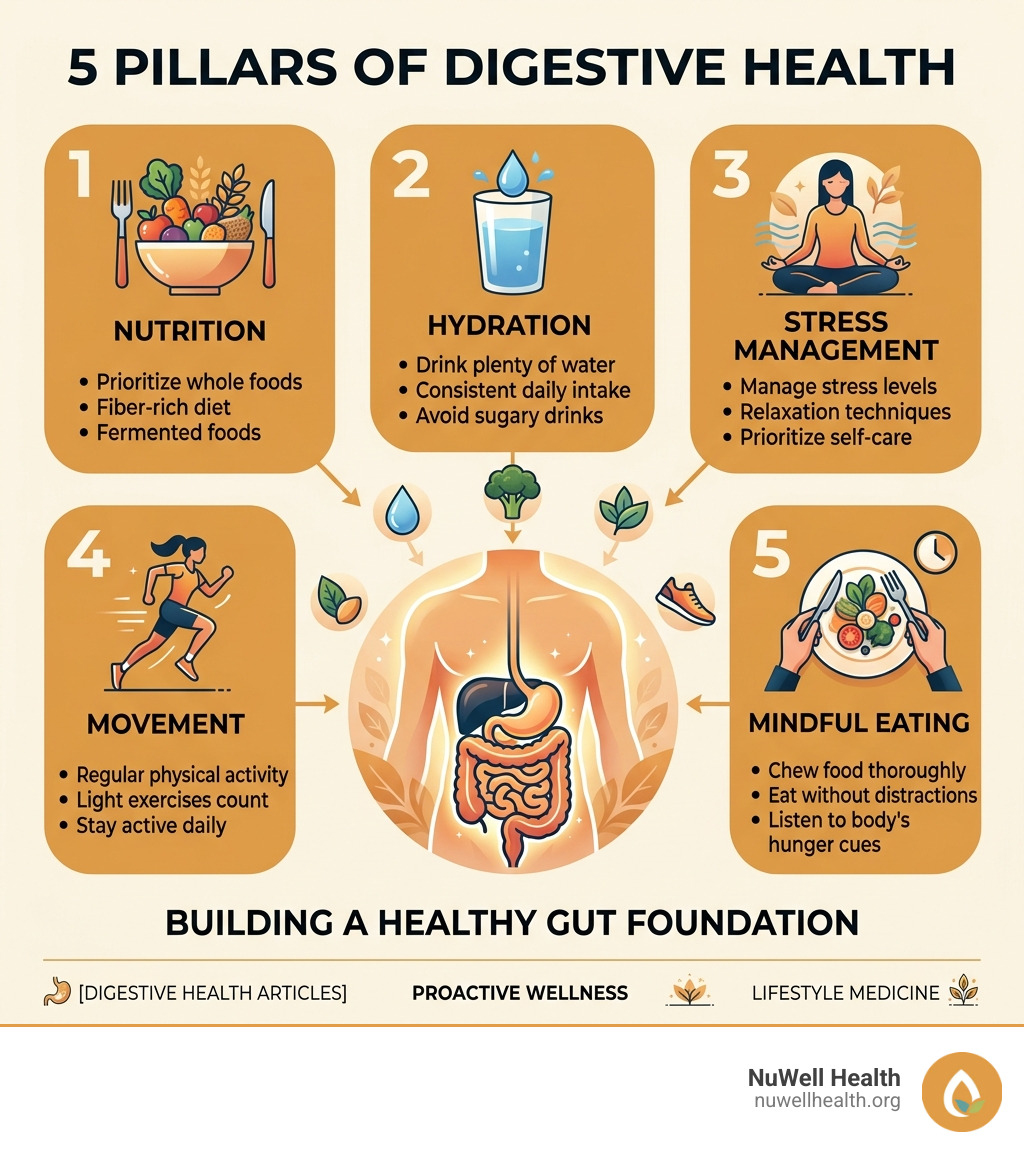
At NuWell Health, we have found that addressing the root cause through lifestyle medicine often provides the most sustainable relief. We don’t just want to “fix” the symptom; we want to create an environment where the symptom no longer needs to exist.
Dietary Foundations for Gut Health
Your fork is one of the most powerful tools you have.
- Fiber Intake: Most Americans don’t get enough fiber. Fiber acts as a “broom” for the colon and food for your good bacteria.
- Hydration: Digestion requires water. Without it, you end up with constipation and sluggishness.
- Fermented Foods: Foods like sauerkraut or kefir can help rebalance the microbiome.
- Identify Triggers: Use an elimination diet to see if dairy, gluten, or soy are driving your digestive issues.
- Weight Management: Carrying excess weight can put pressure on the stomach, worsening GERD. Our approach to Weight Management focuses on metabolic health rather than just calories.
Mindful Habits and Stress Management
It’s not just what you eat, but how you eat.
- Chew Thoroughly: Digestion begins in the mouth. Chewing your food until it’s nearly liquid takes the burden off your stomach.
- Meal Spacing: Giving your gut a break between meals allows the “migrating motor complex” to sweep through and clean out the small intestine.
- Hormone Balance: For many women, digestive issues flare up during certain times of the month. Addressing Hormone Imbalance is often the missing piece of the puzzle.
By learning How To Build A Preventive Health Plan That Actually Works, you can move from a state of “reacting” to your gut to “proactively” supporting it. This is the essence of Beginners Guide To Lifestyle Medicine.
Frequently Asked Questions about Digestive Issues
Can stress cause permanent damage to the digestive system?
While stress itself usually causes “functional” issues (how the gut works), chronic stress can lead to long-term problems. For example, stress can worsen the inflammation in IBD or contribute to the development of ulcers by weakening the stomach’s protective lining. It can also lead to “leaky gut” (increased intestinal permeability), which can trigger systemic immune issues.
What is the difference between food intolerance and a food allergy?
A food allergy is an immediate immune system reaction that can be life-threatening (like an anaphylactic peanut allergy). A food intolerance or sensitivity, however, usually stays within the digestive system. It means your body has trouble breaking down a certain food, leading to gas, bloating, and diarrhea. While not immediately life-threatening, intolerances can cause significant chronic distress.
How long does it take to heal the gut through lifestyle changes?
Every body is different, but many people begin to feel relief from bloating and indigestion within 2 to 4 weeks of making significant dietary and stress-management changes. However, deeper healing—such as rebalancing the microbiome or resolving chronic inflammation—can take 3 to 6 months or longer. Consistency is the key!
Conclusion
At NuWell Health, we believe that your digestive issues are not just a list of symptoms to be suppressed. They are a call to look deeper at your health—mind, body, and spirit. By moving away from “band-aid” solutions and toward a root-cause approach, you can reclaim your vitality and enjoy life without the constant worry of an upset stomach.
Whether it’s through adjusting your nutrition, balancing your hormones, or learning to master your stress response, we are here to support you in every step of your journey.
Start your journey to better digestive health today and discover what it feels like to truly thrive.
This article was researched with AI and heavily edited by Jordan Oliver for accuracy and relevance.
Jordan is an author, ordained minister, and online host for His Glory TV, sharing biblically grounded insights on faith, prayer, and spiritual growth. She is the co-founder of Triple-Braided Cord Co., an intercessory prayer and healing ministry inspired by Ecclesiastes 4:12.
Jordan holds a Bachelor’s degree in Communications and Religious Studies from High Point University and is a certified Spiritual Life Coach through iCoachLife in Nashville, Tennessee. Drawing from her ministry, coaching, and academic experience, she creates trustworthy, faith-based content that helps readers grow in their relationship with God. Learn more about Jordan here.