

Egg Food Intolerance: The Symptoms to Notice
Egg food intolerance is a non-allergic reaction that can cause digestive symptoms after eating egg whites, yolks, or foods made with eggs. The most common signs are:
- Bloating or excess gas
- Stomach pain or cramps
- Nausea or indigestion
- Diarrhea
- Occasionally headaches or a “brain fog” feeling
Symptoms may not show up right away. They can develop hours after eating and may be confused with stress, a busy schedule, or another food in the meal.
At NuWell Health, we have found that recurring digestive symptoms are easier to understand when people slow down and look for patterns. A simple record of meals, timing, symptoms, sleep, and stress can reveal whether eggs may be part of the problem.
An intolerance is not the same as an egg allergy. An allergy involves the immune system and can cause hives, swelling, wheezing, or anaphylaxis. Those symptoms require urgent medical attention. Intolerance symptoms are usually digestive, but persistent discomfort still deserves careful attention because it can affect energy, food choices, and daily life.
This guide explains what egg intolerance symptoms can look like, why cooking methods may matter, and how to identify an egg-related trigger safely.
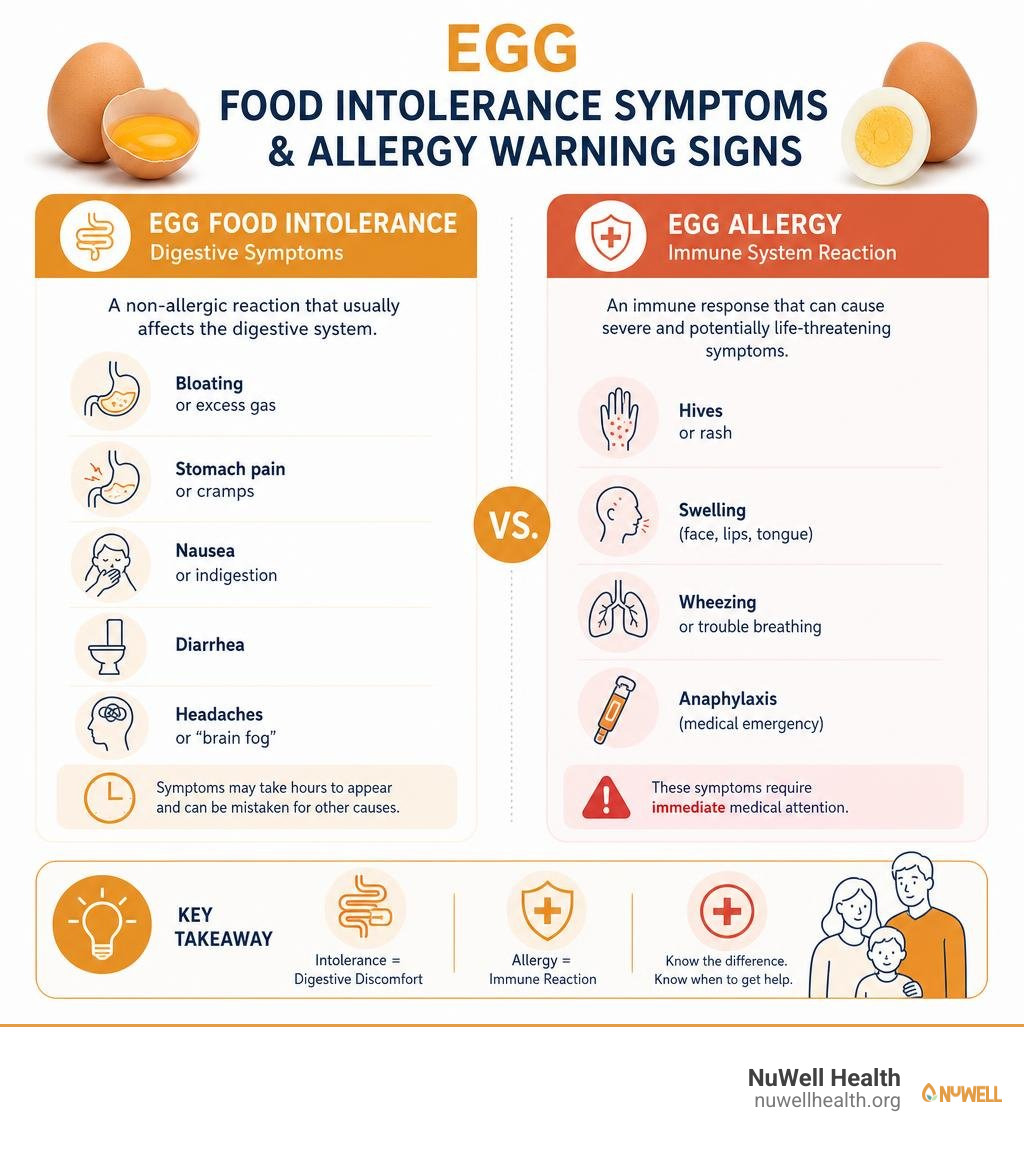
Simple guide to egg food intolerance:
Understanding Egg Food Intolerance vs. Egg Allergy
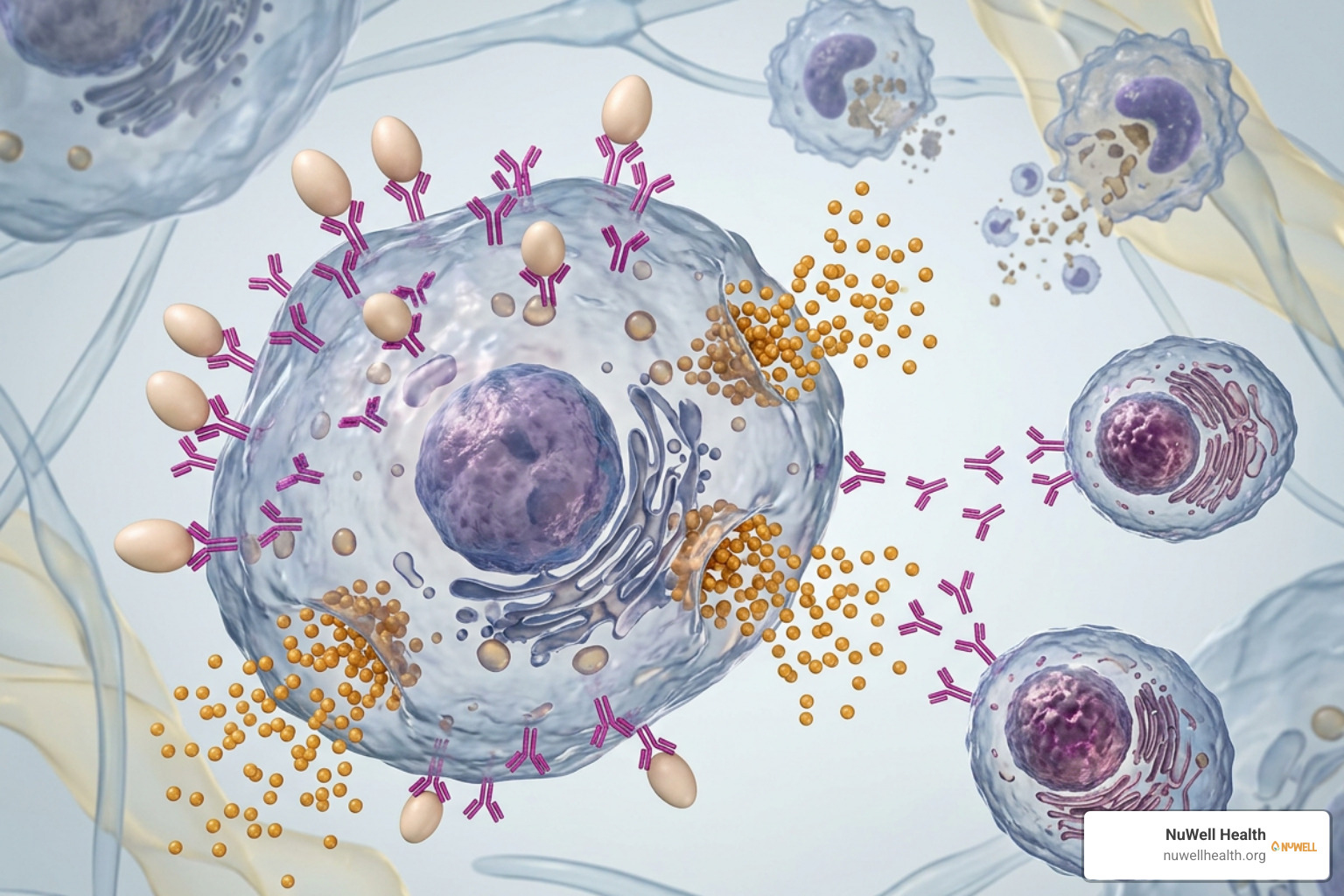
To effectively handle physical reactions to eggs, we must first distinguish between an immune-mediated food allergy and a digestive food intolerance. While both conditions can stem from eating the exact same breakfast dish, the underlying physiological pathways are fundamentally different.
An egg allergy is an immunoglobulin E (IgE)-mediated hypersensitivity reaction. When someone with an egg allergy consumes egg proteins, their immune system mistakenly identifies these proteins as dangerous invaders. In response, immune cells generate specific IgE antibodies that bind to mast cells and basophils, releasing large amounts of histamine and other inflammatory chemicals. This cascade occurs rapidly—often within minutes up to two hours after ingestion. Symptoms can range from mild skin hives and facial swelling to severe respiratory distress, rapid drop in blood pressure, and life-threatening anaphylaxis. Egg allergy is the second most common food allergy in children, affecting roughly 2% of the pediatric population, though up to 70% of affected children outgrow it by age 16.
Conversely, an egg food intolerance is a non-IgE-mediated reaction that primarily involves the gastrointestinal tract rather than the immune system’s antibody machinery. Food intolerances are remarkably widespread, with research indicating that an estimated 20% of the global population is affected by some form of dietary intolerance. An intolerance typically occurs when the digestive system lacks the necessary enzymes, stomach acid, or gut mucosa permeability to efficiently break down specific proteins or lipids found in the egg white or yolk.
Unlike allergies, an intolerance does not pose an immediate risk of anaphylaxis. Instead, symptoms develop gradually—frequently taking anywhere from 2 to 48 hours to fully manifest. Because of this delayed timeline, pinpointing eggs as the culprit behind your discomfort can be challenging without structured observation.
Key Signs of an Egg Food Intolerance
When your gut struggles to break down egg components, unabsorbed proteins pass down into the large intestine, where resident bacteria ferment them. This process generates excess gas, localized inflammation, and fluid shifts that trigger a variety of uncomfortable symptoms:
- Abdominal Bloating and Pressure: Feeling uncomfortably full or distended shortly or hours after meals containing eggs.
- Stomach Cramping and Indigestion: Painful spasms in the lower or mid-abdomen as the intestines strain to process difficult egg fractions.
- Persistent Diarrhea or Loose Stools: Fluid imbalances in the bowel caused by unabsorbed compounds triggering rapid transit.
- Nausea and Upper Abdominal Discomfort: A heavy, uneasy feeling in the stomach after eating whole eggs or egg-dense baked goods.
- Systemic Symptoms (Brain Fog and Headaches): Chronic low-grade gut inflammation can release systemic inflammatory mediators, leading to unexplained fatigue, dull tension headaches, or poor concentration.
For a deeper look into how delayed gut sensitivities affect your overall health, read our Detailed guide on gut reactions.
Why Cooking Methods Affect Egg Digestion
Have you ever wondered why you might feel completely fine after eating a soft slice of sponge cake, but experience intense gas and stomach cramps after eating a hard-boiled egg? The secret lies in molecular chemistry and how heat alters protein structures.
Egg whites contain over 20 distinct proteins, but two dominate digestive responses: ovalbumin (Gal d 2) and ovomucoid (Gal d 1).
- Ovalbumin (Gal d 2) is the most abundant protein in egg white, making up over 50% of its protein content. Ovalbumin is heat-labile, meaning its chemical structure breaks down and denatures when exposed to high heat over prolonged periods.
- Ovomucoid (Gal d 1) is highly heat-stable and resistant to both high temperatures and digestive enzyme breakdown.
When eggs are extensively baked in flour mixtures at temperatures around 350°F (177°C) for 30 minutes or longer, heat-labile proteins like ovalbumin break down almost completely. Additionally, matrix interactions with wheat flour can physically entrap egg proteins, preventing them from irritating sensitive gut linings. In fact, clinical studies show that roughly 70% to 80% of egg-sensitive individuals can comfortably digest extensively baked egg products even if raw or lightly cooked eggs cause symptoms.
Furthermore, cooking techniques alter gas formation. When hard-boiling an egg, internal pressure increases rapidly within the shell. This pressure pushes sulfur compounds (such as hydrogen sulfide gas) from the egg white toward the iron-rich yolk, forming a greenish ring and creating dense sulfur compounds. When ingested, these sulfur compounds can produce noticeable gas and bloating in sensitive individuals, whereas scrambling eggs allows hydrogen sulfide gas to evaporate into the air during cooking.
Root Causes and Adult-Onset Sensitivity

It can be baffling to eat eggs comfortably for thirty years and suddenly find yourself doubled over in pain after a simple breakfast. Yet, adult-onset egg food intolerance is a well-documented phenomenon. While most childhood egg allergies resolve over time, adult-onset intolerances frequently emerge due to changes in gut ecosystem integrity and digestive enzyme capacity.
At NuWell Health, we have found in our clinical practice that food sensitivities rarely happen in isolation; they are typically signals of functional gut imbalances. In our experience working with clients, prioritizing natural health solutions—such as targeted botanical mucosal supports, digestive bitter herbs, and gentle lifestyle adjustments—helps calm intestinal irritation and restore healthy digestive capacity naturally.
Several key factors can trigger sudden egg sensitivity later in life:
- Gut Dysbiosis: An imbalance between beneficial and opportunistic bacteria in the gut microbiome can compromise your ability to ferment complex proteins, leading to gas and distress.
- Intestinal Permeability (“Leaky Gut”): When the tight junctions of the intestinal lining become loose due to chronic stress, poor diet, environmental toxins, or medications, partially digested egg protein fragments enter the submucosal space, triggering localized gut inflammation.
- Enzyme Deficiencies and Low Stomach Acid: Inadequate production of hydrochloric acid (HCl) in the stomach or pepsin enzyme secretion prevents dense egg proteins from being broken down into simple amino acids before reaching the intestines.
- Recent Antibiotic or Illness Exposure: Antibiotics can deplete specific bacterial species responsible for maintaining mucosal barrier integrity, temporarily impairing digestability.
To learn more about how gut health disruptions influence daily digestion, explore our article Understanding digestive issues.
Can Adults Develop Egg Food Intolerance?
Yes, adults can develop an egg food intolerance at virtually any point in life. The encouraging news is that unlike genetic autoimmune conditions, a food intolerance is frequently temporary.
When we focus on restoring the gut ecosystem using natural health solutions—addressing root causes such as low stomach acid, chronic stress, and mucosal barrier breakdown—the digestive tract can often regain its natural ability to process egg proteins smoothly. Intolerances may persist for several months or a few years, but with targeted holistic care, full tolerance can often be restored.
How to Diagnose and Test for Egg Intolerance
Diagnosing a food intolerance differs greatly from diagnosing a classic IgE food allergy. While allergies are clearly identified using skin prick tests or specific IgE blood panels, standard allergy tests cannot diagnose an egg food intolerance because non-IgE intolerances do not produce allergic antibodies.
Commercial direct-to-consumer IgG blood tests and saliva testing kits are widely advertised, but clinical experts note that elevated IgG antibodies often signify normal immune exposure and dietary tolerance rather than true intolerance.
At NuWell Health, we emphasize functional diagnostic approaches that directly evaluate how your body reacts to real foods in real time.
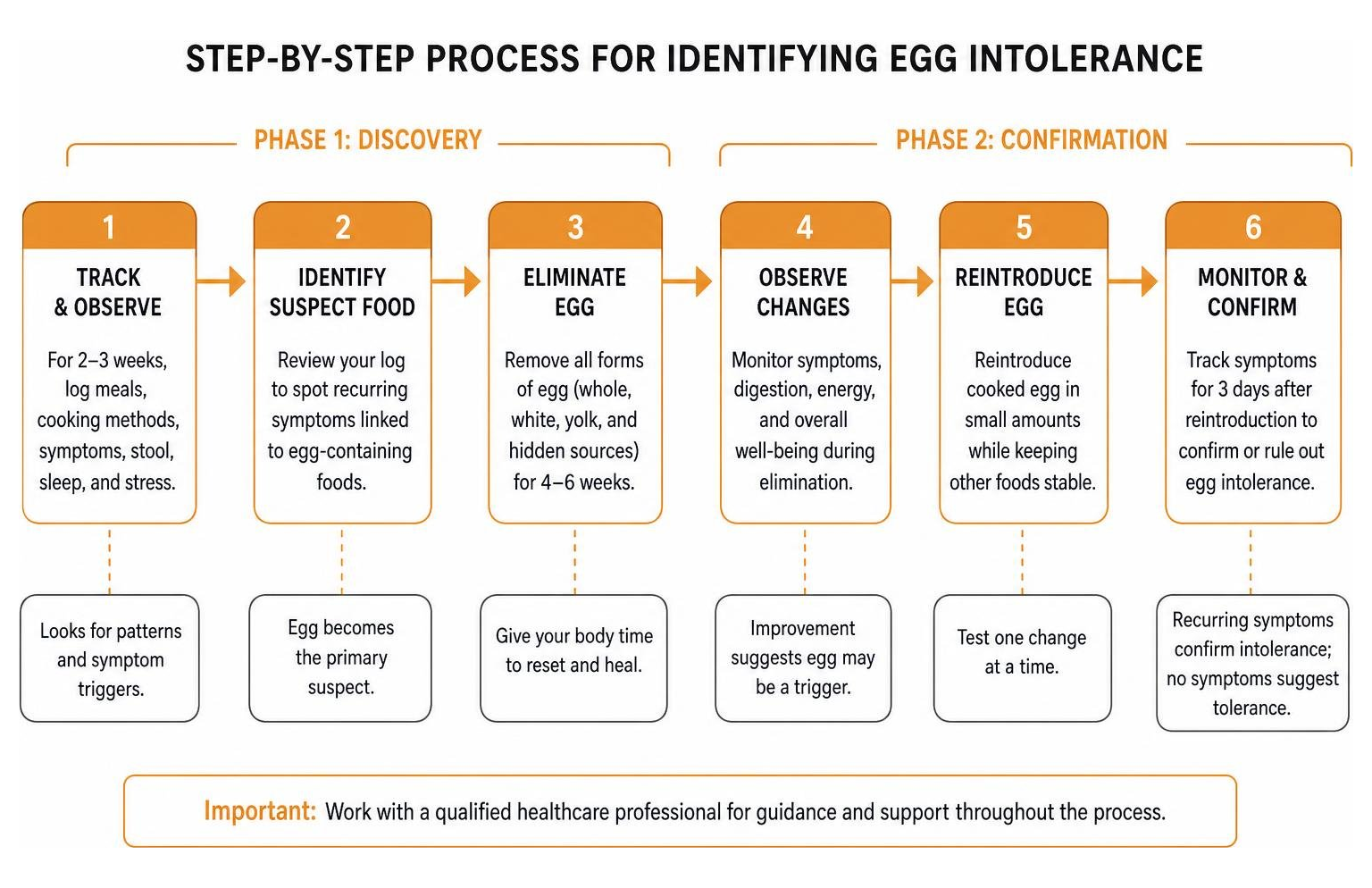
The Two-Phase Diagnostic Strategy
- Detailed Food and Symptom Journaling: For 2 to 3 weeks, log every meal, cooking method, digestive symptom, stool consistency, sleep pattern, and stress level. Because intolerance symptoms can lag up to 48 hours behind consumption, a detailed log makes subtle connections visible.
- The 6-Week Elimination and Reintroduction Protocol: Under guided supervision, completely remove all forms of egg—including whole eggs, egg whites, egg yolks, and packaged foods containing hidden egg derivatives—for 4 to 6 weeks. Observe whether your bloating, cramps, or brain fog resolve. After the elimination phase, systematically reintroduce cooked egg in controlled amounts while monitoring for returning symptoms over 3 days.
For step-by-step guidance on structural elimination diets, check out our Guide to testing gut sensitivities.
Finding the Hidden Triggers on Food Labels
Successfully eliminating egg protein requires careful label reading. Modern food processing uses egg derivatives as emulsifiers, binders, texture enhancers, and clarifying agents. Under labeling regulations, major food allergens must be disclosed, but understanding the scientific names of hidden egg components ensures complete protection.
Watch out for these terms on ingredient lists:
- Albumin / Ovalbumin: The primary protein fraction of egg white.
- Lysozyme: An egg-derived enzyme used as a preservative in cheeses and cured meats (around 30% of egg-sensitive individuals react to lysozyme).
- Globulin / Ovomucoid / Ovotransferrin: Specific protein fractions responsible for structural binding.
- Vitellin / Apovitellin / Livetin: Protein complexes found primarily in the egg yolk.
- Simplesse: A fat substitute made from microparticulated egg and milk protein.
- Surimi: Processed seafood binder that frequently utilizes egg whites.
- Fining Agents: Wine and beer clarifying processes that sometimes utilize egg white albumen.
Pro Tip: Looking for products with certified Vegan seals is an easy, reliable way to guarantee that a packaged item is completely free of hidden egg proteins.
Managing Diet, Egg Substitutes, and Nutritional Health
At NuWell Health, our experience shows that supporting human health through natural whole foods and natural health solutions allows the digestive tract to thrive even during an elimination period. Eliminating eggs does not mean giving up your favorite baked goods or delicious breakfasts. Today, there are many versatile kitchen alternatives that perform the binding, leavening, and moisture-retaining functions of eggs.
Plant-Based Egg Replacements Comparison
| Substitute | Best Functional Use | How to Prepare / Ratio (Replaces 1 Egg) |
|---|---|---|
| Ground Chia or Flaxseed | Binding in baking, muffins, pancakes, and veggie burgers | 1 tbsp ground seeds + 2.5 to 3 tbsp warm water; let sit for 5 minutes until gelled |
| Aquafaba (Chickpea Liquid) | Leavening, whipping into meringues, marshmallows, or light cakes | 3 tbsp aquafaba (whipped or unwhipped) |
| Unsweetened Applesauce / Pureed Fruit | Moisture binder in dense cakes, brownies, and quick breads | 1/4 cup pureed fruit + 1/2 tsp extra baking powder |
| Commercial Plant-Based Replacers | General baking and binding | 1 tsp commercial powder + 2 tbsp water (follow package directions) |
| Silken Tofu | Dense moisture binder, quiches, or scrambled egg alternative | 1/4 cup blended silken tofu seasoned with curcuma and Kala Namak salt |
When cooking or baking at home, keep in mind that other bird eggs (such as duck or quail eggs) may sometimes be tolerated by individuals who react only to specific chicken egg proteins. However, always consult a healthcare provider before trying alternative bird eggs, as cross-reactivity can occur.
For practical strategies on balancing your daily meals while removing trigger foods, read our Practical guide to food sensitivities.
Preventing Nutrient Deficiencies Without Eggs
Eggs are often called nature’s original multivitamin because they are densely packed with essential micronutrients. When removing eggs from your diet long-term, it is crucial to proactively replace these nutrient sources to avoid deficiencies:
- Choline: Essential for liver health, brain function, and cell membrane integrity. Eggs are one of the richest dietary sources of choline. Excellent egg-free replacements include navy beans, Brussels sprouts, broccoli, wheat germ, and sunflower seeds.
- Vitamin D: Important for bone strength and immune function. Look for wild-caught fatty fish (salmon, sardines), fortified plant milks, or sensible daily sun exposure.
- Vitamin A (Retinol): Vital for eye health and mucosal barrier healing. Incorporate sweet potatoes, carrots, dark leafy greens, and squash (rich in beta-carotene which the body converts to vitamin A).
- Bioavailable Protein and Healthy Fats: Balance meals with organic legumes, hemp seeds, pumpkin seeds, wild fish, avocados, and extra virgin olive oil.
Frequently Asked Questions
Why do hard-boiled eggs cause more gas than scrambled eggs?
Hard-boiling traps steam and builds internal pressure inside the eggshell. This environment forces hydrogen sulfide gas in the egg white to migrate toward the iron in the yolk, forming iron sulfide and concentrated sulfur compounds. When ingested, these sulfur compounds are fermented by gut bacteria, producing noticeable gas. Scrambling eggs allows hydrogen sulfide gas to escape into the air during cooking, making scrambled eggs easier on sensitive stomachs.
How long does an elimination diet take for egg intolerance?
A standard structured elimination diet for an egg food intolerance typically lasts 6 weeks. The initial removal phase spans 4 to 6 weeks to allow gut tissue inflammation to calm down and symptoms to resolve. Following this period, a structured 3-day reintroduction phase helps confirm whether eggs are the true cause of your symptoms.
Can you outgrow an egg intolerance over time?
Yes! While true IgE-mediated allergies depend on immune system maturation, an egg food intolerance is often linked to temporary gut permeability, enzyme depletion, or microbiome imbalance. By applying holistic gut-healing strategies—such as restoring stomach acid, balancing the microbiome, and soothing intestinal inflammation—many adults successfully restore full digestive tolerance to eggs over time.
Conclusion
Navigating an egg food intolerance can feel challenging at first, but listening to your body’s subtle signals opens the door to lasting wellness. At NuWell Health, we have found that true health flourishes when we move beyond simply avoiding uncomfortable symptoms and address the underlying root causes in mind, body, and spirit.
By tracking your meals, identifying hidden ingredient triggers, using nourishing culinary substitutes, and restoring your digestive barrier, you can eliminate gut discomfort and regain vibrant daily energy.
Ready to uncover the root causes of your digestive symptoms and build a personalized plan for optimal gut health? Explore comprehensive allergy and sensitivity support with NuWell Health today.
This article was researched with AI and heavily edited by Jordan Oliver for accuracy and relevance.
Jordan is an author, ordained minister, and online host for His Glory TV, sharing biblically grounded insights on faith, prayer, and spiritual growth. She is the co-founder of Triple-Braided Cord Co., an intercessory prayer and healing ministry inspired by Ecclesiastes 4:12.
Jordan holds a Bachelor’s degree in Communications and Religious Studies from High Point University and is a certified Spiritual Life Coach through iCoachLife in Nashville, Tennessee. Drawing from her ministry, coaching, and academic experience, she creates trustworthy, faith-based content that helps readers grow in their relationship with God. Learn more about Jordan here.