

Why does stress make my stomach hurt? Your brain and digestive system trade signals through nerves and hormones. During stress, those signals can change how fast food moves through your gut and how strongly you feel normal stretching, gas, and muscle movement. The pain is real. Even so, stress is one possible contributor, not a diagnosis, and new, severe, or worsening stomach pain deserves medical attention.
If you keep asking, “Why does stress make my stomach hurt?” you are not imagining it. You may feel cramps, nausea, bloating, diarrhea, constipation, or a “knot” in your stomach before a hard conversation or during a demanding week. This guide explains what the gut-brain connection may explain, what it does not prove, what to notice, and when stomach pain needs care.
It is also important not to blame every digestive symptom on stress. An infection, a medicine, a food intolerance, an ulcer, an inflammatory condition, or another health concern may need care.
Why Does Stress Make My Stomach Hurt? How Stress and Digestion Affect Each Other
Your digestive tract has its own network of nerves in the walls of the gut, called the enteric nervous system. These nerves help speed up or slow down the movement of food. Hormones made in the stomach and small intestine also help control digestion and tell your brain when you are hungry or full. According to the National Institute of Diabetes and Digestive and Kidney Diseases (NIDDK), signals flow back and forth between the digestive tract and the brain.
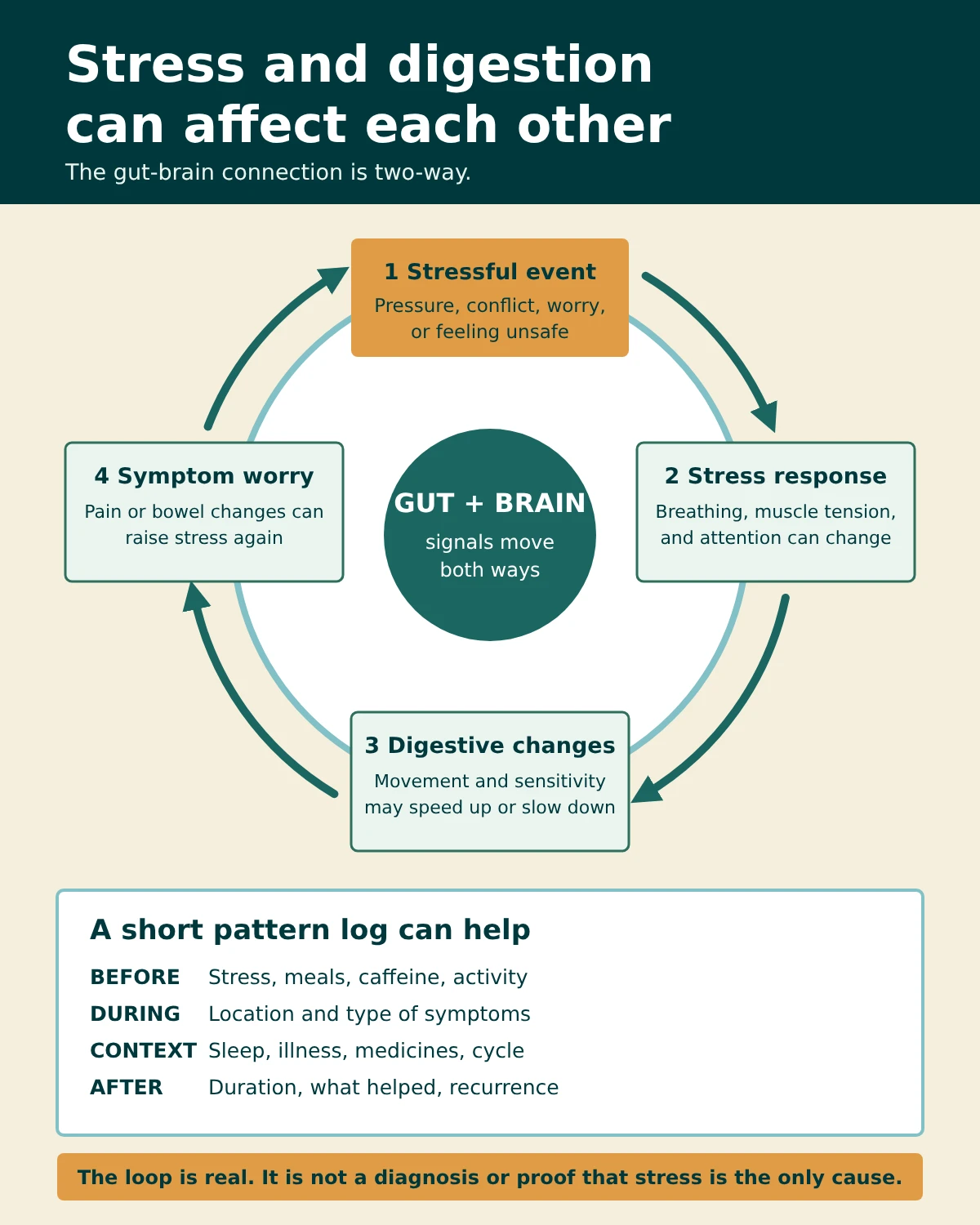
When your body senses pressure or danger, the stress response shifts attention toward immediate demands. Your heart rate and breathing may change, and muscles may tense. The American Psychological Association (APA) notes that stress may make pain, bloating, nausea, and other stomach discomfort easier to feel. It can also affect how quickly food moves through the body, which can lead to diarrhea or constipation.
This connection works in both directions. Stomach pain can raise worry, and worry can make stomach sensations harder to ignore. That cycle does not mean the symptoms are imagined. Instead, it means the brain and gut can keep reacting to each other.
Stress can change movement through the gut
Some people notice an urgent bowel movement before a difficult meeting. Others become constipated during a demanding week. Stress signals can affect the muscle contractions that move food and waste through the digestive tract. The result differs from person to person and can change over time.
Stress can turn up the volume on normal sensations
Normal digestion involves stretching, gas, fluid, and muscle movement. When the gut becomes more sensitive, ordinary activity may feel uncomfortable or painful, which is one way stress stomach pain can build. This is also one reason the National Institutes of Health describes irritable bowel syndrome (IBS) as a disorder of gut-brain interaction. Still, a sensitive gut does not mean you have IBS. Only a clinician can make that diagnosis.
Stress can change how and when you eat
The APA notes that people under stress may eat much more or much less than usual. Stress can also lead to skipped meals, fast eating, or more caffeine or alcohol. Any of these changes may add to heartburn, reflux, gas, bloating, nausea, or bowel changes. In addition, the pattern over several days usually tells you more than a single stressful meal.
What Stress Does Not Prove
So why does stress make my stomach hurt in some weeks and not others? The answer is rarely simple. A stressful week followed by stomach pain does not prove that stress is the only cause. Timing can offer a clue, but it cannot rule out another condition. Stress also does not mean you caused your symptoms or failed to cope well enough. If you want to explore the broader picture, see what can contribute to digestive problems.
Stress is often blamed for stomach ulcers. However, the APA notes that stress does not increase stomach acid or cause ulcers. The NIDDK lists Helicobacter pylori (H. pylori) infection and nonsteroidal anti-inflammatory drugs (NSAIDs) such as aspirin, ibuprofen, and naproxen as the most common causes of peptic ulcers. Stress may make discomfort more noticeable, but it should not be used as a shortcut around appropriate evaluation.
If you already have a diagnosed digestive condition, ask the clinician who treats it how stress may fit into your care. Do not stop or change medicine, start a supplement, or begin a restrictive diet based on this article.
Notice the Pattern Without Diagnosing Yourself
A short record can help you explain stress-related stomach pain to a clinician or practitioner. Track for one to two weeks if doing so feels neutral and useful. Skip the log entirely if tracking food or symptoms could intensify an eating disorder, food anxiety, or health anxiety.
For each episode, notice four things: what was happening before it began, what you felt in your body, what else may have affected digestion that day, and how long the symptoms lasted. The goal is to identify useful questions, not to prove that stress caused the pain.
- Before: the time, recent stress, meal timing, caffeine, alcohol, and activity.
- During: the location and type of discomfort, such as cramping, burning, pressure, nausea, bloating, diarrhea, or constipation.
- Context: sleep, illness, menstrual timing when relevant, and medicines or supplements you already take.
- After: how long it lasted, what helped, and whether the same pattern has happened before.
Bring the record to a medical appointment when symptoms recur, interfere with eating or daily life, or remain unexplained. A log can improve the conversation, but it cannot diagnose IBS, an ulcer, a food intolerance, or another condition.
Low-Risk Steps That May Settle a Stress-Sensitive Stomach
If you have a nervous stomach, or stress makes your stomach hurt often, these ideas may help. They are general and may not fit every medical condition. Try one change at a time, and follow any instructions your care team has already given you.
Slow the moment before you eat
If you are tense or rushing, pause for a minute before the meal. Let your shoulders drop and take a few comfortable, slower breaths. Stop if focused breathing makes you dizzy, panicky, or more uncomfortable. Relaxation practices can help some people reduce stress, but they are not a cure for unexplained pain.
Keep meals simple and regular
Long gaps followed by a large meal can be hard on some people. A regular eating pattern and a pace that lets you chew without rushing may also make symptoms easier to interpret. Avoid turning one episode into a broad elimination diet. Removing many foods without guidance can make nutrition harder and increase fear around eating.
Review caffeine, alcohol, and medicines
Caffeine and alcohol can affect anxiety, sleep, reflux, and bowel patterns. Some medicines and supplements can also cause digestive symptoms. Ask a pharmacist or prescriber to review possible effects and interactions. Do not change a prescribed medicine on your own.
Use gentle movement when it feels safe
A comfortable walk may help you step away from a tense setting and let your body settle. Skip exercise and seek advice when pain is severe, movement makes it worse, or a medical professional has told you to limit activity.
Include mental-health support when stress keeps building
When anxiety stomach pain keeps returning, counseling and other mental-health care can help with the ongoing stress and anxiety behind it. For people with diagnosed IBS, the NIDDK lists cognitive behavioral therapy, gut-directed hypnotherapy, and relaxation training among the mental-health therapies a doctor may recommend. That does not mean every stomachache is IBS, or that a breathing exercise will treat a digestive disorder.
NuWell’s mental-health-informed natural health approach may be used alongside counseling and conventional medical care. Better health is not an either-or choice.
Signs worth a medical conversation
- Belly discomfort that lasts a week or longer
- Pain that does not improve within 24 to 48 hours, or that becomes more severe and frequent with nausea and vomiting
- Bloating that lasts more than two days, or diarrhea that lasts more than five days
- Fever with the pain
- A prolonged poor appetite or unexplained weight loss
- Trouble keeping down any food or liquids
- Pain that keeps returning, wakes you from sleep, or disrupts eating or daily life
When Stress-Related Stomach Pain Needs Medical Care
Stress-related stomach pain can look like other conditions, so a clinician can decide whether you need an examination, testing, a medicine review, or a referral. Arrange care promptly when any of the signs above apply, and do not wait for stress to settle before getting new or worsening pain checked.
When to seek urgent help
- Sudden, sharp, or severe belly pain
- A belly that is very tender, rigid, or hard to the touch
- Vomiting blood, or blood in your stool (bright red, maroon, or black and tarry)
- Being unable to pass stool, especially with vomiting
- Chest, neck, or shoulder pain, or pain between the shoulder blades with nausea
- Trouble breathing
- Belly pain after a recent injury to the abdomen
- Belly pain if you are pregnant or might be pregnant, or are being treated for cancer
How NuWell Can Help You Look at the Whole Pattern
If you keep wondering why stress makes your stomach hurt, the answer often sits where digestion, nutrition, sleep, emotional well-being, medicines, and daily demands meet. A NuWell practitioner can help you organize that broader story and identify questions to discuss with your medical or mental-health professionals. Learn more about our whole-person support for persistent digestive concerns.
NuWell Health offers non-clinical, practitioner-led natural health support that explores possible contributing factors. It does not promise that every symptom has one hidden cause. Testing and supplements are not automatic, and NuWell’s services complement, rather than replace, diagnosis or treatment from a qualified healthcare professional.
Faith, meaning, or prayer may be included if you want them to be. No particular belief is required.
Frequently Asked Questions
Can stress really cause stomach pain?
Stress can contribute to real stomach pain by changing gut movement, increasing sensitivity to digestive sensations, and affecting eating, sleep, and daily habits. It should not automatically be treated as the only cause, especially when pain is new, persistent, severe, or worsening.
How can I tell whether my stomach pain is from stress?
Timing may suggest a connection, such as symptoms that repeatedly begin during tense situations and ease as the stress settles. Timing alone cannot diagnose the cause. Track the pattern and discuss recurring or disruptive pain with a healthcare professional.
Does stress cause stomach ulcers?
Everyday psychological stress is not considered a main cause of peptic ulcers. The most common causes are H. pylori infection and nonsteroidal anti-inflammatory drugs (NSAIDs). Stress may make existing discomfort feel worse, so ulcer symptoms still need appropriate medical evaluation.
What can I do when stress upsets my stomach?
When symptoms are mild, try slowing your breathing, eating without rushing, keeping a regular meal pattern, and noticing caffeine, alcohol, sleep, and medicine timing. Avoid broad food restriction or changing treatment on your own. Seek care when symptoms persist or concern you.
When should I worry about stomach pain?
Get emergency help for sudden or severe pain, a hard or very tender abdomen, trouble breathing, vomiting blood, black or bloody stool, or pain with chest, neck, or shoulder symptoms. Contact a clinician for pain lasting a week or more, unexplained weight loss, fever, ongoing vomiting, or lasting bowel changes.
Sources
- Your Digestive System & How It Works. National Institute of Diabetes and Digestive and Kidney Diseases. Accessed October 26, 2026.
- Stress Effects on the Body. American Psychological Association. Last reviewed October 21, 2024.
- Irritable Bowel Syndrome (IBS). National Institutes of Health. Accessed October 26, 2026.
- Treatment for Irritable Bowel Syndrome. NIDDK. Accessed October 26, 2026.
- Symptoms & Causes of Peptic Ulcers (Stomach or Duodenal Ulcers). NIDDK. Accessed October 26, 2026.
- Abdominal Pain. MedlinePlus Medical Encyclopedia, U.S. National Library of Medicine. Accessed October 26, 2026.

This article was researched with the help of AI and reviewed and edited by Stephen A. Luther, MEd, MSEd, LPC, for accuracy, Scripture references, and faithfulness to NuWell’s non-clinical scope.
Steve brings decades of counseling and leadership experience to the NuWell Method, helping connect mental-health insight, faith, and whole-person collaboration around each client’s lived experience. Read Steve’s profile.
Educational scope: This article provides general education. It does not diagnose or treat a condition, provide emergency care, or replace individualized advice from a qualified medical, nutrition, or mental-health professional. Do not start, stop, or change medication, supplements, testing, or treatment based on this article.