

If you keep asking, “Why am I so tired before my period?” the timing itself is useful information. Fatigue, slower thinking, sleep changes, appetite changes, and mood symptoms can show up in the days before bleeding begins. A repeating pattern can help you and your clinician, but it does not prove a hormone imbalance or point to one cause on its own.
Here is a simple way to look at it: note when the tiredness starts, whether it lifts after your period begins, and what else happens alongside it. Those details help a medical professional sort out whether the pattern fits premenstrual syndrome (PMS), anemia, a sleep problem, a medicine effect, pregnancy, a thyroid condition, depression, anxiety, or something else.
Why Am I So Tired Before My Period? How the Cycle Plays a Role
Estrogen and progesterone rise and fall across a normal menstrual cycle. According to the Office on Women’s Health, energy tends to be higher in the first half of the cycle, and some people feel sluggish or forgetful in the second half, after ovulation. PMS can also include tiredness, sleep problems, food cravings, trouble concentrating, anxiety, sadness, and irritability.
Even so, researchers do not know exactly what causes PMS. Hormone changes may play a role, but symptoms alone cannot show which hormone is involved or whether a hormone disorder is present. Our guide to daily habits that may support hormone health explains what self-care can and cannot do.
Timing matters more than one tired day before your period
A premenstrual pattern tends to come back at a similar point in each cycle. PMS symptoms often appear a week or two before a period and ease within a few days after bleeding starts. However, one hard week does not make a pattern. Travel, illness, caregiving, short sleep, a demanding season at work, or a change in routine can all lower your energy.
A cycle log lets you compare several months instead of relying on memory. It may also show that fatigue is present all month, starts after bleeding begins, or has no clear link to your cycle. Each of those findings leads to a different conversation with your clinician.
Fatigue may have more than one contributor
Cramps, headaches, broken sleep, appetite changes, stress, and low mood can all make the premenstrual days more draining. An existing health concern may also flare. The Office on Women’s Health notes that symptoms of depression, migraine, irritable bowel syndrome, and asthma may get worse right before a period, and blood sugar can be harder to manage in the second half of the cycle for people with diabetes.
This does not mean every symptom comes from your cycle. Ongoing fatigue can overlap with iron-deficiency anemia, thyroid disease, pregnancy, sleep disorders, infection, medicine side effects, depression, anxiety, and other medical concerns. If tiredness is part of your life most of the month, NuWell’s page on support for persistent fatigue explains how we look at the bigger picture. A qualified clinician can decide which possibilities fit your history and whether an exam or testing makes sense.
Track Fatigue Before Your Period for About Three Cycles
Use a calendar, a notebook, or an app, and keep the log short enough that you will actually use it. MedlinePlus suggests keeping a daily symptom log for at least three months when PMS is being evaluated. Then bring the pattern to a medical visit if the fatigue keeps coming back, affects daily life, or shows up with other worrying symptoms.
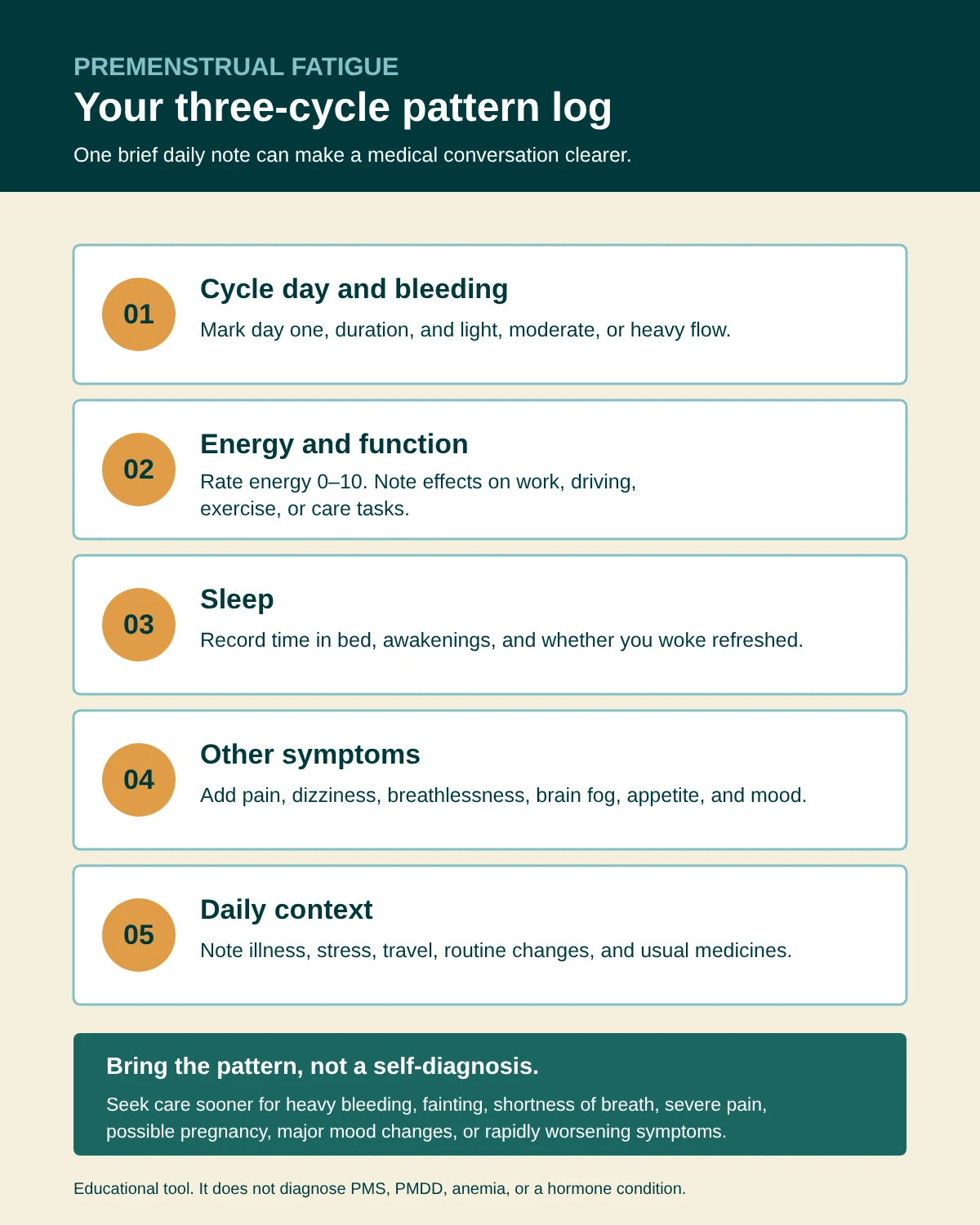
What to write down each day
In more detail, a useful cycle-and-energy log includes:
- Cycle day and bleeding: count the first day of bleeding as day one, and note how long bleeding lasts and whether flow is light, moderate, or heavy.
- Energy and function: rate energy from 0 to 10 and note whether fatigue changed work, driving, exercise, caregiving, school, or social plans.
- Sleep: record bedtime, wake time, awakenings, snoring or gasping if you know about it, and whether you woke refreshed.
- Other symptoms: include cramps, headache, dizziness, shortness of breath, appetite changes, brain fog, anxiety, sadness, irritability, or loss of interest.
- Context: note illness, unusual stress, travel, alcohol, big routine changes, and the medicines or supplements you usually take. Do not change them for the log.
After about three cycles, look for a pattern. Does fatigue begin at about the same time before each period? Does it ease once bleeding starts? Is it getting worse? Does heavy bleeding come with it? A log cannot diagnose PMS, premenstrual dysphoric disorder (PMDD), anemia, or a hormone condition, but it gives you and your clinician better information. It also gives you a clearer answer to “why am I so tired before my period?” than memory alone can.
Skip the detailed log if tracking makes health anxiety, food preoccupation, compulsive checking, or distress worse, or could stir up an eating disorder. Writing down only your period dates and the main concern is enough, or you can talk directly with a clinician or counselor.
Heavy Periods Can Add a Different Kind of Fatigue
Feeling tired before a period is not the same as fatigue from blood loss, but the two can overlap when periods are heavy or long. The CDC notes that heavy menstrual bleeding can cause anemia, which can leave you tired or weak, and ACOG adds that severe anemia can cause shortness of breath. Iron-deficiency anemia needs proper evaluation. Fatigue alone is not a reason to start iron on your own, because the cause may be something else.
- Bleeding that lasts longer than seven days.
- Needing to change a pad or tampon after less than two hours.
- Soaking through one or more pads or tampons every hour for several hours in a row.
- Clots the size of a quarter or larger.
- Needing to double up on protection or change it during the night.
- Bleeding that gets in the way of normal activities, or comes with marked tiredness, weakness, or shortness of breath.
A clinician may ask about several cycles, the chance of pregnancy, birth control, medicines, pain, and family history. Blood tests or other evaluation may be appropriate. The right next step depends on your full history; there is no single hormone or fatigue panel that everyone needs.
When Fatigue Before Your Period Needs Medical or Mental Health Care
Book a routine medical visit when fatigue is new, getting worse, present most of the month, still there after your period, or repeatedly disrupts work, school, driving, relationships, or basic tasks. Seek care sooner when it comes with unexplained weight change, fever, ongoing pain, fainting or near-fainting, marked dizziness, shortness of breath, a racing or irregular heartbeat, or possible pregnancy.
Severe mood symptoms deserve the same attention as physical ones. PMDD is similar to PMS but more serious, and it can include severe depression, anxiety, irritability, or tension before a period. A clinician or mental-health professional should assess symptoms that cause major distress or make daily life hard to manage. NuWell’s overview of mental-health-informed natural health support explains how physical and emotional care can work together. Please do not stop counseling, psychiatric care, or medication while you explore a cycle-related pattern.
When to seek urgent help
Low-Risk Steps for Low Energy Before Your Period
There is no quick fix for the question “why am I so tired before my period?” but a few low-risk habits may support your energy across the whole cycle.
Protect sleep before changing your diet or supplements
Give yourself enough time in bed, and keep sleep and wake times as steady as your life allows. Cramps, headaches, anxiety, temperature changes, and heavy bleeding can all disturb sleep around a period. Loud snoring, gasping, breathing pauses, or severe daytime sleepiness call for medical review rather than a guess at a sleep supplement. If you are tired all month despite a full night in bed, NuWell’s guide to why you may still feel tired after enough sleep covers that question.
Eat regularly without chasing a perfect plan
Regular meals with foods you tolerate may support steadier energy, especially if fatigue leads you to skip meals and then eat very little or very late. Include a practical mix of protein, fiber-rich foods, carbohydrates, and fats that suits your needs. You do not need to cut out gluten, dairy, sugar, or another food group because of premenstrual fatigue alone. Pregnancy, diabetes, kidney disease, digestive conditions, allergies, and an eating-disorder history can change what is right for you, so ask for individual guidance when needed.
Use movement as information, not punishment
Gentle walking, stretching, or another familiar activity may help mood and energy. The Office on Women’s Health notes that regular aerobic activity throughout the month can ease some PMS symptoms, including fatigue. Scale activity to how you feel that day. Stop and get advice if you notice faintness, chest pain, trouble breathing, severe pain, or unusual weakness.
Choose a short stress practice that fits your day
Stress affects sleep, appetite, pain, and how much energy daily tasks take. A brief breathing exercise, quiet prayer, time outdoors, a supportive conversation, or a skill from counseling may help you settle. Spiritual practices can be part of this if they matter to you; they do not replace medical or mental-health care.
Do not start a hormone or iron plan from symptoms alone
Feeling tired before your period is not proof of low progesterone, “estrogen dominance,” “adrenal fatigue,” or iron deficiency. Supplements and herbs can interact with medicines, pregnancy, surgery, and health conditions. Ask a qualified clinician or pharmacist before you start, stop, or change a supplement, hormone, medicine, or treatment.
How NuWell Can Complement Your Medical Care
If you keep wondering why you are so tired before your period, the answer may sit where sleep, stress, nutrition, bleeding, pain, mood, and daily demands meet. NuWell practitioners can help you organize the pattern and explore contributing factors within their professional roles, while you continue care with your physician, gynecologist, counselor, prescriber, or other professionals. Our whole-person hormone support page explains how we approach cycle, energy, sleep, and mood concerns.
Looking for root causes means asking good questions about what may be contributing. It does not promise one hidden cause, a particular test, or a guaranteed outcome, and testing and supplements are not automatic. When symptoms need diagnosis, prescriptions, or urgent treatment, that work belongs with the right medical professional.
Frequently Asked Questions
Why am I so tired before my period?
Many people feel more sluggish in the second half of the cycle, and fatigue is a common PMS symptom. Poor sleep, heavy bleeding, stress, mood changes, and other health concerns can add to it. If the tiredness is severe, lasts most of the month, or disrupts daily life, talk with a medical professional.
How many cycles should I track?
About three cycles can show whether fatigue returns at a similar time and improves after bleeding starts. Seek care sooner for severe symptoms, heavy bleeding, fainting, shortness of breath, pregnancy-related concerns, or major mood changes.
Could heavy periods make me tired?
Yes. Heavy or prolonged bleeding can lead to iron-deficiency anemia, which can cause tiredness and weakness, and severe anemia can cause shortness of breath. A clinician can decide whether blood tests or other evaluation are needed. Do not assume fatigue means you need an iron supplement.
Should I get my hormones tested?
Not automatically. A clinician may first review symptom timing, bleeding, the chance of pregnancy, medicines, sleep, mood, and other health concerns. Testing should answer a clear question and be read in context.
Can premenstrual fatigue affect mental health?
Fatigue, poor sleep, pain, anxiety, and low mood can feed one another. Severe depression, anxiety, irritability, or loss of interest before a period may need assessment for PMDD or another mental-health concern. Medical and mental-health care can happen at the same time.
Sources
- “Premenstrual syndrome (PMS).” Office on Women’s Health.
- “Your menstrual cycle and your health.” Office on Women’s Health.
- “Premenstrual syndrome.” MedlinePlus Medical Encyclopedia.
- “About Heavy Menstrual Bleeding.” Centers for Disease Control and Prevention.
- “Heavy Menstrual Bleeding.” American College of Obstetricians and Gynecologists.
- “Premenstrual dysphoric disorder (PMDD).” Office on Women’s Health.