

Can stress cause constipation? It can play a part, but it is rarely the whole story. Constipation is not only about how often you go. Hard or lumpy stool, straining, pain, or feeling that you did not finish can also count. The National Institute of Diabetes and Digestive and Kidney Diseases (NIDDK) notes that constipation may have more than one cause at a time.
That matters when stress and constipation show up together. The timing is a useful clue, but it does not prove that stress is the cause. Start by noticing the whole pattern, and talk with a qualified healthcare professional if symptoms continue or worry you.
Can Stress Cause Constipation? How the Gut and Brain Connect
Your brain and digestive tract communicate through nerves, hormones, and other signals. This two-way system is often called the gut-brain axis. Under stress, digestion may speed up for one person and slow down for another.
The American Psychological Association explains that stress can affect how quickly food moves through the body, which can lead to either diarrhea or constipation.
A 2026 review in The Lancet describes irritable bowel syndrome, chronic constipation, and functional diarrhea as disorders of gut-brain interaction. In these conditions, communication between the gut and brain can affect bowel movement and how strongly gut sensations are felt. Still, a stressful week does not mean you have one of these disorders. Constipation also does not mean your nervous system is the only factor.
Stress can also contribute in indirect ways:
- You may skip meals or eat at irregular times.
- You may drink less than usual, or lean on more caffeine or alcohol.
- Sleep may become shorter or less regular.
- You may move less during a demanding week.
- You may put off using the bathroom because you are busy, traveling, or uncomfortable where you are.
- A medicine or supplement may have changed around the same time.
None of these details prove a cause. However, they are clues that make a conversation with your doctor or a whole-person practitioner more useful.
Stress Does Not Mean the Symptoms Are Imagined
Constipation is a physical symptom. Stress can affect physical processes, but that does not make the problem “all in your head.” It also does not mean you caused it by failing to relax.
The connection works both ways. Constipation, pain, bloating, and worry about finding a bathroom can raise stress. That added stress may then make the bowel pattern harder to handle. As a result, counseling, medical care, nutrition support, and whole-person care can work together when the problem touches more than one area of life.
If belly pain is your main symptom, NuWell’s guide to why stress may make your stomach hurt covers that side of the gut-brain connection. If constipation comes with low energy, read Can Constipation Cause Fatigue?
Other Causes of Constipation Still Need Attention
When you are asking whether stress can cause constipation, it is easy to blame stress for symptoms that start during a hard season. But that shortcut can miss something else. The American College of Gastroenterology (ACG) and NIDDK list several possible causes, including:
- Too little fiber or fluid for your needs
- Less physical activity or long periods of inactivity
- Changes in your daily routine, travel, pregnancy, or getting older
- Ignoring the urge to have a bowel movement
- Medicines and supplements, including opioid pain medicines, iron, calcium, some antidepressants, and some blood-pressure medicines
- Pelvic-floor muscles that do not relax or coordinate well
- Conditions such as diabetes, an underactive thyroid (hypothyroidism), Parkinson’s disease, or celiac disease
- Irritable bowel syndrome
- Less common but urgent problems, such as a bowel blockage
Do not stop a prescription medicine or supplement on your own. Instead, ask the prescriber or a pharmacist whether constipation could be a side effect and what options fit you. For a broader look, see NuWell’s guide to what can contribute to digestive problems.
Constipation Is More Than a Number
According to the ACG, some people have several bowel movements a day, while others have as few as three a week and are still healthy. So a change from your own usual pattern can matter more than comparing yourself with someone else.
Notice stool consistency, straining, pain, a sense of incomplete emptying, and whether the change is new. Frequent straining or a feeling of blockage may point to a pelvic-floor problem, which needs a different kind of evaluation than simply adding more fiber.
What to Track When Stress and Constipation Show Up Together
If you suspect stress can cause constipation for you, a short record can show whether it keeps appearing during stressful stretches and what else changes at the same time. Track for one to two weeks if it feels useful. Skip the log if tracking could intensify an eating disorder, health anxiety, or compulsive checking.
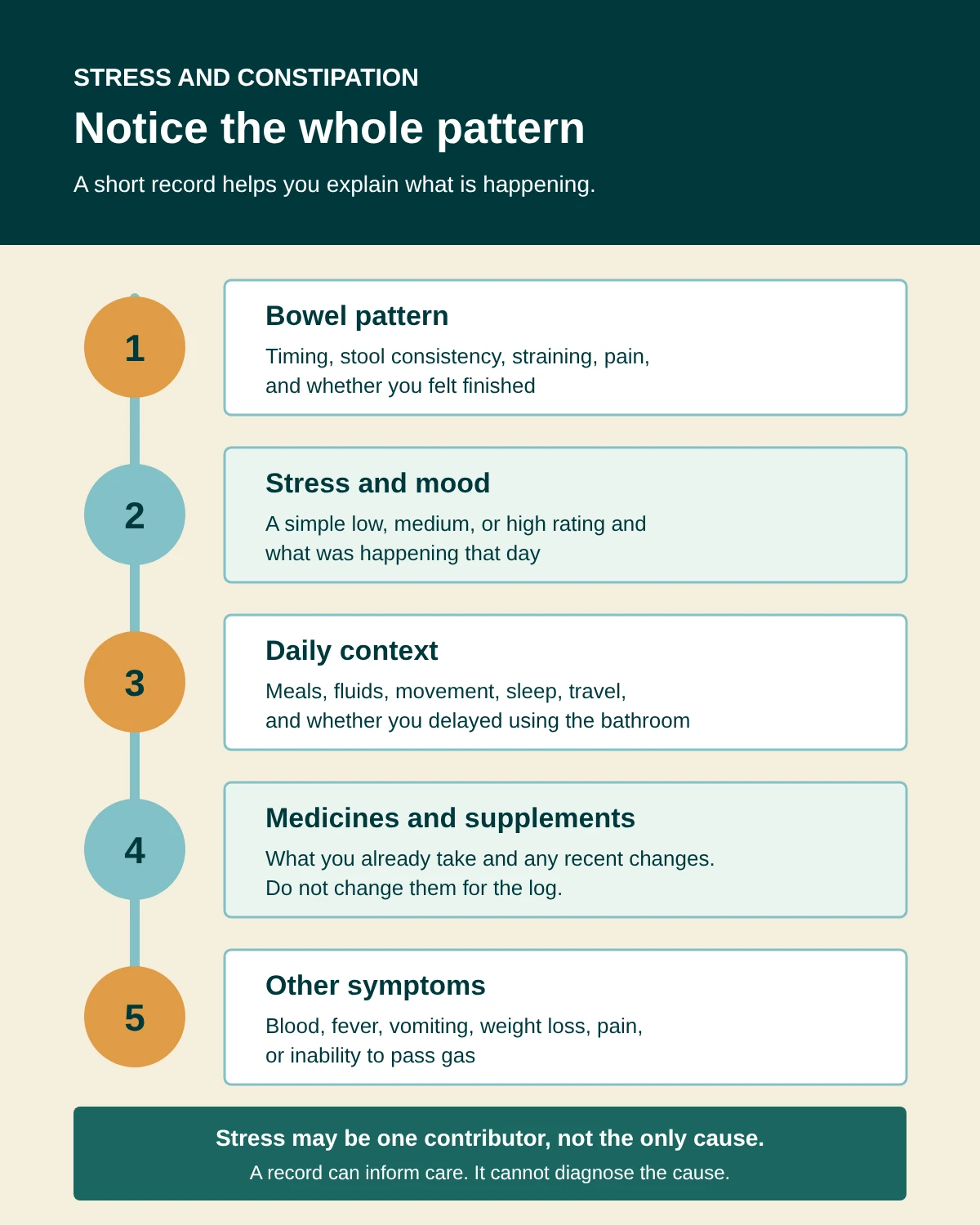
- Bowel pattern: When you went, stool consistency, straining, pain, and whether you felt finished.
- Stress and mood: A simple low, medium, or high rating and what was happening that day.
- Daily context: Meal timing, general fiber intake, fluids, movement, sleep, travel, and whether you put off using the bathroom.
- Medicines and supplements: What you already take and any recent changes. Do not change them for the sake of the log.
- Other symptoms: Bloating, nausea, vomiting, fever, blood in the stool, weight change, or being unable to pass gas.
Bring the record to a primary-care clinician, a gastroenterology professional, or another qualified healthcare professional if the pattern continues.
Simple Steps for Mild Constipation During Stress
Whether or not stress is causing your constipation, the right plan depends on your health history. These general steps may help mild constipation, but they do not replace care when symptoms are severe, persistent, or unexplained.
Give Yourself Regular, Unhurried Bathroom Time
NIDDK suggests trying to have a bowel movement at about the same time each day, and notes that trying 15 to 45 minutes after breakfast may help. Go when you feel the urge, give yourself time, and avoid long straining.
Add Fiber a Little at a Time
NIDDK recommends adding fiber to your diet a little at a time so your body can get used to the change. Whole grains, beans, fruits, vegetables, and nuts are common sources. If you have a suspected blockage, severe pain, a bowel condition, or instructions to limit fiber, ask your clinician first.
Drink Enough for Your Needs
NIDDK also recommends drinking plenty of water and other liquids, especially when you eat more fiber. Needs vary, though. Follow any fluid limits you have been given for heart, kidney, liver, or other conditions.
Move in Ways That Feel Comfortable
Regular physical activity may help relieve constipation, and it can also ease the stress that may cause constipation for some people. A comfortable walk is one option. Follow any activity limits from your doctor, and stop if movement worsens pain or makes you feel unwell.
Address the Stress Alongside the Bowel Pattern
A brief pause, slower breathing, counseling, a steady sleep schedule, and reducing overload where you can may help lower stress. Stop focused breathing if it makes you dizzy or panicky. These steps do not treat every cause of constipation, but they can support the care you already receive.
If faith matters to you, prayer or spiritual reflection can be part of how you handle stress. NuWell includes this only if you want it, and no particular belief is required. Spiritual practices do not replace medical or mental-health care.
Ask Before Using Laxatives or Supplements
Over-the-counter products are not interchangeable. A clinician or pharmacist can help you choose based on your symptoms, medicines, pregnancy, kidney function, and other health needs. Also avoid “detox” or colon-cleanse products that promise to remove toxins or reset digestion.
When Constipation Needs Medical Care
Even when stress seems to cause constipation for you, contact a healthcare professional when it is new, keeps coming back, does not improve with basic self-care, or is a big change from your usual pattern. Arrange care sooner if you have a family history of colon or rectal cancer or if symptoms started after a medicine change.
- Bleeding from the rectum or blood in the stool
- Constant belly pain or lower back pain
- Fever or vomiting
- Being unable to pass gas
- Losing weight without trying
When to Seek Urgent Help
How NuWell Can Help You Look at the Whole Pattern
When you wonder whether stress can cause constipation for you, the answer often sits where bowel habits, nutrition, sleep, movement, medicines, emotional strain, and daily routines meet. NuWell’s virtual, practitioner-led approach can help you sort through that bigger picture and prepare questions for your medical or mental-health professionals.
NuWell does not diagnose constipation or promise to find a single root cause. Our non-clinical, whole-person support looks at possible contributing factors and works alongside your medical care, counseling, and medication management. Testing and supplements are not automatic. Learn more about our whole-person support for persistent digestive concerns and how we approach natural health for mental health, or meet NuWell’s practitioners.
Frequently Asked Questions
Can stress cause constipation suddenly?
Stress may contribute to a sudden change by affecting gut movement, sleep, meals, fluids, activity, or bathroom habits. However, sudden constipation can also have other causes. Get medical advice when the change is significant, painful, or persistent, or when it follows a medicine change or comes with other symptoms.
How do I know if constipation is from stress?
Timing may suggest a link when constipation keeps appearing during stressful periods and improves as life settles down. Timing alone cannot prove the cause, though. A short log and a medical review can help sort out stress from medicines, diet, pelvic-floor concerns, and health conditions.
Can anxiety cause constipation and bloating?
Anxiety and stress may affect bowel movement and how strongly gut sensations are felt, which can contribute to constipation or make bloating feel worse. Constipation itself can also add to bloating. If symptoms persist, get them checked rather than assuming anxiety explains everything.
Should I take a supplement for stress-related constipation?
Do not choose a supplement just because stress and constipation happened together. Fiber products, magnesium, herbs, and laxatives have different effects, risks, and interactions. Ask a clinician or pharmacist what fits your symptoms, health history, and current medicines.
Sources
- Stress Effects on the Body. American Psychological Association. Last reviewed October 21, 2024.
- Symptoms & Causes of Constipation. National Institute of Diabetes and Digestive and Kidney Diseases.
- Treatment for Constipation. National Institute of Diabetes and Digestive and Kidney Diseases.
- Eating, Diet, & Nutrition for Constipation. National Institute of Diabetes and Digestive and Kidney Diseases.
- Constipation and Defecation Problems. American College of Gastroenterology. Updated June 2026.
- Irritable bowel syndrome and related disorders of gut-brain interaction. Black CJ, Chuah KH, Nasser Y, Remes-Troche JM, Shin A, Ford AC. The Lancet, 2026.