

Can dehydration make you tired even on an ordinary day? It can, and a few clues make it more likely. Recent heat, heavy sweating, vomiting, diarrhea, fever, travel, a hard workout, or a long stretch without drinking all raise the odds. On the other hand, if tiredness keeps coming back or comes with worrying symptoms, another glass of water is probably not the whole answer.
How Dehydration Can Make You Tired
Dehydration happens when your body loses more fluid than it takes in. MedlinePlus lists feeling tired and dizziness among the symptoms in adults, along with strong thirst, dry mouth, dark urine, and urinating less than usual. The Centers for Disease Control and Prevention adds that dehydration may cause unclear thinking and mood changes.
Your body uses water to keep a normal temperature and to get rid of waste. When you lose a meaningful amount of fluid, ordinary tasks can feel harder. In heat or during exercise, sweating adds to the loss, so dehydration can make you tired sooner, along with weakness, lower stamina, or dizziness.
Research on focus and thinking is mixed. One meta-analysis found small overall effects, which were larger when people lost more than 2% of their body weight in fluid (Wittbrodt and Millard-Stafford, 2018). Another meta-analysis found no clear overall drop in thinking (Goodman and colleagues, 2019), and a 2021 systematic review found inconsistent results (Katz and colleagues). So dehydration can affect how some people feel and function, but it should not become a catch-all explanation for brain fog or tiredness.
Signs that make dehydration more likely
- Thirst or a dry, sticky mouth
- Urinating less often than usual
- Urine that is darker than your normal
- Headache, dizziness, weakness, or muscle cramps
- Recent heavy sweating, heat, fever, vomiting, or diarrhea
- Feeling better after rest, cooling down, and drinking fluids when symptoms are mild
No single sign settles the question. Urine color can change with food, vitamins, medicines, or health conditions. Some people lose their sense of thirst as they age, according to MedlinePlus. People with diabetes, kidney problems, or medicines that increase urination may also have a different risk. Use the clues together, and ask a clinician when the pattern is unclear.
Why Dehydration and Tiredness Often Show Up Together
Fluid needs change from day to day. Hot weather, a long workout, fever, a stomach bug, pregnancy, breastfeeding, high altitude, and some medicines can increase fluid loss or change what your body needs. A packed schedule can also mean you simply forget to drink.
Heat adds another layer. According to CDC heat-illness guidance, heat exhaustion can bring heavy sweating, nausea, headache, thirst, weakness, dizziness, and less urine. That is more serious than everyday thirst and needs prompt attention.
Tiredness and dehydration can also share a cause. Vomiting, diarrhea, fever, uncontrolled diabetes, or a medicine side effect can bring on both. That is one more reason not to treat recurring tiredness as only a water problem.
A Short Check: Can Dehydration Make You Tired Today?
For a few days, notice the setting rather than counting every ounce. Then use these notes to decide whether hydration deserves attention, and share them with a clinician if you see one.
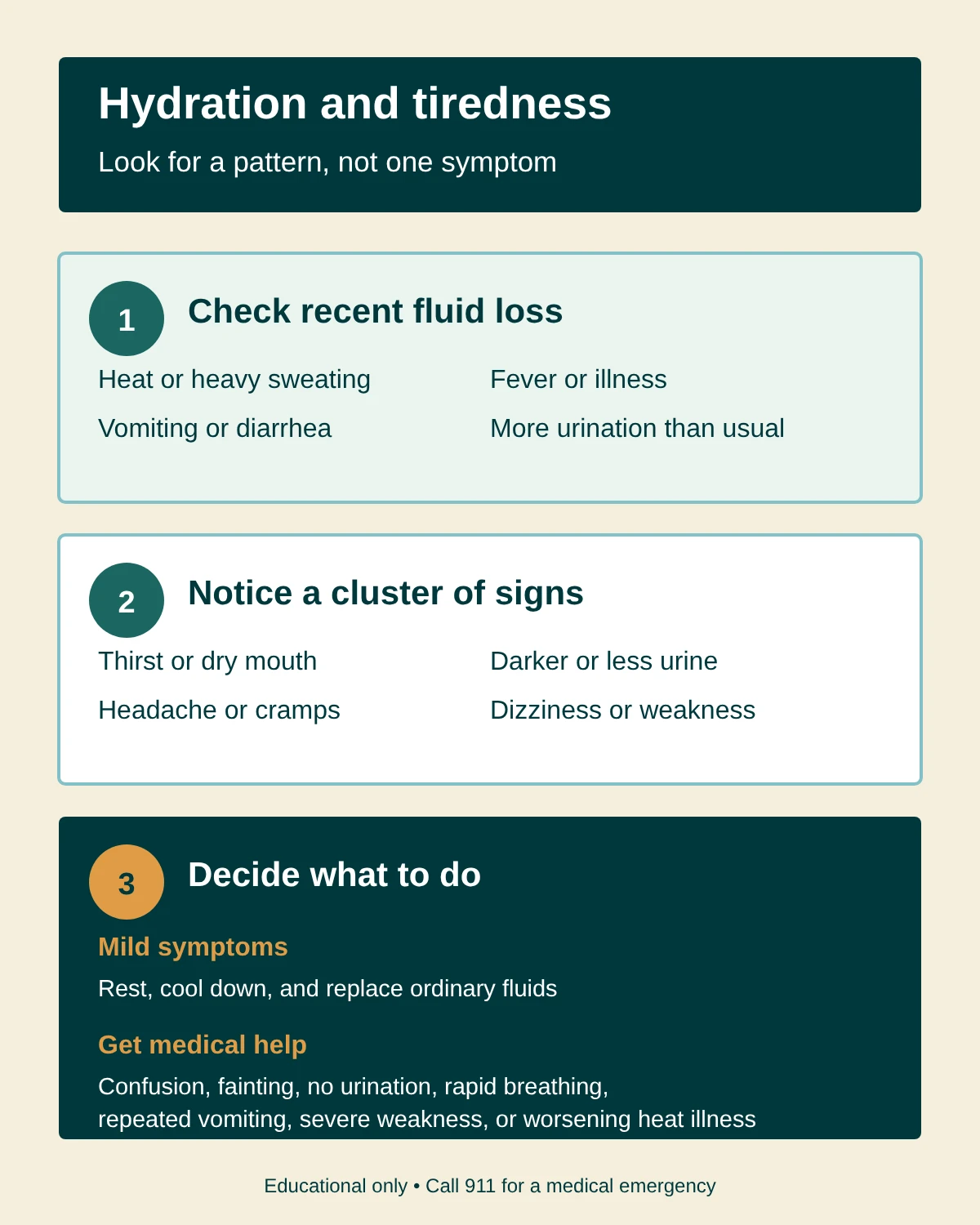
- Timing: When did the tiredness start, and was it linked with heat, exercise, illness, travel, or a missed routine?
- Fluid loss: Did you sweat heavily, vomit, have diarrhea, run a fever, or urinate much more than usual?
- Other signs: Were you thirsty, dry-mouthed, dizzy, headachy, crampy, or urinating less?
- Daily context: How did you sleep? Did you skip meals? Did alcohol, a new medicine, pain, stress, or low mood change? If the dip follows meals, see feeling tired after eating.
- Response: When symptoms were mild, did rest, cooling down, food, and ordinary fluids help?
Keep these notes light. Skip the log if tracking could intensify an eating disorder or health anxiety, and talk with a qualified professional instead.
Simple Hydration Steps for Mild Symptoms
If dehydration seems to make you tired on hot or busy days and no one has told you to limit fluids, start simply. Drink at regular points in the day, keep water within reach, and have something to drink with meals. Water is usually a good choice. Also, according to Mayo Clinic, tea, coffee, and milk count toward your daily fluids, and food supplies about a fifth of the water you need.
No single number fits every adult. Body size, climate, activity, pregnancy, breastfeeding, illness, diet, and health conditions all change how much fluid you need. A set number of glasses can be a handy reminder, but it is not a personal prescription. A healthcare professional can help set a target when fluid balance matters for your health.
Sports drinks are not needed for an ordinary day or a short, light workout, and many contain a lot of sugar and salt. Oral rehydration solutions are made for fluid loss from vomiting or diarrhea and are different from most sports drinks. Ask a clinician or pharmacist what fits, especially for a child, an older adult, pregnancy, ongoing vomiting or diarrhea, or a medical condition.
More water is not always better
Drinking a very large amount of water in a short time can push blood sodium too low. Mayo Clinic notes that this condition, called hyponatremia, can be life-threatening. People with heart failure, kidney disease, liver disease, certain hormone conditions, or a prescribed fluid limit need individual guidance. Do not override a fluid restriction or change a diuretic or other medicine on your own.
When Dehydration Does Not Explain Feeling Tired
Dehydration can make you tired, but if you are drinking normally and tiredness keeps returning, look beyond water. MedlinePlus lists anemia, depression, infection, diabetes, sleep disorders, thyroid problems, and medicines among the common causes of fatigue. NuWell’s guide to why you may feel tired after sleeping enough covers sleep quality and other health factors.
Digestive patterns can overlap too. For example, low fluid intake is one of several links between constipation and fatigue. And if tired days also bring strong sweet cravings, see why you may crave sugar when tired.
When Tiredness Needs Medical Care
Mild dehydration can make you tired for a day or so. However, make a medical appointment when tiredness is persistent, unexplained, worsening, or getting in the way of daily life.
- Frequent dizziness or fainting
- A racing or irregular heartbeat, or shortness of breath
- Fever, unusual bleeding, or weight change you cannot explain
- Marked thirst or urination
- New numbness, weakness, or trouble speaking or thinking clearly
- Ongoing vomiting or diarrhea, or a medical condition that affects fluid balance
When to get urgent help
How NuWell Can Help With Ongoing Fatigue
Even when dehydration does make you tired, persistent tiredness often has more than one contributor. NuWell’s practitioners can help you review nutrition, hydration, sleep, stress, digestion, metabolism, emotional well-being, daily life, and existing care within their professional roles. Learn more about NuWell’s whole-person support for persistent fatigue. This non-clinical, whole-person support complements medical and mental-health care; it does not replace them. Recommendations are personalized, and testing or supplements are not automatic.
If faith or spiritual well-being matters to you, it can be included according to your preferences. No particular belief is required.
Frequently Asked Questions
Can not drinking enough water make you tired?
Yes. Tiredness can occur with dehydration, especially when low intake is combined with heat, sweating, fever, vomiting, diarrhea, or increased urination. Tiredness alone cannot confirm dehydration.
How can I tell if dehydration is what makes me tired?
Look for a cluster of clues: thirst, dry mouth, darker or less frequent urine, headache, dizziness, weakness, and a recent reason for fluid loss. If the pattern is severe, keeps returning, or does not improve, ask a clinician rather than relying on symptoms alone.
Will drinking water fix tiredness right away?
It may help when mild dehydration is part of the problem, but the timing varies and something else may be responsible. Severe dehydration, ongoing fluid loss, or worrying symptoms need medical care.
Do coffee and tea count as fluids?
Yes, for most adults they count toward daily fluid intake. Caffeine can affect sleep, anxiety, bladder symptoms, or heart rate in some people, so the best amount and timing depend on the person.
When should I worry about dehydration?
Get prompt medical help for confusion, fainting, no urination, rapid breathing, a rapid heartbeat, repeated vomiting, severe weakness, or heat illness that is getting worse. Call 911 for a medical emergency or suspected heat stroke.
Have questions about how NuWell works? See NuWell’s frequently asked questions.
Sources
- Dehydration. MedlinePlus, National Library of Medicine.
- About Water and Healthier Drinks. Centers for Disease Control and Prevention, 2026.
- Heat-related Illnesses. CDC, National Institute for Occupational Safety and Health, 2026.
- Water: How much should you drink every day? Mayo Clinic, 2026.
- Fatigue. MedlinePlus Medical Encyclopedia.
- Dehydration Impairs Cognitive Performance: A Meta-analysis. Wittbrodt MT, Millard-Stafford M. Medicine & Science in Sports & Exercise, 2018;50(11):2360-2368. PubMed.
- The effect of active hypohydration on cognitive function: A systematic review and meta-analysis. Goodman SPJ, Moreland AT, Marino FE. Physiology & Behavior, 2019;204:297-308. PubMed.
- Does Hydration Status Influence Executive Function? A Systematic Review. Katz B, Airaghi K, Davy B. Journal of the Academy of Nutrition and Dietetics, 2021;121(7):1284-1305. PubMed.