

If you keep asking yourself why do I crave sugar when tired, the answer usually has less to do with willpower than with what happened before the craving showed up. How did you sleep? When did you last eat? What kind of day was it? A few days of simple notes can show the pattern and help you decide whether small changes are enough or a medical visit makes sense.
Why Tiredness Can Make Sweet Foods More Appealing
Sleep affects appetite, attention, mood, and decision-making, too. When you are short on sleep, planning a meal or waiting for food can feel like more work. As a result, foods that are quick, familiar, and rewarding tend to stand out.
Sleep loss can raise hunger
A 2019 review of 41 randomized controlled trials found that people who were sleep-restricted reported more hunger and ate about 250 more calories a day than when they slept normally (Zhu and colleagues, Sleep Medicine Reviews). However, the researchers did not find strong evidence that sleep loss consistently changed the appetite hormones leptin and ghrelin. So the common explanation of a simple “hormone switch” is too tidy. The real picture is more mixed.
In a smaller lab study of 23 healthy young adults, one night without sleep made higher-calorie foods more desirable and changed activity in brain areas that weigh food choices (Greer, Goldstein, and Walker, Nature Communications). The study measured how much people wanted foods, not what they ate over time. Even so, it fits a familiar experience: when you are worn out, quick and appealing foods get more of your attention.
A craving is not the same as low blood glucose
To begin with, a craving is a strong desire for a particular food. Hunger is a broader signal that your body wants food. The two can overlap, but neither one confirms low blood glucose, diabetes, insulin resistance, or a so-called sugar crash.
According to the National Institute of Diabetes and Digestive and Kidney Diseases, low blood glucose can make you feel shaky, hungry, dizzy, confused, or tired, or notice a fast or uneven heartbeat. It is common in people with diabetes who take insulin or some other diabetes medicines. If you have diabetes, follow the plan your care team gave you. If you do not have diabetes and keep having episodes with shakiness, confusion, or faintness, ask a medical professional how to have them checked. NuWell also explains how low blood sugar can feel like anxiety.
Why Do I Crave Sugar When Tired? Four Patterns to Check
In most cases, tired-day cravings trace back to one or more of four areas. Looking at all four keeps you from blaming yourself or guessing at a single cause.
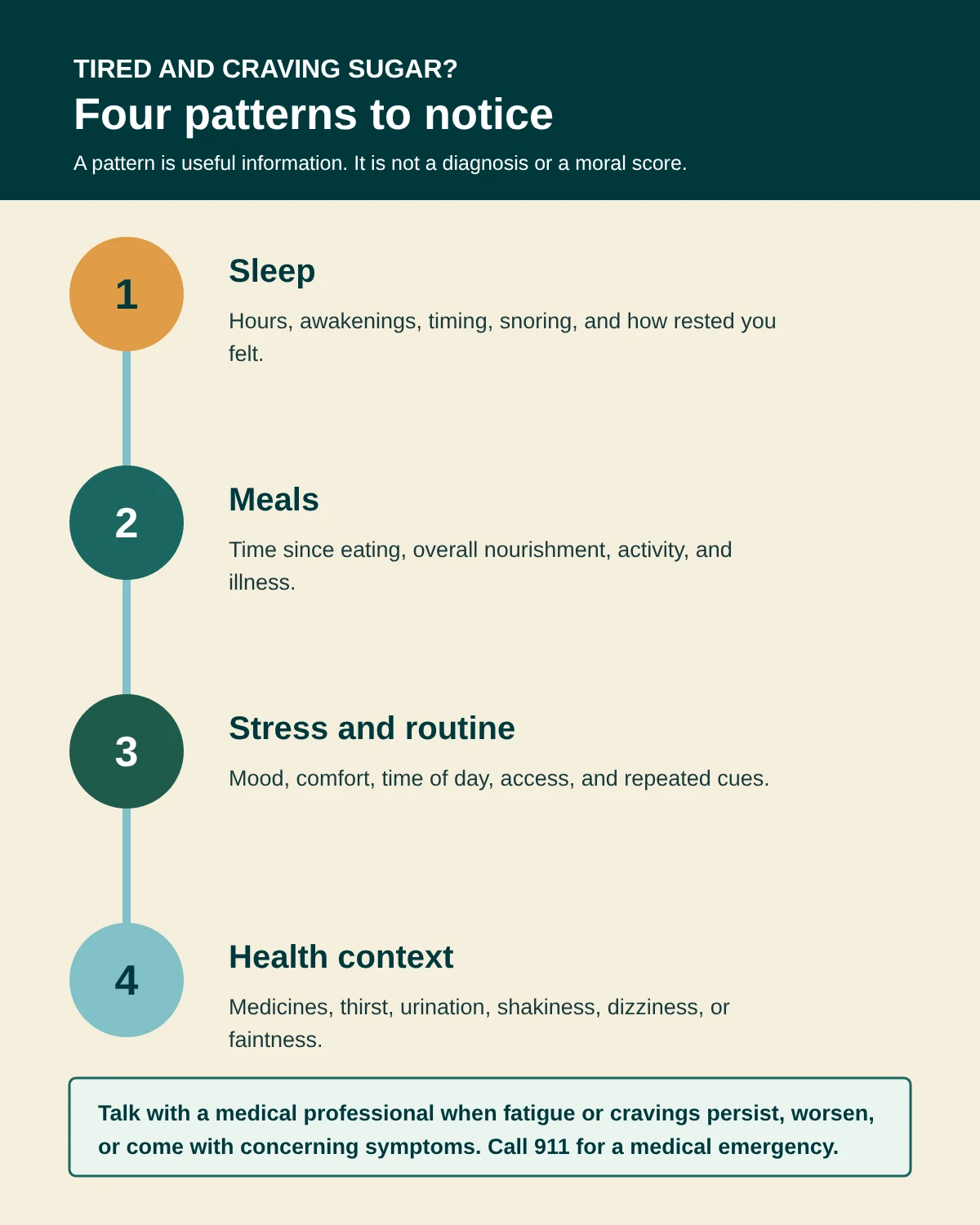
1. How much and how well you slept
First, look beyond the hours in bed. Broken sleep, an irregular schedule, pain, reflux, alcohol, caregiving, or breathing problems can leave you drained. The National Heart, Lung, and Blood Institute lists loud snoring, gasping, breathing that stops and starts, headaches, and daytime sleepiness as possible signs of sleep apnea, so mention them to a clinician. If you sleep a full night and still wake up worn out, see why you may feel tired after sleeping enough.
2. How long it has been since you ate
A missed meal, a small meal, extra activity, illness, pregnancy, or a demanding day can leave you hungry. In that moment, a sweet food may simply be the easiest thing within reach. Restricting food to make up for a craving can also make hunger and food thoughts louder later. If hunger keeps coming back soon after meals, read why hunger may return after eating.
At the same time, you do not need a perfect meal formula. Notice whether you have eaten enough for your needs and whether a mixed meal or snack leaves you satisfied. A registered dietitian or medical professional can tailor advice when diabetes, pregnancy, kidney disease, digestive problems, food allergies, or a history of disordered eating make general guidance too simple.
3. Stress, mood, and daily habits
Stress raises appetite for some people and lowers it for others. Sweet foods can also become tied to a break, comfort, a late-afternoon habit, a celebration, or relief after a hard day. That does not make the craving fake or wrong. It simply gives you more context. Stress and mood can be part of mental-health-informed natural health support alongside counseling.
If eating feels urgent, secretive, or out of control, or is followed by guilt, purging, fasting, or rigid rules, talk with a medical, nutrition, or mental-health professional who understands eating disorders.
4. Medicines and health changes
Some medicines can change sleep, appetite, energy, or blood glucose. Do not stop or change a medicine on your own. Instead, ask your prescriber or pharmacist whether a new medicine, dose, or timing change could fit the pattern.
Similarly, ongoing fatigue has many possible causes. MedlinePlus lists anemia, thyroid problems, depression, infection, diabetes, sleep disorders, and medicines among them. Sugar cravings do not tell you which one is involved. Your history and other symptoms guide what gets checked.
What to Do on a Tired Day Without Turning Food Into a Test
Start with care, not punishment. If you are hungry, eat. A mixed meal or snack with foods you enjoy is often more satisfying than ignoring hunger until it feels urgent. For example, yogurt and fruit, toast with eggs, crackers with cheese, or fruit with nut or seed butter, adjusted for allergies, medical needs, and taste.
Likewise, you do not need to ban sugar, skip the next meal, start fasting, buy a supplement, or use a glucose monitor because of one craving. Those moves can create new problems and hide the very pattern you are trying to understand.
After that, protect the next night of sleep where you can. The Centers for Disease Control and Prevention suggests going to bed and getting up at the same time each day, keeping your bedroom quiet, relaxing, and cool, turning off electronic devices at least 30 minutes before bed, and avoiding caffeine in the afternoon or evening. These are general sleep habits, not treatment for insomnia or a sleep disorder.
Do not drive or do safety-sensitive work when you are very sleepy or struggling to stay awake. A snack cannot make that kind of sleepiness safe.
Try a Seven-Day Pattern Note
If you keep wondering why you crave sugar when tired, a week of short notes can help. Write down only enough to make the pattern clearer:
- Sleep: bedtime, wake time, awakenings, and whether you felt rested.
- Craving: the time, what sounded good, and whether you also felt physically hungry.
- Context: your last meal or snack, stress, mood, activity, caffeine, and alcohol.
- Other symptoms: shakiness, sweating, dizziness, thirst, frequent urination, headache, racing heart, or digestive symptoms.
- Medicines or supplements taken near the episode, without changing them.
In other words, keep the note broad. You do not need calories, exact portions, or labels such as good and bad. Skip the log if tracking could intensify an eating disorder or health anxiety, and stop it if it brings on guilt, restriction, bingeing, or constant checking. Bring any useful pattern to a primary-care professional, registered dietitian, sleep clinician, or mental-health professional.
When Fatigue and Sugar Cravings Need Medical Attention
Make a routine medical appointment when fatigue lasts several weeks, keeps getting worse, gets in the way of daily life, or does not improve with rest and regular meals. NuWell also offers support for persistent fatigue that works alongside your medical care.
- Marked thirst, frequent urination, blurry vision, repeated infections, or weight loss you cannot explain (CDC: Symptoms of Diabetes)
- Loud snoring, gasping, breathing pauses, headaches, or severe daytime sleepiness
- Repeated shakiness, sweating, dizziness, confusion, or faintness
- A new medicine, a dose change, pregnancy, diabetes, or another condition that affects nutrition or blood glucose
- Binge eating, purging, severe restriction, intense fear of food, or distress about eating
When to Get Urgent Help
How NuWell Can Help With Tired-Day Cravings
Tired-day cravings often sit where sleep, food, stress, mood, medicines, metabolism, and daily responsibilities meet. A whole-person conversation can sort through those pieces without assuming one hidden cause or treating a craving as a character flaw. Appetite and energy also connect to NuWell’s whole-person weight and metabolic-health support.
NuWell practitioners can review your history, sleep and energy patterns, nutrition, stress, existing care, goals, and preferences. Recommendations are personalized, and testing or supplements are not automatic. NuWell’s non-clinical, whole-person support complements medical care, counseling, psychiatric care, and nutrition care; it does not replace them. Faith or spiritual well-being can be included if you want it, and no particular belief is required.
Frequently Asked Questions
Does lack of sleep cause sugar cravings?
Too little sleep can increase hunger and make sweet or other high-calorie foods more appealing for some people. The response varies, and sleep is not the only possible factor.
Why do I crave sugar when tired but not hungry?
A craving can show up without real hunger. Tiredness, stress, habit, and the easy comfort of a sweet food can all play a part. Noticing when cravings happen, and what came before them, often explains more than the craving itself.
Does craving sugar mean my blood sugar is low?
No. A craving alone cannot confirm low blood glucose. Low glucose can cause shakiness, hunger, dizziness, confusion, tiredness, or a fast heartbeat, especially in people who take insulin or certain diabetes medicines. Repeated or severe episodes need a medical check.
Will getting more sleep stop sugar cravings?
Better sleep may reduce hunger or change food choices for some people, but it is not a guaranteed fix. Meal timing, stress, habits, medicines, and health problems may still matter.
Should I take a supplement for sugar cravings?
Do not start a supplement based on cravings alone. Products marketed for blood sugar can interact with medicines, affect glucose, and cause side effects. Ask a qualified medical professional or pharmacist before using one.
Sources
- Effects of sleep restriction on metabolism-related parameters in healthy adults: a comprehensive review and meta-analysis of randomized controlled trials. Zhu B, et al. Sleep Medicine Reviews, 2019. PubMed.
- The impact of sleep deprivation on food desire in the human brain. Greer SM, Goldstein AN, Walker MP. Nature Communications, 2013. PubMed Central.
- Low Blood Glucose (Hypoglycemia). National Institute of Diabetes and Digestive and Kidney Diseases.
- Sleep Apnea: Symptoms. National Heart, Lung, and Blood Institute.
- Fatigue. MedlinePlus Medical Encyclopedia.
- About Sleep. Centers for Disease Control and Prevention.
- Symptoms of Diabetes. CDC Diabetes.