
What Causes Allergy Sneezing and a Runny Nose?
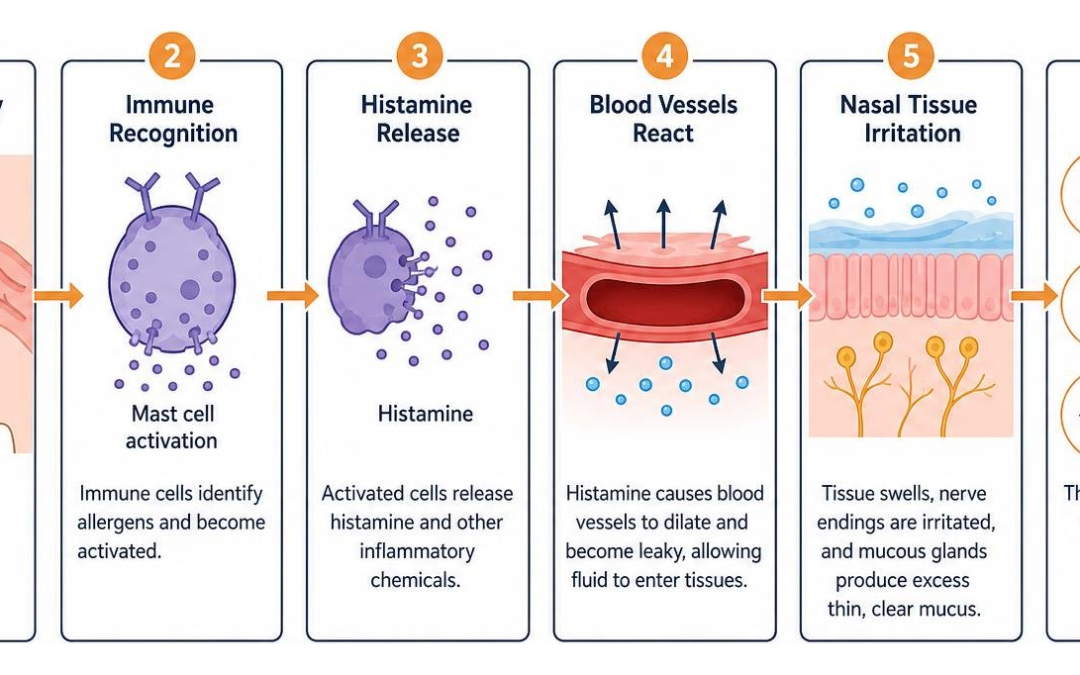
When airborne particles like grass pollen, ragweed, dust mite debris, or cat dander enter your nasal passages, an overreactive immune system identifies them as dangerous invaders. In response, immune cells release inflammatory chemical messengers, primarily histamine.
Histamine increases vascular permeability, causing blood vessels in the lining of your nose to dilate and leak fluid into surrounding tissues. This triggers tissue swelling (nasal congestion) and signals mucous glands to produce copious amounts of thin, clear nasal discharge, a condition clinically known as rhinorrhea. Simultaneously, irritated nerve endings in the mucous membranes send rapid signals to your brain, triggering explosive sneezing fits meant to force the irritants out.
At NuWell Health, we have found that understanding the biological triggers behind your symptoms makes it much easier to select an targeted allergy sneezing runny nose home remedy.
Common Environmental Triggers
Allergic rhinitis is generally categorized into seasonal allergies (hay fever) and perennial (year-round) allergies:
- Tree, Grass, and Weed Pollen: Fine powders released by plants that peak during spring, early summer, and fall. Pollen travels easily on dry, windy days.
- Dust Mites: Microscopic organisms that thrive in home bedding, carpets, and upholstered furniture.
- Pet Dander and Saliva: Proteins shed by cats, dogs, and other furred animals that easily adhere to clothing and house dust.
- Indoor and Outdoor Mold: Fungal spores that flourish in humid areas like basements, bathrooms, damp leaves, and mulch.
Differentiating Allergies from Colds and Viral Infections
Because a cold, COVID-19, and seasonal allergies share similar symptoms, distinguishing between them is critical for proper care. Allergies rarely produce body aches or a fever, and nasal secretions remain clear and thin. Viral infections, on the other hand, often cause thickened white, yellow, or green mucus, accompanied by low-grade fever, sore throat, and fatigue.
| Feature | Seasonal Allergies | Common Cold | COVID-19 |
|---|---|---|---|
| Primary Symptoms | Sneezing, clear runny nose, itchy eyes/nose | Stuffy nose, sneezing, mild cough, sore throat | Fever, dry cough, shortness of breath, fatigue |
| Fever Presence | Never | Rare (low-grade if present) | Very Common |
| Itchy Eyes/Nose | Extremely Common | Rare | Rare |
| Mucus Consistency | Thin, watery, clear | Thick, white, yellow, or green | Clear or thick |
| Symptom Duration | Weeks to months (per pollen season) | 7 to 14 days | 1 to 2+ weeks |
For more details on managing viral issues, review this guide on how to treat the common cold at home.
5 Easy Steps to Find an Allergy Sneezing Runny Nose Home Remedy
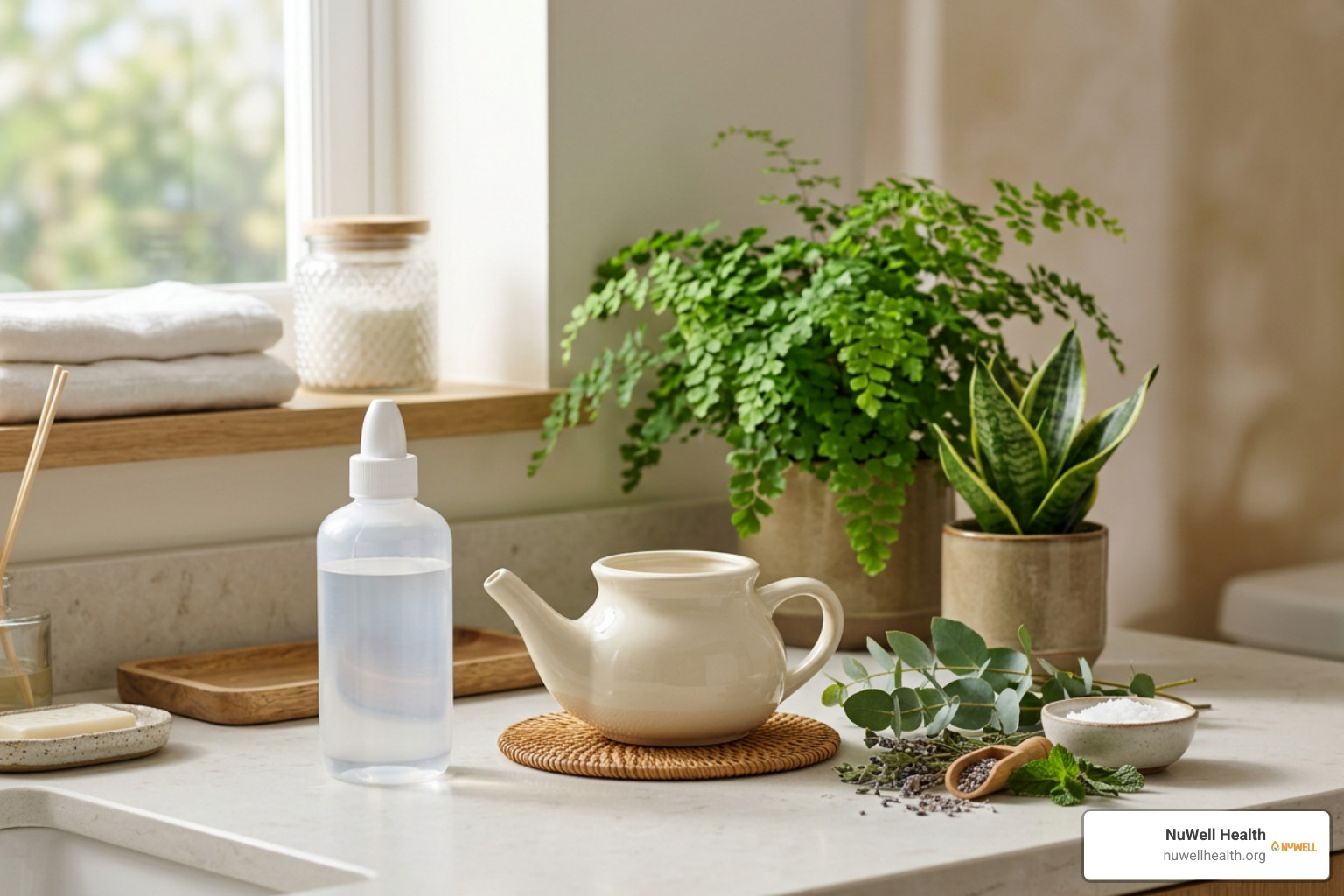
If you are looking for effective natural strategies to soothe an irritated respiratory tract, these five simple steps offer safe, practical relief. At NuWell Health, we have found that combining targeted nasal flushing with simple household controls provides the most consistent, lasting comfort during high pollen seasons.
Step 1: Perform Safe Saline Nasal Irrigation
Nasal washing acts like a gentle bath for your sinus cavities. Flushing the nasal passages with a salt-water rinse physically lifts out trapped pollen grains, dust mites, and excess mucus while soothing inflamed membranes.
According to medical research, saline nasal irrigation is highly effective for mild allergic rhinitis. You can craft an easy, safe rinse at home:
- Mix 1 cup (240 milliliters) of purchased distilled water (or boiled tap water cooled down to room temperature), 1/2 teaspoon (2.5 grams) of non-iodized salt, and a pinch of baking soda.
- Pour the solution into a clean neti pot or squeeze bottle.
- Lean forward over a bathroom sink, tilt your head sideways at a 45-degree angle, and breathe gently through your open mouth.
- Insert the spout into the upper nostril and pour gently so the liquid flows through your nasal cavity and streams out the lower nostril.
- Gently blow your nose to clear remaining fluid, then repeat on the opposite side.
For additional nasal flushing strategies, explore our full guide on natural relief and top anti-allergic home remedies to try and read through the official allergic rhinitis self-care guide.
Step 2: Inhale Soothing Steam with Essential Oils
Steam inhalation is one of the easiest and fastest ways to calm a runny nose. Inhaling warm, moist air for 5 to 10 minutes helps loosen thick mucus, clear congested passages, and soothe raw sinus passages.
For added relief, consider incorporating specific pure essential oils. Research from 2022 indicates that inhaling compounds from Mentha piperita (peppermint leaf) can help decrease nasal inflammation in allergic rhinitis due to its natural cooling menthol sensation. Similarly, adding eucalyptus essential oil creates a cooling airway sensation that makes breathing feel noticeably clearer.
- How to do it: Fill a wide bowl with steamy hot water. Add 1 to 2 drops of eucalyptus or peppermint essential oil. Lean over the bowl, drape a clean towel over your head to trap the steam, and inhale deeply through your nose for 5 to 10 minutes.
To explore more ways to stop a running nose, refer to 8 powerful home remedies to stop your runny nose.
Step 3: Try Natural Supplements as an Allergy Sneezing Runny Nose Home Remedy
Targeted botanicals and bioflavonoids can serve as a supportive allergy sneezing runny nose home remedy by stabilizing immune cell activity:
- Quercetin: A natural plant bioflavonoid found in red onions, apples, and green tea. A 2022 clinical study demonstrated that a quercetin-containing supplement improved allergic symptoms, including itchy eyes, sneezing, runny nose, and sleep quality.
- Vitamin C: A natural antioxidant and immune support nutrient. While adult daily dietary recommendations are 90 mg for men and 75 mg for women, higher therapeutic oral doses during allergy season may help moderate histamine reactivity.
- Spirulina: A blue-green microalgae that has been shown to reduce nasal discharge, sneezing, congestion, and itching by balancing cytokine production.
- Stinging Nettle and Butterbur: Plant extracts historically used to ease upper respiratory inflammation and inhibit leukotrienes.
For a detailed evaluation of natural health solutions, read through Cleveland Clinic’s guidance on alternative remedies for allergies and check out our comprehensive guide on pollen vs your pantry: best home remedies for natural allergy relief.
Step 4: Implement Environmental Controls and Household Hygiene
Preventing allergen accumulation indoors reduces the overall burden on your immune system:
- Deploy HEPA Filters: High-Efficiency Particulate Air (HEPA) purifiers capture up to 99.97% of airborne dust, pollen, and pet dander.
- Manage HVAC Systems: Replace air filters in heating and cooling systems every 30 to 60 days during peak pollen months, and set air conditioners to recirculate indoor air.
- Establish Bedtime Routines: Pollen clings to exposed hair and skin. Showering before bed prevents outdoor allergens from contaminating your pillowcases and sheets. Wash bedding weekly in hot water.
- Sanitize Bedding with Eucalyptus: Adding a few drops of eucalyptus oil to laundry cycles helps eliminate dust mites that standard warm washes might miss.
For fast outdoor-to-indoor recovery techniques, read our practical steps on how to get rid of pollen allergy symptoms fast.
Step 5: Utilize Local Honey and Warm Teas as an Allergy Sneezing Runny Nose Home Remedy
Warm fluids thin out mucus and soothe ticklish throats caused by postnasal drip:
- Herbal Teas: Sipping warm ginger root, peppermint, or chamomile tea relaxes respiratory pathways.
- Turmeric Milk: Combining warm milk (or non-dairy alternatives) with half a teaspoon of ground turmeric creates a traditional golden milk packed with anti-inflammatory curcumin.
- Local Raw Honey: Many wellness enthusiasts advocate consuming locally produced raw honey. The theory is that consuming small traces of regional pollen over time may help train your immune system to tolerate environmental allergens, though scientific evidence remains mixed.
- Probiotics: Research from 2023 highlights that supporting gut microbiome diversity with probiotics helps regulate overall immune responses, easing inflammatory reactions.
Learn how to ease seasonal issues naturally without sluggishness in our guide on how to treat hay fever at home without turning into a zombie.
Safety Precautions and Unsafe Home Remedies to Avoid
While natural care offers safe relief, improper habits can introduce serious health risks. At NuWell Health, we emphasize these crucial precautions:
- Never Use Plain Tap Water for Nasal Irrigation: Tap water contains harmless microscopic organisms that your stomach acids easily kill when swallowed, but when flushed into nasal passages, they can cause fatal brain infections (such as Naegleria fowleri). Always use distilled, sterile, or boiled and cooled water.
- Limit Nasal Decongestant Sprays: Over-the-counter decongestant sprays should never be used for more than 3 consecutive days. Prolonged use causes rebound congestion (rhinitis medicamentosa), making nasal swelling significantly worse once the drug wears off.
- Perform Essential Oil Patch Tests: Essential oils are potent and non-FDA-regulated. Always dilute them in a carrier oil (such as jojoba or almond oil) and conduct a 24-hour skin patch test on your inner forearm before topical use or intense inhalation.
- Avoid Unfiltered High-Dose Herbal Supplements: Botanicals like butterbur must be certified “PA-free” (pyrrolizidine alkaloids), as raw, unrefined butterbur contains compounds toxic to the liver.
When to See a Doctor for Persistent Allergy Symptoms

Home care works best for mild to moderate symptoms. You should consult a healthcare provider or allergist if:
- Your runny nose and sneezing persist beyond 3 to 4 weeks without improvement.
- You experience severe facial pain, localized headache, swelling around the eyes, or thick green discharge, which may indicate a secondary bacterial sinus infection.
- You develop a high fever or persistent throat pain.
- You experience wheezing, shortness of breath, tight chest sensation, or worsening asthma.
If you frequently experience sinus-related pressure, explore our recommendations on how to treat an allergy headache naturally without pills.
Frequently Asked Questions
How quickly can steam inhalation stop sneezing and a runny nose?
Steam inhalation provides almost immediate comfort. Inhaling warm moisture for 5 to 10 minutes loosens thick secretions, calms hyperactive nerve endings in the nostrils, and eases sneezing fits rapidly, though you may need to repeat the process 2 to 3 times daily during peak allergy days.
Is tap water safe for a nasal neti pot rinse?
No, untreated tap water is unsafe for nasal irrigation. Always use distilled water, commercially bottled sterile water, or tap water that has been boiled vigorously for 1 minute and completely cooled to room temperature.
How long do seasonal allergy symptoms usually last?
Unlike a cold, which typically clears up within 7 to 14 days, seasonal pollen allergies can last 4 to 6 weeks per pollen season, depending on geographic location and weather conditions.
Conclusion
Finding an effective allergy sneezing runny nose home remedy comes down to consistent, preventive self-care. By combining gentle nasal irrigation, steam inhalation, targeted natural supplements, and rigorous household hygiene, you can dramatically lower your allergen exposure and support your body naturally.
At NuWell Health, we have found that holistic wellness is rooted in supporting the body God gave us by addressing root causes rather than just masking symptoms. Taking time to care for your home environment, resting your body, and nourishing your immune system equips you to enjoy every season in comfort and health.
If you are ready to address your environmental sensitivity from the inside out, check out our comprehensive resource on A Practical Guide to Allergies and Food Sensitivity.
This article was researched with AI and heavily edited by Jordan Oliver for accuracy and relevance.
Jordan is an author, ordained minister, and online host for His Glory TV, sharing biblically grounded insights on faith, prayer, and spiritual growth. She is the co-founder of Triple-Braided Cord Co., an intercessory prayer and healing ministry inspired by Ecclesiastes 4:12.
Jordan holds a Bachelor’s degree in Communications and Religious Studies from High Point University and is a certified Spiritual Life Coach through iCoachLife in Nashville, Tennessee. Drawing from her ministry, coaching, and academic experience, she creates trustworthy, faith-based content that helps readers grow in their relationship with God. Learn more about Jordan here.