

Why So Many People Are Turning to Natural Remedies for Health and Wellness
The most effective natural remedies for health and wellness are not exotic supplements or expensive cleanses. They are the foundational habits the human body was designed to run on:
| Natural Remedy | Best For |
|---|---|
| Quality sleep (7-9 hrs) | Energy, immunity, mood, brain function |
| Whole-food diet | Inflammation, digestion, metabolic health |
| Daily movement | Blood sugar, stress, cardiovascular health |
| Stress management (breathing, prayer) | Nervous system, cortisol, sleep quality |
| Sunlight and nature exposure | Vitamin D, circadian rhythm, mental health |
| Honey and ginger | Coughs, sore throats, nausea |
| Chamomile and lavender | Sleep, anxiety, relaxation |
| Probiotics and fiber | Gut health, immunity, digestion |
| Ginger and peppermint | Digestive discomfort, bloating |
| Hydration and minerals | Energy, joint health, brain function |
If you’re frustrated with recurring symptoms, side effects from synthetic drugs, or feeling like you’re only ever treating the surface of a problem — you’re not alone. At NuWell Health, we’ve found through working with people on real-world wellness concerns that most people seeking natural solutions aren’t looking to abandon medicine entirely. They want to understand why they feel the way they do and address the root cause.
The interest in natural approaches is real and growing fast. Search interest in natural health has risen dramatically over the past five years, and the global wellness market is now valued at over $6.3 trillion. But more searching doesn’t always mean better answers. Much of what gets promoted online is recycled hype with little scientific backing.
This guide cuts through that noise.
We’ll cover what the evidence actually supports — from simple kitchen remedies for coughs and indigestion, to lifestyle foundations that help support long-term human health and wellness. We’ll also be honest about when natural remedies fall short and conventional care is the wiser choice.
One important truth up front: “natural” does not automatically mean safe. Some natural substances interact with medications. Others are mislabeled or contaminated. We’ll show you how to evaluate what you’re putting in your body with the same care you’d apply to any other health decision.
Whether you’re building a daily wellness routine from scratch or looking to fill the gaps in an existing one, this step-by-step guide is designed to give you practical, trustworthy, and personalized direction.

Natural Remedies for Health and Wellness: Start With the Foundations
When people think of natural remedies for health and wellness, they often picture herbs, teas, or supplement bottles. Those can have a role, but the strongest evidence still points to basics: sleep, nutrition, movement, stress regulation, hydration, sunlight, and time outdoors.
These are not glamorous. They also work.
Poor sleep raises stress hormones and appetite. Ultra-processed foods now make up a large share of calories in Western diets and can crowd out fiber and nutrients. Many adults are low in vitamin D. And when we spend nearly all day indoors, both mood and circadian rhythm can drift off course.
Why lifestyle habits are the most evidence-based natural remedies
If we had to rank the most reliable natural strategies, lifestyle habits would sit at the top.
- Sleep supports immune function, brain performance, hormone balance, and recovery
- Whole foods help regulate inflammation and blood sugar
- Fiber and plant variety support the gut microbiome
- Walking and strength training improve metabolic and cardiovascular health
- Mindfulness, prayer, and slow breathing calm the nervous system
At NuWell Health, we have found that many recurring complaints like fatigue, poor digestion, headaches, and low resilience improve when these foundations are addressed consistently. Not overnight. Not magically. But meaningfully.
How to build a simple daily routine that actually sticks
The best routine is not the most impressive one. It is the one we can repeat.
Try habit stacking:
- Get morning light within 30 to 60 minutes of waking
- Drink a glass of water after brushing teeth
- Eat regular meals with protein, fiber, and healthy fats
- Take a 5 to 10 minute walk after meals when possible
- Add 3 to 5 minutes of deep breathing or prayer during a daily transition point
- Keep a fixed bedtime routine and a mostly fixed wake time
Consistency beats perfection every time. A simple routine done 80% of the time is better than a heroic routine done for four days and then forgotten like last year’s resistance bands.

Nature exposure, grounding, and a Christian view of rest
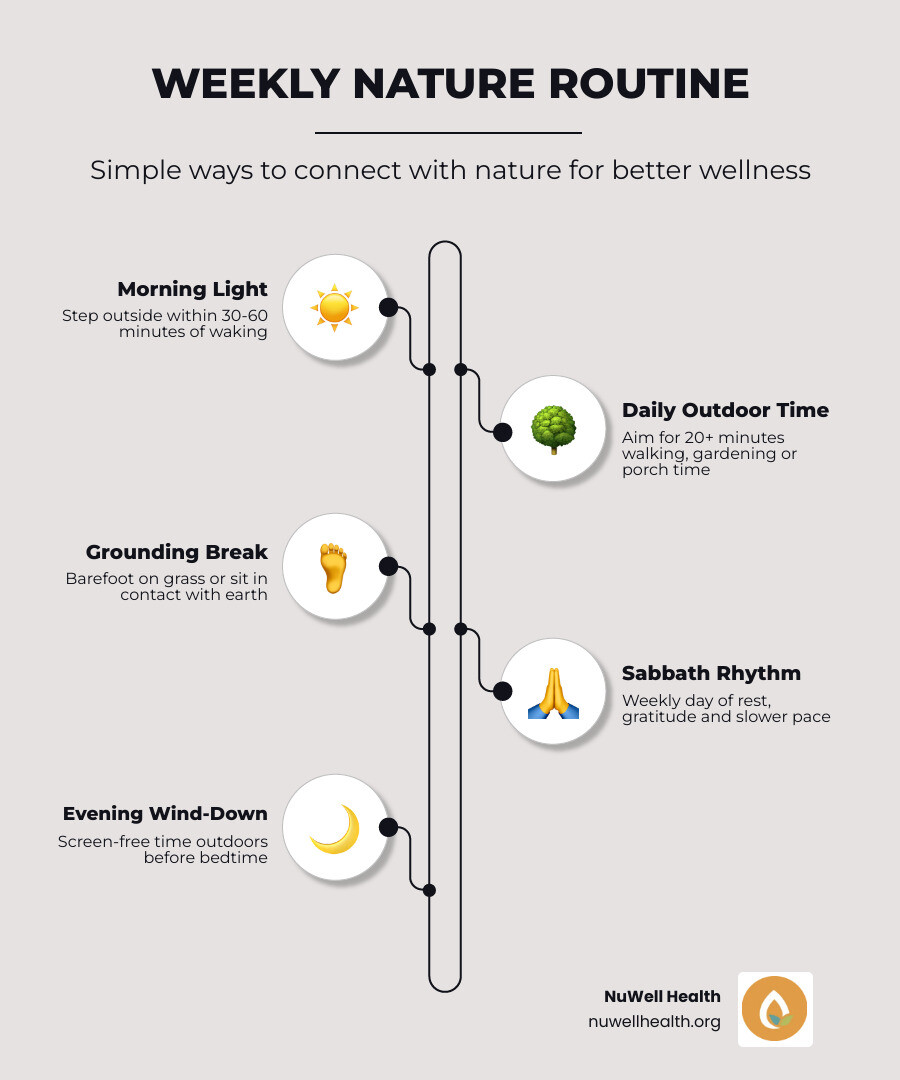
Time outdoors is one of the most overlooked natural health tools. Spending at least 120 minutes a week in nature is associated with better health and wellbeing. That can mean walking in a park, gardening, reading outside, or sitting on the porch with your coffee and your thoughts.
Some people also find grounding helpful, such as walking barefoot on grass or sitting outdoors in direct contact with the earth. While claims around grounding can be overstated online, many people experience it as calming and supportive, especially when it encourages more outdoor time, slower breathing, and less screen time.
From a Christian perspective, rest is not laziness. It is part of healthy design. Sabbath rhythm, gratitude, quiet prayer, and stewardship of the body all support a more grounded way of living. Nature can help us slow down enough to notice what our bodies and souls have been trying to say all week.
For deeper guidance, explore more info about long-term wellness.
Natural Remedies for Health and Wellness for Common Everyday Issues
Natural remedies can be helpful for everyday problems, especially when symptoms are mild and we also address contributing habits.
Best natural remedies for coughs and sore throats
Several options have decent evidence or longstanding practical use:
- Honey can reduce cough frequency and soothe irritation. It may work about as well as some over-the-counter cough products. Never give honey to children under 1 year old.
- Ginger may help with throat irritation and can be added to warm tea.
- Warm tea with slippery elm or licorice may soothe the throat.
- Salt water gargles can reduce throat discomfort.
- A warm turmeric and salt gargle is a traditional option some people find soothing.
- Humidifiers can help when dry air is making symptoms worse.
- Chicken soup is not just folklore; warm broth can help with hydration and congestion.
- Elderberry and echinacea are popular, but results are mixed, and they should be used thoughtfully rather than thrown into a giant “immune stack.”
At NuWell Health, we have found that simple remedies tend to work best when paired with rest, hydration, and a realistic recovery routine rather than a long list of supplements. For a broader overview, see Scientific research on herbal medicine.

What helps digestive problems naturally
Digestive issues vary, so matching the remedy to the symptom matters.
- Ginger is one of the best-supported natural options for nausea
- Probiotics may help some people, especially after antibiotics or with certain digestive patterns, but they are not a cure-all
- Yogurt and kimchi can provide helpful live cultures for some people
- Fennel is often used for gas and bloating
- Peppermint may help digestive discomfort and IBS symptoms in some cases
- Fiber supports bowel regularity, but increase it gradually
- Hydration matters more than most people realize for constipation
- Mindful eating and chewing slowly can reduce bloating and improve digestion
At NuWell Health, we have found that indigestion is often less about finding the perfect supplement and more about slowing down, eating in a calmer state, and reducing ultra-processed foods that can irritate the gut.
If you want a practical safety guide, see more info about herbal supplement safety.
Natural sleep support without overcomplicating it
Sleep support does not need to become a nighttime chemistry experiment.
Start here:
- Keep a fixed wake time, even on weekends
- Dim lights in the evening
- Reduce screens before bed
- Keep the room cool, dark, and quiet
- Try chamomile tea if it feels calming
- Use lavender in a pillow spray or diffuser if you enjoy the scent
- Consider magnesium if intake is low, but choose carefully and talk with a clinician if you take medications
- Practice slow breathing, prayer, or a short wind-down routine
These habits usually matter more than fancy sleep products.
Which popular remedies are useful and which are overhyped
Some remedies deserve a spot in the toolkit. Others deserve a polite but firm “no thanks.”
| Remedy | Evidence snapshot | Bottom line |
|---|---|---|
| Honey | Good support for cough relief | Useful |
| Ginger | Good support for nausea, some digestive issues | Useful |
| Peppermint oil | May help IBS and digestive discomfort | Useful for some |
| Turmeric | Some early support for inflammation and arthritis symptoms | Promising, not magic |
| Neti pot | Helpful for congestion if used correctly | Useful with safety rules |
| Chamomile | Mild support for relaxation and sleep | Reasonable |
| Echinacea | Mixed evidence, may help if used early | Limited but possible |
| Apple cider vinegar | Popular for everything, strongly proven for very little | Overhyped |
| Detox teas | Often laxative-heavy marketing | Overhyped |
| Juice cleanses | Not needed for “detox” | Overhyped |
| Ear candling | Unsafe and ineffective | Avoid |
If using a neti pot, only use distilled or previously boiled and cooled water, and keep the device clean.
Natural Remedies vs Conventional Treatments: What Works Best and When
This is where balance matters. Natural approaches and conventional care are not enemies. In many cases, the best choice is integrative care.
When natural remedies work well on their own
Natural remedies may be enough when symptoms are:
- Mild
- Short-term
- Clearly improving
- Not associated with red flags
Examples:
- Mild coughs or sore throats
- Temporary indigestion or bloating
- Trouble winding down at night
- Everyday stress
- Mild muscle soreness after activity
In these cases, sleep, hydration, warm fluids, honey, ginger, light movement, and rest can go a long way.
When conventional treatment is the safer choice
Natural care should not delay medical treatment for:
- Chest pain
- Trouble breathing
- Signs of dehydration
- High fever that persists
- Severe infection
- Persistent vomiting
- New neurological symptoms
- Severe pain
- Worsening symptoms in infants, older adults, or medically vulnerable people
The same goes for chronic disease that needs monitoring or medication. Lifestyle medicine is powerful, but it is not a substitute for emergency care or necessary treatment.
The safest approach is often integrative, not all-or-nothing
At NuWell Health, we support a whole-person approach that respects both prevention and appropriate medical care. Sometimes that means using sleep, nutrition, movement, and stress management as the base, while also using medication when needed. That is not failure. That is wisdom.
Herbal Supplements and Natural Remedies: Safety, Interactions, and Smart Buying
Supplements can be helpful, but they are not automatically safe, pure, or necessary.
Why “natural” does not always mean safe
A natural label can create false confidence.
Examples:
- St. John’s wort can interact with many medications and may trigger problems in people with bipolar disorder
- Foxglove is natural, but eating it can be dangerous
- Some concentrated extracts may affect the liver at high doses
- Supplements are not always tested before reaching the market
- Labels may not match what is actually inside
That is why we should treat supplements with the same respect we give medications.
Medication interactions and who should be extra careful
Use extra caution if you take:
- Blood thinners
- Antidepressants
- Blood pressure medications
- Diabetes medications
- Sedatives or sleep medications
Also speak with a clinician before using herbs or supplements if you are:
- Pregnant
- Breastfeeding
- Preparing for surgery
- Managing a chronic disease
- Giving a remedy to a child
How to choose better supplements and avoid misleading marketing
When shopping, look for:
- Third-party testing such as NSF or USP
- Clear ingredient lists
- Transparent dosing
- Single-ingredient products when possible
- Lot numbers and manufacturer information
- Brands that avoid vague “proprietary blends”
- Claims that sound realistic, not miraculous
If a product says it boosts everything, fixes everything, and probably folds your laundry, we recommend skepticism.
For more on philosophy and practice, see more info about natural medicine.
Practical rules for trying a new remedy safely
Use these rules:
- Start low and go slow
- Try one new thing at a time
- Keep a symptom log
- Stop if symptoms worsen
- Ask for guidance if you take medications
- Store remedies safely away from children
- Never give honey to babies under 1
- Use only distilled or boiled and cooled water in a neti pot
A Step-by-Step Personalized Natural Wellness Plan
Personalization matters. Two people can have the same symptom and need different solutions.
Step 1: Match the remedy to the problem and your health history
Ask:
- What is the symptom?
- How severe is it?
- How long has it lasted?
- What triggers it?
- What medications are we taking?
- Are there allergies, diagnoses, or past reactions?
For example, peppermint may help one person’s bloating but aggravate another person’s reflux. Chamomile may calm one person and do little for another. Bio-individuality is real.
Step 2: Build your natural remedies for health and wellness routine
Keep it practical:
- Morning sunlight within the first hour of waking
- A protein-rich breakfast if tolerated
- Regular water intake through the day
- Short movement snacks between long periods of sitting
- Herbal tea for a specific goal, like ginger for nausea or chamomile for evening calm
- An outdoor walk most days
- An evening wind-down with prayerful reflection and less screen time
Step 3: Support long-term wellness and prevention holistically
Prevention is where natural health shines.
Long-term wellness often includes:
- Better metabolic health through regular meals and movement
- Gut support through fiber-rich foods and less ultra-processed food
- Lower stress load through rest, prayer, boundaries, and relationships
- Social connection and community
- Anti-inflammatory eating patterns
- Sleep consistency
These patterns matter because so much chronic disease is tied to lifestyle. Learn more in more info about holistic cancer prevention.
Step 4: Adjust for specific concerns without chasing trends
Once the basics are in place, we can personalize further for concerns like skin health, yeast overgrowth patterns, hormone balance, or healthy aging. The key is to make sustainable adjustments, not jump from trend to trend.
Helpful next reads:
- more info about healing eczema naturally
- more info about holistic candida support
- more info about natural hormone support
Frequently Asked Questions About Natural Remedies for Health and Wellness
What are the most evidence-based natural remedies for common health problems?
The strongest options include:
- Honey for coughs
- Ginger for nausea and some digestive complaints
- Probiotics for selected gut issues
- Chamomile for mild relaxation support
- Sleep hygiene for insomnia
- Breathing exercises for stress and anxiety
Just as important are daily habits: whole foods, walking, sunlight, hydration, and regular sleep.
Can natural remedies replace medication?
Sometimes for mild, short-term issues. Not always for chronic or serious conditions.
Natural remedies can complement medication well, and in some cases may reduce symptom burden enough that care plans can be adjusted by a clinician. But we should never stop prescribed medication without guidance.
How long does it take natural health habits to work?
That depends on the change.
- Better sleep habits may improve energy within 1 to 2 weeks
- Digestive improvements may show up within 2 to 6 weeks
- Stress reduction practices can help acutely, but deeper resilience takes longer
- Long-term metabolic and inflammatory changes often take several weeks to months
The goal is not instant perfection. It is steady progress.
Conclusion
Natural health works best when we stop chasing shiny objects and start honoring fundamentals. The most reliable natural remedies for health and wellness are often the least flashy: sleep, nourishing food, movement, hydration, sunlight, stress regulation, and thoughtful use of simple remedies like honey, ginger, chamomile, and probiotics.
At NuWell Health, we believe sustainable wellness comes from informed choices, prevention, and personalized care that addresses root causes rather than masking symptoms alone. That includes knowing when a natural remedy is enough, when a supplement needs caution, and when conventional care is the right tool.
If you want to keep building a realistic plan for lifelong health, explore more info about long-term wellness or visit more info about NuWell Health.
This article was researched with AI and heavily edited by Jordan Oliver for accuracy and relevance.
Jordan is an author, ordained minister, and online host for His Glory TV, sharing biblically grounded insights on faith, prayer, and spiritual growth. She is the co-founder of Triple-Braided Cord Co., an intercessory prayer and healing ministry inspired by Ecclesiastes 4:12.
Jordan holds a Bachelor’s degree in Communications and Religious Studies from High Point University and is a certified Spiritual Life Coach through iCoachLife in Nashville, Tennessee. Drawing from her ministry, coaching, and academic experience, she creates trustworthy, faith-based content that helps readers grow in their relationship with God. Learn more about Jordan here.