

Why Spiritual Health and Wellness Belongs at the Center of Your Well-Being
Spiritual health and wellness is one of the most overlooked pillars of a truly healthy life — yet research consistently links it to longer life, better mental health, and stronger physical resilience.
Here is a quick answer to what spiritual health and wellness actually means and why it matters:
- What it is: A sense of inner well-being rooted in meaning, purpose, and connection — to God, others, nature, or your deepest values
- What it is not: Exclusively tied to organized region; it includes personal faith, prayer, reflection, and living in alignment with your beliefs
- Why it matters: Studies link strong spiritual well-being to lower rates of depression, reduced hypertension risk, better immune function, and greater longevity
- Who it is for: Anyone seeking whole-person health — body, mind, and spirit
Most conversations about health stop at diet and exercise. But at NuWell Health, we have found that clients who neglect the spiritual dimension often keep hitting a ceiling — recurring stress, persistent anxiety, and a sense that something is still missing, even when everything else looks “optimized.”
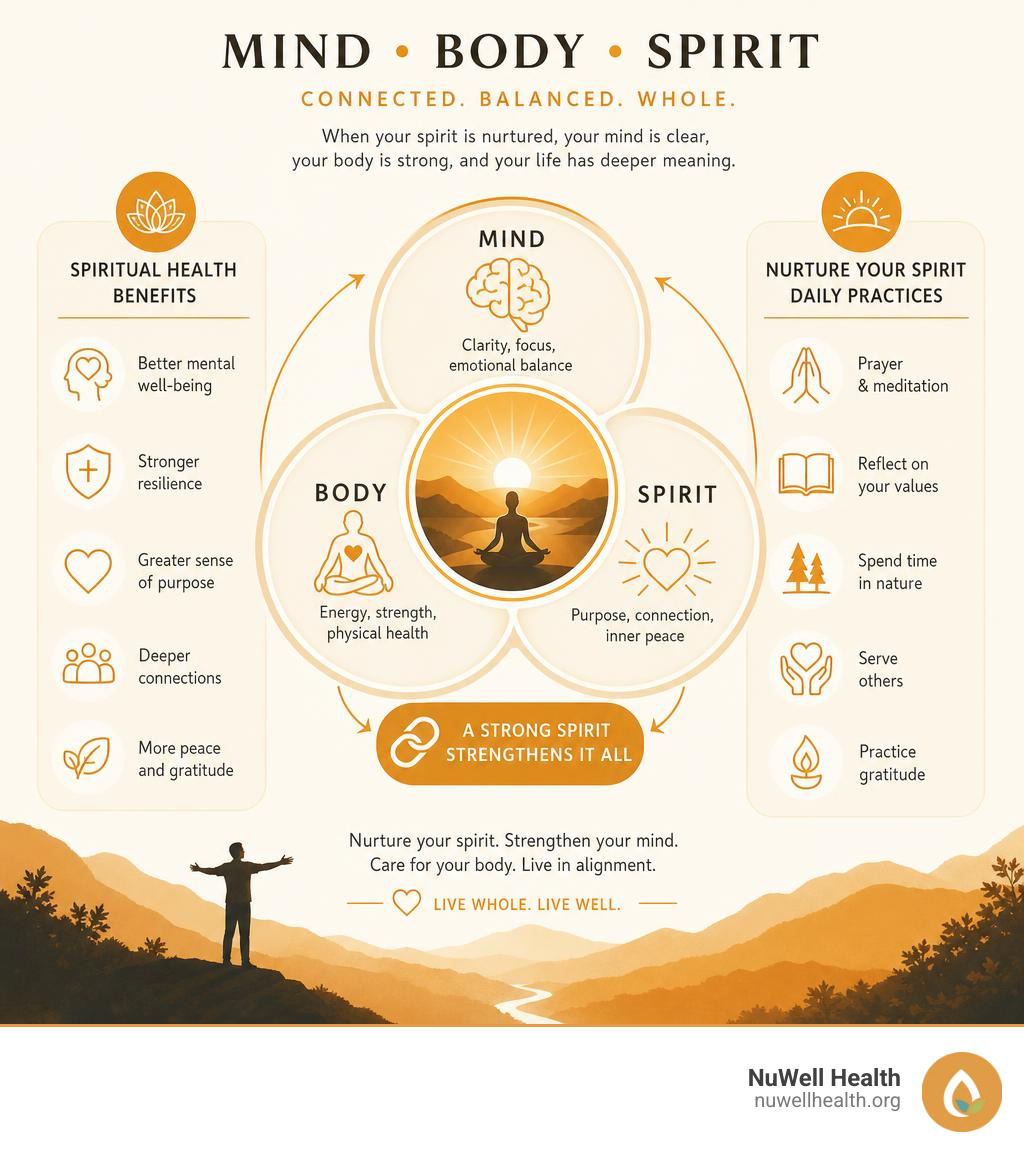
The truth is, your spirit, mind, and body are deeply connected. Tending to one without the others leaves the whole system out of balance.
This guide walks you through the science, the practical steps, and the real-world benefits of building your spiritual health — whether you are deeply rooted in your Christian faith or just beginning to explore what spiritual well-being means for you.
Defining Spiritual Health and Wellness
To understand spiritual health and wellness, we must look beyond the physical and material aspects of our lives. In academic and clinical settings, researchers define spiritual health as a dynamic dimension of human life that involves how we seek and express meaning, purpose, and connection. It is the core framework through which we process suffering, establish our values, and experience transcendence—the feeling of being connected to something much larger than ourselves.
As explored in depth within the paper on Spiritual Health as an Integral Component of Human Wellbeing , spiritual well-being is not just a subjective feeling of peace; it is a measurable state of relational harmony. True spiritual wellness is reflected in how well we relate to ourselves, our community, our environment, and the ultimate transcendental reality.
At NuWell Health, we approach this through the lens of Christian anthropology. This perspective recognizes that human beings are created Imago Dei—in the image and likeness of God. We are not merely biological machines with thoughts; we are integrated beings of body, mind, and soul. Therefore, our ultimate spiritual health is anchored in a restored, active relationship with God. When this relationship is out of alignment, we experience a quiet internal friction that no amount of clean eating or physical exercise can fully resolve.
To explore how you can begin restoring this internal balance, you can read our comprehensive guide on Alignment 101: Reconnecting Your Inner Self.
How Spiritual Health and Wellness Differs from Religious Practice
It is common to use the terms “spirituality” and “religion” interchangeably, but they are distinct concepts that serve different roles in our well-being.
- Religion is an organized, external system of beliefs, practices, rituals, and symbols designed to facilitate closeness to the sacred. It provides a structured faith community, shared doctrines, and traditional ways of worship. According to Gallup data, approximately 43% of Americans say they belong to a church or other religious body.
- Spirituality, on the other hand, is a deeply personal, internal experience. It is the individual search for ultimate meaning, connection, and values alignment.
As the University of New Hampshire explains, spiritual wellness involves connecting to both your inner and outer worlds to support you in living out your values and purpose. While a religious person often expresses their spirituality through their church, parish, or faith community, an individual can still pursue spiritual health outside of formal, organized structures. They may find this connection through quiet reflection, walks in nature, or creative expression.
Whether you practice your faith within a traditional church community or are navigating a personal, individual connection with God, spiritual health requires aligning your daily actions with your core beliefs. When your external choices match your internal values, you cultivate a deep sense of moral clarity and peace.
The Holistic Mind-Body-Spirit Connection
At NuWell Health, we believe that you cannot isolate one part of your health without affecting the others. The mind, body, and spirit do not exist in separate compartments; they are constantly communicating through intricate biological and psychological pathways. When we experience spiritual distress—such as a loss of purpose, unresolved guilt, or a feeling of separation from God—our bodies register this as a chronic stressor.
This is why a purely physical approach to chronic symptoms often falls short. In our practice, we focus on root-cause healing. If you are struggling with chronic fatigue, digestive issues, or muscle tension, the root cause may not just be physical. It could be tied to an overloaded nervous system driven by spiritual and emotional unrest. In our clinical experience at NuWell Health, we have observed that clients who integrate daily spiritual practices alongside natural health solutions—such as targeted herbal support, whole-food nutrition, and nervous system regulation—experience significantly faster recovery from chronic fatigue and digestive issues than those who rely solely on physical interventions.
To understand why this integrated approach is so vital for long-term vitality, check out our article on Why Your Holistic Mind-Body-Spirit Connection Matters.
When we cultivate spiritual health, we send signals of safety to our brain. This activates the parasympathetic nervous system (our “rest and digest” state), which:
- Lowers systemic cortisol levels (the primary stress hormone)
- Improves heart rate variability (HRV), a key marker of cardiovascular resilience
- Strengthens immune function by reducing chronic, low-grade inflammation
- Promotes better sleep and cellular repair
By addressing the spiritual root of our stress, we lay a foundation for physical healing that makes preventive health measures far more effective.
The Physiological Impact of Spiritual Health and Wellness
The physiological benefits of spiritual practices are not just theoretical; they are backed by robust clinical data. As highlighted in research on The Vital Link Between Spiritual Health and Physical Well-Being, engaging in regular spiritual activities—such as prayer, meditation, and scripture reflection—has a direct, measurable impact on physical health outcomes.
For example, clinical studies have shown that individuals who maintain a regular spiritual practice have a significantly reduced risk of hypertension. Chronic stress is a primary driver of high blood pressure and heart disease, and spiritual grounding acts as a natural buffer against these conditions.
Furthermore, research published in Psychology and Health indicates that people who regularly participate in spiritual or religious activities display higher levels of immune function compared to those who do not. This is largely because spiritual practices help regulate the body’s autonomic nervous system, keeping inflammatory markers in check and allowing the body to defend itself more efficiently against pathogens.
Evidence-Based Benefits of Spiritual Well-Being
The scientific community is increasingly recognizing spirituality as a vital determinant of health. A landmark policy analysis published in Health Affairs argues that spiritual care and community participation should be integrated into public health policies and clinical practices.
At NuWell Health, we have observed firsthand how clients who cultivate a strong sense of purpose and engage in regular prayer show marked improvements in their physical resilience, stress tolerance, and overall recovery times when utilizing natural health therapies.
The data supporting this integration is compelling:
- Greater Longevity: Multiple longitudinal studies have found that individuals who report a strong sense of spiritual well-being, or who regularly attend spiritual community gatherings, live longer on average than those who do not.
- Better Mental Health: Regular spiritual practice is consistently associated with lower rates of clinical depression, reduced suicide rates, and a lower risk of substance use disorders.
- Enhanced Resilience: Spiritual wellness provides a cognitive and emotional framework that helps individuals cope with severe life stressors, chronic pain, and traumatic events.
To dive deeper into how natural and spiritual approaches support your mental well-being, read our Natural Health for Mental Health: Complete Guide.
To illustrate the clear connection between your spiritual state and your physical body, consider the following comparison table:
| Spiritual Health Indicator | Associated Physical & Mental Health Outcome |
|---|---|
| Strong Sense of Purpose & Hope | Lower risk of cognitive decline and Alzheimer’s disease |
| Active Prayer & Meditation | Reduced cortisol production, lower blood pressure, and better HRV |
| Spiritual Community & Fellowship | Lower rates of depression, reduced isolation, and increased longevity |
| Practice of Forgiveness & Confession | Reduced chronic muscle tension, lower anxiety, and improved sleep quality |
Practical Ways to Nurture Your Spiritual Health

Nurturing your spirit does not have to be complicated or overwhelming. At NuWell Health, we emphasize simple, daily habits that fit naturally into a preventive lifestyle. Through our work with hundreds of clients at NuWell Health, we have found that combining natural health solutions—like restorative outdoor movement and nervous system support—with structured prayer yields the most sustainable improvements in overall vitality. Here are some of the most effective, evidence-based ways to improve your spiritual health and wellness:
- Dedicate Time to Prayer and Scripture:
For those practicing a Christian faith, daily prayer and scripture reading are the cornerstones of spiritual health. It shifts your focus away from the chaotic demands of the world and centers your mind on God’s promises, providing a deep sense of security and peace. - Practice Quiet Meditation and Reflection:
Spend 10 to 15 minutes in silent reflection. Focus on breathing deeply, slowing your thoughts, and practicing gratitude. This simple act lowers your heart rate and helps quiet a busy mind. - Connect with Nature:
Take regular walks in a quiet forest or park. Unplug from your phone, listen to the wind, observe the changing seasons, and appreciate the beauty of creation. Nature connection has been shown to reduce stress and foster a sense of awe and perspective. - Keep a Daily Journal:
Writing down your thoughts, prayers, and things you are grateful for is an excellent way to process emotions, track your personal growth, and identify areas where you might be experiencing spiritual friction. - Engage in Faith Community and Fellowship:
Do not walk your journey alone. Regular fellowship with a local church or small group provides crucial social support, accountability, and shared values that protect against loneliness and depression. - Volunteer and Serve Others:
Actively helping those in need shifts your focus outward. Serving others fosters compassion, builds meaningful connections, and reinforces your sense of life purpose.
To learn more about practical, holistic ways to restore clarity and peace to your life, explore our guide on how to Cleanse Your Soul: A Guide to Total Healing.
Integrating Spiritual Care into Modern Healthcare
Historically, medicine and spirituality were closely intertwined. Over the last century, healthcare became highly segmented, often treating the physical body while ignoring the soul. However, as documented in scientific research on spiritual health, modern medicine is experiencing a paradigm shift. Healthcare providers are realizing that ignoring a patient’s spiritual needs can leave them feeling disconnected and dissatisfied with their care.
In clinical settings, trained chaplains and spiritual care specialists play an essential role. They provide non-judgmental, compassionate support to patients of all backgrounds, helping them navigate the existential questions that arise during a serious illness, chronic disease diagnosis, or end-of-life care.
To help clinicians address these needs, tools like the FICA Spiritual History Tool are used to guide sensitive conversations:
- F (Faith or Belief): Asking if the patient has spiritual beliefs that help them cope.
- I (Importance): Determining how central these beliefs are to their life decisions.
- C (Community): Identifying if they belong to a supportive spiritual or religious group.
- A (Address in Care): Deciding how the healthcare team should integrate these factors into their medical treatment plan.
At NuWell Health, we believe that integrating spiritual care into your wellness plan is essential for recovering from deep-seated wellness issues. We focus on healing from the inside out, ensuring your spiritual foundation is as strong as your physical habits. For a deeper look at this approach, read our article on Healing from Within: A Deep Dive into Mind Root Cause Treatments.
Frequently Asked Questions about Spiritual Wellness
What are the signs that someone is struggling with their spiritual health?
Spiritual distress often manifests before physical symptoms appear. Common signs include:
- A persistent feeling of hopelessness, emptiness, or a loss of purpose in daily life
- Feeling deeply isolated or disconnected from others and from God
- Unresolved anger, bitterness, or an inability to practice forgiveness
- Moral conflict, where your daily actions and lifestyle choices do not align with your core values
- Increased anxiety and a sense of internal friction that you cannot seem to shake
Can you improve spiritual health without being religious?
Yes. While religious practice is a powerful pathway for many, spiritual wellness is accessible to everyone. If you do not have a specific religious affiliation, you can nurture your spiritual health by:
- Spending quiet, uninterrupted time in nature to connect with the beauty of creation
- Developing a daily gratitude practice to focus on the positive aspects of life
- Engaging deeply with music, art, and poetry that evoke a sense of wonder and peace
- Aligning your daily habits with clear personal values, such as integrity, compassion, and service to others
How does spiritual health affect recovery from serious illness?
Research shows that patients with robust spiritual health often experience better outcomes during serious illness and chronic disease recovery. A strong spiritual foundation provides:
- Effective coping mechanisms that reduce the emotional impact of physical pain
- Greater resilience, helping patients maintain hope and a positive outlook during difficult treatments
- Clearer value alignment, which helps patients and their families make confident, peaceful medical decisions
- A supportive community that offers practical help, emotional comfort, and prayer during recovery
Conclusion

True health is never just about the numbers on a scale or the food on your plate. It is about achieving total life balance across your mind, body, and spirit.
At NuWell Health, we have found that when individuals consciously integrate spiritual care and faith into their daily routines, their physical and mental health treatments become significantly more effective. By focusing on root-cause healing and empowering self-care, you can stop simply managing symptoms and start living a life of abundant vitality.
If you are ready to take control of your health and experience the profound benefits of a balanced, aligned life, we invite you to learn more about Why Your Holistic Mind-Body-Spirit Connection Matters and start your journey toward total well-being today.
This article was researched with AI and heavily edited by Jordan Oliver for accuracy and relevance.
Jordan is an author, ordained minister, and online host for His Glory TV, sharing biblically grounded insights on faith, prayer, and spiritual growth. She is the co-founder of Triple-Braided Cord Co., an intercessory prayer and healing ministry inspired by Ecclesiastes 4:12.
Jordan holds a Bachelor’s degree in Communications and Religious Studies from High Point University and is a certified Spiritual Life Coach through iCoachLife in Nashville, Tennessee. Drawing from her ministry, coaching, and academic experience, she creates trustworthy, faith-based content that helps readers grow in their relationship with God. Learn more about Jordan here.