

Dairy Protein Intolerance Symptoms: What to Watch For
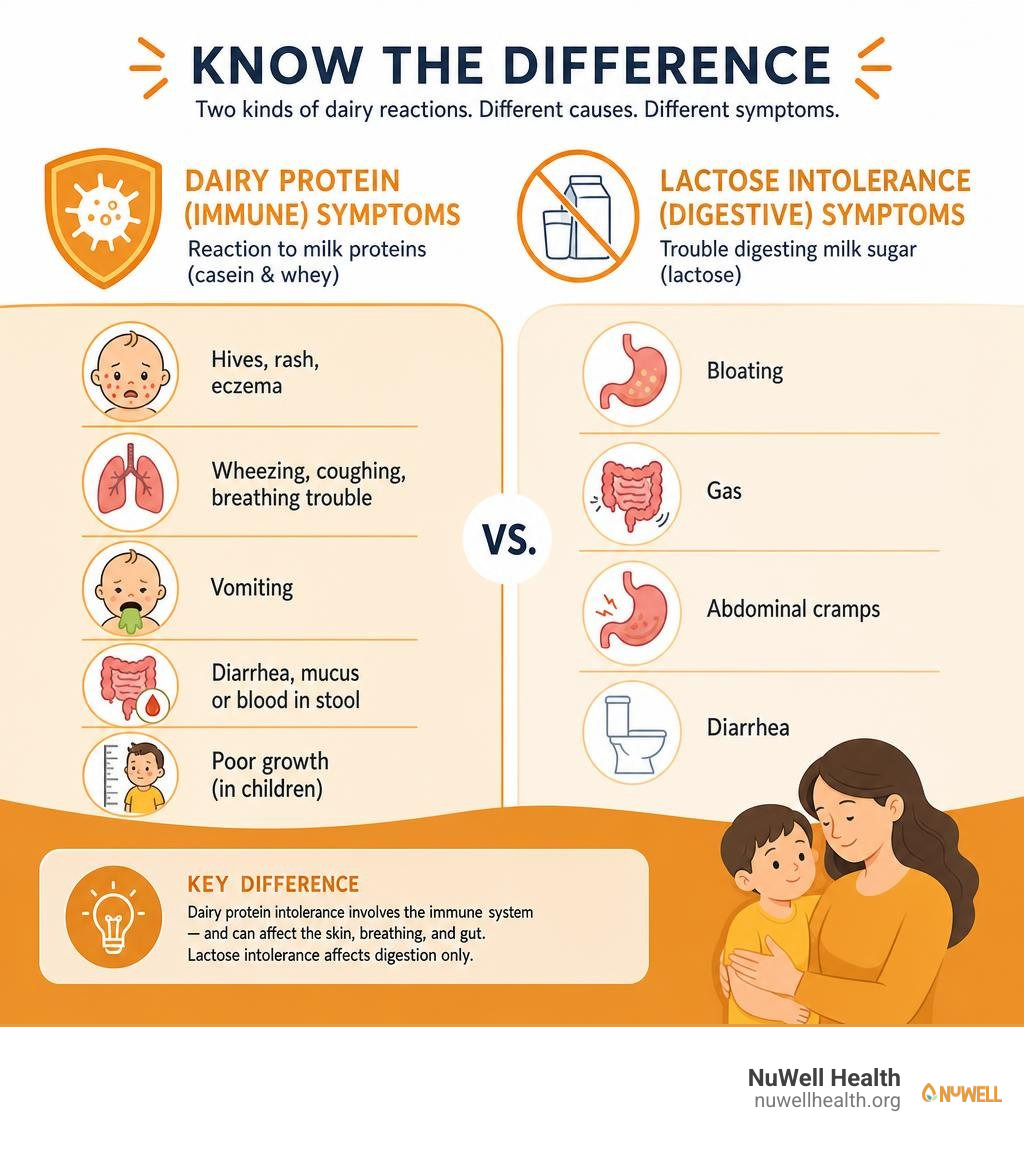
Dairy protein intolerance is an adverse reaction to proteins in milk, mainly casein and whey. Unlike lactose intolerance, it can involve the immune system and may cause more than digestive upset. Symptoms can include vomiting, diarrhea, mucus or blood in an infant’s stool, eczema, hives, wheezing, abdominal pain, or poor growth in children.
The timing matters:
- Fast reactions within minutes to 2 hours, such as hives, swelling, coughing, wheezing, or repeated vomiting, may signal an IgE-mediated milk allergy and need urgent medical attention.
- Delayed reactions over hours to days often involve the gut, with symptoms such as reflux, diarrhea, constipation, eczema, or blood-streaked stools in infants.
- Lactose intolerance usually causes gas, bloating, cramps, and diarrhea because the body lacks enough lactase to digest milk sugar. It does not cause an allergic reaction to milk protein.
At NuWell Health, we have found that recurring symptoms are easier to address when people stop guessing and look closely at the pattern: what was eaten, how quickly symptoms began, and whether skin, breathing, or digestion are affected. Do not start a strict dairy-free diet for an infant or child without guidance from a pediatric clinician or dietitian, since nutrition and growth still need support.
Similar topics to dairy protein intolerance:
Dairy Protein Intolerance vs. Lactose Intolerance: Key Differences
It is common to confuse dairy protein intolerance with lactose intolerance, yet they stem from completely different biological processes.
Lactose intolerance is a purely non-immunological carbohydrate malabsorption issue. As detailed in the Lactose Intolerance clinical overview, it occurs when the small intestine fails to produce sufficient lactase, the enzyme responsible for breaking down lactose (milk sugar). When unabsorbed lactose reaches the large intestine, gut bacteria ferment it, creating hydrogen gas, methane, and osmotic fluid shifts that lead to bloating, cramps, and watery diarrhea. It never involves the immune system, causes no systemic tissue inflammation, and is exceptionally rare in infants under three years old.
In contrast, dairy protein intolerance (and milk protein allergy) involves an adverse immune reaction against the structural proteins in milk—specifically casein (which forms about 80% of bovine milk protein) and whey (including beta-lactoglobulin and alpha-lactalbumin). Even tiny micro-exposures can irritate the mucosal lining of the gastrointestinal tract or trigger systemic inflammatory responses throughout the body.
| Feature | Dairy Protein Intolerance / Allergy | Lactose Intolerance |
|---|---|---|
| Underlying Cause | Immune system response to milk proteins (casein, whey) | Enzymatic deficiency of the digestive enzyme lactase |
| Primary Target | Proteins (casein, beta-lactoglobulin, alpha-lactalbumin) | Sugar / Carbohydrate (lactose) |
| Body Systems Affected | Digestive tract, skin, respiratory tract, immune pathways | Exclusively localized to the gastrointestinal tract |
| Typical Age of Onset | Infancy and early childhood (often within the first year) | Late childhood, adolescence, and adulthood |
| Stool Characteristics | May contain visible or microscopic blood and mucus | Watery, acidic, frothy stools without blood |
| Response to Lactose-Free Dairy | Continues to trigger reactions (proteins remain intact) | Well tolerated (lactose has been broken down) |
| Dietary Requirement | Strict elimination of all dairy proteins | Individual threshold tolerance; lactase enzyme aids |
Understanding this distinction is vital. As we explore in our comprehensive guide on food allergies and intolerances the ultimate guide to gut reactions, drinking lactose-free milk will not help if your body is reacting immunologically to casein or whey.
Signs and Symptoms Across Different Life Stages
Food protein intolerances can manifest differently depending on your age, gut barrier maturity, and immune reactivity.
Recognizing Dairy Protein Intolerance in Infants and Children

Cow’s milk protein allergy (CMPA) and intolerance affect an estimated 0.5% to 3% of infants at one year of age, with almost all cases emerging during the first year of life. According to pediatric guidelines on cow’s milk protein allergy, adverse reactions in young children generally fall along a wide spectrum.
In babies, non-IgE-mediated dairy protein reactions frequently appear as:
- Food Protein-Induced Allergic Proctocolitis (FPIAP): Painless, blood-streaked stools containing mucus in an otherwise healthy, thriving infant.
- Delayed Gastrointestinal Upset: Frequent spit-up, severe reflux, painful gas, and unpredictable bouts of diarrhea or persistent constipation.
- Inconsolable Colic and Distress: Prolonged periods of crying and abdominal discomfort, often worse after feeding.
- Cutaneous Reactions: Chronic eczema flare-ups, dry patches, or cradle cap that resists standard topical care.
- Failure to Thrive: In severe enteropathies, ongoing gut mucosal inflammation can cause nutrient malabsorption, poor weight gain, or linear growth delays.
For parents navigating these complex pediatric reactions, our practical guide to allergies and food sensitivity provides foundational steps for tracking triggers while protecting your child’s nutritional needs.
Identifying Dairy Protein Intolerance in Adults
While classic childhood milk allergies often resolve, adults frequently struggle with non-allergic dairy protein sensitivity or acquired gut barrier reactivity. In adulthood, food intolerance affects an estimated 15% to 20% of the population.
Adults dealing with dairy protein sensitivity rarely see immediate hives. Instead, they commonly experience delayed, multi-system inflammatory symptoms that appear 12 to 48 hours after consuming dairy:
- Chronic Abdominal Bloating and Distension: Feeling uncomfortably full or swollen hours after meals.
- Altered Bowel Habits: Unpredictable alternations between sluggish digestion and loose, urgent stools.
- Dermatological Flare-ups: Adult-onset cystic acne, rosacea, or persistent patches of itchy eczema.
- Systemic Fatigue and “Brain Fog”: Waking up exhausted, experiencing post-meal lethargy, or struggling with focus.
- Joint Stiffness and Sinus Congestion: Generalized inflammatory aches and chronic post-nasal drip.
When the mucosal lining of the gut is stressed, these reactions can worsen. Reviewing our resource on digestive issues causes can help you see how intestinal permeability connects everyday dietary choices to whole-body wellness.
Root Causes and Immune Mechanisms Behind Milk Reactions
To truly address dairy protein intolerance, we must examine what happens at the cellular and immune levels within the digestive tract.
IgE vs. Non-IgE Immune Pathways
Immune-mediated reactions to dairy proteins operate primarily through two pathways:
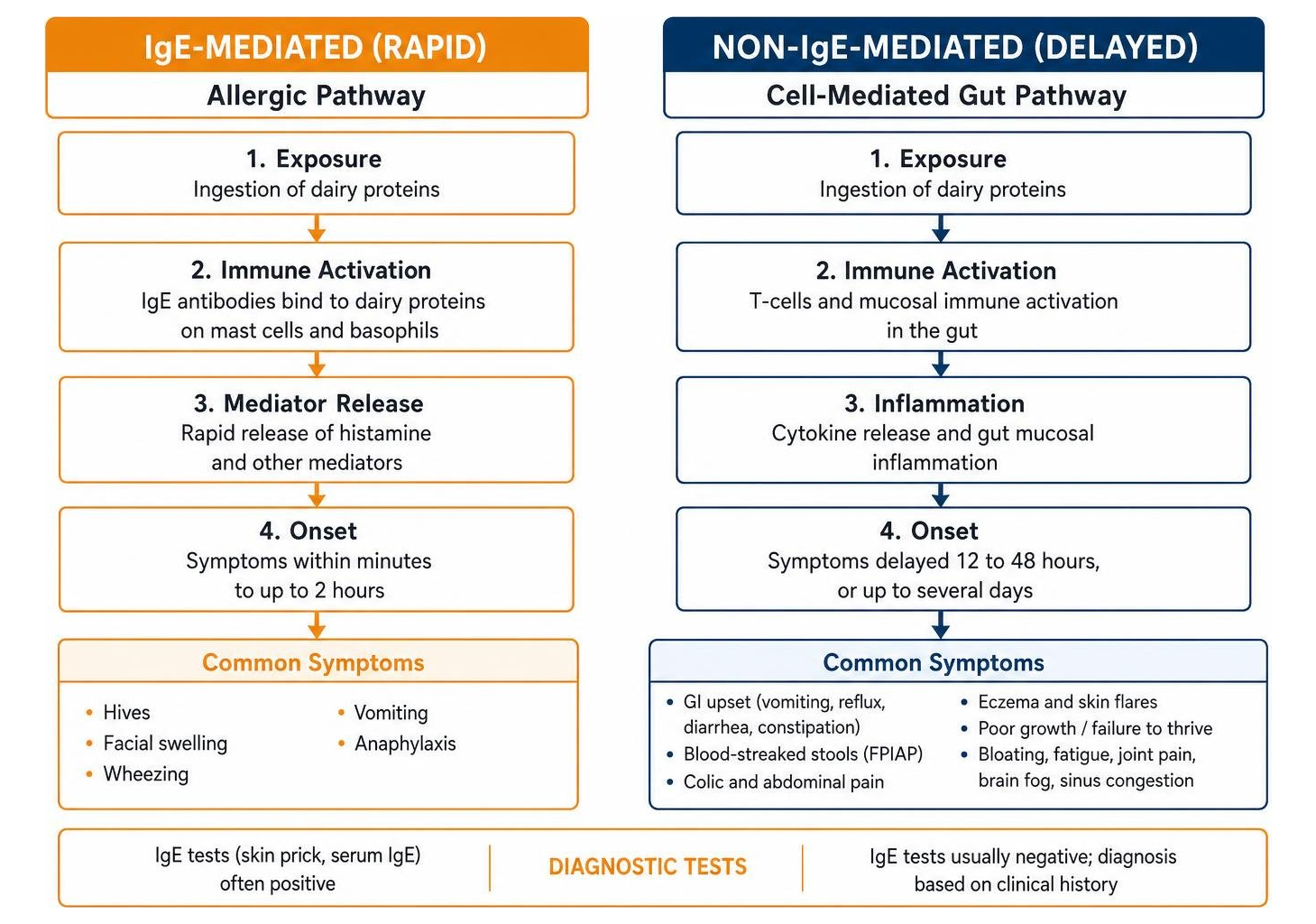
- IgE-Mediated Hypersensitivity: The immune system produces Immunoglobulin E (IgE) antibodies specific to dairy proteins. Upon ingestion, these antibodies trigger mast cells and basophils to release histamine rapidly. Symptoms occur within minutes to two hours and can include hives, facial swelling, wheezing, vomiting, or life-threatening anaphylaxis.
- Non-IgE-Mediated Hypersensitivity: This pathway is driven by T-cells and localized mucosal immune activation. As highlighted in research on protein intolerance pathophysiology, these reactions are delayed, taking anywhere from several hours to several days to manifest. Conditions like Food Protein-Induced Enterocolitis Syndrome (FPIES), which causes severe repetitive vomiting and lethargy 2 to 4 hours post-feeding, and allergic proctocolitis belong to this category. Standard allergy skin prick tests and serum IgE blood draws are usually negative in non-IgE conditions.
Gut Barrier Dysfunction and Microbiome Imbalances
In healthy digestion, stomach acid denatures dairy proteins, and digestive proteases break them down into individual amino acids and small peptides. These are absorbed smoothly across an intact intestinal barrier.

However, when stomach acid is suppressed (such as through chronic antacid use) or when the gut mucosal lining becomes compromised (“leaky gut”), larger, intact protein macromolecules slip across the epithelial barrier. The gut-associated lymphoid tissue (GALT)—which houses over 70% of the body’s immune cells—identifies these intact casein or whey fragments as foreign invaders, mounting an inflammatory response.
Furthermore, gut microbiome dysbiosis (an imbalance between beneficial and opportunistic bacteria) weakens the protective mucosal lining. At NuWell Health, we have found that restoring gut microbial diversity and strengthening intestinal tight junctions is essential for helping the body maintain natural immune balance. If you suspect your gut lining is compromised, our guide on testing your gut for food sensitivities outlines helpful diagnostic options to identify underlying microbial imbalances.
Diagnosis, Dietary Management, and Holistic Recovery
Recovering from dairy protein reactivity requires an organized approach: identifying the trigger, removing it safely, and rebuilding whole-body vitality.
Accurate Diagnosis and Elimination Protocols
The clinical gold standard for diagnosing non-IgE dairy protein intolerance is a structured elimination diet followed by an oral food challenge (OFC).
- Phase 1: Strict Elimination (2 to 4 Weeks): Completely remove all sources of dairy protein from your diet (or the nursing mother’s diet). Track changes in digestion, skin health, and energy using a daily food and symptom journal.
- Phase 2: Supervised Reintroduction: If symptoms clear up, reintroduce dairy under the guidance of a healthcare professional. A return of symptoms confirms reactivity.
It is best to avoid commercial food-specific IgG antibody blood panels. Major pediatric and allergy organizations caution that IgG antibodies reflect normal immune exposure and immunological tolerance rather than true intolerance, often leading to unnecessary dietary restrictions. When looking for professional guidance, our resource on finding a food sensitivity specialist can help you connect with a practitioner who takes an evidence-based approach.
Hidden Dairy Ingredients and Safe Alternatives
Eliminating dairy protein requires reading labels carefully. Milk derivatives hide behind many scientific names in packaged foods. According to the dietary guide for cow’s milk protein avoidance, you should watch for the following ingredients:
- Casein, Caseinates (calcium caseinate, sodium caseinate, potassium caseinate)
- Whey, Whey Protein Concentrate, Hydrolyzed Whey
- Lactalbumin, Lactoglobulin, Lactoferrin
- Curds, Ghee, Butter Fat, Buttermilk Powder
- Dry Milk Solids, Milk Protein Isolate
- Recaldent™ / CPP-ACP (found in certain specialty dental and toothpaste products)
Note: Be careful with labels marked “non-dairy,” as FDA regulations permit these products to contain milk derivatives like sodium caseinate. Look for certified dairy-free labels or kosher “Pareve” marks.
Nourishing Dairy-Free Alternatives:
- For Formula-Fed Infants: Extensively hydrolyzed formulas (eHF) break proteins into tiny fragments that over 90% of reactive infants tolerate. For severe enteropathies, an amino acid-based formula (AAF) provides completely elemental nutrition.
- For Older Children and Adults: Calcium-fortified plant milks (such as coconut, almond, hemp, or oat), canned sardines with bones, tahini, dark leafy greens (kale, collards), chia seeds, and almonds ensure optimal calcium and mineral intake.
Holistic Gut Healing and Long-Term Outlook
At NuWell Health, we believe true healing means supporting the body’s natural regenerative abilities, treating mind, body, and spirit as an interconnected whole. Simply avoiding trigger foods is a vital first step, but restoring the gut mucosal barrier helps foster lasting balance.
Natural nutritional compounds that help soothe the gut lining include:
- L-Glutamine: A primary fuel source for enterocytes that helps rebuild intestinal tight junctions.
- Zinc Carnosine: Helps soothe the mucosal lining and protect stomach integrity.
- Anti-Inflammatory Whole Foods: Nutrient-rich bone broths, wild-caught fatty fish rich in omega-3s, and prebiotic-rich stewed apples.
- Nervous System Rest: Embracing intentional prayer, peaceful reflection, and regular rest. Chronic emotional stress downregulates digestive secretions and slows gut motility, making stress management an essential part of digestive healing.
Frequently Asked Questions About Milk Sensitivities
Can dairy protein intolerance be outgrown?
Yes. Non-IgE-mediated dairy protein intolerances in children carry an excellent prognosis. Clinical research shows that approximately 50% of children develop tolerance by 1 year of age, more than 75% outgrow it by 3 years, and over 90% achieve complete tolerance by age 6. Reintroductions should always be done under the guidance of your child’s pediatrician or pediatric dietitian.
How can breastfeeding mothers manage an infant’s reaction?
Mothers do not need to stop breastfeeding if their baby shows signs of milk protein intolerance. Maternal dietary proteins pass into breast milk in small amounts, so the nursing mother can follow a strict dairy-elimination diet for 2 to 4 weeks. Because roughly 15% to 30% of infants with milk protein intolerance also react to soy proteins, eliminating soy alongside dairy is often recommended. Breastfeeding mothers should supplement with 1,000 mg of calcium daily and adequate vitamin D to protect their own bone density.
Are goat and sheep milk safe substitutes?
No. Goat’s milk and sheep’s milk share a high degree of protein sequence homology with cow’s milk. The immune system cross-reacts with goat and sheep milk proteins in more than 90% of cases. Furthermore, unmodified mammalian milks lack the proper nutrient balance for growing infants and should never replace breast milk or specialized formula.
Conclusion
Dairy protein intolerance can feel overwhelming to navigate, especially when delayed reactions create a confusing trail of digestive, skin, and systemic symptoms. By understanding the root immunological mechanisms, ditching unhelpful guesswork, and eliminating hidden dairy proteins, you take the first proactive steps toward sustained comfort.
At NuWell Health, we have found that real recovery happens when you look beyond symptom management to address the whole person—nurturing the physical body with nutrient-dense foods, supporting the gut mucosal barrier, and resting the mind and spirit. To take the next step in revitalizing your digestive well-being, explore our dedicated resources on allergies and food sensitivity and discover our root-cause approach to vibrant, natural health.
This article was researched with AI and heavily edited by Jordan Oliver for accuracy and relevance.
Jordan is an author, ordained minister, and online host for His Glory TV, sharing biblically grounded insights on faith, prayer, and spiritual growth. She is the co-founder of Triple-Braided Cord Co., an intercessory prayer and healing ministry inspired by Ecclesiastes 4:12.
Jordan holds a Bachelor’s degree in Communications and Religious Studies from High Point University and is a certified Spiritual Life Coach through iCoachLife in Nashville, Tennessee. Drawing from her ministry, coaching, and academic experience, she creates trustworthy, faith-based content that helps readers grow in their relationship with God. Learn more about Jordan here.