

Can constipation cause fatigue on its own? Sometimes it plays a part, but it is rarely the whole story. Pay attention when constipation and low energy start at the same time, keep returning, or get in the way of daily life. A primary-care professional can review the full pattern, and NuWell’s whole-person support can help you look at digestion, nutrition, sleep, stress, movement, and mental well-being alongside that medical care.
Can Constipation Cause Fatigue Directly?
Constipation usually means bowel movements are less frequent than usual, stools are hard or difficult to pass, or you still feel as though stool remains. Some people also notice bloating or belly discomfort.
Those symptoms can wear you down. Pain may interrupt sleep. Feeling full may change how much you eat or drink. Straining and repeated bathroom trips can be tiring too. In that practical sense, constipation may contribute to low energy for some people.
Even so, a tired feeling does not mean stool buildup is poisoning the body or that you need a detox. Fatigue alone is not proof of a toxin problem, a food sensitivity, a parasite, or a blocked colon. When fatigue is persistent or strong, look beyond the bowel symptom.
The National Institute of Diabetes and Digestive and Kidney Diseases (NIDDK) lists fewer than three bowel movements a week, hard or lumpy stools, stools that are painful to pass, and a feeling that not all stool has passed as constipation symptoms. Fatigue is not on that list. However, the NHS advises seeing a doctor if you are constipated and feel tired all the time, because another cause may need attention.
Why Constipation and Fatigue May Happen Together
Several shared factors can affect bowel movements and energy at the same time. More than one may be present.
Not enough fluid or food
Not drinking enough can make stool harder, and dehydration can also leave you weak, dizzy, or foggy. Eating much less than usual, or too little fiber, can also slow things down and leave you short on energy. This often follows illness, travel, a restrictive diet, or a busy stretch when meals and fluids become irregular. For more on fluid loss and energy, see how dehydration can make you tired.
Do not force large amounts of fluid if a medical professional has given you a fluid limit for a heart, kidney, or other condition.
A change in routine or activity
Travel, a schedule change, ignoring the urge to have a bowel movement, and less physical activity can all contribute to constipation. The same changes can also affect sleep, mood, meals, and energy. As a result, your bowel pattern can shift even when no disease is present.
Medicines and supplements
According to the NIDDK, medicines that can cause constipation include narcotic (opioid) pain medicines, antacids that contain aluminum and calcium, anticholinergics, some medicines for depression, calcium channel blockers, diuretics, anticonvulsants, and iron supplements. Some of these can also cause drowsiness or fatigue.
Make a complete list of your prescriptions, over-the-counter medicines, vitamins, herbs, and other supplements, and ask a pharmacist or prescriber to review it. Do not stop a prescribed medicine or supplement on your own.
Hypothyroidism and other health concerns
An underactive thyroid (hypothyroidism) can bring both constipation and fatigue. The NIDDK also lists trouble tolerating cold, dry skin, weight gain, joint and muscle pain, a slowed heart rate, and heavy or irregular periods among common symptoms. Still, these symptoms are common and do not prove a thyroid problem. A clinician decides whether testing fits your history.
Diabetes, celiac disease, Parkinson’s disease, pelvic floor disorders, and other medical concerns can also affect bowel function. Fatigue has its own long list of possible causes, including sleep disorders, anemia, infection, depression or grief, and medicine side effects. Two symptoms showing up together do not point to one diagnosis.
Stress, anxiety, and low mood
Stress and emotional strain can change appetite, sleep, activity, muscle tension, and bathroom routines. They can also change how strongly you feel discomfort. That does not make constipation or fatigue imaginary. It means physical and emotional health both deserve attention. NuWell’s article on why stress can make your stomach hurt explains the gut-brain side of this in more detail. If you wonder whether stress can cause constipation, that article covers what to track and when to get care.
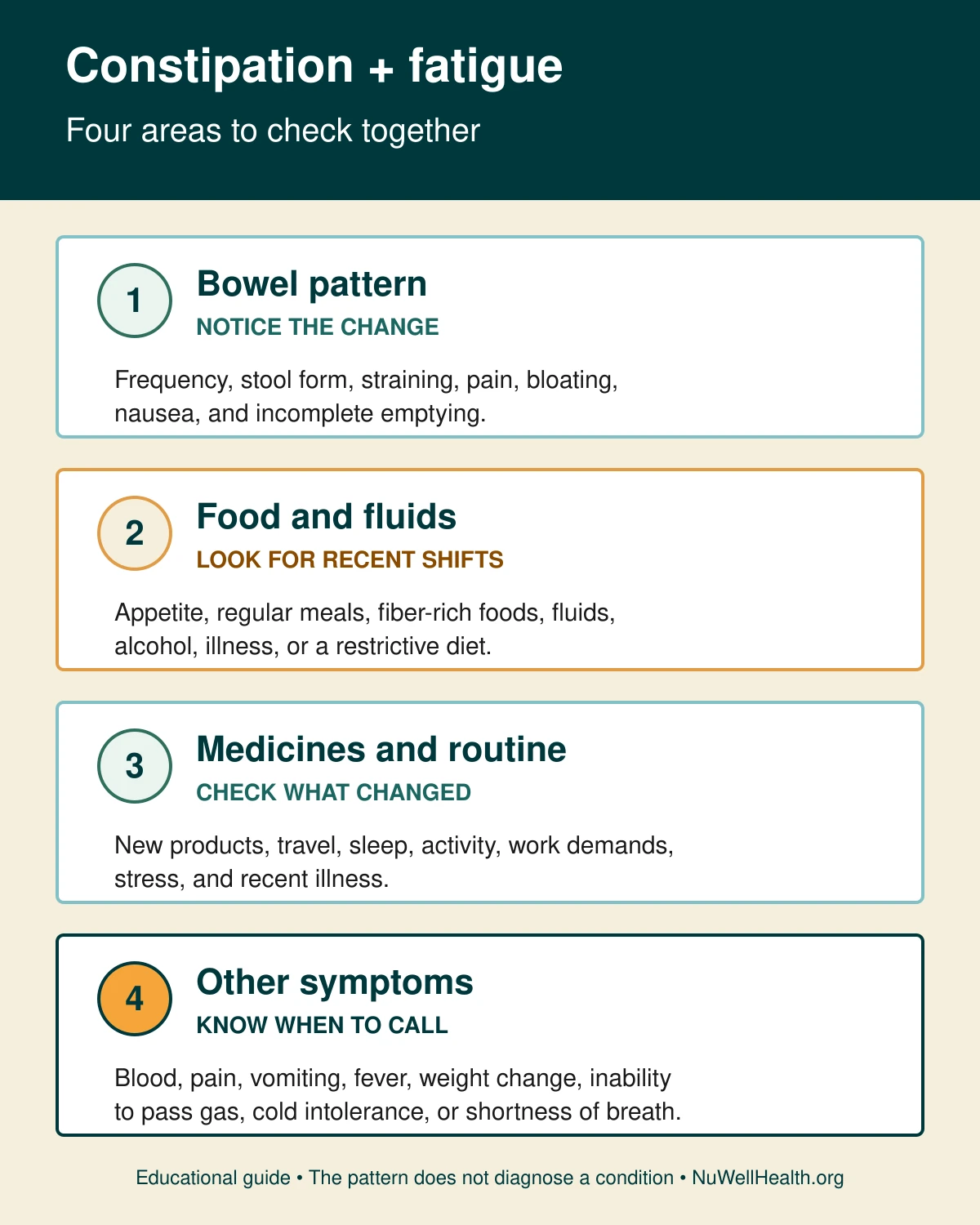
Four Areas to Check When You Feel Tired and Constipated
Use these as notes for a visit with your doctor, not as a home diagnostic test.
The pattern matters more than one isolated day. If your main energy dip follows meals rather than bowel changes, NuWell’s guide to feeling tired after eating may answer that question more directly. If tiredness lasts across the whole day, read about our support for persistent fatigue.
What to Track for One to Two Weeks
A simple log can help a clinician see whether the symptoms move together or only overlap now and then. Estimates are fine; the log does not need to be perfect.
- Date and time of each bowel movement.
- Stool form, straining, pain, bloating, and whether you felt fully emptied.
- Daily energy on a simple 0 to 10 scale, and when fatigue is worst.
- Sleep, meals, fluids, activity, stress, travel, and recent illness.
- Medicines and supplements, including any recent change, without altering them.
- Menstrual bleeding when relevant, especially if it is heavy or has changed.
- Any blood, black stool, vomiting, fever, weight loss, severe pain, or trouble passing gas.
Bring the log to a medical visit if the symptoms continue. Tracking should never become a reason to fear food or restrict eating. Skip the log if tracking could intensify an eating disorder or health anxiety, and talk directly with an appropriate professional instead.
Low-Risk Steps for Occasional Constipation
For mild constipation without warning signs, the NIDDK suggests eating more high-fiber foods, drinking plenty of water and other liquids, and getting regular physical activity. Add fiber gradually, since a quick jump can bring on gas or bloating, and keep fluids within any limit your doctor has set.
Give yourself time in the bathroom and go when you feel the urge. Resting your feet on a small footstool may also make the position more comfortable.
If these steps do not help, ask a pharmacist or healthcare professional whether a short-term laxative makes sense for you. Laxatives work in different ways and are not right for everyone, and regular use deserves a conversation with your doctor.
Skip colon cleanses, detox teas, coffee enemas, and high-dose supplements. They can cause dehydration, electrolyte problems, medicine interactions, or injury, and they can delay the medical care you may need.
When Constipation and Fatigue Need Medical Care
Make a medical appointment when constipation keeps returning, does not improve with simple self-care, or comes with fatigue that lasts for weeks or affects daily life. Book sooner for a sudden change in bowel habits, constipation that started with a new medicine, a family history of colon or rectal cancer, or weight loss you cannot explain.
- Blood in the stool, bleeding from the rectum, or black, tarry stool
- Constant belly pain or lower back pain
- Fever or vomiting
- Being unable to pass gas
- Losing weight without trying
When to Seek Urgent Help
How NuWell’s Whole-Person Support Can Help
Medical care is the right place to diagnose or treat persistent constipation, fatigue, thyroid disease, anemia, bowel disease, or another condition. Whole-person support adds to that care by looking at eating patterns, hydration, digestion, sleep, movement, stress, mood, daily responsibilities, and spiritual well-being together.
NuWell practitioners work within different professional roles. They can help you organize your history, notice patterns, and talk through practical nutrition or lifestyle changes that complement your medical care. Testing and supplements are not automatic. Faith or spiritual concerns are included only if you want them, and no particular belief is required.
For a broader look at gut symptoms, read NuWell’s guide to the causes of ongoing digestive problems or our support for digestive issues. If gas and pressure are the main problem, see our article on lower abdominal gas and bloating.
Frequently Asked Questions
Can constipation make you feel weak or tired?
It can add to tiredness indirectly through discomfort, poor sleep, a smaller appetite, or not drinking enough. However, persistent fatigue can also point to a shared cause or a separate problem, so do not assume constipation explains it.
Can hypothyroidism cause constipation and fatigue?
Yes. Both are common symptoms of an underactive thyroid. Even so, many other things cause them too, so they do not confirm a thyroid condition. A clinician can decide whether thyroid testing fits your history and other symptoms.
Should I take a laxative when I am tired and constipated?
Ask a pharmacist or healthcare professional which option, if any, fits your situation. Do not treat fatigue as a reason to take repeated laxatives or do a cleanse. Get medical review when symptoms are persistent, severe, or come with warning signs.
When should I worry about constipation and fatigue?
See a doctor when both symptoms persist, keep coming back, or affect daily life. Get prompt help for blood in the stool, black stool, constant pain, vomiting, fever, weight loss you cannot explain, or being unable to pass gas. Call 911 for a life-threatening emergency.
Sources
- Symptoms & Causes of Constipation. National Institute of Diabetes and Digestive and Kidney Diseases.
- Treatment for Constipation. National Institute of Diabetes and Digestive and Kidney Diseases.
- Hashimoto’s Disease. National Institute of Diabetes and Digestive and Kidney Diseases.
- Fatigue. MedlinePlus, U.S. National Library of Medicine.
- Constipation. National Health Service (NHS).