

Anxiety before a period is common enough that many people start to expect it: a few tense, restless, or on-edge days, then relief once bleeding starts. That timing is useful information. Still, it doesn’t prove that hormones are the only cause. Premenstrual syndrome (PMS), premenstrual dysphoric disorder (PMDD), an existing anxiety condition, sleep loss, stress, and medicines can overlap. A simple daily log can help you and a qualified clinician see which pattern fits.
Why Anxiety Before Your Period Can Get Worse
PMS can include tension or anxiety, irritability, mood swings, trouble concentrating, sleep problems, fatigue, appetite changes, and physical symptoms such as bloating or breast tenderness. According to the American College of Obstetricians and Gynecologists (ACOG), these symptoms show up in the days before a period and usually end within a few days after it starts.
Researchers don’t know exactly what causes PMS. Estrogen and progesterone rise and fall across a normal cycle, and the Office on Women’s Health explains that these changing levels may affect some people more than others. In other words, a strong response to normal hormone changes is different from a hormone level being “too high” or “too low.” Symptoms alone can’t diagnose a hormone imbalance.
PMS and PMDD are not the same
PMS describes a repeating group of physical or emotional symptoms before a period that affects daily life. PMDD is more severe. It can include marked anxiety or tension, panic attacks, deep sadness, irritability, trouble thinking, and feeling out of control. The Office on Women’s Health notes that PMDD can also bring thoughts of suicide. A clinician looks at the number, timing, and effect of symptoms over several cycles before making a diagnosis, so one hard month isn’t enough to know.
Severe symptoms deserve care. They are not a character flaw, a lack of discipline, or a sign of weak faith. Treatment may include medical care, counseling, medicine, or other support based on your needs. Mental-health-informed natural health support may complement that care, but it doesn’t replace it.
An existing anxiety condition may flare before your period
Some people feel anxious most of the month and notice a clear increase before their period. ACOG notes that depression and anxiety disorders are the conditions that most often overlap with PMS, and their symptoms may worsen before or during a period. That matters because the plan may be different from care for symptoms that appear only in the premenstrual part of the cycle.
Your cycle is also only one part of the picture. Short sleep, high stress, caffeine, alcohol, pain, illness, relationship strain, trauma reminders, thyroid disease, perimenopause, and medicine side effects can all affect anxiety. Looking at the whole picture helps you avoid blaming every emotional change on hormones.
Track Anxiety Before Your Period for Two to Three Months
A short daily record is more useful than trying to remember the hardest days at the end of the month. ACOG suggests writing down and rating your symptoms each day for at least two to three months. The goal is to notice timing and effect, not to monitor yourself perfectly.
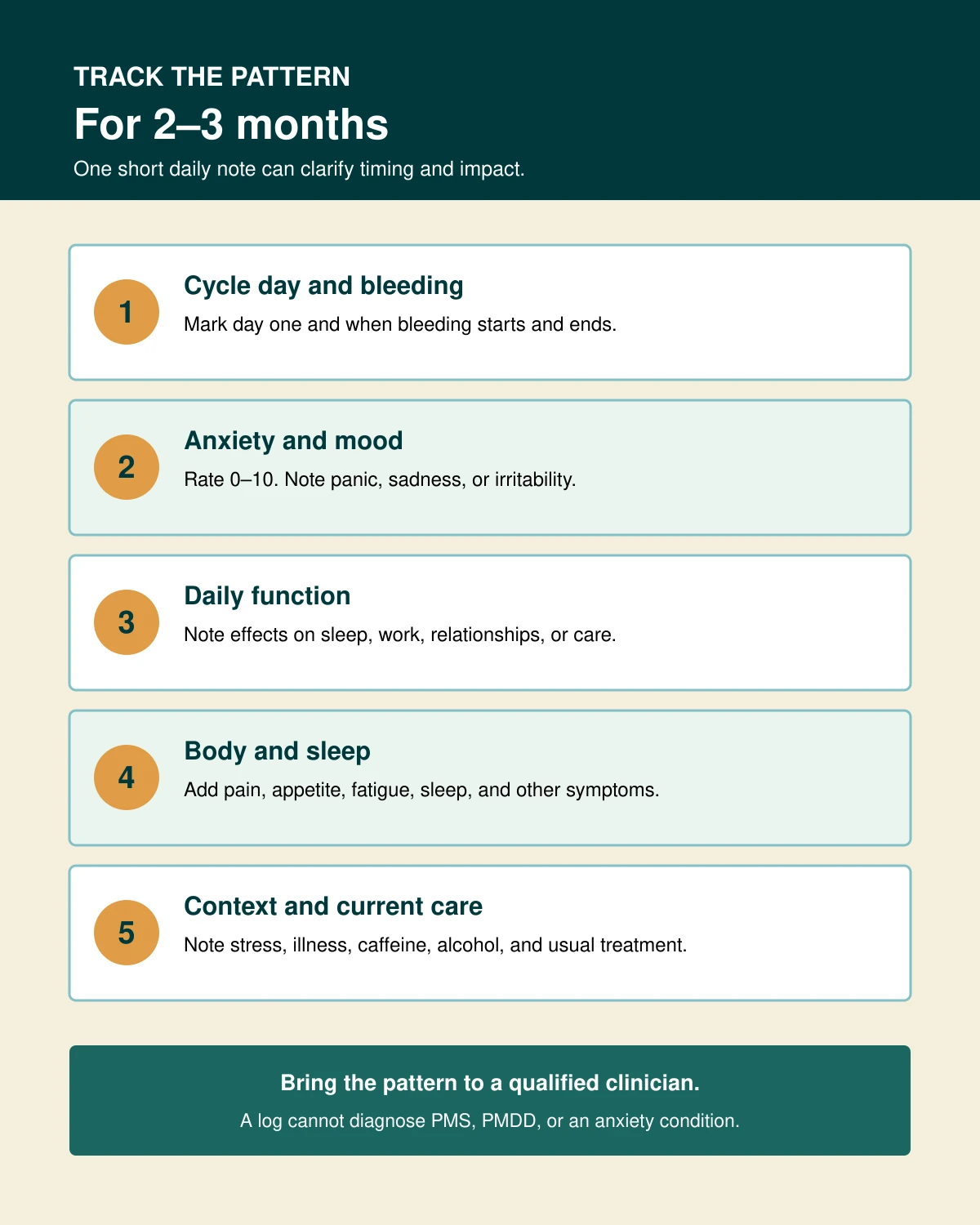
What to record each day
Here are the same five details in plain text:
- Cycle day and bleeding. Mark the first day of bleeding as day one, and write down when bleeding ends.
- Anxiety and mood. Use a simple 0–10 rating. Add irritability, sadness, panic, feeling overwhelmed, or thoughts of self-harm if they occur.
- Daily function. Check whether symptoms changed work, school, sleep, driving, caregiving, relationships, or usual activities.
- Body and sleep. Record cramps, headaches, bloating, appetite changes, fatigue, bedtime, awakenings, and whether you woke refreshed.
- Context and current care. Jot down unusual stress, illness, caffeine or alcohol changes, and the medicines or supplements you already take. Don’t change treatment just to test the pattern.
What to look for in your log
After two to three months, look for a repeat. Does anxiety begin at about the same point before each period? Does it ease within a few days after bleeding begins? Is it present all month but stronger before the period? Does it interrupt normal life? Then bring the log to a clinician rather than trying to diagnose yourself from it.
If low energy rises at the same time, NuWell’s guide to fatigue before your period explains what to track and when heavy bleeding needs medical attention.
Skip the detailed log if tracking makes health anxiety, compulsive checking, or eating-disorder symptoms worse. Period dates, the main symptom, and how much it affects your day may be enough. You can also talk with a counselor or clinician without keeping any record.
When Anxiety Before Your Period Needs Professional Care
Make a routine appointment when anxiety returns month after month, is getting stronger, affects sleep or relationships, leads you to avoid normal activities, or makes work, school, parenting, or self-care harder. A clinician can ask about the pattern, your mental-health history, current medicines, possible pregnancy, perimenopause, thyroid symptoms, substance use, sleep, and other concerns.
- Panic attacks or anxiety that feels out of control.
- Severe low mood, hopelessness, or feeling unlike yourself.
- Unsafe behavior or trouble caring for yourself or others.
- Very heavy bleeding, fainting, or new confusion.
- New or severe physical symptoms, even if they happen near your period.
When to seek urgent help
Low-Risk Steps for Anxiety Before Your Period
Simple habits may support well-being, but they are not a test or a cure. Choose one or two that fit your health, capacity, and current care.
Protect sleep and keep your routine steady
Short or broken sleep can make anxiety and premenstrual mood symptoms harder to manage. The Office on Women’s Health suggests aiming for about eight hours of sleep. Keep sleep and wake times as steady as your life allows, and cut back on late caffeine if it keeps you up. If you often wake with a racing mind, NuWell’s guide on why you may wake up anxious covers that pattern. Loud snoring, gasping, breathing pauses, or severe daytime sleepiness call for medical review.
Eat regularly without a restrictive “hormone diet”
Regular meals may help you avoid adding hunger, shakiness, or fatigue to an already hard day. In fact, the shaky, jittery feeling of a skipped meal can overlap with anxiety, as NuWell’s guide to whether low blood sugar can feel like anxiety explains. Build meals from foods you tolerate, with a mix of protein, carbohydrates, fiber-rich foods, and fats. Anxiety before your period is not a reason to cut out gluten, dairy, sugar, or another food group on your own.
Use familiar movement and stress skills
For many people, regular aerobic exercise such as brisk walking, cycling, or swimming lessens PMS symptoms, according to ACOG. Gentle strength work or stretching may also help. Breathing practice, prayer, time outdoors, and skills learned in counseling can help you settle, too. Choose what matches your beliefs and needs. Spiritual practices can support you, but they don’t replace medical or mental-health care.
Keep counseling and prescribed treatment in place
Don’t stop or change counseling, psychiatric medicine, hormonal birth control, or another treatment because symptoms seem tied to your cycle. Instead, share the timing with your counselor and prescriber. ACOG’s clinical guidance notes that many people with premenstrual disorders benefit from a combination of approaches, such as counseling, medicine, exercise, nutrition, and self-help strategies.
Ask before trying supplements or hormone products
A symptom pattern doesn’t prove low progesterone, “estrogen dominance,” or another single hormone problem. Some supplements have been studied for PMS, but evidence varies by product, and product quality varies too. Supplements and herbs can also interact with medicines, pregnancy, surgery, and health conditions. So ask a qualified clinician or pharmacist before you start, stop, or change a supplement, medicine, or hormone for anxiety before your period.
Prepare for a Medical or Mental-Health Visit
Bring your log, a current medicine and supplement list, the date of your last period, and the main way symptoms affect daily life. Tell the clinician whether anxiety shows up only before a period or continues through the month. Also mention panic, depression, trauma symptoms, sleep changes, heavy bleeding, pain, possible pregnancy, or perimenopause symptoms. If concentration or word-finding has changed in midlife, NuWell’s guide to perimenopause brain fog covers that separately.
Questions you might ask:
- Does this pattern fit PMS, PMDD, or a worsening of an existing anxiety condition?
- What other causes should we consider?
- Do I need an exam or testing based on my history?
- How should this plan fit with counseling and the medicines I already take?
- What symptoms should prompt urgent care?
There is no single test for PMS, as the Office on Women’s Health points out. Testing may help when your history suggests another concern, but more testing is not always better. The right evaluation depends on your age, symptoms, health history, medicines, and goals.
How NuWell Can Help With Anxiety Before Your Period
A repeating anxiety pattern may sit where sleep, stress, nourishment, cycle changes, daily demands, mental well-being, and spiritual concerns meet. NuWell practitioners can help you lay out that story and explore contributing factors within their professional roles. Learn more about NuWell’s whole-person hormone support. This support can be used alongside your gynecologist, primary care professional, counselor, prescriber, or other care team.
Root-cause care means looking closely at possible contributors. It doesn’t promise one hidden cause, a specific test, or a guaranteed result. Recommendations are personalized, and testing or supplements are not automatic.
Frequently Asked Questions
Is anxiety before a period normal?
Mild mood changes before a period are common. However, anxiety that returns each month, causes marked distress, or gets in the way of daily life deserves professional attention.
How can I tell PMS, PMDD, and an anxiety condition apart?
Timing, severity, and effect on daily life help a clinician sort them out. PMS and PMDD follow a repeating premenstrual pattern, while an anxiety condition may be present all month and get worse before a period. A daily log for two to three months can make the difference clearer, but it cannot diagnose you.
Can supplements help anxiety before your period?
Evidence differs across supplements, and some can interact with medicines or health conditions. Don’t choose a supplement from symptoms alone. Ask a qualified clinician or pharmacist to review the evidence, dose, product quality, and safety for you.
Sources
- “Premenstrual Syndrome (PMS).” American College of Obstetricians and Gynecologists, FAQ057. Last reviewed November 2025.
- “Management of Premenstrual Disorders.” ACOG Clinical Practice Guideline No. 7, December 2023.
- “Premenstrual syndrome (PMS).” Office on Women’s Health, U.S. Department of Health and Human Services.
- “What to Expect.” 988 Suicide & Crisis Lifeline.
- “Premenstrual dysphoric disorder (PMDD).” Office on Women’s Health.