

Hormonal mood swings can show up as irritability, sadness, anxiety, anger, or sudden shifts that leave you feeling unlike yourself. Those feelings are real, and hormones may be part of the story. Even so, the same feelings can come from poor sleep, stress, medicines, thyroid disease, depression, anxiety, bipolar disorder, substance use, and other health concerns. This guide explains what to watch for, how to track the pattern, and when to get help.
What Hormonal Mood Swings Can Look Like
People use “mood swings” to describe several experiences. You may feel patient one moment and irritable the next. You may notice crying spells, anger, anxiety, sadness, or a short temper. Some changes last minutes or hours, while others settle in for days.
That difference matters. A quick change in mood is not the same as a depressive, manic, or hypomanic episode. According to the National Institute of Mental Health, bipolar mood episodes bring clear changes in mood, energy, and activity levels, along with changes in behavior that other people can notice. During an episode, symptoms last most of the day, every day, for a week or two or sometimes longer. A qualified professional needs to look at that kind of pattern. So don’t assume a dramatic or lasting change is “just hormones.”
Hormones can still be part of the picture. Mood symptoms may show up before a period or during perimenopause. The useful clue is a repeating link between how you feel and your cycle or life stage. However, that link doesn’t prove that one hormone is too high or too low.
Mood changes before a period
Premenstrual syndrome, or PMS, can include irritability, angry outbursts, anxiety, crying spells, trouble concentrating, sleep changes, fatigue, appetite changes, and physical symptoms. The American College of Obstetricians and Gynecologists (ACOG) says an ob-gyn looks for a repeating pattern before diagnosing PMS. Symptoms show up in the five days before a period for at least three cycles in a row. They also end within four days after the period starts and interfere with some normal activities.
Premenstrual dysphoric disorder, or PMDD, is a severe type of PMS that can cause problems at work and in relationships. If anxiety is your main concern, NuWell’s guide to anxiety before your period covers that narrower pattern, including how PMS, PMDD, and an ongoing anxiety condition differ. If exhaustion is the bigger issue, see why you may feel so tired before your period.
Some people live with depression, anxiety, trauma symptoms, or another condition all month and notice it gets worse before their period. The Office on Women’s Health notes that depression and anxiety can worsen before or during a period. That’s one more reason to track the whole month, not only the hardest days.
Mood changes during perimenopause
Perimenopause is the transition before menopause. Periods may become shorter, longer, lighter, heavier, or skipped. The Office on Women’s Health lists mood changes, anxiety, depression, sleep problems, hot flashes, night sweats, and brain fog among the symptoms that can begin during this time. It also notes that mood changes can disrupt sleep. NuWell’s guide to perimenopause brain fog covers the thinking and memory side of this transition.
Perimenopause mood swings deserve attention, but they still don’t prove that hormones explain every change. Relationship strain, caregiving, work pressure, grief, health conditions, medicines, and existing mental-health concerns can overlap with this stage of life. A medical professional can help assess the full pattern and talk through treatment choices, including their benefits and risks.
Mood changes outside a cycle pattern
If changes happen throughout the month or don’t follow a clear life-stage pattern, widen the questions. Consider sleep loss, pain, illness, thyroid concerns, and medicine or supplement effects. Also think about caffeine, alcohol or other substances, skipped meals, high stress, and changes in mental health.
Don’t stop a prescribed medicine because you think it affects your mood. Instead, contact the prescriber or a pharmacist. A sudden change after starting, stopping, or changing a medicine deserves prompt review.
Track Hormonal Mood Swings for Two to Three Months
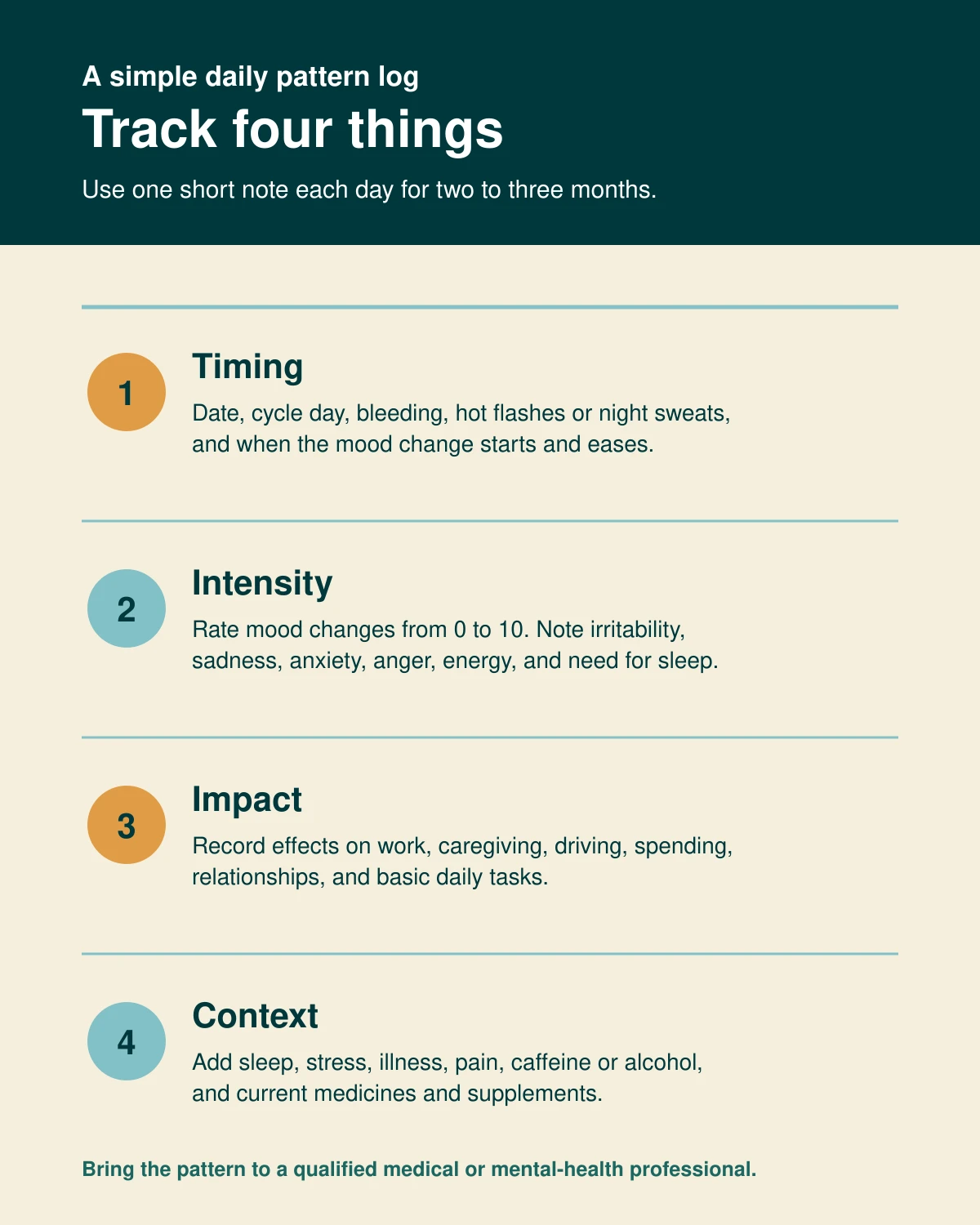
Memory tends to center on the hardest day, so a brief daily note gives you and your care team a clearer view. ACOG suggests writing down and rating your symptoms each day for at least two to three months, along with the dates of your periods.
In plain list form, each day’s note covers:
- Timing: the date, cycle day when relevant, bleeding, hot flashes or night sweats, and when the mood change starts and eases.
- Intensity: a 0 to 10 rating for irritability, sadness, anxiety, anger, or feeling unusually “up,” plus changes in energy and need for sleep.
- Impact: effects on work, school, caregiving, driving, spending, relationships, or basic daily tasks.
- Context: sleep, major stress, illness, pain, caffeine or alcohol changes, and current medicines and supplements.
Using your log
You don’t need perfect records. Look for a pattern you can describe, such as: “I become sharply irritable for four days before bleeding, then feel like myself again by day two,” or “my mood changes began with irregular periods and night sweats, but they’re strongest after broken sleep.” If daily tracking makes you more anxious or keeps your attention fixed on symptoms, keep it lighter or skip it, and simply describe the pattern to your provider.
Bring the log to a primary care provider, gynecologist, or mental-health professional. It can also help a NuWell practitioner understand your wider health story, while diagnosis and medical treatment stay with an appropriately licensed provider.
When Mood Swings Need Professional Care
- Mood changes keep coming back, last for weeks, or strain your relationships or work
- The change started after a new medicine, a dose change, or stopping a medicine
- Irregular or heavy bleeding, hot flashes, or major sleep disruption come with the mood changes
- You notice unexplained changes in weight or energy
- You are pregnant, recently gave birth, or are in the first year after a pregnancy
Ask for prompt medical or mental-health help when a change is severe or unlike your usual self. Examples include going with very little sleep without feeling tired, racing thoughts, unusually fast speech, or reckless choices. Feeling unusually powerful, deep hopelessness, losing interest in most activities, or being unable to manage basic responsibilities also count. These signs don’t point to a diagnosis by themselves, but they shouldn’t be written off as a hormone issue.
Crisis and emergency help
Daily Support for Hormonal Mood Swings
Basic routines can support overall health and also make patterns easier to see. Aim for regular meals that fit your needs and consistent sleep and wake times when possible. In addition, choose movement that fits your health, drink less alcohol, and find practical ways to lower daily stress. For a broader guide, read NuWell’s article on daily habits that may support hormone health.
These habits are support, not a hormone test or a treatment for every cause of hormonal mood swings. They don’t replace counseling, psychiatric care, primary care, gynecology care, or medicine when those are needed.
Be cautious with products sold for “hormone balance.” Herbs and supplements can cause side effects and interact with medicines. They can also affect pregnancy or breastfeeding, or be a poor fit for some health conditions. The Office on Women’s Health advises talking with your doctor before taking any supplement for PMS. Testing and supplements are not automatic, so don’t use an online symptom list to choose hormone tests or supplements on your own.
Faith or spiritual practices may be a meaningful source of comfort, reflection, and connection for you. They are optional, and they don’t replace medical or mental-health care. NuWell welcomes people of all beliefs and respects your choice about whether faith is part of the conversation.
How NuWell Approaches Mood and Hormone Questions
NuWell’s whole-person approach looks at physical health, mental well-being, sleep, stress, nutrition, lifestyle, relationships, and spiritual concerns when you want them included. With hormonal mood swings, a practitioner may help you organize your history, list questions for your medical provider, and consider personalized natural-health support within their professional scope.
That work can complement counseling and conventional medical care. It does not diagnose a hormone disorder from mood symptoms, replace a medical or mental-health evaluation, or promise that one root cause will be found. Learn more about natural hormone support and mental-health-informed natural health at NuWell.
Frequently Asked Questions
Can hormones really cause mood swings?
Hormone changes can play a part, especially before a period and during perimenopause. However, sleep, stress, medicines, thyroid problems, and mental-health conditions can cause similar changes, so a repeating pattern is a clue, not a diagnosis.
How long should I track hormonal mood swings?
ACOG suggests writing down and rating symptoms each day for at least two to three months, along with the dates of your periods. That gives a provider enough cycles to see whether the pattern repeats.
What is the difference between PMS and PMDD?
PMDD is a severe type of PMS. Its emotional symptoms are strong enough to cause problems at work or in relationships. An ob-gyn or other qualified provider can assess which one fits your pattern.
Should I take supplements for hormone balance?
Not without guidance. Herbs and supplements can cause side effects, interact with medicines, and affect pregnancy or breastfeeding. Talk with a physician, pharmacist, or other qualified professional who knows your history first.
Sources
- Premenstrual Syndrome (PMS). American College of Obstetricians and Gynecologists. Last reviewed November 2025.
- Premenstrual syndrome (PMS). Office on Women’s Health, U.S. Department of Health and Human Services. Updated September 26, 2025.
- Menopause symptoms and relief. Office on Women’s Health. Updated October 19, 2026.
- Bipolar Disorder. National Institute of Mental Health. Revised 2025.
- Warning Signs. 988 Suicide & Crisis Lifeline.