
Why So Many People Are Searching for Natural Treatments for Eczema
Natural treatments for eczema are among the most searched health topics today — and for good reason. More than half of all eczema patients have already tried some form of alternative medicine, and most are still looking for better answers.
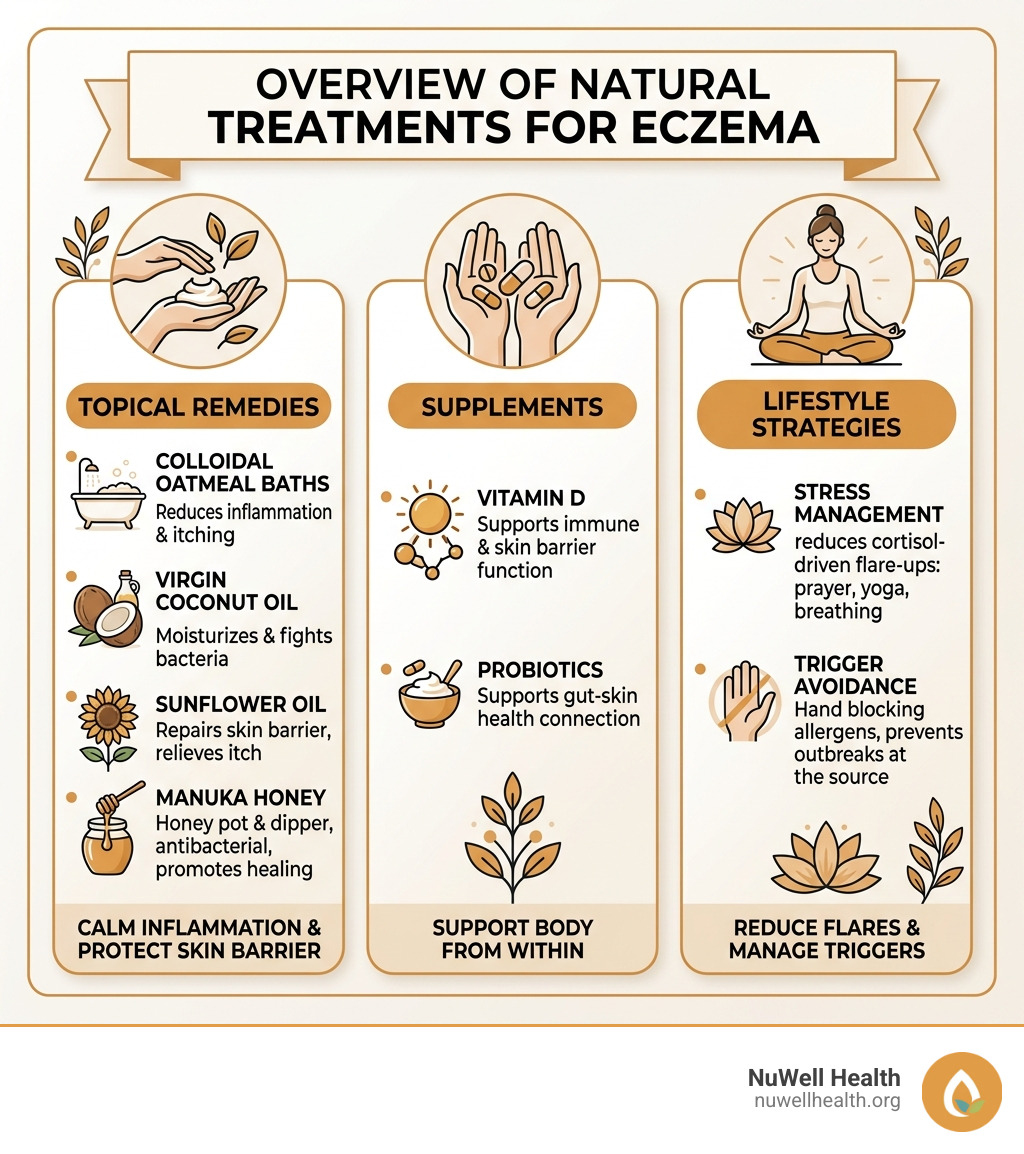
Here is a quick overview of the most effective natural options:
| Natural Treatment | Primary Benefit |
|---|---|
| Colloidal oatmeal baths | Reduces inflammation and itching |
| Virgin coconut oil | Moisturizes and fights bacteria |
| Sunflower oil | Repairs skin barrier, relieves itch |
| Manuka honey | Antibacterial, promotes wound healing |
| Vitamin D supplements | Supports immune and skin barrier function |
| Probiotics | Supports gut-skin health connection |
| Stress management (prayer, yoga, breathing) | Reduces cortisol-driven flare-ups |
| Trigger avoidance | Prevents outbreaks at the source |
Eczema — most commonly known as atopic dermatitis — is a chronic inflammatory skin condition that causes red, itchy, and sometimes painful patches of skin. It affects roughly 1 in 5 children and about 7 percent of adults. And despite being so common, there is still no permanent cure.
That gap between “no cure” and “need relief” is exactly why so many people are exploring natural options. Whether your symptoms are mild or severe, the goal is the same: calm the inflammation, protect the skin barrier, and reduce how often flares happen.
This guide walks through the natural treatments with the strongest evidence behind them — from what you put on your skin to what you eat, how you sleep, and how you manage stress.
I’m Stephen A. Luther, MS, MEd, LPC, a Licensed Professional Counselor with over 25 years of experience supporting whole-person healing through mind-body-spirit approaches — including the role of stress, gut health, and lifestyle in conditions like eczema that respond well to natural treatments for eczema strategies. The sections ahead will help you evaluate your options clearly and confidently.
Understanding Eczema and Its Root Causes
To truly manage eczema, we must look beyond the surface of the skin. At NuWell Health, we believe in roots over remedies, which means understanding why the body is reacting with inflammation in the first place.
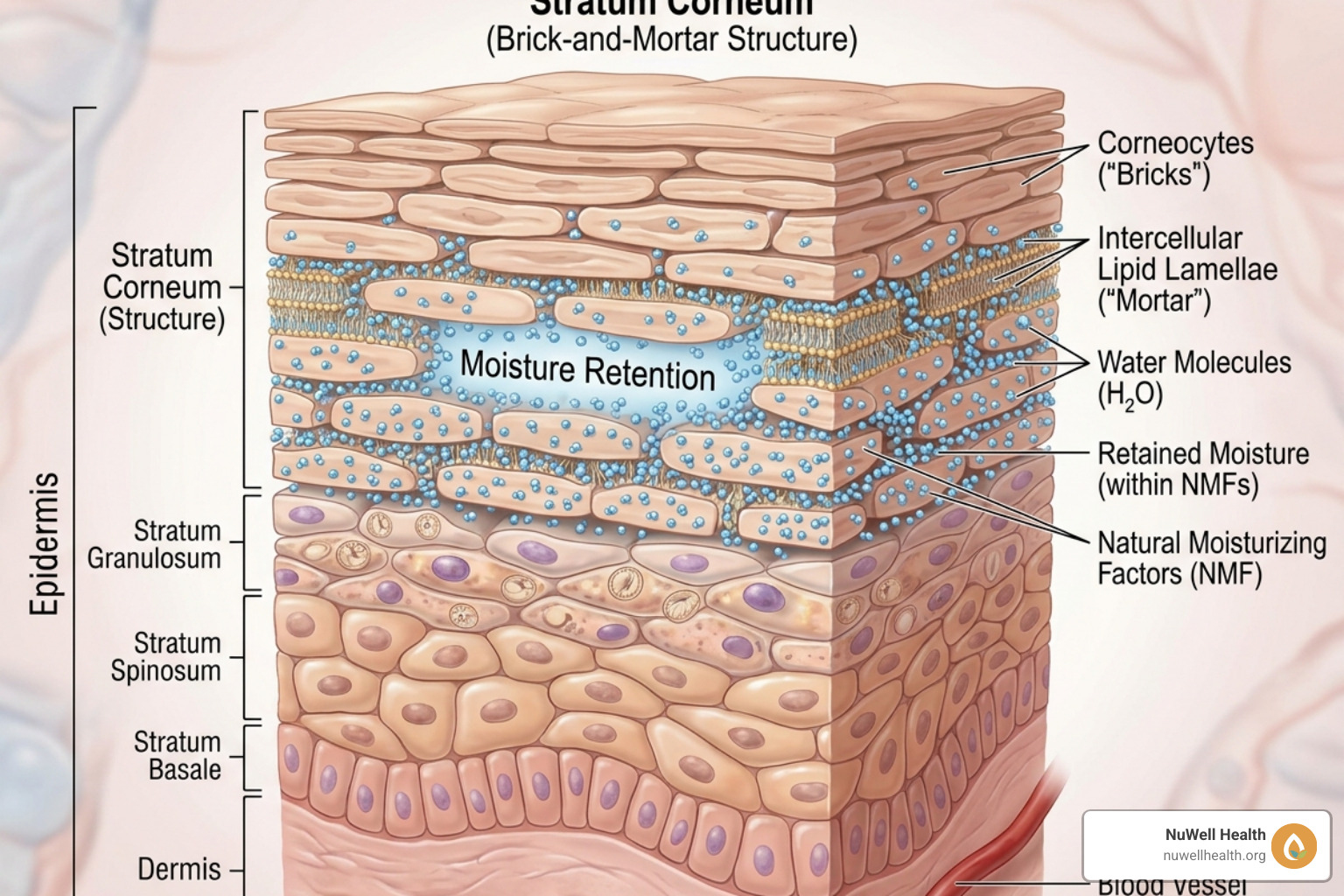
Eczema isn’t just “dry skin.” It is a complex condition involving genetics, the immune system, and environmental factors. One major player is the filaggrin protein. In many people with atopic dermatitis, a genetic mutation leads to a deficiency in filaggrin, which is responsible for building a strong, “brick-and-mortar” skin barrier. When this barrier is weak, moisture escapes (leaky skin) and irritants get in.
However, the “leaky skin” is often mirrored by a leaky gut. Research into the gut-skin axis suggests that immune dysregulation often starts in the digestive tract. When the gut lining is compromised due to poor diet, medication overuse (like antibiotics or NSAIDs), or stress, it can trigger systemic inflammation that shows up on your face, elbows, or knees.
Environmental toxins also play a role. In our modern world, we are exposed to thousands of chemicals in soaps, detergents, and even the air. These toxins can overwhelm a sensitive immune system, leading to the “atopic march”—a progression where eczema in infancy leads to food allergies and asthma later in life. Understanding this scientific research on eczema causes helps us move from simply “covering up” a rash to healing the body from the inside out.
In our clinical work at NuWell Health, we frequently see patients with stubborn eczema who have tried countless creams and steroids with only temporary relief. Many arrive frustrated after years of flare-ups triggered by hidden food sensitivities, gut imbalances, or chronic stress. When we address the root causes through targeted nutrition, gut healing protocols, and stress reduction strategies, we consistently observe significant improvement in skin clarity, reduced itching, and fewer flare-ups — often within 6 to 12 weeks.
Science-Backed Natural Treatments for Eczema
When we talk about natural treatments for eczema, we aren’t just talking about “old wives’ tales.” Many of these remedies have significant clinical backing. The goal of topical natural treatments is to restore the skin’s pH, kill harmful bacteria, and seal in moisture.
Soothing with Colloidal Oatmeal and Sunflower Oil
Colloidal oatmeal is one of the most celebrated natural treatments for eczema. This isn’t the stuff you eat for breakfast; it’s oats ground into an ultra-fine powder that dissolves in water. It works by creating a protective film on the skin, buffering the skin’s pH, and providing “avenanthramides”—powerful antioxidant and anti-inflammatory compounds that stop the itch.
A 2024 study also highlighted the benefits of sunflower seed oil. Unlike some other oils, sunflower oil is rich in linoleic acid, which helps the skin synthesize its own ceramides. This leads to better moisture retention and barrier repair.
| Feature | Virgin Coconut Oil | Sunflower Seed Oil |
|---|---|---|
| Best For | Fighting staph bacteria | Repairing the skin barrier |
| Key Component | Lauric Acid | Linoleic Acid |
| Application | Damp skin after bath | Twice daily, once on wet skin |
| Evidence | High (antimicrobial) | High (anti-inflammatory) |
For the best results, we recommend a 10-to-15-minute lukewarm soak with colloidal oatmeal, followed by a gentle pat-dry and immediate application of sunflower oil to lock in that hydration. This helps reduce the scaling and roughness often seen in chronic cases. You can find more details on these in the best home remedies for eczema guides from leading health institutions.
The Power of Coconut Oil and Manuka Honey
If you struggle with frequent skin infections, virgin coconut oil is a powerhouse. It contains lauric acid, which has been shown to reduce the presence of Staphylococcus aureus (staph bacteria) on the skin. Since scratching often tears the skin and invites bacteria, coconut oil acts as both a moisturizer and a mild natural shield.
Similarly, Manuka honey (specifically medical-grade) is gaining traction. It has unique antibacterial and antioxidant properties that promote wound healing. For stubborn, oozing patches, applying a thin layer of Manuka honey and covering it with a sterile bandage can help the skin knit back together while reducing inflammation.
Real Results from a Root-Cause Approach
During our time supporting whole-person healing at NuWell Health, we’ve observed that clients who combine natural anti-inflammatory foods, key supplements like omega-3s and probiotics, and nervous system regulation practices experience the most lasting results for eczema. What often begins as constant itching and discomfort gradually gives way to calmer skin, better sleep, and renewed confidence as the body’s internal environment improves. Many of our patients report not only clearer skin but also greater overall vitality as inflammation decreases throughout the body.
Internal Support: Supplements and Dietary Shifts
Healing the skin often requires us to address digestive issues and systemic inflammation. What we put into our bodies is just as important as what we put on them.
Many people find that their eczema is triggered by specific allergies and food sensitivity. Common culprits include dairy, gluten, eggs, and soy. An elimination diet—where you remove these triggers for a few weeks and slowly reintroduce them—can be a life-changing way to identify personal “flare foods.”
We also look to nature for internal anti-inflammatories. Quercetin (found in apples and onions) and freeze-dried stinging nettles act as natural antihistamines, helping to dampen the allergic response that causes the “dreaded itch.”
Vitamin D and Probiotics as Natural Treatments for Eczema
The evidence for Vitamin D is particularly striking. A 2018 systemic review found that children with low Vitamin D levels had more severe eczema, and 67% saw improvements after taking supplements. Vitamin D is essential for immune modulation and strengthening the skin’s “tight junctions.”
Furthermore, research published in the British Journal of Dermatology revealed that babies had a lower risk of developing atopic eczema if their mothers took 25mcg of Vitamin D daily from the 14th week of pregnancy through delivery.
Probiotics are another pillar of our approach. By introducing beneficial bacteria like Bifidobacterium strains, we can help balance the gut microbiome, which in turn calms the immune system’s overactive response on the skin. This gut-skin axis connection is a vital part of long-term eczema management.
Lifestyle Changes and Natural Treatments for Eczema
Prevention is the best medicine. Simple lifestyle adjustments can significantly reduce the frequency of outbreaks:
- Fabric Choices: Stick to 100% cotton, silk, or bamboo. Avoid wool and synthetic fabrics like polyester, which can trap heat and irritate sensitive skin.
- The 3-Minute Rule: Always apply your moisturizer within three minutes of getting out of the bath or shower while the skin is still damp. This “soak and smear” technique is the gold standard for hydration.
- Fragrance-Free Living: Switch to “fragrance-free” (not just “unscented”) detergents and soaps. Fragrances are a leading cause of contact dermatitis.
- Climate Control: Use a humidifier in the winter to prevent the air from stripping moisture from your skin.
Addressing these factors helps manage chronic pain and inflammation by removing the constant “insults” to the skin barrier.
Therapeutic Baths and Stress Management
Bathing can be a double-edged sword for eczema. While long, hot showers strip natural oils, specific therapeutic baths can be incredibly healing.
Bleach baths might sound scary, but they are highly recommended by dermatologists to control bacterial overgrowth. Adding 1/4 to 1/2 cup of plain bleach to a full bathtub and soaking for 10 minutes (2-3 times a week) can drastically reduce redness and itching. Alternatively, apple cider vinegar baths (about 2 cups in a warm bath) can help restore the skin’s naturally acidic pH, making it harder for “bad” bacteria to thrive. You can explore more about these in scientific research on alternative treatments.
Mind-Body Connection and Flare-Up Prevention
At NuWell Health, we recognize that the mind and spirit are intimately connected to the body. Stress causes the body to produce cortisol and other hormones that fuel inflammation. For many, a stressful week at work or home leads directly to an eczema flare.
From our Christian perspective, we encourage practices that foster peace and reduce the emotional toll of chronic skin conditions. Prayer and meditation on Scripture can lower heart rates and cortisol levels. Deep breathing exercises, yoga, and ensuring high-quality sleep are not just “extras”—they are essential natural treatments for eczema. When the spirit is at rest, the body’s inflammatory response often follows suit.
Safety First: When to Consult a Professional
While we love natural options, it is vital to know when to seek help. If your skin is weeping, crusting with yellow scabs, or you have a fever, you may have a secondary infection that requires medical intervention.
It is also important to know what to avoid. For example:
- Olive Oil: Despite its healthy reputation, it can actually damage the skin barrier and encourage fungal growth. Keep it in your salad, not on your skin!
- Essential Oils: Many are too potent for eczema-prone skin and can cause severe allergic reactions.
- Harsh Botanicals: Ingredients like calendula or tea tree oil can be helpful for some but may trigger “contact dermatitis” in others. Always patch-test a small area first.
If you are unsure where to start, learning what is naturopathic medicine? can help you find a practitioner who balances traditional wisdom with modern safety.
Frequently Asked Questions about Natural Eczema Relief
How do colloidal oatmeal baths work for eczema?
Colloidal oatmeal contains fats (lipids) that add moisture and proteins that create a protective barrier. It also has anti-inflammatory compounds called avenanthramides that specifically target the “itch” receptors in the skin, providing immediate relief.
Is coconut oil safe for all types of eczema?
Generally, yes, especially for atopic dermatitis. However, if you have a coconut allergy or very oily, acne-prone skin in the affected area, you should proceed with caution. Always use “virgin” or “cold-pressed” oil to ensure no harsh chemicals were used during processing.
When should I see a doctor instead of using home remedies?
You should consult a professional if:
- The rash is spreading rapidly.
- You see signs of infection (pus, yellow crusts, extreme pain).
- The itch is preventing you from sleeping or performing daily tasks.
- Home remedies haven’t shown any improvement after two weeks.
Conclusion
Managing eczema is a journey of holistic healing. By treating the mind, body, and spirit, we can move beyond just “stopping the scratch” and toward a preventive lifestyle that keeps flares at bay. At NuWell Health, we are dedicated to helping you find the root causes of your inflammation and empowering you with the tools to heal naturally.
Whether it’s through dietary shifts, therapeutic baths, or finding peace through prayer and stress management, there is hope for clearer, more comfortable skin. Start your journey to holistic wellness with us today and discover the power of a whole-person approach to health.
This article was researched with AI and heavily edited by Stephen Luther for accuracy and relevance.
Stephen Luther is the Executive Director and Founder of NuWell Health, along with its sister programs Grace Christian Counseling, Grace Recovery Services, WPA Counseling, and NuWell Online Counseling and Coaching.
He holds a Master’s degree in Education from the University of Georgia and a Master’s degree in Marriage and Family Therapy from Duquesne University. He is a licensed professional counselor in Pennsylvania.
With over 25 years of experience, Steve specializes in whole-person healing that integrates clinical excellence with faith-honoring care. At NuWell Health, he and his team focus on helping individuals and families overcome emotional, relational, and physical challenges through a holistic mind-body-spirit approach, including attachment-based therapy, trauma-informed care, and practical strategies for lasting restoration.
This guide is for educational and spiritual encouragement and is not a substitute for personalized professional counseling. If you are in crisis, please reach out for immediate help.