

When Your Skin Won’t Stop Itching: What You Should Know About Chamomile Compress Dermatitis Relief
Chamomile compress dermatitis relief is one of the most practical, evidence-backed natural remedies available for inflamed, itchy skin. If you’re dealing with a dermatitis flare and want a fast, gentle answer — here’s the short version:
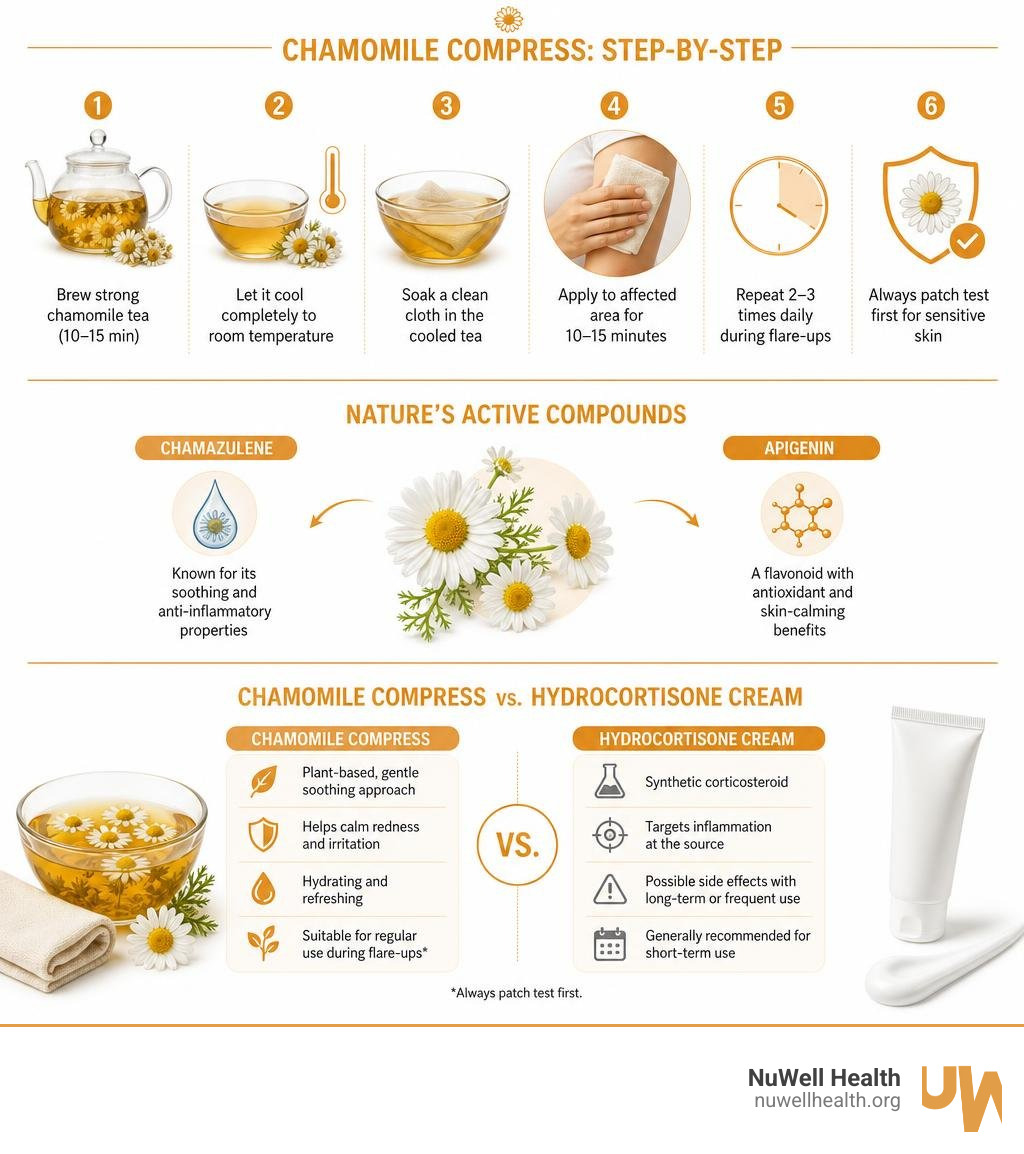
How to use a chamomile compress for dermatitis relief:
- Brew strong chamomile tea using dried chamomile flowers (steep for 10-15 minutes)
- Let the tea cool completely to room temperature
- Soak a clean cloth in the cooled tea
- Apply the compress to the affected area for 10-15 minutes
- Repeat 2-3 times daily during flare-ups
- Always patch test first — chamomile can cause reactions in sensitive individuals
Dermatitis is exhausting. The constant itch, the redness, the broken sleep — it wears you down. And if you’ve tried prescription creams only to deal with side effects like skin thinning, you’re probably wondering whether there’s a gentler path forward.
There is.
Chamomile (Matricaria chamomilla) has been used for centuries to calm irritated skin. At NuWell Health, we have found that many of our clients seeking natural alternatives respond well to chamomile-based compresses as part of a broader skin-care routine. The research backs this up — topical chamomile preparations have been shown to perform comparably to low-potency corticosteroids in several clinical studies, with far fewer side effects.
It’s not a magic cure. But it’s a meaningful, natural tool — and one that fits well within a holistic, root-cause approach to healing.
This guide will walk you through exactly how chamomile works, how to prepare and apply a compress safely, and what the science actually says.
Understanding Dermatitis and the Power of Chamomile Compress Dermatitis Relief
To understand why a chamomile compress for dermatitis relief works so well, we first have to look at what happens to your skin during a flare-up.
Atopic dermatitis and other forms of eczema are characterized by skin barrier dysfunction. When your skin barrier is compromised, it loses moisture rapidly (known as trensepidermal water loss) and becomes highly vulnerable to environmental irritants, allergens, and microbes. This vulnerability triggers an immune response, leading to a cascade of inflammatory cytokines.
This cytokine-mediated pruritus (the medical term for severe itching) is what keeps you scratching, which further damages the skin barrier and creates a vicious cycle.
Traditional medicine systems, including Traditional Chinese Medicine (TCM) and Ayurveda, have used chamomile for thousands of years to quiet this exact type of hot, angry inflammation. Modern dermatological research is finally catching up to this ancient wisdom. In studies reviewing the therapeutic potential of botanicals, chamomile consistently stands out for its multi-targeted approach to skin healing.
According to a comprehensive scientific review on Exploring the Therapeutic Potential of Calendula and Chamomile in Dermatology: From Anti-Inflammatory and Antioxidant Properties to New Therapeutic Perspectives, chamomile does not just mask symptoms; it actively downregulates oxidative stress and modulates the inflammatory pathways that drive dermatitis in the first place.
Can a Chamomile Compress Dermatitis Relief Routine Cause Contact Allergy?
While chamomile is incredibly gentle for the vast majority of people, we must address an important safety consideration: allergic contact dermatitis.
Chamomile belongs to the Asteraceae (Compositae) family, which also includes ragweed, chrysanthemums, marigolds, and daisies. If you have a known seasonal allergy to ragweed, your immune system might cross-react to chamomile. The primary culprits behind these allergic reactions are sesquiterpene lactones (such as nobilin and desacetylmatricarin) naturally present in the plant.
According to dermatological data compiled by Chamomile, a six-year German study identified 67 patients who were allergic to chamomile. While this represents a small percentage of the population, the risk is real. For instance, hay fever sufferers have occasionally developed severe conjunctivitis and eyelid swelling simply from using chamomile tea to wash their eyes, even if they could drink the tea without any digestive issues.
In our practice at NuWell Health, we have seen even mild herbal remedies trigger unexpected reactions in highly sensitive individuals. To ensure your safety, we strongly recommend performing a simple patch test before introducing a chamomile compress dermatitis relief routine to your skin:
- Brew a small cup of chamomile tea and let it cool.
- Apply a few drops to a small, unaffected patch of skin (like the inside of your forearm).
- Leave it on and monitor the area for 3 to 5 days.
- If you notice any redness, itching, swelling, or tiny bumps, discontinue use immediately.
Active Phytocompounds: How Chamomile Soothes the Skin
So, what makes chamomile so uniquely therapeutic? The secret lies in its rich chemical profile. Chamomile flowers contain over 120 pharmacologically active compounds, including a powerful mix of terpenoids and flavonoids.
When we look at the research on Phytocompounds from chamomile (Matricaria recutita, L.) for the treatment of Atopic Dermatitis | Research, Society and Development, three specific compounds emerge as the heavy hitters for skin healing:
- Chamazulene: This compound is actually formed during the steam distillation of chamomile essential oil (giving German chamomile oil its deep blue color). Chamazulene is a potent antioxidant and anti-inflammatory agent that inhibits the pathways responsible for swelling and redness.
- Apigenin: A stellar flavonoid that penetrates the skin barrier to inhibit the production of inflammatory cytokines. Apigenin has also been shown to restore normal cellular repair processes in skin cells damaged by environmental stress.
- α-Bisabolol: This naturally occurring alcohol reduces the synthesis of inflammatory mediators like prostaglandins. It acts as a natural soothing agent, dramatically dampening the “itch signal” sent to your brain.
By delivering these phytocompounds directly to the skin via a cool compress, you can calm the local inflammatory fire without systemic side effects.
Chamomile Compresses vs. Conventional Corticosteroids

When dermatitis flares up, the standard medical response is usually a prescription for topical corticosteroids, such as hydrocortisone or mometasone furoate. While these medications are highly effective at stopping an acute flare quickly, they are not designed for long-term management. Prolonged use of topical steroids can lead to skin atrophy (thinning of the skin), stretch marks (striae), steroid-induced rosacea, and even topical steroid withdrawal (TSW).
This is where natural alternatives shine. According to a clinical review published in TOPICAL EFFECTS OF CHAMOMILLA RECUTITA IN SKIN DAMAGE: A LITERATURE REVIEW, topical chamomile preparations have demonstrated anti-inflammatory effects that are highly competitive with low-potency steroids. In fact, research indicates that topical chamomile cream is roughly 60% as effective as 0.25% hydrocortisone cream for reducing eczema-related inflammation — but with a fraction of the safety risks.
Furthermore, in a randomized controlled trial of colostomy patients suffering from peristomal skin injuries, those treated with chamomile compresses twice daily healed significantly faster (averaging 8.89 days) compared to those using 1% hydrocortisone cream once daily (who averaged 14.53 days).
In our clinical experience at NuWell Health, we have observed that clients who integrate natural therapies alongside or after conventional treatments manage chronic symptoms far more sustainably than those relying on steroids alone. Prescriptions have their place for severe, acute crises, but integrating natural therapies allows you to manage chronic symptoms sustainably. You can learn more about balancing these approaches in our guide on how to Stop the Scratch with These Natural Treatments for Eczema.
| Feature | Chamomile Compress | 0.25% Hydrocortisone Cream |
|---|---|---|
| Primary Mechanism | Inhibits prostaglandins & cytokines via apigenin, chamazulene, and bisabolol | Suppresses immune response and constricts local blood vessels |
| Efficacy | ~60% as effective as low-potency hydrocortisone | High short-term clearing of inflammation |
| Risk of Skin Thinning | None | Moderate to high with prolonged use |
| Long-Term Safety | Excellent (assuming no Asteraceae allergy) | Low; restricted to short intervals |
| Best Used For | Daily maintenance, soothing acute itch, weeping lesions | Severe, acute flare-ups under medical supervision |
How to Prepare and Apply a Chamomile Compress for Dermatitis Relief

Preparing a chamomile compress is a simple, meditative self-care ritual. However, because you are dealing with a compromised skin barrier, you must follow strict hygiene and temperature guidelines to avoid introducing bacteria or burning your skin.
To discover more about incorporating these botanical rituals into your broader wellness routine, read our comprehensive guide on How to Master Natural Ways to Heal Eczema.
Step-by-Step Guide to Your Chamomile Compress Dermatitis Relief Ritual
Follow these precise steps to prepare and apply your compress safely. For more detailed insights on building a customized botanical toolkit, check out our Step-by-Step Guide to Natural Remedies.
- Source High-Quality Ingredients: Always use certified organic, dried German chamomile (Matricaria recutita) flowers or high-quality organic tea bags. This ensures your compress is free from synthetic pesticides or chemical additives that could further irritate your skin.
- Brew a Strong Infusion: Place 2 tablespoons of dried chamomile flowers (or 3 organic tea bags) into a clean glass jar or teapot. Pour 2 cups of boiling water over the herbs.
- Steep Thoroughly: Cover the vessel to prevent the therapeutic volatile oils from escaping in the steam. Let the mixture steep for 10 to 15 minutes.
- Strain and Cool: Strain the liquid through a fine-mesh sieve or paper coffee filter to remove all plant particles. Let the tea cool completely. Crucial safety rule: Never apply a warm or hot compress to active dermatitis. Heat dilates blood vessels and can actually worsen itching and inflammation. Cool or room-temperature liquid is highly recommended. You can even place the strained tea in the refrigerator for 20 minutes for an extra cooling effect.
- Soak the Compress: Take a clean, soft washcloth or a piece of sterile cotton gauze and submerge it in the cooled chamomile tea. Gently squeeze out the excess liquid so it is damp but not dripping wet.
- Apply to the Skin: Gently drape the damp cloth over the affected skin. Leave it in place for 10 to 15 minutes. Sit quietly, breathe deeply, and allow the cooling sensation to soothe the itch.
- Moisturize Immediately: Once you remove the compress, pat your skin dry with a clean towel (do not rub!). Within three minutes of removal, apply a thick, fragrance-free moisturizer to lock in the hydration.
Compresses vs. Topical Creams and Oils
You might wonder: Why go through the trouble of making a wet compress when I could just apply a chamomile cream or oil?
Both delivery methods have their place, but they serve different purposes. Compresses provide immediate, evaporative cooling which is unmatched for stopping an active, burning itch in its tracks. The moisture from the compress also helps soften dry, crusty plaques.
On the other hand, topical creams and oils are excellent for barrier repair and daily maintenance. Emerging dermatological science is exploring advanced delivery systems to make these topicals even more effective.
For example, a study published in Therapeutic effects of chamomile volatile oil nanoemulsion/ Bletilla striata polysaccharides gels on atopic dermatitis found that combining a nanoemulsion of chamomile volatile oil with Bletilla striata polysaccharides created a highly stable gel. This formulation not only delivered active phytocompounds deep into the skin but also formed a protective film that significantly reduced moisture loss and accelerated skin barrier repair.
Through our hands-on work with clients at NuWell Health, we have found that using cool compresses to calm active “hot” flares, followed by high-quality chamomile-infused creams or salves, provides the most reliable daily barrier protection and relief.
Frequently Asked Questions About Chamomile for Skin Relief
Can I use a chamomile compress on broken skin?
Yes, but with extreme caution. If your skin is raw, weeping, or has minor scratches from itching, a cool chamomile compress can be incredibly soothing. Chamomile possesses mild antimicrobial properties that can help protect compromised skin.
However, if you have deep, open wounds, active bleeding, or signs of a skin infection (such as pus, extreme warmth, or red streaks), do not apply a home remedy. In those cases, keep the area clean and dry, and consult a healthcare professional immediately.
How often should I apply a chamomile compress?
During an active dermatitis flare-up, you can safely apply a cool chamomile compress 2 to 3 times per day. Each session should last between 10 and 15 minutes. Always remember to apply a gentle, barrier-restoring moisturizer immediately after removing the compress to prevent the skin from drying out as the water evaporates.
Does chamomile interact with prescription eczema creams?
At NuWell Health, our practitioners often see clients who successfully combine natural remedies with conventional prescriptions. Topical chamomile is highly compatible with most conventional treatments and can easily be integrated into a hybrid care plan. However, you should avoid applying a chamomile compress immediately after putting on a prescription steroid cream, as the wet compress may alter the absorption rate of the medication.
Instead, use your chamomile compress to soothe the skin first, pat dry, and then apply your prescribed topical treatments as directed by your doctor. Always consult your dermatologist before combining natural remedies with prescription protocols.
Conclusion
Managing chronic dermatitis requires more than just masking the itch—it demands a holistic approach that honors the connection between mind, body, and spirit. At NuWell Health, we believe that true wellness comes from addressing the root causes of inflammation, whether they stem from gut dysbiosis, environmental triggers, or emotional stress.
Our approach to self-care is grounded in a Christian perspective of stewardship, recognizing that God has provided incredible botanical resources—like the humble chamomile flower—to support our bodies’ natural capacity to heal. By taking time to slow down, brew a soothing compress, and care for your skin, you are practicing a beautiful form of self-care empowerment.
A chamomile compress is a wonderful topical tool to soothe the surface, but long-term relief comes from looking deeper. If you are ready to explore the root causes of your skin struggles and build a personalized, holistic strategy for lasting health, we invite you to explore our foundational resource, Stop the Scratch with These Natural Treatments for Eczema. Let us walk alongside you on your journey to vibrant, peaceful skin.
This article was researched with AI and heavily edited by Jordan Oliver for accuracy and relevance.
Jordan is an author, ordained minister, and online host for His Glory TV, sharing biblically grounded insights on faith, prayer, and spiritual growth. She is the co-founder of Triple-Braided Cord Co., an intercessory prayer and healing ministry inspired by Ecclesiastes 4:12.
Jordan holds a Bachelor’s degree in Communications and Religious Studies from High Point University and is a certified Spiritual Life Coach through iCoachLife in Nashville, Tennessee. Drawing from her ministry, coaching, and academic experience, she creates trustworthy, faith-based content that helps readers grow in their relationship with God. Learn more about Jordan here.