
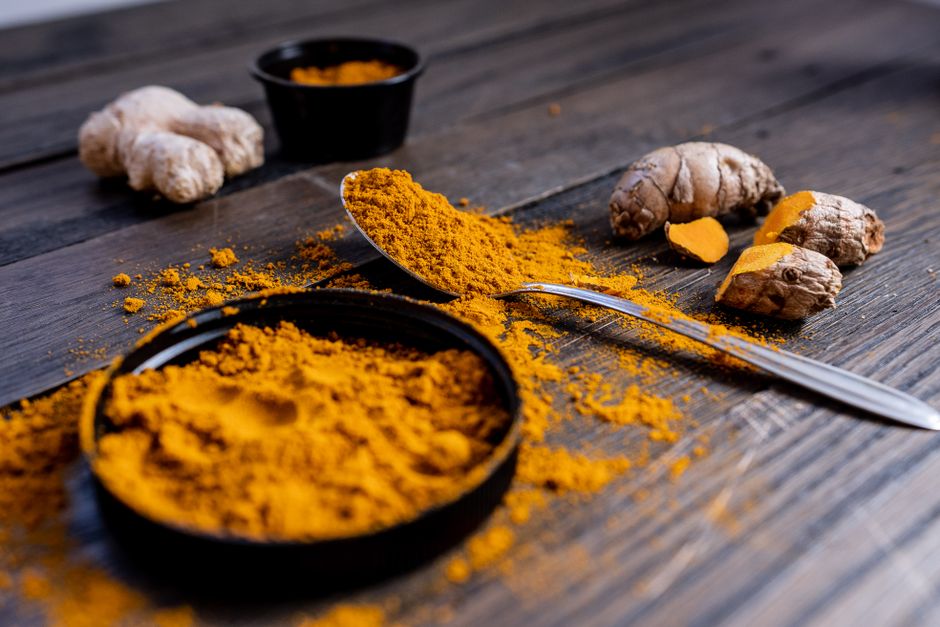
Why Curcumin for Skin Inflammation Is Worth Your Attention
Curcumin skin inflammation research has grown dramatically in recent years — and for good reason. This golden compound, found in the turmeric root, has been used medicinally for centuries. Now, modern science is confirming what traditional medicine long suspected: curcumin powerfully calms skin inflammation at the molecular level.
Quick answer — how curcumin helps skin inflammation:
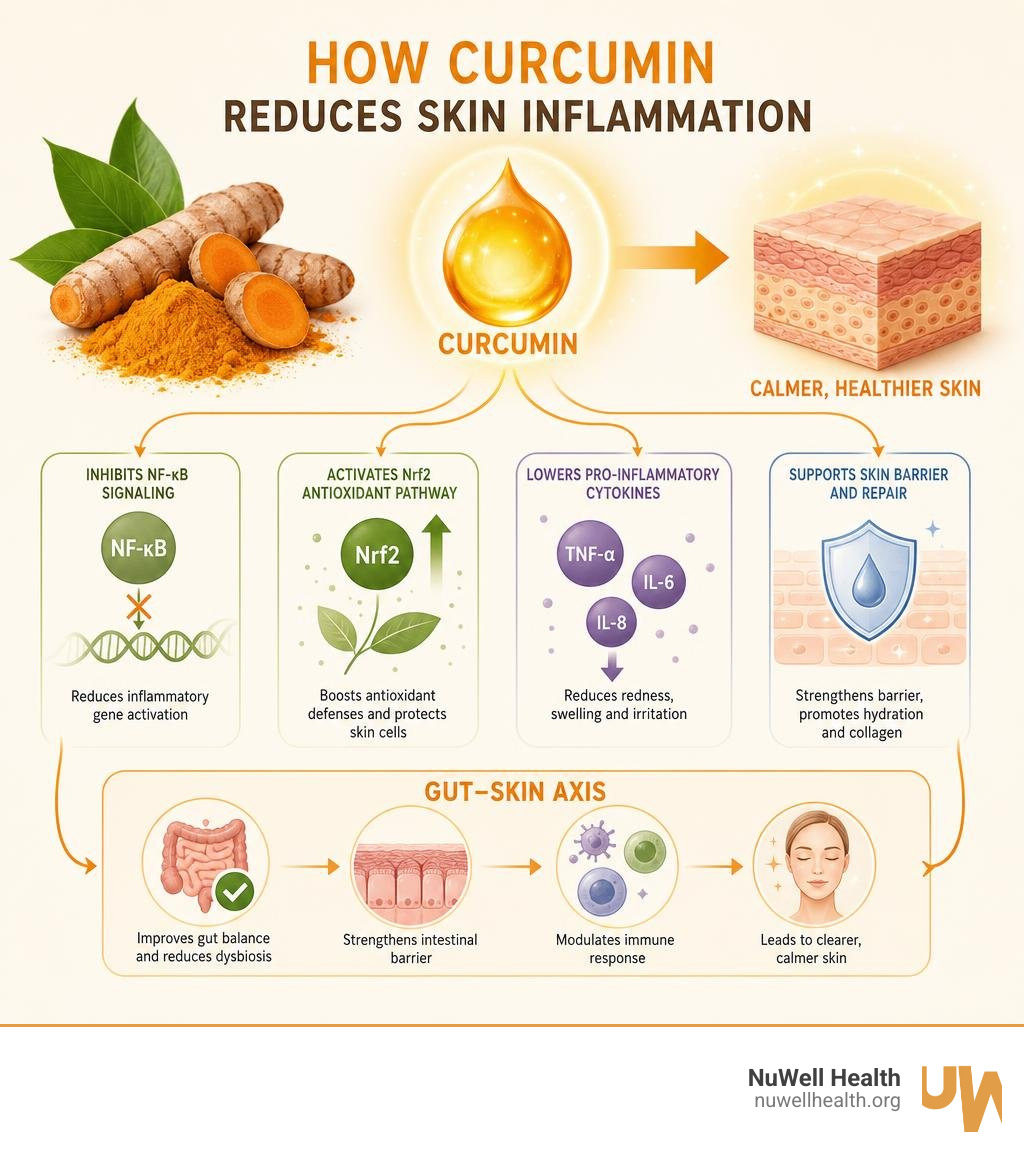
- Blocks inflammatory pathways (NF-κB, MAPK, STAT3) to reduce redness, swelling, and irritation
- Lowers pro-inflammatory cytokines like TNF-α, IL-6, and IL-8
- Neutralizes free radicals through the Nrf2 antioxidant pathway
- Supports skin barrier repair by promoting collagen synthesis
- Benefits multiple conditions including eczema, psoriasis, acne, and photoaged skin
Nearly 80% of adults experience a skin disorder at some point in their lives. Conditions like atopic dermatitis affect up to 20% of children and 10% of adults worldwide. Conventional treatments often manage symptoms without addressing the root cause — and they frequently come with side effects that frustrate people seeking long-term relief.
At NuWell Health, we have found that many of our clients dealing with recurring skin flares are looking for something different: a natural, well-researched option that works with the body rather than suppressing it.
Curcumin does exactly that. It targets the source of skin inflammation — not just the surface symptoms.
This guide breaks down the science, the evidence, and the practical steps you need to know.
Curcumin skin inflammation vocab to learn:
The Molecular Science of Curcumin Skin Inflammation
To understand how curcumin works, we have to look beneath the surface of the skin. Skin inflammation is not just a random occurrence; it is a highly coordinated cellular event controlled by specific signaling pathways. When your skin is exposed to triggers—such as UV radiation, environmental toxins, or allergens—your immune cells release a flood of pro-inflammatory cytokines, including tumor necrosis factor-alpha (TNF-α) and interleukin-6 (IL-6).
These cytokines act as chemical messengers that recruit more immune cells to the skin, creating a cycle of redness, swelling, and itching. Research shows that curcumin acts as a natural multi-pathway inhibitor. Instead of targeting just one single enzyme, it acts like a broad-spectrum volume dial, turning down the activity of multiple inflammatory signaling networks simultaneously.
According to a comprehensive review on the Potential of Curcumin in the Management of Skin Diseases – PMC, curcumin modulates key pathways such as NF-κB, MAPK, and STAT3, while also suppressing the NLRP3 inflammasome. This multi-targeted approach is what makes it uniquely effective compared to synthetic treatments that only block a single pathway.
How Curcumin Modulates Inflammatory Signaling Pathways
The primary driver of chronic skin inflammation is the Nuclear Factor-kappa B (NF-κB) pathway. Think of NF-κB as the “master switch” for inflammation. When activated, it moves into the cell’s nucleus and instructs the DNA to produce inflammatory proteins.
Curcumin directly interferes with this master switch:
- Inhibiting IKKβ Phosphorylation: Curcumin inhibits IKKβ phosphorylation with an IC50 of approximately 5.2 μM, preventing the activation cascade of NF-κB.
- Direct Binding: It directly binds to the NF-κB p65 subunit with a binding affinity (Kd) of 2.3 nM. This physical blocking action reduces NF-κB nuclear translocation by up to 76%.
- Suppressing AP-1 and MAPK: Beyond NF-κB, curcumin suppresses the Mitogen-Activated Protein Kinase (MAPK) and Activator Protein-1 (AP-1) pathways, which are heavily involved in cellular stress and the progression of chronic pain and inflammation.
By blocking these core pathways, curcumin reduces the cellular production of downstream inflammatory enzymes like cyclooxygenase-2 (COX-2) and inducible nitric oxide synthase (iNOS) by over 60%.
Cellular Mechanisms Targeting Curcumin Skin Inflammation
At the cellular level, curcumin also acts as an agonist for Peroxisome Proliferator-Activated Receptor Gamma (PPARγ). Activating PPARγ helps suppress inflammatory responses in both keratinocytes (the primary outer skin cells) and immune cells.
Additionally, curcumin:
- Inhibits the TLR4/MyD88 Complex: This complex is responsible for recognizing pathogens and environmental triggers. By blocking it, curcumin prevents the initial “alarm” that starts the inflammatory cascade.
- Modulates T-Cell Activation: It regulates the protein kinase C theta (PKCθ) pathway, which is essential for T-cell activation.
- Restores Th1/Th2/Th17 Balance: In many chronic skin conditions, the immune system gets stuck in a biased Th2 or Th17 response. Curcumin helps restore systemic immunological balance, preventing the immune system from overreacting to minor triggers.
Clinical Evidence: Curcumin for Inflammatory Skin Conditions
While the test-tube science is impressive, what does the clinical data say about real human skin? Over the years, clinical trials and animal models have demonstrated that curcumin is highly effective for managing major inflammatory dermatological conditions.
According to a clinical review published in the journal Advancements in dermatological applications of Curcumin | CCID | Dove Medical Press, curcumin has shown remarkable therapeutic promise for atopic dermatitis, plaque psoriasis, acne vulgaris, and wound healing.
Managing Eczema and Atopic Dermatitis Naturally
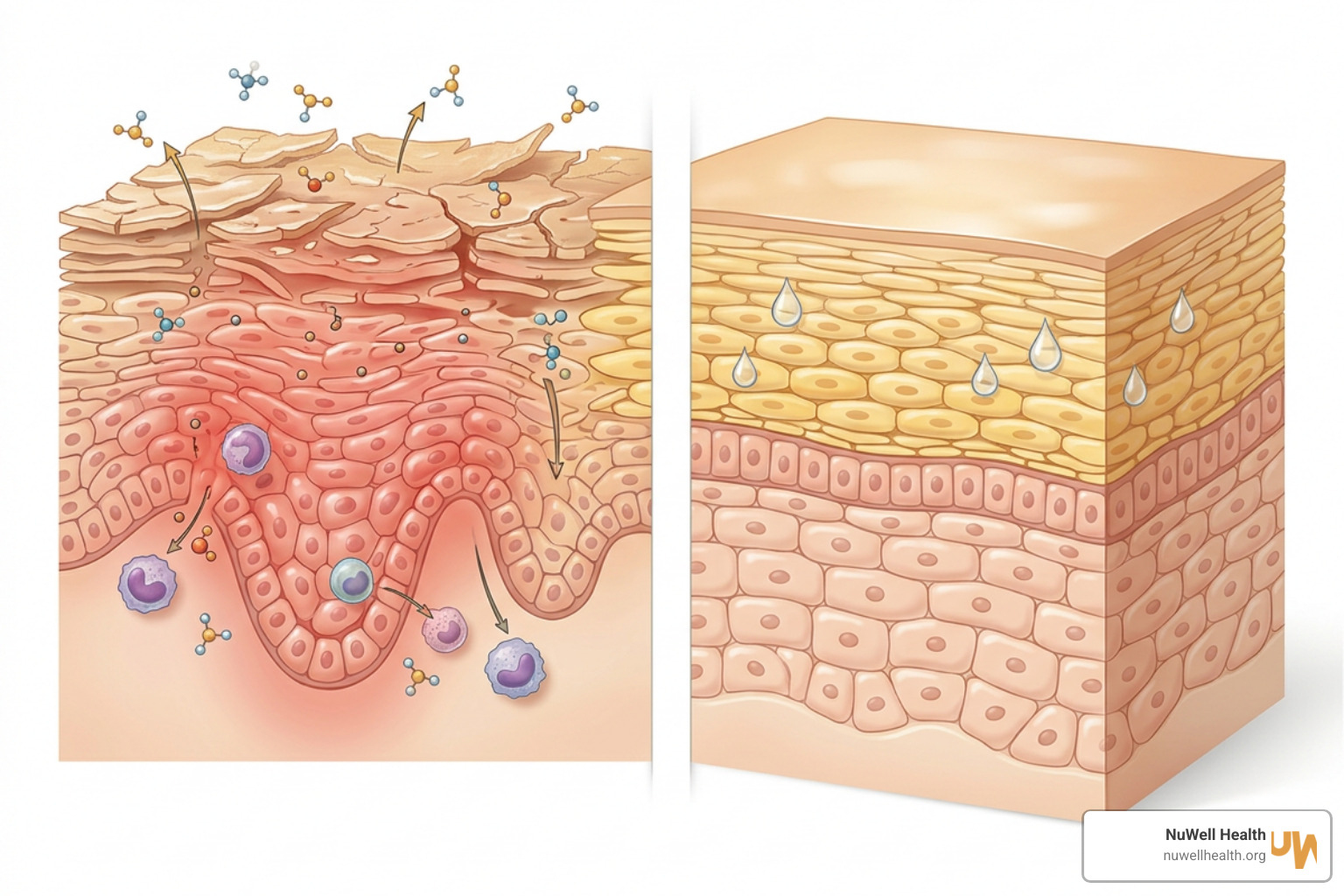
Atopic dermatitis (eczema) is characterized by a damaged skin barrier, intense itching, and immune system dysregulation. Standard treatments rely heavily on topical corticosteroids, which can thin the skin over time.
Curcumin offers a safer, supportive alternative by targeting the root causes of the “atopic march.”
- Skin Barrier Restoration: Curcumin promotes the expression of structural proteins like filaggrin, helping to patch up a leaky skin barrier.
- IgE and Th2 Reduction: It lowers circulating IgE levels and mitigates Th2-mediated cytokines, which are responsible for the allergic response.
- Itching Relief: By reducing local histamines and inflammatory cytokines, it helps calm the neurological “itch-scratch” reflex.
If you are looking for practical ways to manage these symptoms, you can read our Practical Guide to Natural Dermatitis Treatment or explore our top recommendations in How to Master Natural Ways to Heal Eczema.
Psoriasis and Acne: Targeted Relief with Curcumin
Psoriasis is an autoimmune skin condition where skin cells multiply up to ten times faster than normal, building up into red, scaly plaques. This rapid growth is driven by phosphorylase kinase (PhK), an enzyme that is highly active in psoriatic skin. Curcumin acts as a selective inhibitor of PhK, which slows down the rapid maturation of these epidermal cells.
In a notable clinical study, oral administration of 4.5 g of curcuminoids daily in patients with plaque psoriasis showed that 16.7% of patients responded exceptionally well, with those responders experiencing an 83% to 88% improvement in their Psoriasis Area and Severity Index (PASI) scores by week 12.
For acne vulgaris, curcumin offers a dual-action mechanism:
- Sebum Regulation: It modulates lipogenesis pathways to reduce excess oil production.
- Antimicrobial Activity: It targets Cutibacterium acnes (the bacteria responsible for acne breakouts) without causing the dryness and peeling associated with conventional benzoyl peroxide.
By keeping the immune system balanced, we can address these concerns from the inside out. To learn more about this biological connection, read our article on Eczema and the Immune System: How to Achieve True Skin Balance.
Antioxidant Defense and Extracellular Matrix Remodeling
Inflammation and oxidative stress are two sides of the same coin. When skin cells are inflamed, they produce reactive oxygen species (ROS), which damage lipids, proteins, and DNA. Conversely, oxidative stress triggers the pathways that cause inflammation.
Curcumin breaks this vicious cycle by activating the Keap1-Nrf2 pathway. Nrf2 is the body’s primary defense system against oxidative stress. When curcumin binds to Keap1, Nrf2 is released and travels to the nucleus, where it upregulates antioxidant enzymes like superoxide dismutase (SOD), catalase, and glutathione peroxidase.
A meta-analysis of clinical trials showed that turmeric and curcumin supplementation significantly increases total antioxidant capacity (TAC), enhances SOD activity, and decreases levels of malondialdehyde (MDA)—a key marker of lipid peroxidation and cell damage. Specifically, curcumin doses of 600 mg/day or higher were shown to be highly effective at lowering MDA levels.
To dive deeper into how this compound protects skin from external stressors, refer to the review on Curcumin: a potential anti-photoaging agent – Frontiers.
Combating Photoaging and Regulating MMPs
Ultraviolet (UV) radiation from the sun is the leading cause of extrinsic skin aging, also known as photoaging. UV rays penetrate the skin and activate matrix metalloproteinases (MMPs)—specifically MMP-1, MMP-3, and MMP-9. These enzymes act like molecular scissors, chopping up collagen and elastin fibers, leading to wrinkles, sagging, and deep structural damage.
Curcumin prevents this degradation through several mechanisms:
- Direct Enzyme Inhibition: Curcumin physically binds to the catalytic domain of MMP-9 (Kd = 8.4 nM) and blocks the active sites of MMP-1 and MMP-3.
- Upregulating Collagen Synthesis: It activates the TGF-β/Smad2/3 signaling pathway, which tells the fibroblasts to produce more high-quality collagen.
- Protecting Against UVB Damage: In laboratory models, photodynamic therapy utilizing Ce6-diPEG-curcumin conjugates (at a low concentration of 200 nM) reduced UVB-induced MMP-2 expression by 67%, preserving the integrity of the extracellular matrix.
The Gut-Skin Axis and Microbiome Homeostasis
At NuWell Health, we believe in treating the whole person, and you cannot talk about skin health without talking about the gut. The “gut-skin axis” refers to the bidirectional communication network between your gastrointestinal tract and your skin.
When your gut microbiome is out of balance (a state known as dysbiosis), it can compromise your gut barrier. This allows bacterial toxins to enter the bloodstream, triggering systemic inflammation that often manifests on the skin as eczema, acne, or psoriasis.
Curcumin interacts beautifully with this axis:
- Microbiome Modulation: It promotes the growth of beneficial gut bacteria while suppressing harmful strains.
- Metabolic Transformation: Interestingly, certain gut bacteria, such as E. coli, carry a unique curcumin-converting enzyme called CurA. This enzyme metabolizes curcumin into tetrahydrocurcumin, a compound that is even more biologically active and anti-inflammatory than curcumin itself.
- Reducing Systemic Leaky Gut: By strengthening the intestinal lining, curcumin prevents systemic inflammatory signals from reaching and irritating the skin.
Overcoming Bioavailability Challenges in Curcumin Skin Inflammation
For all its incredible benefits, curcumin has one major flaw: poor bioavailability.
When you swallow standard curcumin, very little of it actually makes it into your bloodstream. It has low water solubility, poor chemical stability, and is rapidly metabolized by the liver and intestines into glucuronide and sulfate conjugates, which are quickly excreted. In fact, oral doses of up to 3.6 g of standard curcumin can result in barely detectable plasma levels (around 0.01 μM).
To get around this, researchers have developed advanced topical and oral delivery systems.
| Delivery Route | Bioavailability Challenges | Solutions & Enhancements | Best Use Cases |
|---|---|---|---|
| Oral Administration | Low water solubility, rapid first-pass metabolism in the liver. | Formulations with piperine, liposomes, or lecithin-phytosomes (Meriva). | Systemic inflammation, psoriasis, gut-skin axis support. |
| Topical Application | Poor penetration through the hydrophobic stratum corneum (outer skin layer). | Nano-emulsions, hydrogels, chitosan-alginate sponges, and micellar creams. | Localized eczema, wound healing, active acne, photoaging. |
To understand the full pharmacological profile of these delivery systems, check out the extensive review on the Emerging therapeutic potential of curcumin in the management of dermatological diseases | Springer Nature.
Advanced Formulations for Curcumin Skin Inflammation
To maximize the therapeutic potential of curcumin skin inflammation treatments, modern science has introduced several high-tech formulations:
- Piperine Combinations: Pairing curcumin with black pepper extract (piperine) is the simplest way to boost absorption. Piperine temporarily blocks the liver enzymes that metabolize curcumin, increasing its oral absorption by up to 2,000%.
- Liposomes and Micelles: These lipid-based nanocarriers wrap curcumin in a fat-soluble bubble, allowing it to easily slip through cell membranes.
- Meriva (Lecithin Phytosome): This patented formulation binds curcumin to phosphatidylcholine (a natural component of cell membranes). Clinical studies show it drastically improves systemic absorption and reduces the need for topical corticosteroids in eczema patients.
- Polymeric Nanoparticles (PLGA): These tiny structures release curcumin slowly over time, making them ideal for topical wound-healing gels.
For deeper insights into how these modern formulations are changing the way we treat chronic skin issues, read the study on Exploring Curcumin’s healing properties in the treatment of atopic dermatitis | ScienceDirect.
Optimal Dosages, Safety, and Synergistic Combinations
When using curcumin, finding the right dose and combination is key to achieving the best results.
- Oral Dosage: For systemic support, clinical trials typically use doses ranging from 500 mg to 2,000 mg of standardized curcuminoids per day (ideally paired with piperine or in a phytosome form).
- Topical Dosage: Over-the-counter creams and gels usually contain 0.5% to 1% curcumin extract. For wound healing, specialized clinical hydrogels may use slightly higher concentrations.
- Safety & GRAS Status: Curcumin is recognized as Generally Recognized as Safe (GRAS) by the FDA. Doses up to 12,000 mg/day have been tested in healthy individuals with no serious toxicities.
- Synergistic Agents: Curcumin works even better when combined with other natural compounds. For example, combining curcumin with quercetin (a natural antihistamine found in apples and onions) at a 3:1 ratio has been shown to produce synergistic antimicrobial and wound-healing effects. Historically, combining turmeric with neem has also been highly effective for treating skin infections like scabies.
For more natural ways to calm irritated skin externally, check out our guide on The Best Herbal Compresses and Teas to Soothe Irritated Skin.
Frequently Asked Questions about Curcumin and Skin Health
Is topical or oral curcumin better for skin inflammation?
The answer depends entirely on your goals.
Topical curcumin is superior for localized, surface-level issues. Because it is applied directly to the site, it bypasses the liver and delivers high concentrations of curcumin straight to the skin cells. This makes it highly effective for wound healing, active acne, and localized eczema patches. If you are dealing with a sudden, itchy flare-up or a bug bite, a topical approach is usually best. You can read more about quick, local relief in Don’t Scratch That: Easy DIY Bug Bite Relief at Home.
Oral curcumin is better for chronic, widespread, or systemic inflammatory issues like plaque psoriasis or severe, full-body eczema. Oral supplements work from the inside out by calming systemic immune responses and balancing the gut microbiome via the gut-skin axis. For the absolute best results, many people use a combination of both.
What are the potential side effects of high-dose curcumin?
Curcumin is exceptionally safe, but high doses (especially of oral supplements) can sometimes cause mild side effects:
- Gastrointestinal Upset: Some people report mild bloating, gas, acid reflux, or diarrhea when taking doses exceeding 2,000 mg of standard oral curcumin.
- Skin Staining: Pure topical curcumin has a vibrant yellow color that can temporarily stain the skin and permanently stain clothing. Modern cosmetic formulations use purified, “colorless” curcumin (tetrahydrocurcumin) to avoid this issue.
- Allergic Contact Dermatitis: Though rare, some individuals may develop a localized rash or contact urticaria from topical turmeric creams. We always recommend performing a 24-hour patch test on your forearm before applying any new curcumin product to your face or inflamed skin.
Can curcumin be combined with other natural anti-inflammatory agents?
Yes, and we highly recommend it! Curcumin works beautifully in tandem with other natural remedies.
For instance, combining oral curcumin with omega-3 fish oils provides a powerful dual-action defense against systemic inflammation. For topical use, combining curcumin with soothing botanicals like aloe vera, calendula, or chamomile helps cool hot, irritated skin while curcumin works on the deeper molecular pathways.
If you are looking for natural ways to soothe delicate skin areas, you can explore our recommendations in Breast Eczema Relief: 8 Natural Home Remedies That Actually Work.
Conclusion
At NuWell Health, we have found that true skin healing is never just about what you put on the surface. God designed our bodies with intricate, interconnected systems, and when the skin flares up, it is often a sign that the deeper systems—our immune response, our gut, and our oxidative defenses—are calling out for balance.
In our clinical experience at NuWell Health, we have seen that prioritizing human natural health solutions over synthetic or agricultural-focused alternatives allows the body to heal more gently and sustainably. Curcumin is a beautiful example of how nature provides elegant, multi-targeted solutions. By calming the master switches of inflammation like NF-κB, boosting our natural antioxidant enzymes, and supporting gut-skin health, curcumin helps restore balance to the body naturally and gently.
If you are ready to take a holistic, root-cause approach to your skin health and leave the endless cycle of temporary fixes behind, we invite you to explore our resources. Start your journey toward lasting relief by reading our guide on how to Stop the Scratch with These Natural Treatments for Eczema. Let us help you support your body’s natural ability to heal, thrive, and glow.
This article was researched with AI and heavily edited by Jordan Oliver for accuracy and relevance.
Jordan is an author, ordained minister, and online host for His Glory TV, sharing biblically grounded insights on faith, prayer, and spiritual growth. She is the co-founder of Triple-Braided Cord Co., an intercessory prayer and healing ministry inspired by Ecclesiastes 4:12.
Jordan holds a Bachelor’s degree in Communications and Religious Studies from High Point University and is a certified Spiritual Life Coach through iCoachLife in Nashville, Tennessee. Drawing from her ministry, coaching, and academic experience, she creates trustworthy, faith-based content that helps readers grow in their relationship with God. Learn more about Jordan here.