
When Your Skin Won’t Settle: Natural Remedies for Eczema on the Breast
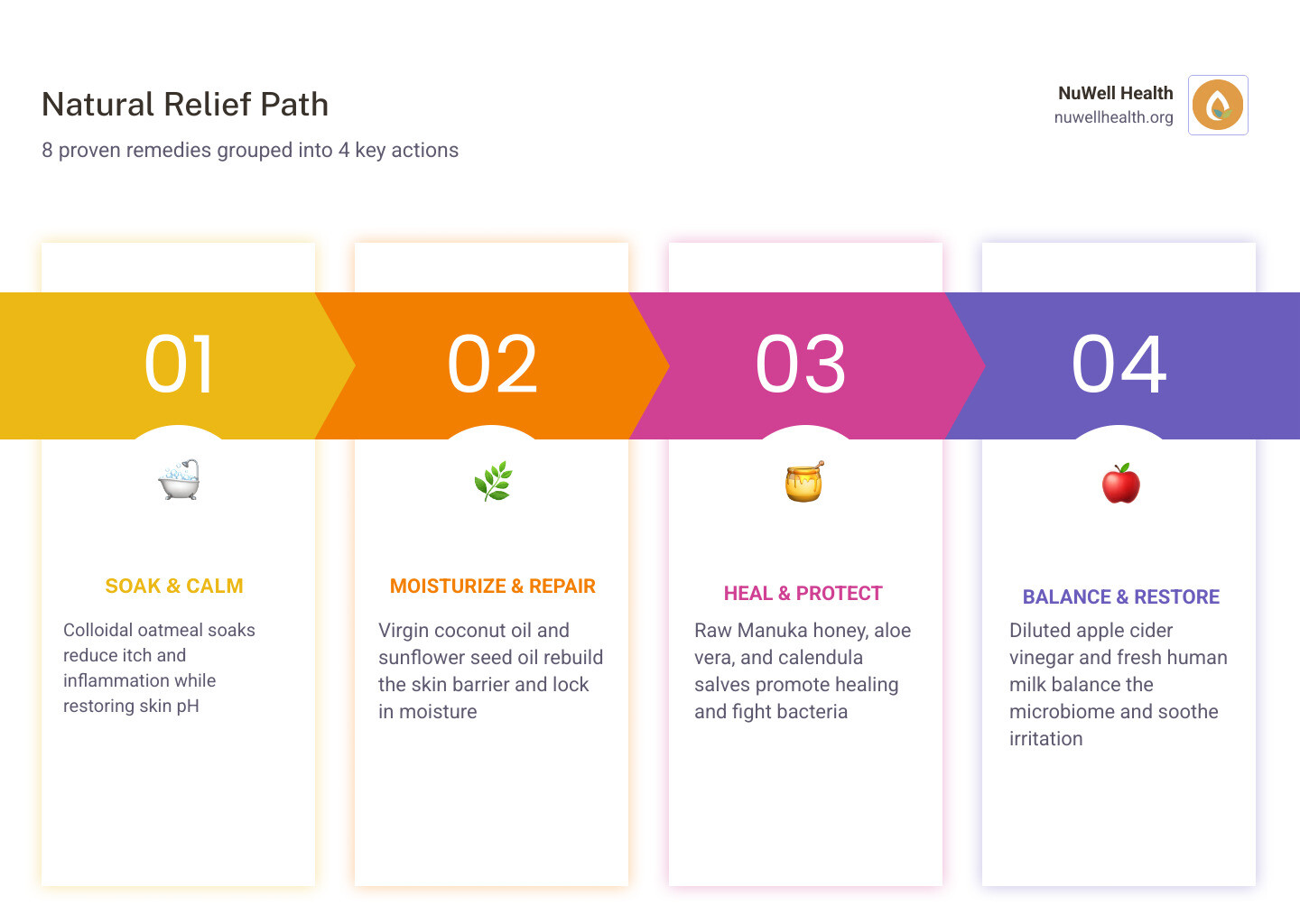
The best natural remedies for eczema on breast skin include:
- Colloidal oatmeal soaks – reduces itch and inflammation
- Virgin coconut oil – repairs the skin barrier and fights bacteria
- Raw Manuka honey – promotes healing and prevents infection
- Aloe vera gel – soothes and cools irritated, broken skin
- Sunflower seed oil – locks in moisture and supports ceramide production
- Diluted apple cider vinegar – restores skin acidity and balances the microbiome
- Calendula and comfrey salves – herbal support for skin cell renewal
- Fresh human milk – antimicrobial relief for nursing mothers
If you’ve ever dealt with dry, itchy, inflamed skin on your breast or nipple that just won’t calm down, you’re not alone. Breast eczema — also called atopic dermatitis — affects millions of people, with eczema overall touching the lives of around 15 million Americans and up to 20% of children each year.
The good news? You don’t have to rely entirely on synthetic creams or medications to find relief.
Many people are turning to gentle, plant-based approaches that work with the body rather than against it. At NuWell Health, we have found that the most effective path to lasting skin relief combines targeted natural treatments with real lifestyle change — addressing the root cause, not just the symptoms.
This guide walks you through eight natural remedies that are backed by research, safe for sensitive skin, and practical enough to fit into a busy life.
Understanding Breast Eczema and Its Triggers
Breast eczema isn’t just a surface-level annoyance; it is a sign that your body’s largest organ—the skin—is struggling to maintain its protective shield. In May 2026, we understand more than ever how the skin barrier function is tied to our overall health. When you have Breast Eczema, the outer layer of your skin becomes compromised, allowing moisture to escape and irritants to enter.
This condition can manifest as atopic dermatitis (linked to genetics and allergies) or contact dermatitis (a reaction to something touching the skin). It often appears as red, scaly, or bumpy patches on the breast, under the breast folds, or specifically on the nipple and areola. For many, a genetic mutation in the filaggrin protein is the culprit, as this protein is responsible for keeping the skin barrier strong. At NuWell Health, we believe in the meaning of natural medicine which focuses on supporting these biological systems holistically rather than just masking the itch.
Identifying Common Causes and Triggers
Why does eczema flare up on the breast specifically? The area is prone to friction from bras, moisture from sweat, and hormonal shifts. Common triggers include:
- Immune Overreaction: Your immune system may be hyper-sensitive to environmental factors.
- Environmental Irritants: Harsh laundry detergents, synthetic lace, or fragranced body washes.
- Hormonal Fluctuations: Changes during the menstrual cycle, pregnancy, or menopause can dry out the skin.
- Dietary Factors: Allergies and Food Sensitivity play a massive role in skin inflammation.
At NuWell Health, we have found that identifying root-cause triggers is the first step toward lasting relief. If you don’t remove the “splinter” (the trigger), the “wound” (the eczema) will struggle to heal, no matter what cream you apply.
Breast Eczema vs. Paget’s Disease
It is vital to distinguish between standard eczema and more serious conditions. While eczema usually affects both breasts and responds to soothing treatments, Paget’s disease of the breast is a rare form of cancer that often affects only one nipple. It can mimic eczema with redness and scaling, but it typically does not itch as and may involve an inverted nipple or bloody discharge.
| Feature | Breast Eczema | Paget’s Disease |
|---|---|---|
| Location | Usually both breasts/nipples | Typically only one nipple |
| Itching | Very intense | Present, but often less dominant |
| Response | Improves with moisturizers | Does not respond to eczema care |
| Discharge | Clear or straw-colored (if weeping) | May be bloody or persistent |
| Nipple Shape | Usually remains normal | Nipple may become flat or inverted |
If you notice changes in only one breast or symptoms that do not improve with natural care, consult a healthcare provider immediately to rule out Paget’s disease or inflammatory breast cancer.
8 Effective Natural Remedies for Breast Eczema
When dealing with sensitive breast tissue, the “less is more” approach is often best. Choosing natural remedies for eczema on breast means you are avoiding the thinning of skin sometimes associated with long-term steroid use. You can stop the scratch with these natural treatments that offer antimicrobial and anti-inflammatory benefits.
Why Choose Natural Remedies for Eczema on Breast?
The skin on our breasts is thinner and more absorbent than the skin on our legs or back. Natural remedies offer:
- Fewer Side Effects: No synthetic fragrances or parabens.
- Gentleness: Safe for the sensitive nipple area.
- Holistic Recovery: These ingredients often nourish the skin with vitamins and fatty acids while they heal.
1. Colloidal Oatmeal Soaks
Colloidal oatmeal is a specialized preparation of oats ground into an extremely fine powder that stays suspended in water. At NuWell Health, we have observed that colloidal oatmeal is one of the most reliable ways to break the itch-scratch cycle quickly. A 2015 study confirmed that it has potent antioxidant and anti-inflammatory properties, helping to normalize the skin’s pH and create a protective film.
How to use: Add one cup of 100% pure colloidal oatmeal to a lukewarm bath. Soak for 10–15 minutes, then pat (don’t rub!) your breasts dry.
2. Virgin Coconut Oil
Coconut oil is a powerhouse for skin barrier repair. It contains lauric acid, which has been shown to reduce the presence of Staphylococcus aureus—a bacteria that frequently colonizes eczema-prone skin. In our experience at NuWell Health, patients who use virgin coconut oil consistently report a noticeable reduction in skin roughness and irritation within the first week.
How to use: Apply organic, cold-pressed virgin coconut oil to the affected areas twice daily. It’s particularly effective when applied to slightly damp skin after a bath.
3. Raw Manuka Honey
Manuka honey is world-renowned for its wound-healing and antibacterial properties. It acts as a humectant, meaning it draws moisture into the skin, and its low pH promotes tissue regeneration.
How to use: Apply a thin layer of medical-grade Manuka honey to the eczema patch. Cover with a clean gauze pad for 20 minutes before gently rinsing with lukewarm water.
4. Aloe Vera Gel
If your breast eczema feels hot or “angry,” aloe vera is your best friend. It provides an immediate cooling effect and contains polysaccharides that support skin repair.
How to use: Use 100% pure aloe vera gel (avoid brands with green dyes or alcohol). Apply a thin layer to soothe broken or irritated skin as needed.
5. Sunflower Seed Oil
Sunflower seed oil is superior to olive oil for eczema because it stimulates natural ceramide production. Our practitioners at NuWell Health often recommend sunflower seed oil specifically for its ability to strengthen the skin’s natural defenses without the heaviness of other oils.
How to use: Massage a few drops of organic sunflower seed oil into the breast skin. It is non-comedogenic, so it won’t clog pores in the cleavage area.
6. Diluted Apple Cider Vinegar (ACV)
Healthy skin is naturally acidic, but eczema skin is often more alkaline, which weakens the barrier. ACV can help restore the proper acid mantle.
How to use: Always dilute! Mix 1 tablespoon of ACV with 1 cup of water. Use a cotton ball to gently dab the solution onto the skin, then rinse after a few minutes. Never use ACV on cracked or bleeding skin.
7. Calendula and Comfrey Salves
These traditional botanicals are famous for skin cell renewal. Calendula is exceptionally gentle, making it a favorite for nipple irritation.
How to use: Look for a salve that uses a beeswax or shea butter base. Apply 1–2 times daily to reduce redness and promote the healing of scaly patches.
8. Fresh Human Milk (For Nursing Mothers)
For our breastfeeding community, your own milk is a biological miracle. While a small pilot study showed mixed results compared to standard emollients, many mothers find the immunological components and antimicrobial proteins in fresh milk provide significant relief for nipple eczema.
How to use: After nursing, express a few drops of milk and rub them into the nipple and areola. Let it air dry before putting your bra back on.
Lifestyle Strategies and Prevention for Long-Term Relief

To truly master natural ways to heal eczema, we must look beyond topical creams. Your skin is a reflection of your internal environment.
Dietary Adjustments and Gut Health
There is a profound link between your gut and your skin. Many people with breast eczema find that their flares are triggered by “leaky gut” or food sensitivities.
- Elimination Diet: At NuWell Health, we often recommend a 4–6 week period of removing common triggers like dairy, gluten, and soy.
- Testing: The Definitive Guide to Food Sensitivity Testing can help you identify exactly which foods are causing systemic inflammation.
- Probiotics: Boosting your gut flora with Bifidobacterium can help regulate the immune response that causes skin flares.
Managing Stress for Skin Health
The “stress-itch” cycle is real. High cortisol levels can damage the skin barrier and trigger an inflammatory cascade.
- Christian Perspective on Wellness: We encourage our community to find peace through prayer and scripture meditation. Philippians 4:6-7 reminds us to bring our anxieties to God, which can physically lower our stress response.
- Restorative Rest: Ensure you are getting 7–9 hours of sleep to allow your skin cells to regenerate.
- Nervous System Support: Simple deep-breathing exercises can shift your body from “fight or flight” to “rest and digest,” giving your skin a chance to heal. For more on this, see our Natural Health for Mental Health Complete Guide.
Safety Precautions for Natural Remedies for Eczema on Breast
Even natural ingredients can cause reactions if your skin is highly sensitized.
Applying Natural Remedies for Eczema on Breast Safely
- Patch Test: Before applying any new remedy to your entire breast, test a small amount on your inner forearm for 24 hours.
- Avoid Cross-Contamination: Use clean spoons to scoop out coconut oil or honey; don’t use your fingers if you have an active flare.
- Breastfeeding Safety: If you are nursing, apply remedies after a feeding session. Wipe away any excess honey or essential oil-based salves before the next feeding to ensure the baby doesn’t ingest them.
- Nipple Shields: If friction is making the eczema worse during nursing, a silicone nipple shield can provide a temporary physical barrier.
How long do natural remedies for eczema on breast take to work?
At NuWell Health, we emphasize that natural healing is a marathon, not a sprint. Our clinical observations show that while a chemical steroid might hide symptoms in 24 hours, natural remedies focus on rebuilding the skin’s integrity. Most people see a significant reduction in itching within 3 days, but it typically takes 1 to 3 weeks of consistent application to see the skin barrier fully close and the redness fade.
Frequently Asked Questions about Breast Eczema
Is breast eczema contagious?
No. Breast eczema is an inflammatory skin condition and an immune system response. You cannot “catch” it from someone else, nor can you spread it to other parts of your body through touch. It is often linked to your genetics and environment.
Can I continue breastfeeding with nipple eczema?
Yes, in most cases. It is safe for the baby, though it may be uncomfortable for you. Using fresh breast milk or coconut oil can help manage the pain. If the skin is cracked and bleeding, monitor for signs of mastitis or thrush, which may require additional care.
When should I seek medical attention?
You should consult a healthcare provider if:
- The rash is only on one breast and doesn’t respond to treatment.
- You see yellow crusting or pus (signs of a bacterial infection).
- The pain is so severe it interferes with sleep or nursing.
- You notice a lump or changes in the shape of the nipple.
Conclusion
At NuWell Health, our holistic healing philosophy is built on the belief that your body was designed to heal when given the right tools. By using natural remedies for eczema on breast skin—like coconut oil, colloidal oatmeal, and stress management—you aren’t just treating a rash; you are honoring your body and addressing the root causes of inflammation.
Empower yourself today by choosing gentle, effective, and natural care. Your skin, mind, and spirit will thank you. Master the natural ways to heal eczema today and reclaim your comfort.
This article was researched with AI and heavily edited by Jordan Oliver for accuracy and relevance.
Jordan is an author, ordained minister, and online host for His Glory TV, sharing biblically grounded insights on faith, prayer, and spiritual growth. She is the co-founder of Triple-Braided Cord Co., an intercessory prayer and healing ministry inspired by Ecclesiastes 4:12.
Jordan holds a Bachelor’s degree in Communications and Religious Studies from High Point University and is a certified Spiritual Life Coach through iCoachLife in Nashville, Tennessee. Drawing from her ministry, coaching, and academic experience, she creates trustworthy, faith-based content that helps readers grow in their relationship with God. Learn more about Jordan here.