
When Pollen Season Hits Hard: What Actually Helps
The best home remedies for pollen allergies include nasal saline irrigation, HEPA air filtration, PA-free butterbur extract, quercetin-rich foods, and simple daily habits like showering before bed and keeping windows closed during peak pollen hours.
Quick answer — top home remedies for pollen allergies:
- Nasal saline rinse — flushes pollen and mucus from nasal passages
- HEPA air purifier — removes up to 99.97% of airborne pollen indoors
- PA-free butterbur extract — shown in trials to work similarly to antihistamines
- Quercetin-rich foods — apples, onions, and leafy greens act as natural antihistamines
- Stay hydrated — dehydration increases histamine production
- Shower before bed — removes pollen from hair and skin
- Keep windows closed — especially during early morning peak pollen hours
Spring used to feel like a gift. Now, for millions of people, it feels more like a health crisis.
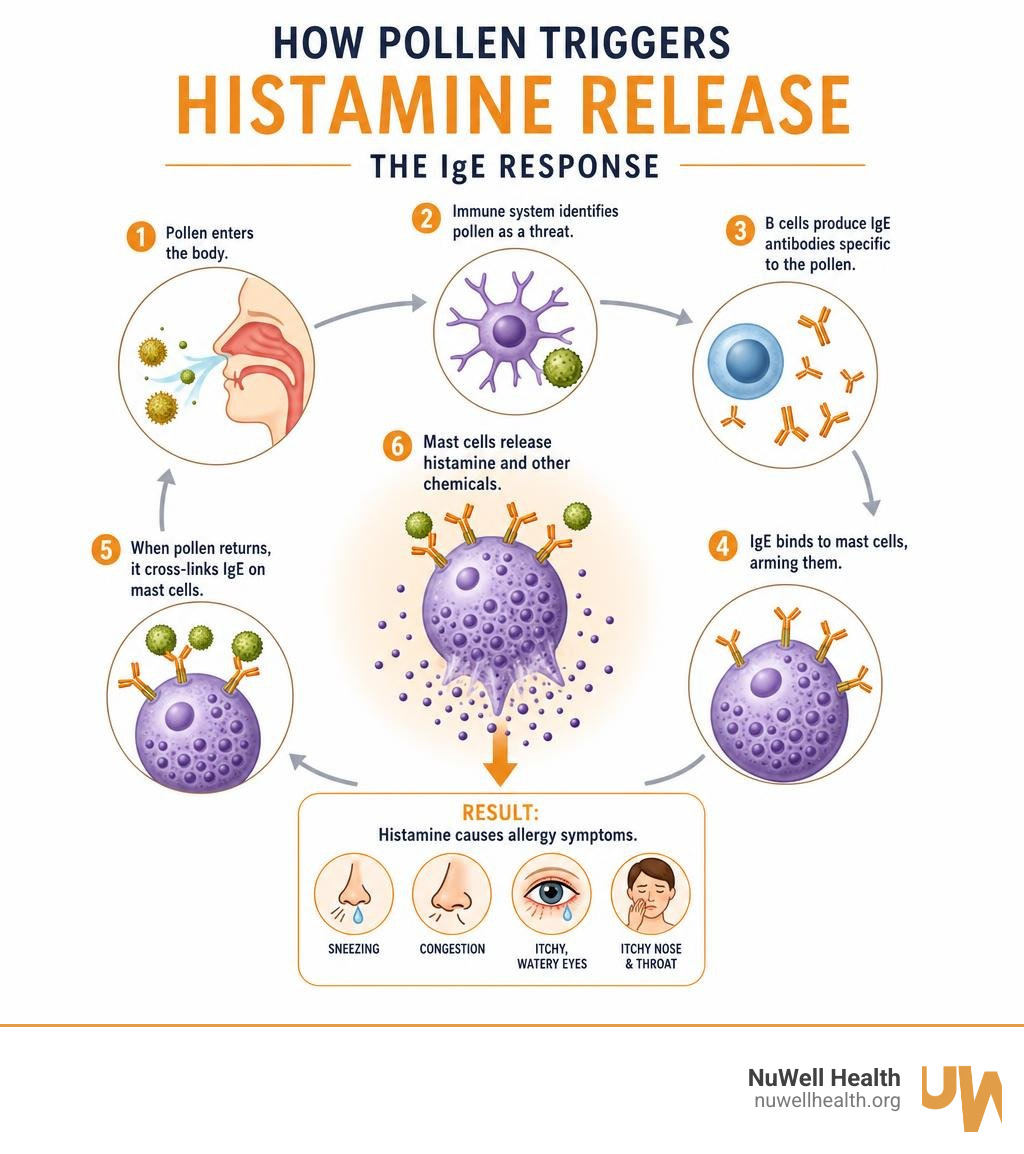
About one in four adults and one in five children in the U.S. now suffer from seasonal allergies. Pollen triggers a cascade inside your body — your immune system misidentifies harmless pollen proteins as threats, releases IgE antibodies, and floods your system with histamine. The result? Sneezing, congestion, itchy eyes, and exhaustion that can drag on for months.
The frustrating part is that pollen seasons are getting longer and more intense. The freeze-free growing season in the U.S. has extended by an average of 21 days from 1970 to 2025, meaning more pollen in the air for more of the year.
At NuWell Health, we have found that most people reach straight for an antihistamine pill — and then feel groggy, frustrated, and no closer to lasting relief. There is a better way. Many natural remedies have genuine science behind them, and when combined with smart daily habits, they can make a real difference.
This guide covers what works, what doesn’t, and how to build a practical plan that fits your life.
Understanding the Pollen Plague: Why Seasonal Allergies Are Worsening
If you feel like your seasonal allergies are worse now than they were a decade ago, you are not alone. Rather than focusing on the agricultural and environmental shifts in plant reproduction, we believe the most effective approach is to focus on how the human body processes these environmental triggers. When you inhale microscopic pollen grains, your immune system goes on high alert, producing Immunoglobulin E (IgE) antibodies that trigger the release of histamine. This chemical cascade causes the classic, frustrating symptoms of allergic rhinitis: sneezing, a runny nose, and itchy, watery eyes.
At NuWell Health, our clinical experience has shown that resolving these symptoms requires looking beyond the nasal passages to the root of our immune system: the gut. We have worked with hundreds of clients who found that by addressing gut dysbiosis—an imbalance in the microbial community of the digestive tract—they could significantly reduce their seasonal sensitivity. When the gut is balanced, the body produces the regulatory T-cells needed to suppress unnecessary inflammatory responses. Supporting your digestive health is therefore a foundational, human-centric step in building long-term resistance to seasonal triggers.
To explore this changing environmental dynamic further, you can read about The Pollen Plague: 5 Natural Remedies for the 2026 Respiratory Crisis. To understand how to build a resilient immune system from the inside out, check out our guide on The Best Natural Strategies for Long-Term Wellness.
The Best Home Remedies for Pollen Allergies: Science-Backed Solutions
When seasonal symptoms strike, your kitchen pantry and local health food store can become your greatest allies. By focusing on whole-body wellness and natural antihistamines, you can calm your overactive immune response without the dry mouth and brain fog associated with traditional over-the-counter medications.

An anti-inflammatory diet rich in antioxidants serves as your primary defense against seasonal flare-ups. At NuWell Health, our hands-on experience with clients has shown that combining targeted natural compounds yields far better results than relying on a single remedy. Key natural compounds to focus on include:
- Quercetin: A powerful plant flavonoid that acts as a natural master cell stabilizer. It helps block the release of histamines before they can cause inflammation. You can find quercetin in abundance in red onions, apples, berries, and dark leafy greens. In our work at NuWell Health, we have found that clients who start a high-quality quercetin supplement four to six weeks before the pollen season begins report significantly fewer flare-ups.
- Vitamin C: This household vitamin is a potent, natural antihistamine. Studies suggest that high doses of vitamin C can help break down the histamine molecules already circulating in your bloodstream. While the daily recommended intake is 90 mg for men and 75 mg for women, therapeutic levels during allergy season can be safely increased through citrus fruits, bell peppers, and high-quality supplements.
- Hydration: Simple, pure water is one of the most overlooked remedies for respiratory relief. When your body is dehydrated, it produces higher levels of histamine to preserve water in your airways, which directly worsens your congestion and sneezing. Drinking plenty of water thins out mucus and keeps your histamine levels in check.
- Raw Local Honey: Consuming a daily spoonful of raw, unfiltered honey produced in your immediate geographic area is a time-tested folk remedy. The theory is similar to sublingual immunotherapy: by consuming tiny amounts of local pollen trapped in the honey, your immune system may gradually learn to recognize these proteins as harmless. While clinical evidence remains mixed, many individuals report a noticeable reduction in seasonal sensitivity over time.
For a comprehensive look at how to address these triggers naturally, read about how to Try These 15 Natural Home Remedies for Allergy Relief, and explore our Step-by-Step Guide to Natural Remedies to learn how to integrate these solutions into your daily routine.
Nasal Saline Irrigation: The Best Home Remedies for Pollen Allergies in Your Sinuses
If you are looking for immediate, physical relief from congestion, nasal saline irrigation is highly effective. Think of it as giving your sinuses a gentle, refreshing bath to flush out trapped pollen, dust, and excess mucus.
The science supporting this practice is robust. A comprehensive Cochrane review confirmed that nasal saline irrigation provides significant benefits in relieving the symptoms of allergic rhinitis in both adults and children when compared to no saline treatment, and it is highly unlikely to be associated with any adverse side effects. In fact, it is so well-regarded that more than 90% of family physicians in Wisconsin have prescribed nasal irrigation for chronic sinus issues, and more than half actively recommend it for seasonal allergies and upper respiratory infections.
To perform a saline rinse safely at home, you can use a neti pot or a squeeze bottle. It is absolutely vital to use only distilled, sterile, or previously boiled and cooled water to eliminate any risk of rare but serious sinus infections.
Our Easy Homemade Saline Solution Recipe:
- 1 quart of distilled or sterilized water
- 1.5 teaspoons of non-iodized canning or pickling salt (avoid salts with anti-caking agents)
- 1 teaspoon of baking soda
Mix the ingredients thoroughly and store the solution at room temperature. To use, lean forward over a sink, tilt your head to one side, and gently pour or squeeze the solution into your upper nostril, letting it drain out of the lower nostril while breathing through your mouth. Be sure to thoroughly rinse your neti pot or squeeze bottle with sterile water after each use and let it air-dry completely.
For more strategic tips on sinus hygiene and managing seasonal triggers, check out the guide on How to Beat Pollen Season Naturally: Proven Strategies for Relief.
Herbal Supplements: The Best Home Remedies for Pollen Allergies from Nature’s Pharmacy
For those seeking targeted herbal support, several botanicals offer clinical-grade relief by naturally cooling the body’s inflammatory response.
- Butterbur (Petasites hybridus): This herb is perhaps the most heavily researched natural alternative to conventional allergy medications. In randomized controlled trials, butterbur extract was found to be similarly effective to cetirizine (a common over-the-counter antihistamine) in improving symptoms of seasonal allergic rhinitis, without causing the drowsiness often associated with medication. However, safety is paramount: you must only use butterbur products that are certified PA-free (meaning they have been processed to remove pyrrolizidine alkaloids, which can be toxic to the liver). PA-free butterbur is considered safe for most adults when taken orally for up to 16 weeks.
- Stinging Nettle (Urtica dioica L.): Stinging nettle has a long history of traditional use for respiratory support. Clinical trials suggest that nettle extracts can inhibit the pro-inflammatory pathways associated with seasonal allergies. Drinking nettle tea two to three times daily during peak season is a wonderful, soothing way to quiet a hyperactive immune system.
- Bromelain: A natural enzyme found in pineapples and papayas, bromelain is highly effective at reducing swelling and inflammation in the nasal passages, making it easier to breathe through your nose.
Before starting any new herbal regimen, it is wise to educate yourself on proper usage. Read our Beginner’s Guide to Natural Health Supplements, review our detailed advice on Herbal Food Supplement Benefits and Safety, and browse our A Visual Encyclopedia of 100 Healing Plants and Their Uses to discover how to use these botanical gifts safely and effectively.
Environmental Controls: Keeping Pollen Out of Your Home
While supporting your body internally is essential, reducing the physical volume of pollen you breathe in is equally critical. During high-pollen seasons, your home should serve as a safe, clean sanctuary where your immune system can rest and recover.

To achieve this, high-efficiency particulate air (HEPA) filtration is your most valuable tool. True HEPA filters are capable of trapping up to 99.97% of dust, pollen, mold spores, and other airborne particles as small as 0.3 microns. Studies have shown that running a HEPA air purifier in the home—especially in the bedroom—can significantly reduce seasonal allergy symptoms, with participants experiencing an average 26% reduction in morning symptoms and a 24% reduction in evening symptoms.
However, keep in mind that while air purifiers are fantastic at clearing the air and reducing immediate discomfort, a 2024 analysis published in the journal Indoor Air noted that they do not significantly improve long-term lung function or entirely eliminate the need for allergy management strategies. They are a powerful piece of the puzzle, but they work best when combined with smart daily habits.
To protect your indoor air quality, keep your home and car windows closed during peak pollen hours, which typically fall between 5:00 a.m. and 10:00 a.m., as well as from midday to late afternoon. Instead, rely on air conditioning to keep things cool.
Additionally, pollen is incredibly sticky. It hitches a ride on your clothes, hair, skin, and even your pets. To prevent tracking it into your living spaces, establish a “decontamination” routine. At NuWell Health, we have found that clients who implement a strict evening decontamination routine—specifically showering and washing their hair before bed—report a dramatic improvement in sleep quality and a significant reduction in morning congestion. Change your clothes as soon as you return indoors, wash your bedding weekly in hot water, and always shower before bed so you aren’t sleeping on a pillowcase covered in pollen. If you must do yard work or spend extended time outdoors on dry, windy days, wearing an N95 mask can physically block these microscopic particles from entering your respiratory system.
For more practical tips on keeping your environment allergen-free, read the advice from the Seasonal allergies: Nip them in the bud – Mayo Clinic.
Indoor vs. Outdoor Pollen Defense Strategies
| Strategy Type | Action Plan | How It Helps |
|---|---|---|
| Indoor Control | Run HEPA air purifiers in bedrooms | Traps 99.97% of airborne pollen and reduces morning symptoms by up to 26%. |
| Indoor Control | Keep windows closed and run the AC | Prevents outdoor pollen from drifting into your living and sleeping areas. |
| Indoor Control | Wash bedding weekly in hot water | Destroys accumulated allergens, dust mites, and sticky pollen residues. |
| Outdoor Defense | Monitor daily pollen counts | Helps you plan outdoor activities for low-pollen days or after a fresh rain. |
| Outdoor Defense | Wear an N95 mask and sunglasses | Physically blocks pollen from entering your nose, mouth, and sensitive eyes. |
| Outdoor Defense | Shower and change clothes immediately | Removes sticky pollen from your hair and skin so you don’t spread it indoors. |
Frequently Asked Questions about Pollen Allergies
What is the single most effective natural remedy for pollen allergies?
The single most effective natural strategy is a two-pronged approach: strict allergen avoidance combined with nasal saline irrigation. While you cannot completely avoid the outdoors, minimizing your exposure during peak hours and immediately washing away the pollen that lands on your skin and inside your nasal passages prevents the inflammatory cascade from starting.
Rinsing your sinuses with a sterile saline solution physically flushes out the pollen grains before they can bind to your IgE antibodies and trigger a histamine release. For more expert insights on how to build a natural defense system, explore these Alternative Remedies for Allergies.
Does eating local honey actually cure seasonal allergies?
While eating raw local honey is a beloved and delicious folk remedy, there is limited and inconsistent scientific evidence to prove that it can completely cure seasonal allergies. The underlying concept is similar to immunotherapy: honey contains trace amounts of local pollen, which could theoretically help your immune system build tolerance over time.
However, because bees primarily collect pollen from bright, colorful flowers—rather than the wind-pollinated trees, grasses, and weeds that actually trigger most seasonal allergies—the pollen profile in honey may not match your specific triggers. Furthermore, the concentration of pollen in honey is highly variable, making reliable dosing impossible. It is best enjoyed as a soothing, complementary addition to your wellness routine rather than a primary treatment. Learn more about how to evaluate these options in this guide on Natural Remedies for Seasonal Allergies – Cigna Healthcare.
When should I stop using home remedies and see a doctor?
While home remedies are excellent for managing mild to moderate symptoms, you should seek professional medical help if your allergies begin to interfere with your daily life, disrupt your sleep, or fail to respond to natural treatments.
Most importantly, if you experience breathing difficulties, such as a persistent dry cough, wheezing, chest tightness, or shortness of breath, you should be evaluated by a healthcare professional immediately, as these symptoms can point to allergy-induced asthma. An allergist can perform precise testing to identify your exact triggers and discuss advanced options like sublingual or injection immunotherapy, which can reduce your overall sensitivity by 60% to 80%. For guidance on when to make the transition to professional care, read these 9 Natural Home Remedies For Allergies That Work, From Allergists.
Conclusion
At NuWell Health, we believe that true wellness is holistic, addressing the delicate connection between the mind, body, and spirit. From a Christian perspective, we recognize our bodies as beautifully designed temples, and caring for them through gentle, natural means is a form of stewardship. Rather than simply masking your symptoms with heavy medications, we encourage you to look at the root causes of your discomfort—supporting your gut health, nourishing your body with clean, anti-inflammatory foods, and creating a clean, restful home environment.
By combining the best home remedies for pollen allergies—like nasal saline rinses, HEPA filtration, and targeted botanicals—with mindful daily habits, you can find lasting relief and fully enjoy the changing seasons as they were meant to be experienced.
If you are ready to take a deeper, root-cause approach to your seasonal symptoms, explore our dedicated resources and learn More info about allergy and food sensitivity support to start your journey toward long-term respiratory comfort.
This article was researched with AI and heavily edited by Jordan Oliver for accuracy and relevance.
Jordan is an author, ordained minister, and online host for His Glory TV, sharing biblically grounded insights on faith, prayer, and spiritual growth. She is the co-founder of Triple-Braided Cord Co., an intercessory prayer and healing ministry inspired by Ecclesiastes 4:12.
Jordan holds a Bachelor’s degree in Communications and Religious Studies from High Point University and is a certified Spiritual Life Coach through iCoachLife in Nashville, Tennessee. Drawing from her ministry, coaching, and academic experience, she creates trustworthy, faith-based content that helps readers grow in their relationship with God. Learn more about Jordan here.