
Biological Pathways: How Organ Systems Drive Psychological Health
Published Date: September 2026 Last-Reviewed Date: September 2026 Clinical Review Panel: Sarah Jenkins, ND, CNS (Integrative Health Specialist) and Marcus Vance, MD, DipABLM (Lifestyle Medicine Physician)
Disclaimer: The content provided in this article is for educational and informational purposes only and does not constitute medical, psychiatric, or psychological advice. NuWell Health’s virtual whole-person natural health services complement rather than replace appropriate medical care, counseling, psychiatric care, medication management, or emergency care. If you are experiencing a medical or mental health emergency, please call 911 (in the US) or call/text 988 to reach the Suicide & Crisis Lifeline.
Mental-health-informed natural health is an integrative, evidence-aware approach that supports emotional well-being by nurturing the health of the entire body. Rather than treating the mind as separate from physical health, this framework recognizes that daily habits—such as nourishing meals, restorative sleep, gentle aerobic movement, nervous system pacing, and mindful nature connection—can help create an internal environment that supports mood, stress tolerance, and cognitive clarity. These practices are designed to complement, never replace, appropriate medical and psychiatric care.
According to the World Health Organization, approximately 280 million people worldwide live with depression. It is also well recognized that women are roughly twice as likely to experience depression as men. Furthermore, mood and anxiety disorders carry a massive global economic burden, resulting in an estimated USD 1 trillion in lost productivity each year.
Rather than viewing psychological distress in isolation, emerging biomedical research highlights how deeply interconnected the mind is with the rest of the body. Co-occurring physical and psychological challenges frequently share underlying biological pathways, meaning that nurturing whole-body vitality can play a meaningful supportive role in long-term emotional resilience.
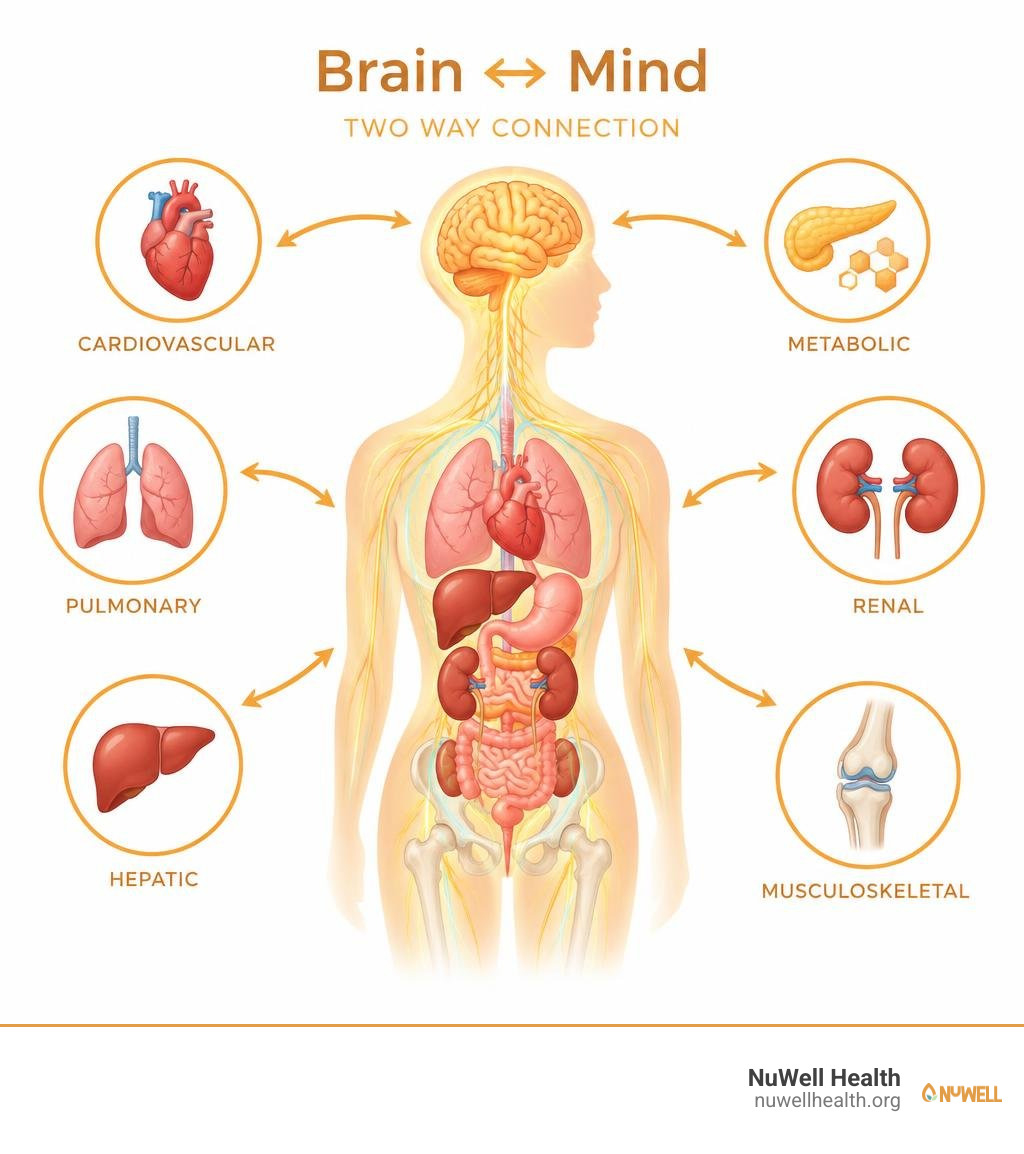
For decades, psychological wellness was often studied separately from peripheral physiology. However, contemporary population-based body-brain mapping demonstrates that mental health is intimately linked to the systemic health of multiple organ systems, including cardiovascular, pulmonary, hepatic, metabolic, renal, and musculoskeletal functions.
When systemic health declines, the brain often reflects that strain. Research indicates that structural markers such as total gray matter volume and white matter tract integrity (measured via fractional anisotropy) act as mediating bridges between physical organ function and psychological states.
Consider how various organ systems interface with neurological wellness:
- Cardiovascular and Pulmonary Function: Efficient oxygenation and vascular integrity ensure steady cerebral blood flow. Reduced lung function or compromised vascular tone can increase systemic oxidative stress and restrict nutrient delivery to high-demand brain regions, which may contribute to higher baseline anxiety and vulnerability to mood disorders.
- Hepatic and Metabolic Regulation: The liver coordinates metabolic clearance, glucose stabilization, and detoxification pathways. Poor metabolic health and hepatic stress are frequently linked to systemic low-grade inflammation. Circulating pro-inflammatory cytokines can cross the blood-brain barrier, altering neurotransmitter synthesis and contributing to neuroinflammation, cognitive fatigue, and low mood.
- Systemic Inflammatory Cascades: Chronic peripheral inflammation signals the central nervous system to adopt a “sickness behavior” posture, characterized by lethargy, social withdrawal, and depressive symptoms. Over time, chronic inflammatory signaling can suppress brain-derived neurotrophic factor (BDNF), impairing neurogenesis and neuroplasticity in the hippocampus.
Understanding the deep mind-body connection in mental health allows us to appreciate that emotional well-being is never solely a mental, digestive, or biochemical issue in isolation. Instead, it reflects an ongoing biological conversation between our peripheral organs, brain architecture, and daily environment.
Principles of Mental-Health-Informed Natural Health
Mental-health-informed natural health operates through the lens of the biopsychosocial-spiritual model. This framework recognizes that physical processes, psychological patterns, social environments, and personal values continuously influence one another.
At NuWell Health, we have found that clients achieve the most sustainable progress when we emphasize compassionate, non-pharmacological supportive strategies that address multiple contributing factors without ever suggesting that natural methods replace essential clinical care.
Key foundational principles include:
- Multi-Factorial Exploration: Avoiding reductionist claims that blame all distress on a single “toxin,” food intolerance, or hormonal shift. We recognize that genetics, life history, organ health, and psychosocial stressors work together.
- Autonomic Regulation and Pacing: Supporting the nervous system’s shift from persistent sympathetic arousal (fight-or-flight) into parasympathetic restoration (rest-and-digest).
- Somatic Awareness: Helping individuals gently tune into physical sensations, recognizing how tension, shallow breathing, and fatigue manifest in real time.
- Empowered Self-Care: Equipping individuals with sustainable daily habits that nurture physical resilience, cognitive clarity, and emotional equilibrium.
Core Pillars of Mental-Health-Informed Natural Health
To better understand how a supportive, whole-person approach contrasts with and complements conventional models, consider the following comparison:
| Dimension | Conventional Symptom Management | Mental-Health-Informed Natural Health |
|---|---|---|
| Primary Focus | Acute symptom reduction and stabilization | Identifying and supporting multiple contributing physiological and lifestyle factors |
| Intervention Tools | Pharmacotherapy, acute psychiatric intervention, psychotherapy | Nutrient-dense nutrition, nervous system pacing, sleep optimization, outdoor activity, spiritual reflection |
| Role of Organ Health | Often managed by separate medical subspecialties | Evaluated as an interconnected network directly influencing brain structure and mood |
| Patient Experience | Standardized clinical protocols | Collaborative, bio-individualized lifestyle education and gentle self-care practices |
| Clinical Scope | Diagnostic and curative intent | Complementary, educational, and supportive alongside primary medical care |
When exploring natural approaches to wellness, it is essential to remember that “natural” does not automatically mean universally safe or superior to conventional treatment. Herbal supplements and dietary modifications have real limitations and potential interactions with prescription medications.
A responsible wellness plan avoids rigid, restrictive diets or unproven megadoses, focusing instead on steady, evidence-supported lifestyle adjustments that nurture emotional resilience and overall wellness.
Integrating Mind-Body-Spirit and Christian Faith
For many individuals, lasting emotional resilience is profoundly anchored in spiritual faith. Within our practice, when clients desire it, we integrate supportive practices rooted in a Christian perspective, recognizing the deep bond between physical embodiment and spiritual peace. Faith is always offered as a supportive option based entirely on client preference, never as a requirement or a prerequisite for receiving compassionate care. We never suggest that depression, anxiety, or physical health challenges arise from a lack of faith.
Biblical meditation, prayerful reflection, and scripture-based encouragement can offer profound emotional grounding. By resting in God’s grace, individuals often find a restorative space to release chronic anxiety and cultivate peace:
- Scriptural Grounding: Reflecting on passages emphasizing hope, steadfast love, and comfort helps quiet autonomic hyperarousal.
- Prayerful Lament and Release: Bringing genuine emotional burdens into prayer allows for emotional release, validating pain while fostering hope.
- Christ-Centered Soul Care: Integrating daily quiet time, fellowship, and sabbath rest supports both the autonomic nervous system and spiritual alignment.
For those navigating both mental health challenges and spiritual questions, integrating Christian faith and natural healing practices provides a grounded framework that honors both the physical vessel and the spiritual soul without relying on New Age philosophies.
Evidence-Informed Practices: From Nature Connection to Nutrition

Translating whole-person concepts into tangible routines requires practical, accessible interventions. Emerging evidence demonstrates that simple, restorative engagements with the natural world and targeted nutritional habits can yield measurable benefits for psychological well-being.
Nature Connectedness and Outdoor Activity
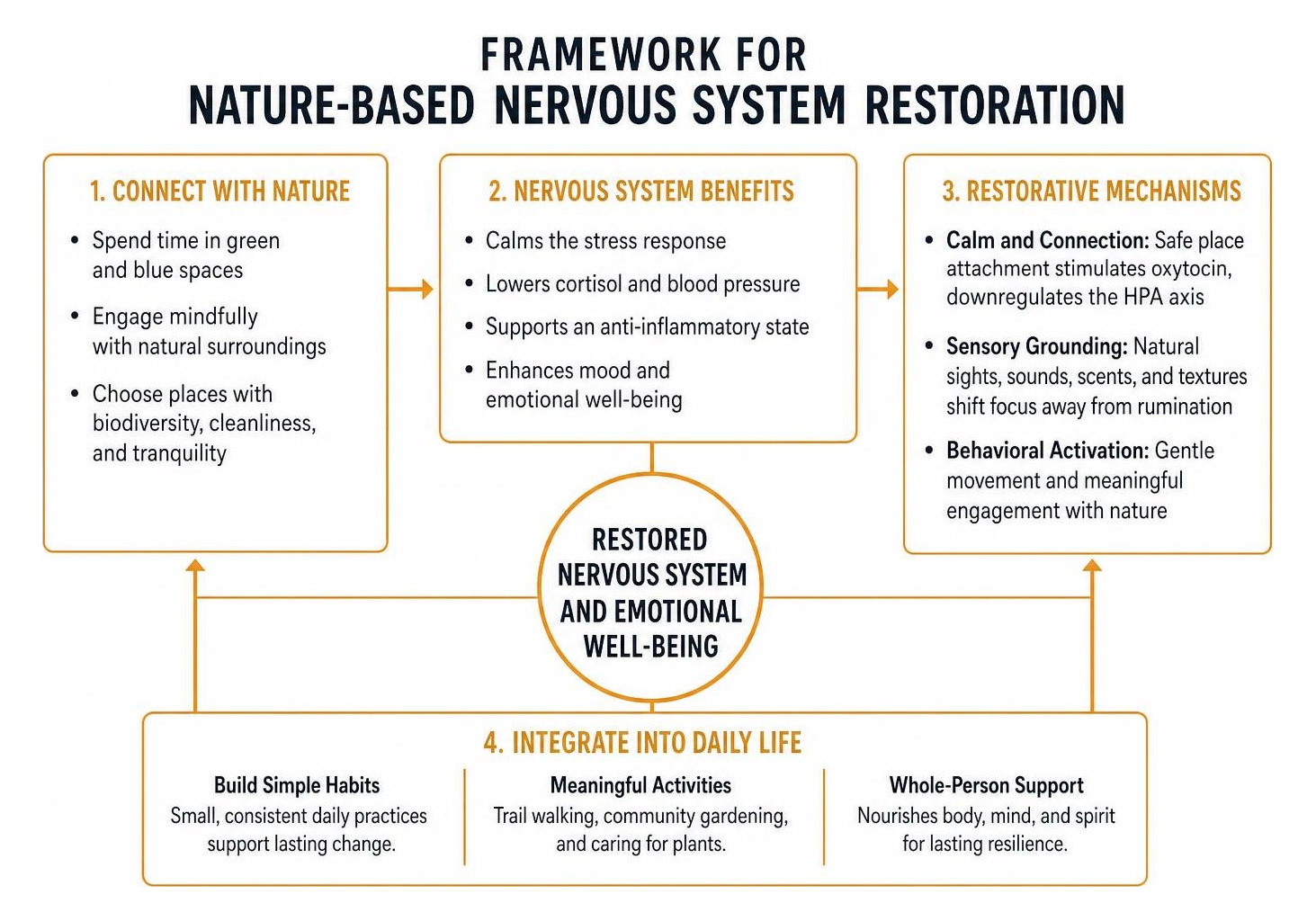
Contact with green and blue spaces is increasingly recognized as a powerful non-pharmacological support tool. However, research emphasizes that personal connectedness to nature—how mindfully we engage with and relate to our natural surroundings—often matters more than simple geographical proximity. High-quality environments characterized by biodiversity, cleanliness, and tranquility provide the greatest emotional uplift.
In a clinical pilot study involving young psychosomatic patients participating in structured nature-based interventions, researchers observed statistically significant improvements in well-being (mean difference = 0.55, p < 0.001) and connectedness to nature (mean difference = 0.45, p = 0.010) (Joschko et al., 2023). Depression scores on clinical scales also decreased significantly (mean difference = 3.31, p = 0.044), with 86.66% of participants rating the nature-based activities as effective, 93.33% reporting mood improvements, and 100% noting positive effects on their emotional well-being (Joschko et al., 2023).
Several biological and psychological mechanisms explain these restorative effects:
- Calm and Connection Theory: Developing a safe place attachment in natural environments is hypothesized to stimulate the endogenous oxytocinergic system. Oxytocin release downregulates the hypothalamic-pituitary-adrenal (HPA) axis, lowering circulating cortisol, reducing resting blood pressure, and supporting an anti-inflammatory state.
- Sensory Grounding: Mindful awareness of natural sounds, scents, and textures pulls focus away from repetitive rumination, a central component in addressing underlying emotional distress and trauma.
- Behavioral Activation: Activities like community gardening, trail walking, and caring for plants encourage gentle physical movement and meaningful sensory stimulation.
Implementing Mental-Health-Informed Natural Health in Daily Life
At NuWell Health, we have found that sustainable progress comes from small, consistent daily habits rather than extreme or sudden lifestyle overhauls.
Consider implementing these foundational practices to support organ vitality, brain health, and nervous system balance:
- Nourish with Anti-Inflammatory Whole Foods: Emphasize colorful vegetables, berries, legumes, lean proteins, and omega-3 fatty acids from fish or flaxseed. These foods provide vital micronutrients—such as folate, magnesium, and vitamin B12—that support neurotransmitter synthesis and hepatic methylation pathways.
- Maintain Consistent Sleep Rhythms: Aim for 7–9 hours of sleep per night in a cool, dark room. Consistent sleep schedules preserve gray matter volume, support hippocampal memory consolidation, and regulate metabolic hormones like leptin and ghrelin.
- Engage in Regular Aerobic Movement: Incorporate 150 minutes of moderate-intensity movement (such as brisk walking, cycling, or swimming) weekly. Aerobic exercise stimulates endothelial nitric oxide production, improves vascular elasticity, and boosts neuroprotective BDNF levels.
- Practice Structured Sensory Grounding: Dedicate 5 to 10 minutes daily to quiet outdoor reflection. Engage your senses deliberately—notice the warmth of sunlight, the scent of pine needles, or the sound of birdsong to encourage autonomic down-regulation.
- Establish Intentional Information Boundaries: Guard mental energy by setting boundaries on daily news consumption and social media scrolling, which can otherwise trigger chronic low-grade sympathetic stress.
Frequently Asked Questions About Whole-Person Wellness
What is mental-health-informed natural health?
Mental-health-informed natural health is an integrative, evidence-aware approach to wellness that views emotional and mental well-being as inseparable from physical organ health, nervous system balance, daily habits, and spiritual life. Rather than chasing single root causes, it focuses on supporting the body’s natural resilience using nutrition, restorative movement, sleep optimization, outdoor connection, and stress-reduction practices alongside conventional medical care.
How do physical organ systems influence mood and anxiety?
Peripheral organs communicate constantly with the central nervous system via autonomic nerves, hormones, and immune messengers. For example, metabolic imbalances, liver stress, or reduced cardiovascular and lung function can increase systemic inflammation and alter cerebral blood flow. These changes can directly influence brain structure, particularly gray matter volume and white matter tract integrity, affecting mood, stress tolerance, and cognitive clarity.
When should natural health support be combined with conventional medical care?
Natural health practices should always be viewed as complementary rather than primary replacements for necessary medical or psychiatric treatment. If you are managing severe depression, panic disorder, bipolar illness, psychosis, unmanaged chronic disease, or thoughts of self-harm, working closely with a licensed physician, psychiatrist, or mental health counselor is essential.
Emergency Guidance: If you experience acute chest pain, sudden severe neurological symptoms, or severe psychiatric distress, seek emergency medical care immediately. For 24/7 mental health crisis support in the United States, call or text 988.
What does a NuWell consultation include?
A virtual consultation with NuWell Health provides a thorough, whole-person review of your physical vitality, daily lifestyle habits, environmental stressors, emotional well-being, and personal faith goals. Our multidisciplinary care team collaborates with you to craft an individualized, realistic lifestyle roadmap. We offer supportive education and practical self-care tools while actively encouraging ongoing coordination with your primary medical and mental health providers.
Conclusion
Caring for mental health requires a compassionate, broad perspective that honors the intricate connections between your heart, lungs, metabolism, brain, and spirit. By focusing on sustainable daily foundations—nourishing meals, gentle aerobic movement, restorative sleep, mindful nature connection, and faith-centered soul care—you can cultivate an internal environment that supports resilience from the inside out.
NuWell Health is dedicated to walking alongside you with virtual, whole-person natural health support delivered by a compassionate, multidisciplinary team. Our services are designed to enrich and complement your existing healthcare relationships, empowering you with practical, evidence-informed tools for daily life.
To take your next step toward balanced, whole-person wellness, explore our comprehensive natural health for mental health guide or schedule a free virtual discovery call with the NuWell care team today. During this introductory conversation, we will listen to your unique wellness goals, explain our collaborative approach, and help you determine how our personalized support can best serve your journey.
This article was researched with AI and heavily edited by Jordan Oliver for accuracy and relevance.
Jordan is an author, ordained minister, and online host for His Glory TV, sharing biblically grounded insights on faith, prayer, and spiritual growth. She is the co-founder of Triple-Braided Cord Co., an intercessory prayer and healing ministry inspired by Ecclesiastes 4:12.
Jordan holds a Bachelor’s degree in Communications and Religious Studies from High Point University and is a certified Spiritual Life Coach through iCoachLife in Nashville, Tennessee. Drawing from her ministry, coaching, and academic experience, she creates trustworthy, faith-based content that helps readers grow in their relationship with God. Learn more about Jordan here.
References
Joschko L, Pálsdóttir AM, Grahn P, Hinse M. “Nature-Based Therapy in Individuals with Mental Health Disorders, with a Focus on Mental Well-Being and Connectedness to Nature-A Pilot Study..” International journal of environmental research and public health, 2023. PMCID PMC9914984.