

Why an Eczema Elimination Diet Could Change Your Skin
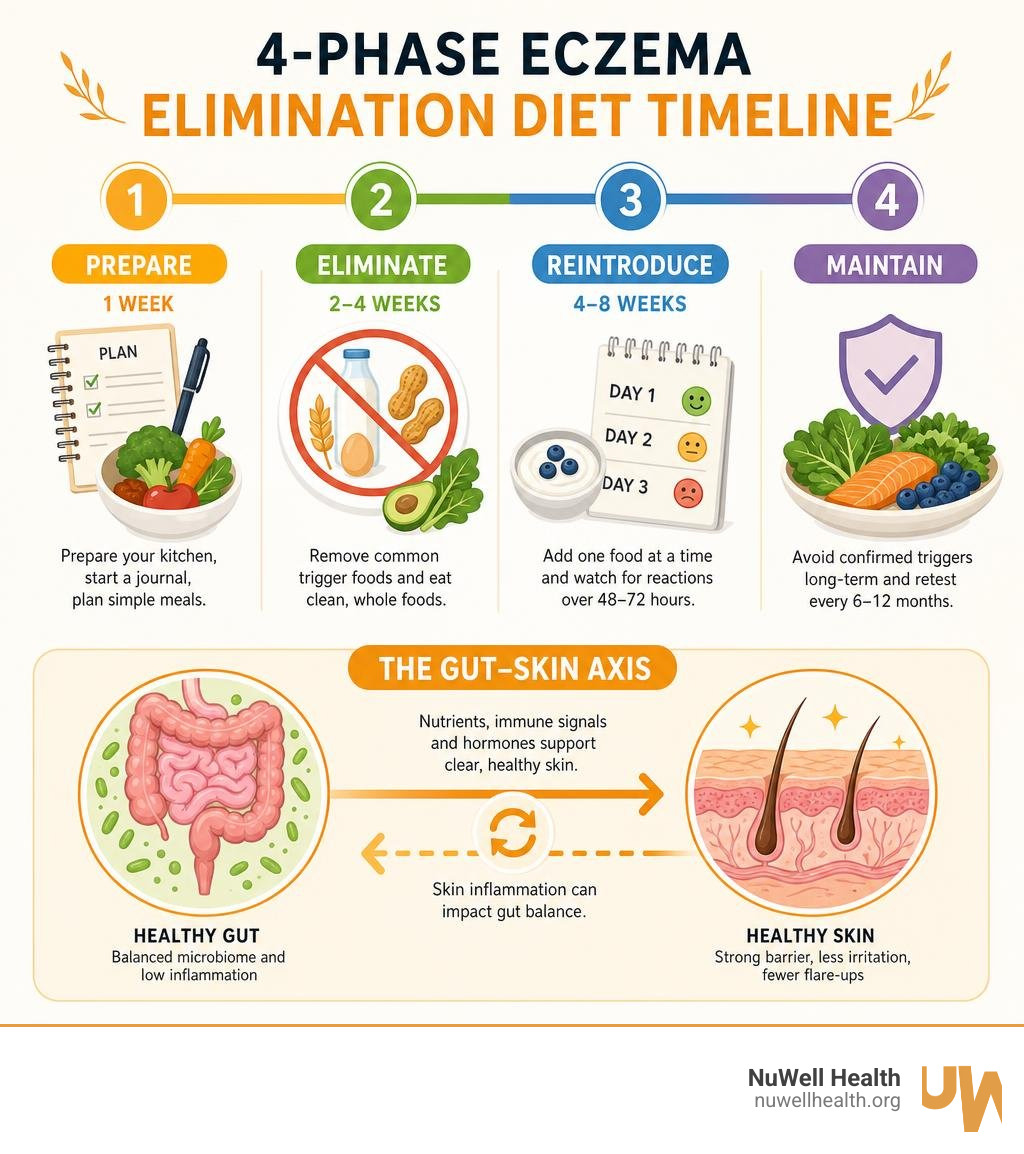
Following an eczema elimination diet guide is one of the most practical ways to find out which foods are quietly fueling your flares. Here is a quick overview of how it works:
Eczema Elimination Diet — At a Glance:
- Prepare (1 week) — Clear trigger foods from your kitchen, start a symptom journal, and plan simple whole-food meals.
- Eliminate (2–4 weeks) — Remove the most common food triggers completely and eat clean, whole foods.
- Reintroduce (4–8 weeks) — Add one food back at a time and watch for reactions over 48–72 hours.
- Maintain — Avoid confirmed triggers long-term and retest every 6–12 months.
Eczema is more than an annoying rash. The constant itch, broken sleep, and unpredictable flares can wear you down — physically and emotionally. Many people try creams and medications, get short-term relief, and then end up right back where they started.
That cycle often continues because the root cause is never addressed.
Food is one of the most overlooked triggers. The tricky part? Food reactions in eczema are frequently delayed — sometimes by 24 to 72 hours — making it nearly impossible to connect the dots without a structured plan. A cookie on Tuesday might not show up on your skin until Thursday.
At NuWell Health, we have found that most people are genuinely surprised to discover which foods are driving their symptoms. It is rarely what they expect.
The good news is that a well-structured elimination diet gives your body a chance to calm down, and then tells you exactly what it cannot handle — no guesswork required.
What is an Eczema Elimination Diet and How Does It Work?
An eczema elimination diet is a systematic, short-term eating plan designed to identify personal food triggers that worsen atopic dermatitis. Unlike general wellness diets, it is not meant to be a permanent lifestyle. Instead, it serves as an investigative tool to help you discover the exact connection between what you eat and how your skin reacts. At NuWell Health, we have found that distinguishing between immediate allergies and delayed sensitivities is crucial for designing an effective natural recovery plan.
To understand how it works, we must first distinguish between a food allergy and a food sensitivity.
- Food Allergy (IgE-Mediated): This is an immediate, immune system reaction. When someone with an allergy eats a trigger food, their body releases histamine, causing rapid symptoms like hives, facial swelling, or even anaphylaxis.
- Food Sensitivity or Intolerance: This is a delayed reaction that does not involve immediate IgE antibodies. Up to 20% of people worldwide may experience a food intolerance or sensitivity. These reactions can take hours or days to manifest, often showing up as digestive issues, headaches, or delayed eczema flares.
For a deeper dive into these differences, you can learn more about allergies and food sensitivity.
When we look at scientific evidence, we see a complex relationship between eczema and diet. For instance, nearly 80% of children with atopic dermatitis have elevated food- or pollen-specific IgE levels, but only 35–40% of food-sensitized children actually show clinical signs and symptoms of a food allergy. Furthermore, Eczema research summaries on food elimination highlight that unguided, broad elimination diets do not benefit everyone. This is why a strategic, personalized approach is so critical.
To help you visualize these differences, here is a quick comparison:
| Feature | Food Allergy (IgE-Mediated) | Food Sensitivity / Intolerance |
|---|---|---|
| System Involved | Immune System (IgE antibodies) | Digestive System or Delayed Immune Pathways |
| Reaction Time | Immediate (minutes to 2 hours) | Delayed (2 to 72 hours) |
| Common Symptoms | Hives, swelling, difficulty breathing, anaphylaxis | Eczema flares, bloating, joint pain, headaches |
| Testing Methods | Skin prick tests, IgE blood tests | Elimination diet (Gold Standard), symptom tracking |
Eczema vs. Standard Elimination Diets
While a standard elimination diet focuses heavily on relieving gastrointestinal symptoms like bloating or gas, an eczema elimination diet guide is tailored specifically to address skin barrier dysfunction and systemic inflammation.
In a standard elimination diet, you might remove foods that ferment easily in the gut (such as high-FODMAP foods). In an eczema-focused diet, we target foods that are known to compromise the skin barrier or trigger delayed eczematous reactions.
Because the skin barrier in atopic dermatitis is already compromised, food proteins can sometimes cross into the bloodstream more easily, sensitizing the immune system. This delayed immune response makes tracking skin symptoms uniquely challenging. According to the National Eczema Association guide on diet and nutrition, understanding these nuances helps prevent unnecessary, overly restrictive diets that do not actually improve skin health.
Common Food Triggers and the Science Behind Flares
Certain foods are more commonly linked to eczema flares than others. The most frequent culprits include:
- Cow’s Milk & Hen’s Egg: These are the most common triggers in children. However, a Cochrane review did not support the routine exclusion of these foods in unselected children without a confirmed sensitivity.
- Gluten & Soy: These proteins can contribute to gut dysbiosis (an imbalance in gut bacteria), which weakens the gut-skin barrier.
- Nightshades: Vegetables like tomatoes, eggplants, and peppers contain compounds that some individuals find irritating to their inflammatory pathways.
- Salicylates: These are natural chemicals produced by plants as a defense mechanism. While they act as antioxidants for most, some people experience a pharmacological reaction (not an allergy) due to leukotriene overproduction. If you suspect this is your issue, exploring a low salicylate diet for eczema might be highly beneficial.
The science behind these flares often points to the dual-allergen-exposure hypothesis. This theory suggests that exposure to food allergens through a broken skin barrier (like scratched, eczematous skin) can lead to allergic sensitization, while consuming the foods orally might actually help build tolerance. This is why we must focus on healing the skin barrier and gut microbiome simultaneously, rather than just avoiding foods forever.
Your Step-by-Step Eczema Elimination Diet Guide

Now that you understand the science, let’s look at how to safely put this into practice. Managing eczema naturally requires a calm, methodical approach. It is about working with your body’s natural design to find balance. At NuWell Health, our experience shows that a structured, step-by-step approach to natural dietary changes yields the most sustainable results for skin health.
If you are looking for external support during this transition, you can explore various natural treatments for eczema that work beautifully alongside dietary changes. Additionally, the Cleveland Clinic eczema diet insights emphasize that focusing on anti-inflammatory, whole foods is a wonderful foundation for healthy skin.
Preparing for an Eczema Elimination Diet Guide
Preparation is the key to avoiding frustration. Before you remove a single food from your plate, take one week to plan.
- Meal Planning: Create a simple menu of safe, nourishing foods. Focus on fresh, unprocessed proteins, healthy fats, and low-reactive vegetables.
- Label Reading: Learn to identify hidden names for common allergens. For example, whey and casein indicate the presence of dairy, while lecithin can sometimes be derived from soy.
- Preventing Cross-Contamination: If you share a kitchen, keep your designated safe foods in separate containers and use clean utensils and cutting boards.
- Audit Your Skincare: Check your lotions and soaps. Many “natural” products contain botanical extracts high in salicylates (like willow bark or aloe vera) or food proteins (like oat or almond oil) that can enter through a damaged skin barrier and stall your progress.
For a structured approach to implementing natural lifestyle changes, check out our step-by-step guide to natural remedies.
Executing the Elimination Phase Safely
The elimination phase should last between two to four weeks. This is typically the time required for the skin barrier to begin its natural healing cycle and for systemic inflammation to subside.
During this phase:
- Eat Whole Foods: Cook at home as much as possible using fresh ingredients.
- Keep It Simple: Do not try to recreate complex gluten-free, dairy-free processed treats. Stick to basic, clean meals like grilled chicken, steamed green vegetables, and white rice.
- Support Your Body: Drink plenty of water and get adequate rest.
- Consider Safe Supplements: Some people find that supplementing with gut-supportive nutrients helps ease the transition. To learn more about incorporating herbs safely, read about herbal food supplement benefits and safety.
A quick note on the “Healing Crisis”: During the first week, some individuals notice a temporary, mild worsening of their skin or slight headaches as the body adjusts. This is normal, but if symptoms persist or severe flares occur, consult your healthcare provider.
Tracking Symptoms and Reintroducing Foods Safely

Without accurate tracking, an elimination diet is just guesswork. The reintroduction phase is where you get your answers. In our practice at NuWell Health, we have observed that clients who meticulously track their symptoms during reintroduction are far more successful in identifying their specific eczema triggers.
To guide your testing journey, you can read the definitive guide to food sensitivity testing to see how clinical testing compares to an elimination diet. For medical consensus on dietary interventions, the EuroGuiDerm dietary guidelines offer excellent professional context.
The Rule of Threes for Reintroduction
When you are ready to reintroduce foods, do not rush. We recommend using the Rule of Threes:
- Introduce One Food: Choose a single food group (e.g., dairy) to test. Keep all other foods strictly within your safe list.
- Three Servings in One Day: Eat a small portion of the test food with breakfast, a medium portion with lunch, and a normal portion with dinner on Day 1.
- Three Days of Observation: Stop eating the test food completely for the next three days. Monitor your skin, sleep quality, and digestion closely.
Because eczematous reactions are often delayed, a flare may not appear until 48 to 72 hours after ingestion. If you experience any itchiness, redness, or digestive discomfort during this observation window, note it in your journal and return to the strict elimination phase until your skin is completely calm before testing the next food.
If you want to explore professional screening options to complement this process, take a look at our food sensitivity screening guide.
Who Should Avoid an Eczema Elimination Diet Guide?
While highly effective for many, an elimination diet is not suitable for everyone.
- History of Disordered Eating: The restrictive nature of an elimination diet can trigger unhealthy patterns.
- Unsupervised Children: Prolonged elimination diets in children can lead to severe nutritional deficiencies, such as calcium, vitamin D, and vitamin E deficiencies, and even failure to thrive. Over 25% of children on unsupervised strict elimination diets consume less than 67% of their daily recommended intake of these vital nutrients.
- Loss of Tolerance Risk: Unnecessarily removing a tolerated food for a long period can actually cause the body to lose tolerance, potentially triggering a true IgE-mediated allergy when the food is reintroduced.
As noted in the National Eczema Association on food elimination trends, any restrictive diet — especially for moderate to severe eczema — should ideally be supervised by a doctor, allergist, or registered dietitian.
Frequently Asked Questions About Eczema Diets
When embarking on this journey, it is natural to have questions about how your body handles inflammation. Managing skin issues is closely tied to managing systemic inflammation. For more on this connection, you can read about chronic pain and inflammation.
Can an elimination diet completely cure my eczema?
No, an elimination diet cannot permanently “cure” eczema, as atopic dermatitis is a complex condition with genetic, environmental, and skin barrier components. However, identifying and removing your personal food triggers can dramatically reduce the frequency and severity of your flares, giving your skin barrier a chance to heal and rest.
How long does it take to see results on an eczema diet?
Most people begin to see noticeable improvements in their skin’s redness and itchiness within two to four weeks of strict elimination. If you do not see any improvement after four weeks, it is highly likely that your eczema is driven by non-dietary triggers (like dust mites, stress, or weather) rather than food sensitivities.
Is it safe for children to try an eczema elimination diet?
Only under strict medical supervision. Because of the high risk of calcium and vitamin D deficiencies, as well as the potential to accidentally trigger a new food allergy, children should never be put on a strict, multi-food elimination diet without the guidance of a pediatrician, allergist, or pediatric dietitian.
Conclusion
Finding relief from eczema is a journey that requires patience, structure, and a deep respect for your body’s natural healing mechanisms. By systematically identifying your food triggers, you take the guesswork out of your skin health and reclaim control over your daily comfort.
At NuWell Health, we believe in empowering you with the tools and knowledge needed to support your wellness journey from the inside out. If you are looking for long-term health strategies, we invite you to explore the best natural strategies for long-term wellness.
“At NuWell Health, we have found that addressing the root causes of skin inflammation through mindful, natural nutrition empowers long-term healing.”
To continue learning about how to support your skin barrier naturally, take a look at our comprehensive guide to master natural ways to heal eczema. Your path to calmer, happier skin starts with a single, mindful step.
Jordan is an author, ordained minister, and online host for His Glory TV, sharing biblically grounded insights on faith, prayer, and spiritual growth. She is the co-founder of Triple-Braided Cord Co., an intercessory prayer and healing ministry inspired by Ecclesiastes 4:12.
Jordan holds a Bachelor’s degree in Communications and Religious Studies from High Point University and is a certified Spiritual Life Coach through iCoachLife in Nashville, Tennessee. Drawing from her ministry, coaching, and academic experience, she creates trustworthy, faith-based content that helps readers grow in their relationship with God. Learn more about Jordan here.